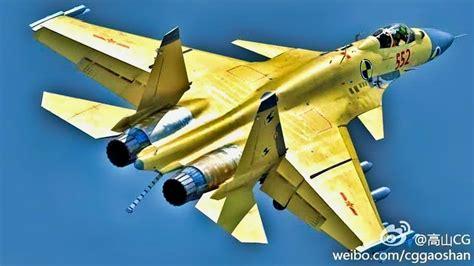
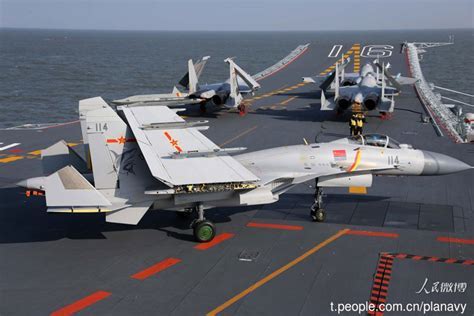
China’s recent military maneuvers in the Western Pacific once again thrust the J-15 Flying Shark and Liaoning aircraft carrier into the international spotlight. The latest provocation came when J-15 fighters operating from the Liaoning reportedly locked radar twice on Japanese jets—a move condemned by Tokyo as “dangerous and extremely regrettable.” Beijing, unrepentant, responded with its own protest. Behind this escalating tension lies an extraordinary story—one that begins not in Beijing or Tokyo, but in Ukraine’s decaying shipyards and forgotten Cold War aviation relics.
From Rust to Rebirth: Ukraine’s Role in China’s Carrier Ambitions
The rebirth of the Liaoning aircraft carrier is an engineering and geopolitical saga that traces back to post-Soviet Ukraine. After the collapse of the USSR, Ukraine inherited the incomplete Varyag, a Kuznetsov-class heavy aircraft-carrying cruiser languishing in the Mykolaiv shipyards. With its hull barely 67% complete and stripped of engines, electronics, and weapons, the Varyag was a rusting symbol of an empire’s fall. Ukraine, desperate for cash in the 1990s, began hawking the vessel to anyone interested.
Enter China. Eager to build a blue-water navy but wary of triggering Western alarm bells, Beijing devised a covert operation. Through a civilian front led by Xu Zengping, a former PLA basketball player turned businessman, China purchased the ship for a paltry $20 million—claiming it would become a floating casino in Macau. What followed was a clandestine odyssey involving bribes, bureaucratic hurdles, and a year-long payment delay. By 2002, the Varyag arrived at Dalian Port in northeastern China. Over the next decade, engineers painstakingly restored and reconfigured it into a full-fledged carrier, launched in 2012 as the Liaoning.
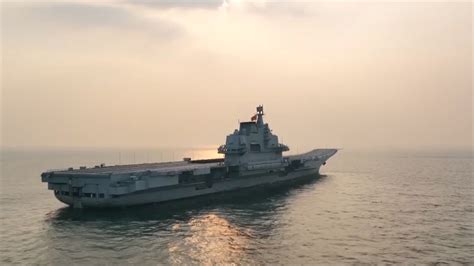
The move marked the beginning of China’s modern carrier era, rooted in a repurposed relic from Ukraine.
Su-33’s Clone: The Birth of the J-15 Flying Shark
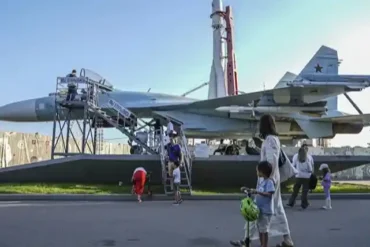
Equally compelling is the story of the J-15, China’s carrier-borne fighter jet. Derived from Soviet aviation know-how, the aircraft owes its existence to a single unfinished Su-33 prototype acquired from Ukraine in 2001. Instead of negotiating a licensed production deal with Russia—which would have cost billions—China opted to reverse-engineer the aircraft domestically. It was a bold gamble.
According to Russian military analyst Vasily Kashin, the decision saved China money initially but extended development timelines and introduced reliability issues in the first J-15 units. The fighter eventually made its maiden flight in 2009 and began sea trials aboard Liaoning in 2012.
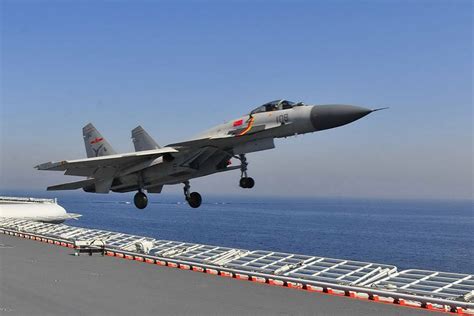
Initially dismissed as inferior to Western counterparts, the J-15 evolved rapidly through iterative design. It is now central to China’s anti-access/area denial (A2/AD) strategy, projecting air power across the East and South China Seas. With deployments on both the Liaoning and Shandong, and future operations from the more advanced Fujian carrier, the J-15 is a cornerstone of Chinese maritime air dominance.
A Growing Family: J-15B, J-15D, and J-15T
The base model J-15 has spawned several modern variants, each designed to address operational shortcomings and enhance battlefield roles.
The J-15B, first unveiled in 2024, introduced key 4.5-generation upgrades including a new active electronically scanned array (AESA) radar, advanced avionics, and a modernized cockpit. Optimized for both STOBAR (Short Take Off But Arrested Recovery) and CATOBAR (Catapult Assisted Take Off But Arrested Recovery) operations, the B-variant can serve aboard all Chinese carriers.
The J-15D is a dedicated electronic warfare (EW) aircraft, featuring large wingtip EW pods and stripped of its cannon and infrared search and track (IRST) sensors. In dual-aircraft drills, it demonstrated capabilities rivalling the U.S. Navy’s EA-18G Growler, offering China a powerful jamming and suppression platform.
The J-15T, showcased at the Zhuhai Air Show in 2024, was designed specifically for catapult launches aboard the EMALS-equipped Fujian carrier. It includes a reinforced nose landing gear with a wider shock-absorbing strut, allowing stress-free launches without relying solely on thrust—a critical capability for extended missions with heavy payloads.
Each of these variants reflects the iterative enhancement of China’s naval aviation, allowing greater versatility and performance despite legacy design limitations.
Weight, Woes, and Controversy
Despite its operational significance, the J-15 has faced persistent criticism. It is the heaviest carrier-based fighter in service today, with an empty weight of 38,000 pounds—significantly heavier than the F/A-18E/F and the F-35C. The added weight, coupled with early reliance on Russian AL-31F engines, made initial models prone to performance and reliability issues.
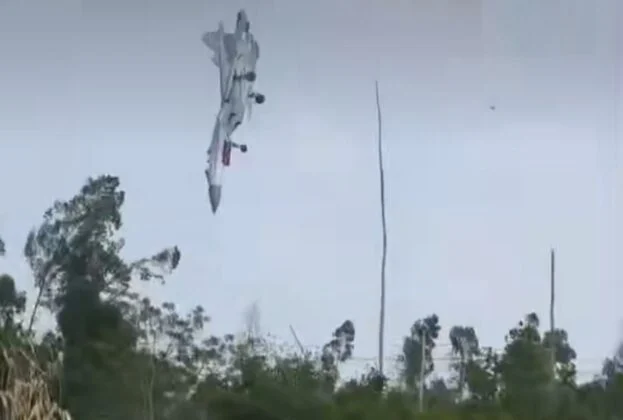
A 2025 crash during a training exercise reignited debate over the aircraft’s safety, with some Chinese commentators branding it a “White Elephant.” That term echoed earlier skepticism when the aircraft failed to meet endurance and reliability expectations. The shift to domestically produced WS-10 engines has improved performance, but public confidence remains divided.
Moreover, the human capital bottleneck presents another challenge. A 2022 estimate indicated that China required at least 200 carrier-qualified fighter pilots to operate 130 shipborne aircraft. The shortage of experienced naval aviators continues to restrict sortie rates and complex carrier operations, limiting the full potential of the J-15 fleet.
Japan’s Frustration and the Strategic Theater
The radar lock-on incident involving Japanese fighter jets underscores the geopolitical friction simmering in the East China Sea. For Japan, which has its own expanding F-35B program and carrier upgrades, China’s growing naval air power is a stark reminder of regional volatility.
The J-15’s ability to operate near Japanese airspace aboard carriers like Liaoning signals a bold extension of China’s blue-water naval doctrine. While lacking in stealth and sensor fusion when compared to fifth-generation fighters, the newer J-15 variants narrow the gap through quantity, EW support, and missile range. Their YJ-83K anti-ship cruise missiles give them a credible threat envelope over contested waters.
For Beijing, such engagements serve a dual purpose—testing Japanese responses while showcasing resolve over disputed territories like the Senkaku Islands and Taiwan Strait.
Beyond the Horizon: The Future of China’s Carrier Air Wing
China’s naval aviation roadmap doesn’t end with the J-15. The development of the J-35, a stealth carrier fighter akin to the U.S. F-35C, promises to eventually replace or complement the J-15 in the late 2020s. Until then, the Flying Shark and its variants will remain the mainstay of People’s Liberation Army Navy (PLAN) carrier strike operations.
Yet the very foundation of this carrier capability—both the Liaoning and the J-15—owes its existence to Soviet engineering and Ukrainian desperation. Without Ukraine’s abandoned war relics and China’s audacious acquisitions in the 1990s and early 2000s, the PLAN’s current posture would look radically different.
Conclusion: A Legacy Forged in Shadow, Realized in Strength
The intertwined stories of the Liaoning aircraft carrier and the J-15 Flying Shark illustrate a unique convergence of forgotten Soviet ambitions and modern Chinese resolve. From rusting shipyard hulks in Mykolaiv to intimidating patrols over the East China Sea, China’s maritime rise has been fueled by opportunism, engineering prowess, and geopolitical calculation.
While flaws remain, and pilot training gaps persist, the transformation of Cold War scrap into strategic assets has altered the balance of power in the Indo-Pacific. What began as salvaged relics now fly above contested waters, locking horns with regional adversaries and rewriting the rules of naval aviation.
As the world watches, the echoes of Ukraine’s abandoned legacies continue to haunt, empower, and embolden Beijing’s quest for dominance at sea.