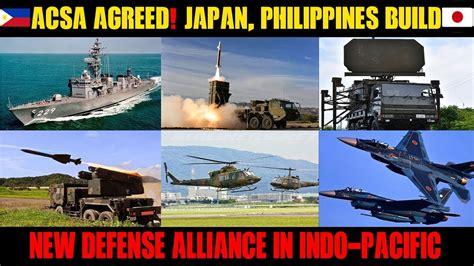
The signing of a new Acquisition and Cross-Servicing Agreement (ACSA) between Japan and the Philippines marks a decisive turn in the evolving security architecture of the Indo-Pacific. Far from a routine military logistics arrangement, the pact reflects Tokyo’s accelerating shift toward a more assertive regional role as China’s strategic footprint expands across contested maritime spaces. The agreement underscores how logistics, often overlooked in grand strategy, can quietly redefine power projection and alliance cohesion.
At its core, the ACSA allows Japanese and Philippine forces to mutually supply ammunition, fuel, food, and essential materials during joint exercises, humanitarian missions, and operational deployments—without tax or bureaucratic friction. This practical cooperation transforms interoperability from a concept into a standing capability, enabling forces to operate together seamlessly in real-world contingencies rather than only on paper.
The pact was signed in Manila by Japanese Foreign Minister Toshimitsu Motegi and Philippine Foreign Secretary Theresa Lazaro, reinforcing the symbolism of Japan’s deepening engagement with Southeast Asia. For Manila, frequently locked in tense confrontations with Beijing in the South China Sea, the agreement strengthens deterrence while embedding the Philippines more firmly within a network of like-minded security partners.
Japan’s Logistics Diplomacy and the Quiet Power of ACSA
While fighter jets and warships dominate headlines, logistics agreements like the ACSA often determine whether military cooperation is viable in a crisis. By enabling rapid resupply and shared sustainment, Japan and the Philippines eliminate one of the most common friction points in multinational operations. This matters profoundly in an Indo-Pacific defined by vast distances, fragile supply lines, and frequent natural disasters that blur the line between military and humanitarian missions.
For Japan, the ACSA complements the previously signed Reciprocal Access Agreement (RAA), which simplifies troop deployments for exercises and disaster response. Together, these frameworks lay the groundwork for persistent operational presence, allowing Japanese Self-Defense Forces to train, deploy, and assist in Philippine territory with unprecedented ease.
The agreement also signals a recalibration of Japan’s post-war security posture. Long constrained by constitutional pacifism, Tokyo is now leveraging logistics, infrastructure, and capacity-building as instruments of strategic influence—tools that reassure partners without triggering the escalatory optics of permanent basing.
Manila’s Strategic Calculus Amid South China Sea Tensions
For the Philippines, the ACSA arrives at a moment of sustained pressure from China’s coast guard and maritime militia. Repeated confrontations around Second Thomas Shoal and Scarborough Shoal have highlighted Manila’s vulnerability and the limits of unilateral deterrence. Enhanced interoperability with Japan strengthens the Philippines’ ability to operate alongside allies during patrols, resupply missions, and crisis response scenarios.
Foreign Secretary Theresa Lazaro emphasized that the pact would “enhance mutual military interoperability and readiness,” building on existing visiting forces arrangements. In practical terms, this means Philippine units can integrate more smoothly with Japanese and allied forces, reducing response times during emergencies and complicating adversaries’ strategic calculations.
Crucially, the agreement also aligns with Washington’s broader vision of networked deterrence, in which U.S. allies cooperate directly with one another rather than relying solely on American coordination. Tokyo and Manila, both treaty allies of the United States, are increasingly acting as security partners in their own right.
Official Security Assistance and Japan’s New Strategic Toolkit
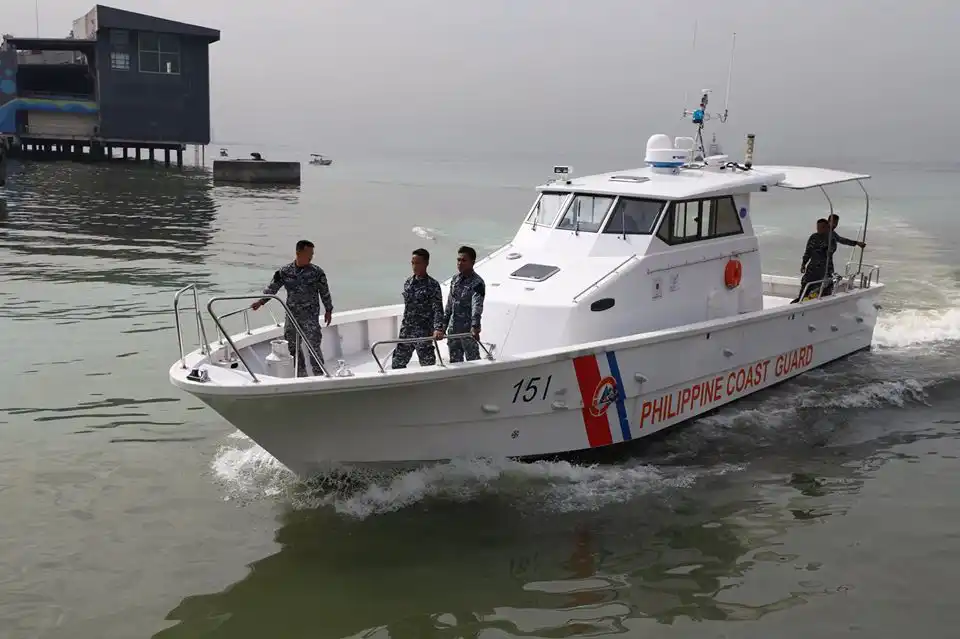
Beyond logistics, Japan is backing its commitments with money and infrastructure. Since 2023, Tokyo has provided over $20 million to the Philippines under its Official Security Assistance (OSA) program, marking a significant evolution in Japanese defense aid. For the first time, OSA funds are being channeled into infrastructure projects, including boathouses and slipways for rigid hull inflatable boats used in maritime patrols.
This shift reflects Tokyo’s understanding that maritime security is as much about sustainment as surveillance. By improving basing and maintenance facilities, Japan is helping the Philippines maintain a persistent presence in contested waters—an essential counter to China’s strategy of exhausting rivals through constant low-level pressure.
The 2023 National Security Strategy and China as a Strategic Challenge
Japan’s growing investment in Philippine security flows directly from its 2023 National Security Strategy (NSS), which identifies China as “the greatest strategic challenge” to Japan’s peace and the regional order. The document cites Beijing’s rapid military modernization, opaque defense spending, and coercive tactics aimed at altering the Indo-Pacific status quo.
Tokyo is particularly alarmed by Chinese activities in the East China Sea and South China Sea, including repeated incursions near the Senkaku Islands, which Japan administers but China claims. The NSS also warns that a crisis in the Taiwan Strait could quickly spill over into Japanese territory, drawing Okinawa and nearby islands into a broader conflict.
From this perspective, strengthening partners like the Philippines is not altruism—it is forward defense. By bolstering maritime domain awareness and operational readiness in Southeast Asia, Japan aims to prevent crises from reaching its own shores.
Trilateral Dynamics and the Expanding Alliance Web
The Japan–Philippines ACSA fits neatly into an expanding trilateral security framework with the United States. Under this arrangement, Tokyo is supplying Manila with patrol boats and other defense equipment while coordinating closely with U.S. forces operating across the region. The result is a dense web of cooperation that increases transparency among allies while raising the costs of unilateral aggression.
Analysts like Don McLain Gill argue that Japan is positioning itself as a regional security provider, particularly for Southeast Asian states facing maritime coercion. This role does not replace the U.S. alliance but complements it, distributing responsibilities and reinforcing the credibility of collective deterrence.
Beyond China: Russia, North Korea, and a Harder Security Environment
China is not Japan’s only concern. The NSS highlights North Korea’s grave and imminent nuclear and missile threats, as well as the destabilizing impact of Russia’s war in Ukraine. Tokyo views Moscow’s actions as evidence that force is once again being used to redraw borders, a precedent that could embolden similar behavior in Asia.
The document calls for enhanced air and missile defense, counterstrike capabilities, and deeper partnerships with countries such as Australia, India, and key Southeast Asian states. The ACSA with the Philippines is a concrete manifestation of this broader strategic recalibration.
A Signal to the Region
Ultimately, the Japan–Philippines ACSA is less about supplies than about strategic signaling. It tells partners that Japan is prepared to invest materially in regional stability and tells adversaries that coercion will be met with coordination, not isolation. By embedding logistics cooperation into a wider network of agreements, Tokyo is quietly but decisively reshaping the Indo-Pacific balance.
As Japan links its own security ever more closely to that of its neighbors, the message is clear: regional stability is indivisible, and safeguarding it now demands shared responsibility, shared resources, and shared resolve.