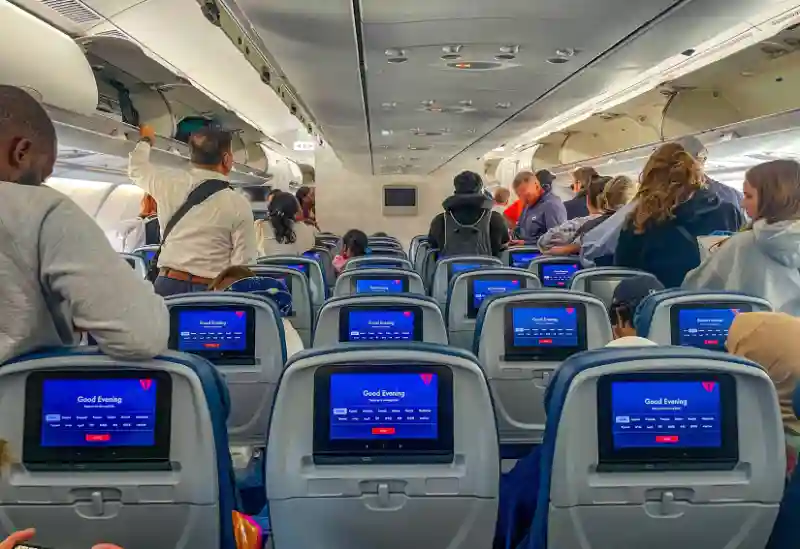
Darrin Roth of Bayside, Wisconsin, has filed a lawsuit against Delta Air Lines after alleging that a defective seat belt caused him to be thrown into the bulkhead and knocked unconscious during a landing in New York. Roth was traveling with his wife, Geralyn, on a flight from Tampa, Florida, to New York City in January 2025 when the alleged restraint failure occurred. According to reporting by the Milwaukee Journal Sentinel, Roth had to be removed from the aircraft on a stretcher and transported to a hospital in Queens after the incident.
The lawsuit centers on an unusually serious allegation involving one of the most basic pieces of safety equipment aboard a commercial aircraft. Roth claims that his seat belt failed during landing, allowing his body to move forward with enough force to strike the bulkhead. He says the impact caused him to lose consciousness immediately. The case is now focused not only on what happened inside the cabin but also on whether the restraint had been properly maintained, installed and inspected before the flight.
According to the allegations, flight attendants examined the seat belt shortly after the incident and observed evidence that something was wrong with the restraint. The cabin crew reportedly suggested that the device may have been installed incorrectly or twisted. That observation could become an important part of the lawsuit because it potentially provides evidence that the problem was not simply the result of passenger use. Delta has not been established as legally liable merely because the lawsuit was filed, and the allegations remain subject to litigation.
What Happened to the Delta Passenger During Landing?
Roth alleges that the seat belt did not properly restrain him as the aircraft touched down in New York. During a normal landing, passengers can experience a significant change in acceleration as the aircraft contacts the runway, but a properly functioning restraint is designed to keep occupants securely positioned. Roth claims that his restraint instead allowed him to move forward, resulting in a forceful collision with the bulkhead and an immediate loss of consciousness.
The medical consequences allegedly extended well beyond the initial emergency treatment. In the weeks following the January 2025 accident, Roth experienced a heart attack and subsequently underwent quadruple bypass surgery. He later underwent a cervical fusion operation in November 2025. Roth’s lawsuit alleges that these later medical problems were connected to the injuries and trauma associated with the landing incident, although establishing that connection will likely require extensive medical evidence.
The distinction between the immediate injury and the later medical conditions could become one of the most important issues in the case. A traumatic event can produce complicated medical consequences, but proving that a particular later condition was caused by an earlier accident generally requires more than a simple chronological connection. Medical records, examinations, expert testimony and evidence concerning Roth’s health before the flight could therefore play a significant role in determining the eventual damages.
Why a Defective Seat Belt Could Create Liability for Delta
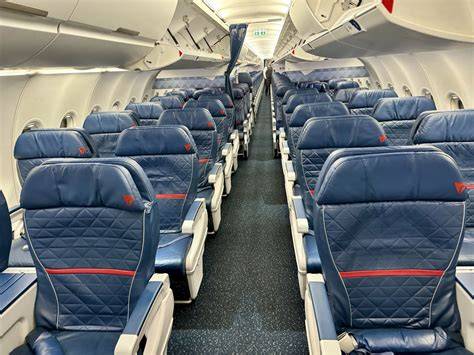
The lawsuit reportedly argues that Delta was negligent in maintaining the aircraft’s equipment. Commercial airlines operate under extensive federal aviation requirements, and cabin restraints are critical safety components that must be inspected, maintained and repaired according to applicable procedures. If investigators or evidence ultimately establish that a seat belt was improperly installed or maintained, the circumstances could strengthen Roth’s negligence claim.
One particularly important allegation concerns the possibility that the belt had been installed incorrectly or twisted. Aircraft seat belts are attached to seat structures using robust hardware, while the restraint webbing passes through adjustment and locking components designed to hold an occupant securely. A badly positioned component or improperly routed webbing could theoretically affect how the restraint responds when subjected to a sudden load.
A severely twisted belt can also alter how the webbing moves through its buckle and adjustment mechanism. Under significant forward force, improperly positioned or routed webbing could potentially behave differently from a correctly installed restraint. These are technical possibilities rather than established findings in Roth’s case, however, and determining what actually happened would require examination of the aircraft seat, belt assembly, maintenance records and other evidence.
The Medical Damages Could Become the Biggest Legal Dispute
The initial injury may be easier to connect to the alleged seat belt failure than Roth’s subsequent heart and spinal problems. Delta’s legal defense could therefore focus heavily on whether those later conditions were caused by the accident, aggravated by it, or resulted primarily from pre-existing medical circumstances.
The lawsuit may also raise the eggshell skull rule, sometimes called the thin-skull rule. Under this legal principle, a defendant who is found responsible for an injury generally cannot avoid responsibility simply because the victim had an unusual vulnerability that made the consequences more severe than an ordinary person might have experienced. Whether and how that principle applies to Roth’s claimed medical conditions will depend on the applicable law and the evidence presented in the case.

Delta Seat Belt Lawsuit Remains Pending
The Roths are seeking compensation, although the amount requested has not been specified in the supplied reporting. The litigation remains pending, meaning that the allegations against Delta have not yet been established as proven facts. The eventual outcome could depend on technical evidence concerning the restraint, Delta’s maintenance records, testimony from the cabin crew, and medical evidence connecting the landing incident to Roth’s later health problems.
The case highlights how a seemingly routine component can become central to a major aviation liability dispute. Passenger seat belts are among the simplest pieces of equipment in an aircraft cabin, but their reliability is fundamental to occupant safety. If Roth’s allegations are ultimately supported by the evidence, the lawsuit could raise important questions about maintenance procedures, inspection practices and responsibility for injuries caused by defective cabin equipment.