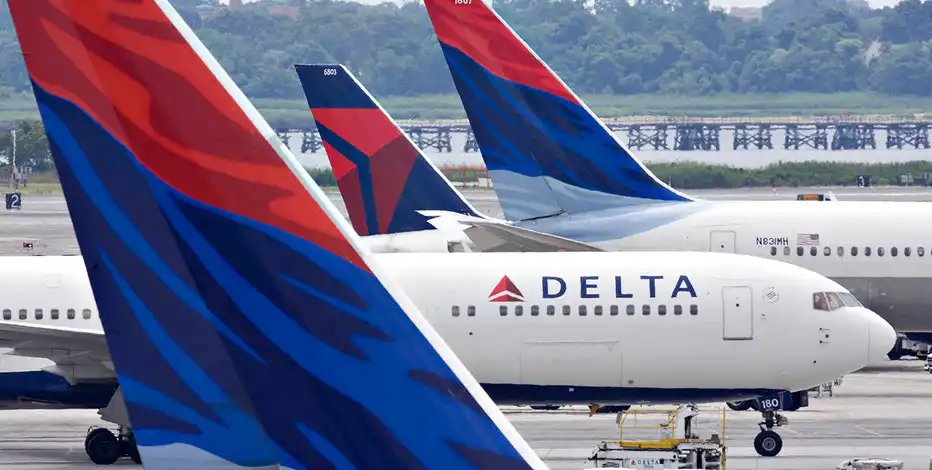
A passenger has sued Delta Air Lines after alleging that a five-and-a-half-hour flight from Atlanta to Seattle left him trapped in a painful, twisted position beside a plus-size passenger. According to the lawsuit, Rolando Jimenez says he was unable to move to another seat after the neighboring passenger allegedly occupied part of his assigned space. He claims the prolonged position caused severe lower-back pain that ultimately led to spinal surgery and more than $44,000 in medical expenses.
The case raises difficult questions about airline seating policies, passenger comfort, disability and body-size considerations, and an airline’s responsibility when a passenger cannot comfortably remain within the boundaries of an assigned seat. It also highlights the practical challenges that can arise when a completely full aircraft leaves little flexibility for cabin crew to resolve a seating dispute.
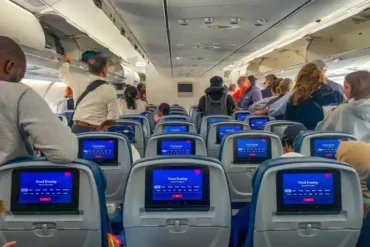
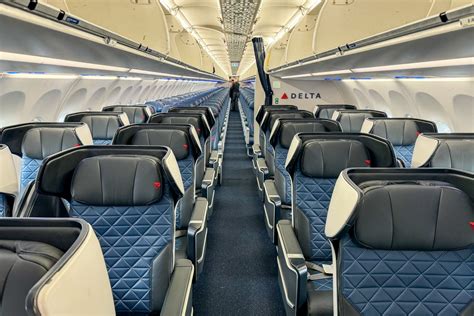
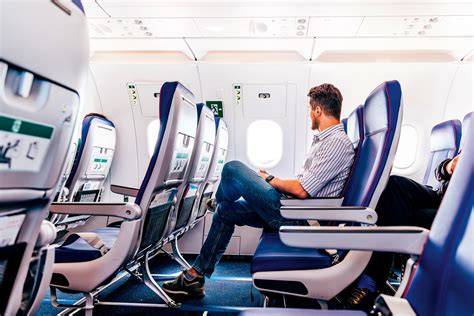
Jimenez’s complaint centers on a Delta Airbus A321 operating from Hartsfield-Jackson Atlanta International Airport (ATL) to Seattle-Tacoma International Airport (SEA) in October 2024. He was reportedly assigned a window seat in Main Cabin. When the passenger seated beside him allegedly encroached into his seat area, Jimenez says he asked flight attendants whether he could be moved.
Five-Hour Seat Squeeze Allegedly Caused Severe Back Pain
According to the complaint, the aircraft was full, meaning that cabin crew could not provide Jimenez with another seat. He therefore remained in his assigned position for the entire journey. The lawsuit describes him as being forced into a “constrained and twisted posture” against the cabin wall for approximately five and a half hours.
The alleged consequences appeared immediately after landing. Jimenez claims that when he stood up, he experienced severe pain radiating from his lower back into his left leg. He sought medical treatment within two days, but his condition allegedly deteriorated substantially during the following weeks.
The complaint says ordinary activities became increasingly difficult. Walking, climbing stairs, bathing and sleeping reportedly became painful or challenging. What began as a seating problem during one flight consequently developed into a much more serious medical issue.
Spinal Surgery Followed Months Later
Jimenez ultimately underwent a laminectomy in November 2024, roughly one month after the Delta flight. The procedure involves removing part of a vertebra to relieve pressure affecting the spinal cord or associated nerves. The lawsuit states that he was subsequently diagnosed with chronic pain syndrome.
The financial impact has also become a major component of the claim. Jimenez’s complaint alleges that his medical expenses had already exceeded $44,000, while additional treatment may still be required. Among the possibilities mentioned in the lawsuit is a spinal cord stimulator.
The complaint does not establish that the seating incident medically caused every subsequent condition, however. That question is likely to be central to the litigation. A court would need to consider the evidence connecting the flight, the alleged posture and the subsequent spinal injury, alongside Delta’s actions and its obligations toward passengers.
What Delta’s Plus-Size Seating Policy Says
Delta’s seating guidance specifically addresses passengers who may require more than one seat’s available space. The airline advises travelers to purchase an additional seat or upgrade to a premium cabin if they expect to encroach into the adjacent seat while seated or cannot keep the seat armrests down.
An additional seat can be purchased at the same fare as the original seat when the seats are booked together. Delta also identifies options such as Delta Premium Select, Delta First and Delta One for travelers seeking additional space.
Jimenez’s lawsuit alleges that Delta failed to adequately enforce this policy in his situation. His complaint argues that the airline should have provided him with a safe and usable seating arrangement rather than leaving him pressed against the aircraft’s interior for the duration of the flight.
The A321 Cabin Space Question
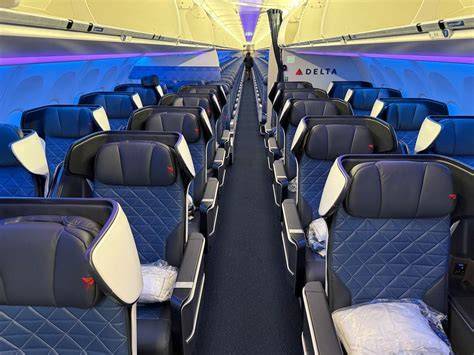
The lawsuit also challenges the amount of space available in Delta’s A321 Main Cabin. Delta’s published figures for the A321-200 indicate approximately 18 inches of seat width and 30 to 31 inches of pitch, although Jimenez’s complaint alleges that the actual seat width was approximately 17.3 inches.
That distinction matters because the dispute is not simply about personal comfort. The complaint argues that limited seat dimensions can create situations where a passenger who cannot fit entirely within one seat may occupy neighboring space, potentially affecting the passenger seated beside them.
Airlines face a complicated balancing act here. Seats must accommodate a wide range of body sizes while maintaining safety requirements, operational efficiency and commercially viable cabin layouts. At the same time, passengers expect the seat they purchase to provide a usable space throughout the flight.
A Wider Debate Over Plus-Size Airline Seating
The Delta lawsuit arrives amid continuing debate over how airlines should accommodate larger passengers. Policies vary considerably between carriers, with some airlines offering more generous options for travelers who need an additional seat.
Southwest Airlines, for example, has historically allowed qualifying passengers to purchase an extra seat and, under certain circumstances, receive a refund when the flight does not sell out. The airline’s transition toward assigned seating has prompted further discussion about how its approach should work under the new system.
Delta has faced seating-related controversy before. The reference material notes a 2025 onboard dispute involving elbow room and a 2022 lawsuit brought by a plus-size model who alleged she could not comfortably fit within her seat.
The latest case therefore touches on an issue extending well beyond one passenger and one flight. It asks where the responsibility lies when one passenger’s physical space directly affects another passenger’s ability to occupy their purchased seat.
What Happens Next in the Delta Lawsuit
The allegations remain claims contained in a lawsuit, rather than established findings of fact. The case will need to determine what occurred aboard the A321, whether Delta’s personnel responded appropriately, whether its seating policies were followed, and whether the alleged seating conditions caused or materially contributed to Jimenez’s injuries.
For airlines, the case could also reinforce the importance of having practical procedures for resolving seating conflicts on full flights. For passengers, it demonstrates why understanding an airline’s additional-seat requirements can matter before boarding.
At its core, the dispute is about something deceptively simple: whether a passenger can safely and reasonably use the seat they purchased. As aircraft cabins become increasingly optimized for capacity, cases like this could keep the question of personal space firmly in the spotlight.