
Google has agreed to pay $10 million for a vast collection of Spirit Airlines’ internal business data, turning the digital remains of the bankrupt carrier into a valuable asset for the artificial intelligence industry. The transaction highlights how companies with years of operational history can retain significant value through their data even after their commercial businesses disappear. Google says the acquisition is intended to support product development and AI model training.
The deal does not mean Google is buying Spirit Airlines, its aircraft, routes, or remaining airline operations. Instead, Google won the bankruptcy auction for a package of enterprise data and internally developed software. The material reportedly includes employee communications, spreadsheets, calendars, operational information and other corporate records. Personal information and customer data are expected to be excluded or de-identified before the transfer.
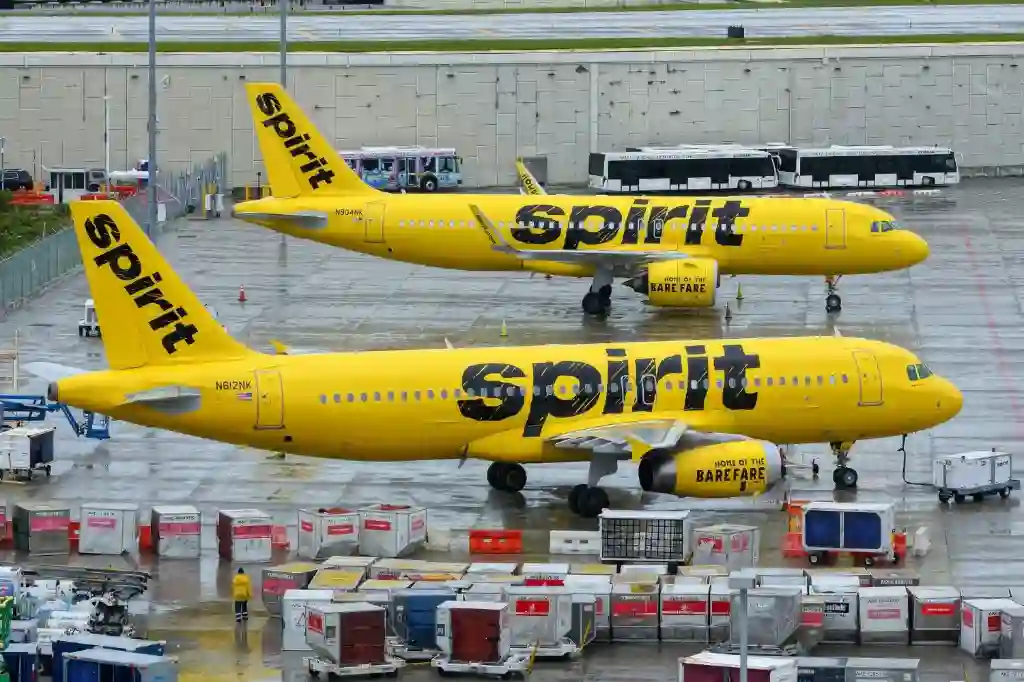
The development comes after Spirit Airlines ended its operations in May 2026, following years of financial pressure and bankruptcy proceedings. While aircraft and other physical assets can be sold after a company’s collapse, Spirit’s enormous digital archive has revealed another form of residual value. For Google, the attraction is not necessarily what Spirit was, but what its records can teach an AI system about how a large organization actually works.

Google Outbids Mercor for Spirit Airlines Data
Google was not alone in recognizing the potential value of Spirit’s corporate records. Mercor, an AI data company, reportedly submitted a $7.5 million bid after Google initially offered $5 million. Google ultimately increased its offer to $10 million, securing the winning position in the bankruptcy auction. The transaction still requires approval through the U.S. bankruptcy process.
The competitive bidding is important because it demonstrates that proprietary corporate information is becoming an asset in its own right. Traditional business records were primarily useful for accounting, compliance, legal proceedings and historical reference. AI changes that calculation. Large collections of real workplace communications can potentially become training material for systems expected to understand business decisions, organizational processes and complex professional workflows.
In Spirit’s case, the potential dataset is unusually broad. Reports indicate that it contains approximately 100 million emails and 500 million Microsoft Teams messages, alongside spreadsheets, calendars, software and operational records. Other reporting has described extensive code and additional corporate datasets, illustrating the enormous digital footprint accumulated by a major airline over decades.
Why Spirit Airlines Data Could Be Valuable to AI
Public websites provide enormous quantities of information, but they rarely show the complete process behind a business decision. An article might explain how an airline manages aircraft, prices tickets or responds to disruptions. Internal records can show something much more useful for an AI system: how employees actually perform those tasks.
Spirit’s emails and Teams conversations could contain examples of employees coordinating schedules, resolving operational problems, discussing pricing decisions, handling marketing campaigns and communicating across departments. Spreadsheets and calendars add another layer by showing how information is organized and acted upon. Together, these materials could provide AI developers with examples of real-world enterprise workflows rather than isolated pieces of publicly available text.
That distinction could become increasingly important as AI companies develop systems designed to perform tasks rather than simply generate answers. A future enterprise AI agent may need to understand how a finance team works with operations, how managers respond to disruptions, or how commercial departments coordinate with other parts of an airline. Real corporate data can provide the messy context that carefully prepared training examples often lack.
Privacy Concerns Surround the $10 Million Deal
The transaction also raises difficult questions about employee privacy and the ownership of workplace data. Although the data is reportedly being de-identified and the sale excludes personally identifiable information, the scale of the archive makes the issue especially significant. The dataset contains hundreds of millions of internal communications, meaning that privacy safeguards are central to whether the transaction can proceed.
Those concerns have already affected the bankruptcy process. The Association of Flight Attendants-CWA has objected to the proposed sale, prompting the bankruptcy court to postpone the hearing that had been expected on August 19. The hearing has now been rescheduled for September 9, 2026, giving the court additional time to consider the objections.
The controversy points to a broader question for the AI industry: who owns the knowledge created inside a company when that company disappears? Employees may create the emails, messages and documents, while the employer controls the systems that store them. Bankruptcy can then transform those records into assets that creditors seek to monetize.
Spirit’s Data Could Signal a New AI Market
Google’s $10 million purchase is therefore about more than one bankrupt airline. It offers a glimpse into a developing market where enterprise data becomes valuable fuel for AI development. As publicly available training material becomes harder to obtain or less useful for specialized applications, companies may increasingly seek proprietary datasets containing real examples of professional work.
Spirit Airlines may have failed as an airline, but its digital history has demonstrated that a company’s information can survive its business model. The unusual auction could ultimately become an early example of a much larger trend: corporate archives becoming AI assets after the companies that created them are gone.
For Google, the immediate goal is clear—use the acquired information to improve products and AI models. What remains uncertain is exactly where Spirit’s data will eventually appear, if anywhere, in Google’s technology. The company has not identified specific consumer products or models that will use the dataset.
That uncertainty makes the transaction particularly interesting. The most valuable part of a failed airline may no longer be its planes, airport slots or brand. In the AI era, the real asset could be the accumulated record of how thousands of people made decisions, solved problems and operated a complex business.