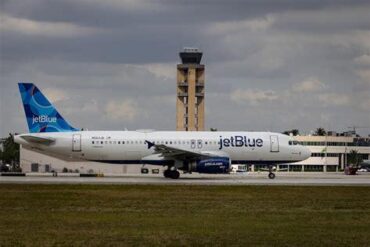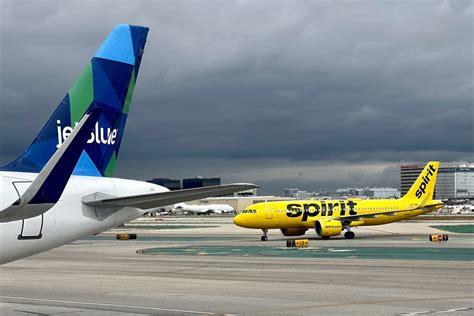
The collapse of Spirit Airlines is continuing to reshape the U.S. aviation market, with its valuable assets attracting interest from airlines and technology companies alike. At LaGuardia Airport (LGA), JetBlue Airways appears poised to secure a significant portion of Spirit’s former operating slots after the Federal Aviation Administration tentatively approved its $58.5 million bid.
The proposed transaction would give JetBlue 22 LaGuardia slots, consisting of 12 departure slots and 10 arrival slots. JetBlue narrowly outbid Frontier Airlines, which offered $57.5 million. The FAA’s decision is not yet final, however. Once the notice is officially published in the Federal Register on August 31, interested parties will have 20 days to submit comments before the transaction can move toward completion.
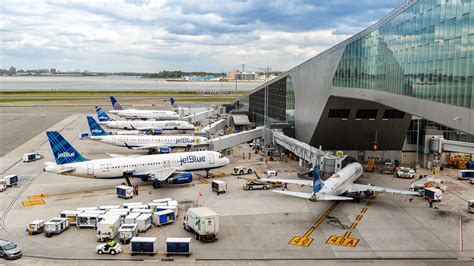
JetBlue’s $58.5 Million Spirit Slot Acquisition
The proposed deal represents a major expansion of JetBlue’s position at one of the most strategically important and slot-constrained airports in the United States. The airline currently holds 31 carrier-controlled slots at LaGuardia. Adding Spirit’s 22 slots would increase that total to 53, representing an increase of roughly 71%.
The FAA believes the transaction could provide meaningful benefits for passengers because additional JetBlue operations would strengthen competition against the dominant airlines at LaGuardia. The agency described the slots as scarce public resources and said returning them to active commercial service under a low-fare carrier could benefit consumers.
JetBlue has indicated that it intends to use the additional capacity for 12 new daily round trips, with the expanded operation expected to take effect by 2027. That could substantially increase the airline’s visibility at LaGuardia and create opportunities for new routes or additional frequencies on markets where demand is strongest.
LaGuardia’s Competitive Balance Could Shift
Even after acquiring the Spirit slots, JetBlue would remain far smaller than the two dominant carriers at LaGuardia. Before the transaction, JetBlue controlled approximately 2.7% of the airport’s 1,141 carrier-held slots. Its new position would rise to about 4.6%.
That figure is particularly interesting because a 5% share has historically been used as a benchmark for identifying airlines with a limited presence at slot-constrained airports. JetBlue would therefore approach that threshold without becoming a major slot holder.
By contrast, Delta Air Lines and American Airlines control 838 slots, or approximately 73.4% of the total. Delta alone accounted for 44.6% of LaGuardia capacity during summer 2026 schedules, according to OAG data cited in the reference material. JetBlue’s expansion will not overturn that structure, but it could give the carrier greater leverage in competing for passengers.
The crucial question will be whether JetBlue can turn additional slot access into sustainable growth rather than simply adding flights. New capacity can put downward pressure on fares and encourage competitors to improve schedules, but profitability ultimately depends on route selection, aircraft availability, passenger demand and operating costs.
FAA Conditions Protect the Slots
JetBlue would not receive unrestricted control over the newly acquired slots. Under the FAA’s proposed conditions, the airline cannot lease the slots to another carrier before April 2028, and it will also be prohibited from selling them outright.
The FAA would retain authority to withdraw JetBlue’s access if the slots were misused. These restrictions are designed to ensure that the scarce airport capacity remains connected to active commercial service rather than becoming a financial asset that can simply be traded or leased.
For JetBlue, that makes the acquisition a strategic operating commitment. The airline will need to demonstrate that the slots can support meaningful service once the planned expansion arrives in 2027.
Google AI Faces a Different Spirit Asset Battle
Spirit’s remaining assets are attracting attention beyond aviation. Alphabet’s Google AI reportedly sought to purchase Spirit’s corporate data for approximately $10 million, potentially giving AI researchers access to valuable historical business information.
The proposed dataset reportedly includes worker emails, spreadsheets, operational records and internal chat messages. Such material can contain enormous potential value for companies developing artificial intelligence systems, but it also raises difficult questions about privacy and employee rights.
Spirit’s cabin crew union, the Association of Flight Attendants-CWA, has formally objected to the proposed sale. The union argues that the information could be sufficiently detailed to identify individual workers, creating concerns over the transfer and use of sensitive employee data.
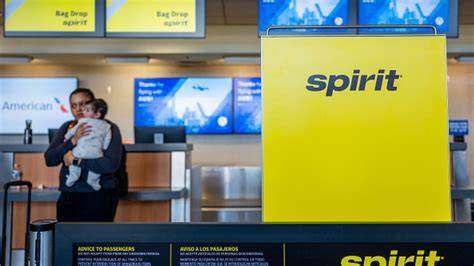
Two Very Different Bids for Spirit’s Remains
The contrast between the two transactions highlights how valuable a failed airline can remain even after it stops flying. JetBlue is pursuing physical aviation infrastructure—valuable LaGuardia operating slots that can support future flights—while Google AI is interested in the company’s accumulated digital information.
For JetBlue, the Spirit slots could become an important part of its LaGuardia growth strategy. For Google AI, Spirit’s data represents a potential training and research resource. Yet both transactions demonstrate that acquiring an asset is only the beginning: regulators, unions and other stakeholders can still determine whether that asset changes hands.
If finalized, JetBlue’s acquisition could make LaGuardia more competitive while giving the airline a substantially larger platform in New York. The next milestone is the FAA’s 20-day public comment period, after which the proposed $58.5 million transaction will face its final regulatory steps.