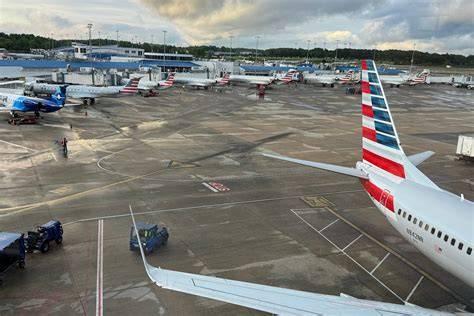
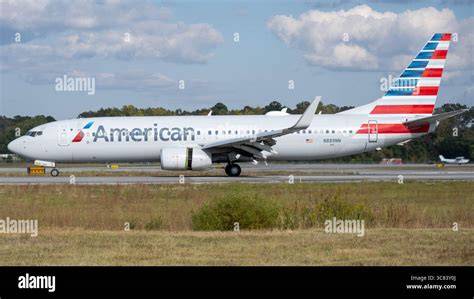
Charlotte Douglas International Airport has spent three decades being underestimated, and it has spent those same three decades quietly becoming one of the most consequential pieces of infrastructure in American aviation. American Airlines operates more than 670 daily departures from CLT on an average day, a figure that eclipses what United Airlines manages from its own largest hub at Chicago O’Hare. That statistic alone should end any conversation about whether Charlotte matters. It is not a regional waypoint or a seasonal supplement to Dallas/Fort Worth. It is the second pillar of American’s domestic network, inherited through the US Airways merger and then deliberately, methodically grown into something the airline cannot function without.
The economics behind that growth are unusually favorable. The Sun Belt has absorbed population and corporate relocations at a pace the Midwest and Northeast have not matched, turning Charlotte into a genuine origin-and-destination market rather than a pure connecting chokepoint. Layer on operating costs that remain attractive relative to peer hubs, and you have a base where American holds overwhelming local market share, runs an enormous connecting bank structure, and does so profitably. American represents a substantial share of CLT’s total business, and CLT represents a substantial share of American’s schedule. Neither party can afford a bad decade.
That mutual dependence is precisely why the airport is now spending roughly $1 billion on a fourth parallel runway that will not simply be a strip of pavement. Runway 19C/01C is being built to behave like a connected device, embedded with roughly 2,000 sensors that will stream continuous data about its own condition, stress, and behavior into a virtual replica known as a Digital Twin. It is the first major deployment of smart runway technology at a large US commercial airport, and it reframes what an airfield asset is: not a static slab to be inspected and eventually replaced, but an instrumented system that reports on itself in real time.
Charlotte’s Existing Runway Grid And Why A Fourth Strip Was Unavoidable
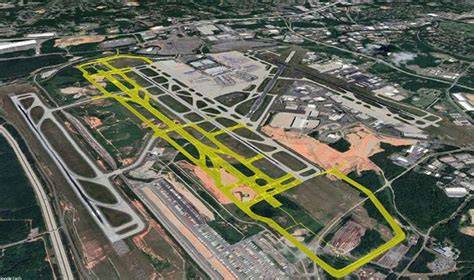
CLT currently operates three parallel runways, designated 18L/36R, 19L/01R, and 19R/01L, with the latter two renamed earlier in 2026. They measure 8,677 feet, 10,000 feet, and 9,000 feet respectively. The two 19/01 strips are concrete; 18L/36R is asphalt concrete. Critically, the three are spaced far enough apart to function independently, which permits simultaneous parallel approaches rather than the staggered, capacity-sapping choreography that constrains airports with tighter geometry.
That independence is the source of Charlotte’s throughput advantage, and it is also why the airport hit a ceiling. By 2023, ground was broken on a new runway positioned between 19L/01R and 19R/01L. Original planning called for approximately 12,000 feet, later trimmed to 10,000 feet — a length that is more than adequate for the aircraft types CLT actually handles, including the Boeing 777-300ER now flying daily between Charlotte and London. The airport did not need the longest runway in the world. It needed one more independent arrival stream and a taxiway system that stops forcing aircraft to cross active runways.
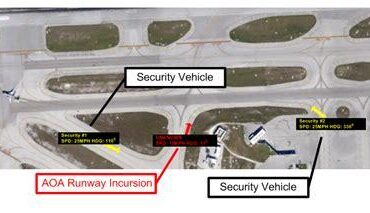
The taxiway work may ultimately prove as valuable as the runway itself. New taxiways will allow aircraft to route around the runways rather than across them, cutting taxi times and, more importantly, allowing tighter arrival sequencing. Every runway crossing removed from the ground choreography is a release valve on the whole operation, because it lets controllers keep arrival streams continuous instead of inserting gaps for crossing traffic. Capacity at a hub is rarely lost in the air. It is lost on the concrete.
Inside The Digital Twin: 2,000 Sensors And A Ten-Year Data Commitment
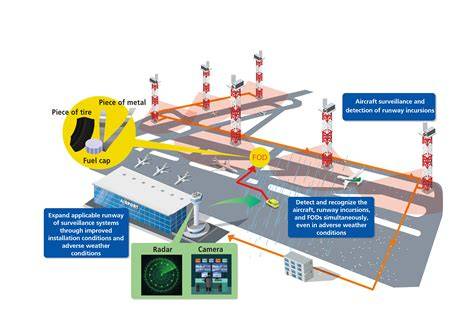
In August 2026, construction crews began installing the first of roughly 2,000 sensors embedded directly within the runway’s pavement. Each unit is about the size of a modern smartphone. Once 19C/01C enters service, those sensors will continuously measure the runway’s structural condition and the stress loads imposed on it, feeding that stream into the Digital Twin — a virtual mirror model that ingests weather, aircraft weights, temperature, moisture, pavement age, and load history to predict where and when the pavement will need attention.
The ambition is predictive maintenance at industrial scale. Runway pavement is designed to last 30 to 40 years, and the sensors themselves are specified for a ten-year lifespan. That means analysts will capture an extraordinary record across the first quarter of the runway’s service life — precisely the period when early degradation patterns reveal how design assumptions hold up against real traffic, real weather, and real aircraft mix. The $6.5 million sensor initiative is a collaboration between CLT and the UNC Charlotte Aviation Innovation & Research Institute, partially funded by a $2 million FAA grant.
What makes this genuinely novel is not the sensor hardware. Similar instrumentation has monitored bridges and highways across the United States for years, and the US military has tested comparable systems going back well before this project. Other airports have deployed limited runway-condition monitoring as well. The innovation lies in scale and duration: using thousands of these devices to construct and sustain a working digital model of an entire runway, for a decade, at an airport handling one of the largest flight volumes in the country. Charlotte is not testing whether the technology functions. It is testing whether the economics and the data architecture hold up over the long run.
The payoff extends beyond Charlotte’s boundaries. The FAA intends to use the findings to inform future airfield design guidance, which means Runway 19C/01C functions simultaneously as operational infrastructure and as a national reference case. If the model proves that sensor-informed maintenance consistently prevents costly failures and extends pavement life, smart runways become standard specification for new construction rather than an experiment. Charlotte, in other words, may end up writing the template that Denver, Detroit, and the next generation of airport expansions follow.
Construction Progress And The Path To A September 2027 Certification
By September 2026, the runway was more than 50% complete. The project had consumed well over a million labor hours and installed more than 30 miles (48 kilometers) of pipe beneath the airfield. Runway 19C/01C is now expected to open for commercial service roughly a year from that point, and it should debut with the sensor system already live rather than retrofitted afterward.
Considerable work remains. CLT must finish the runway’s asphalt shoulders, grooving, lighting, pavement markings, and equipment installations, while the associated taxiways and new movement areas also inch toward completion. The airport is building a new fire station at the southern edge of the airfield, engineered to FAA standards for the new parallel runway and connected to the movement areas in a way that requires no runway crossings — a small but telling detail that reflects how thoroughly the no-crossing philosophy has been baked into the design.
The schedule from here is concrete. Charlotte aims to finish paving in March 2027, complete markings by June 2027, and then hand the runway to the FAA for flight checking. Certification of 19C/01C is targeted for September 2027. At that point Charlotte joins an exclusive group: Denver, Detroit, Los Angeles, and Orlando are among the very few US airports operating four parallel runways, with only Atlanta, Dallas/Fort Worth, and Chicago O’Hare fielding more total runway capacity. An airport that was never considered large until relatively recently will hold infrastructure that ranks among the most capable in the country.
What Four Runways Mean For American Airlines’ Competitive Position
The operational math is straightforward and significant. When 19C/01C opens, CLT is expected to accommodate between 20% and 25% more flights than it does today. For American, that is not a marginal scheduling convenience. It is the difference between defending its Charlotte fortress and actively expanding it, at a hub where the carrier already dominates local market share and runs a dense connecting network across the eastern seaboard, the Caribbean, and beyond.
Charlotte’s structural advantages make that growth durable rather than opportunistic. The region’s economy keeps expanding, the airport’s cost structure remains favorable, and the geography supports efficient domestic connections in a way that few hubs can replicate. American has been directing recent attention toward other markets, but Charlotte possesses the location, the local demand, and the cost base to sustain a very large domestic operation indefinitely. Efficiency improvements compound that advantage: faster taxi times and tighter arrival sequencing translate directly into better aircraft utilization, which is the currency of airline profitability.
There is also a strategic dimension that goes beyond Charlotte. American has been working to close a substantial profit gap with United and Delta, and hub-level efficiency is one of the few levers fully within its control. A fourth runway that reduces ground congestion, enables more daily departures, and lowers long-run maintenance costs through predictive analytics attacks the problem from both the revenue and the cost side simultaneously. CLT’s capacity is now growing to a level that rivals some of the largest hubs in the United States, and the airline that dominates it gains room to compete on frequency, connectivity, and reliability at the same time.

Why A Self-Reporting Runway Is The Real Story
Strip away the construction milestones and the more interesting shift is philosophical. Airports have historically managed pavement reactively — inspecting, patching, and replacing after deterioration becomes measurable or, worse, after it becomes operationally disruptive. A runway that monitors its own stress loads, correlates them with weather and aircraft weight, and feeds them into a predictive model inverts that entire sequence. Maintenance becomes scheduled rather than emergency, budgets become forecastable rather than reactive, and design assumptions get tested against a decade of real evidence instead of laboratory estimates.
For a hub carrying more than 670 daily American Airlines departures, that reliability is not an abstraction. A runway closure for unplanned repairs cascades through connecting banks, crew rotations, and downstream schedules across the network within hours. Predictive maintenance protects the whole system, and the airport’s hub status is exactly what raises the stakes.
Charlotte’s bet, then, is not merely that sensors work. It is that instrumenting critical infrastructure pays for itself across decades, that the data justifies the upfront cost, and that a runway can be managed like a connected device rather than a consumable asset. If the Digital Twin delivers on that premise, the fourth runway at CLT will be remembered less for the flights it added and more for the standard it set — and the airports that follow will be building on Charlotte’s blueprint for a very long time.