A federal grand jury has indicted a California man after authorities allegedly discovered a live explosive device, multiple weapons, and a mobile phone displaying a 15-minute countdown timer in his carry-on baggage before an American Airlines flight departing from Sacramento International Airport.
The case centers on 49-year-old Kimani Osayande Jones, who was stopped by Transportation Security Administration (TSA) officers on May 30 while attempting to board an American Airlines flight bound for Charlotte, North Carolina. According to federal authorities, the items recovered from his luggage posed a serious threat and could have resulted in injuries or even damage to an aircraft had they detonated during flight.
Federal Charges Filed Following Airport Security Discovery
The indictment follows an incident that unfolded at Sacramento International Airport late in the evening, shortly before Jones was scheduled to depart on American Airlines Flight AA2464. TSA officers reportedly became suspicious during the screening process after observing unusual behavior and attire, including a face covering and blue latex gloves.
When security personnel inspected his carry-on luggage, they allegedly uncovered a collection of prohibited and dangerous items. Authorities later stated that Jones claimed he was unaware the materials were inside his bag and offered to discard them. However, the situation quickly escalated after he reportedly declined to participate in an interview with investigators, leading to his arrest.
Federal prosecutors have charged Jones with attempting to place a destructive device on an aircraft, unlawfully possessing explosive material within an airport, and attempting to carry a dangerous weapon or explosive onto an aircraft. If convicted, he could face significant prison time and substantial financial penalties.
Explosive Device and Weapons Raise Serious Concerns
Investigators described the contents of the carry-on bag as particularly alarming. Alongside everyday prohibited items, authorities recovered a knife, scissors, scissor blades, zip ties, an aerosol can, and a torch lighter allegedly capable of igniting the explosive material.
More concerning was the discovery of what officials identified as an M-type explosive device. Bomb technicians from the Sacramento County Sheriff’s Office, working alongside an FBI bomb technician, safely removed and examined the device after it was seized at the checkpoint.
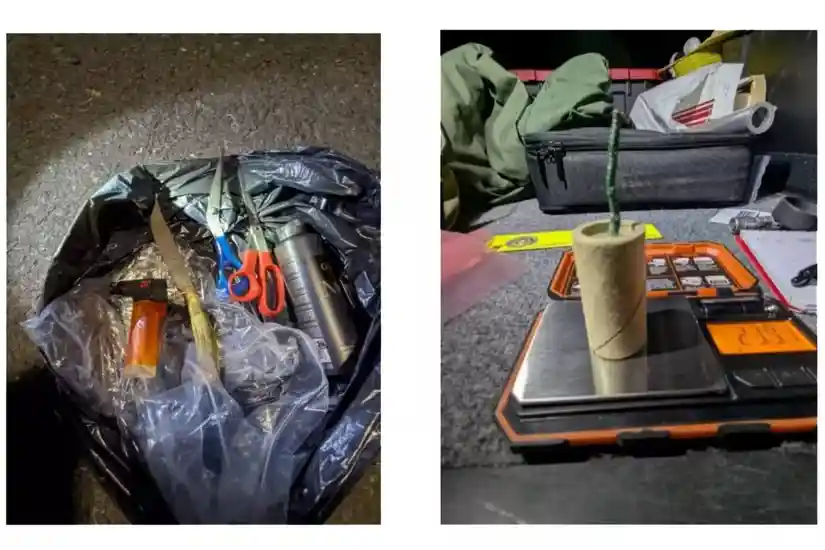
According to officials, laboratory examinations determined that both the powder and fuse associated with the device were viable and energetic. This assessment indicated that the explosive components were functional rather than inert, significantly elevating the seriousness of the incident.
Authorities emphasized that the successful detection of the device before boarding prevented what could have become a highly dangerous scenario aboard a commercial aircraft carrying passengers and crew.
Suspicious Mobile Phones and 15-Minute Countdown Timer
Among the most unusual discoveries were five mobile phones found inside the passenger’s luggage. While carrying multiple phones is not inherently illegal, investigators considered the quantity noteworthy given the surrounding circumstances.
One of the devices reportedly displayed a 15-minute timer that was prepared to begin counting down. The presence of the timer drew immediate attention from investigators because it suggested a potential method for initiating or coordinating an explosive event.
The combination of a functional explosive device, ignition sources, and electronic timing equipment prompted authorities to treat the situation as a credible aviation security threat. Investigators have not publicly detailed whether the timer was directly connected to the explosive device, but its presence formed a key component of the evidence gathered during the investigation.
Potential Consequences at Cruising Altitude
Security experts and investigators noted that the dangers associated with an explosive device increase dramatically once an aircraft reaches cruising altitude. According to TSA statements, testing determined that the recovered device had the potential to cause physical injury if detonated.
Officials further indicated that an explosion occurring near an aircraft window at altitudes above 10,000 feet could potentially damage the aircraft’s structure and contribute to cabin depressurization. While modern airliners are designed with multiple safety systems and structural redundancies, even a relatively small explosive event can create significant hazards inside a pressurized cabin.
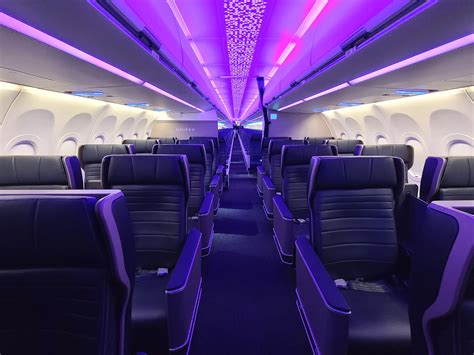
The findings reinforced the importance of airport security screening procedures, which are specifically designed to identify threats before they reach an aircraft.
The American Airlines Flight Involved
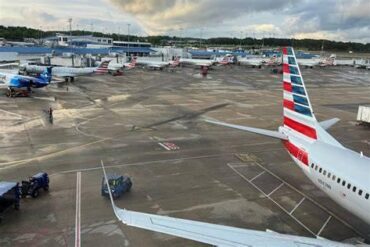
The flight involved in the incident was American Airlines Flight AA2464, a regularly scheduled overnight service connecting Sacramento, California, with Charlotte, North Carolina. Charlotte serves as one of the airline’s largest operational hubs and plays a critical role in its domestic network.
The route is typically operated using an Airbus A321 or Airbus A321neo, narrow-body aircraft capable of carrying well over 180 passengers depending on cabin configuration.
Scheduled to depart Sacramento at approximately 10:03 PM local time and arrive in Charlotte at 5:44 AM the following morning, the flight is frequently used by travelers seeking early-morning connections across the eastern United States.
The interception of the suspect before boarding ensured that neither passengers nor crew members were exposed to the potential dangers associated with the alleged explosive device. As the federal case moves forward, prosecutors will seek to prove that the recovered materials and accompanying equipment constituted a deliberate attempt to bring a destructive device aboard a commercial aircraft, an offense that federal authorities treat with the highest level of seriousness.