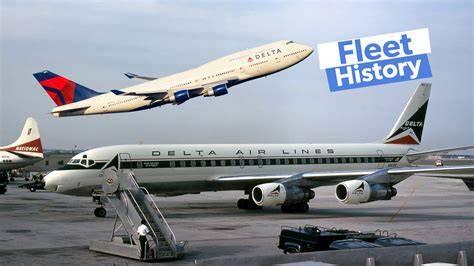
Delta Air Lines celebrated its 100th anniversary in 2025, a milestone that few carriers in the world can match. From its humble beginnings as a crop-dusting operation in the Mississippi Delta region to its current status as one of the largest and most influential airlines on the planet, Delta’s journey has been defined by the aircraft it chose to fly. Over the past century, the Atlanta-based carrier has operated a remarkable variety of aircraft types, each serving distinct missions across different eras of aviation history. Some were brief encounters, acquired through mergers or operated for only a handful of years before being phased out. Others became enduring symbols of Delta’s identity, workhorses that carried millions of passengers and shaped the airline’s reputation for reliability and service excellence.
The story of Delta Air Lines is inseparable from the story of commercial aviation itself. When the airline operated its first passenger flight in 1929, the idea of jet travel was pure science fiction. The passengers who boarded that inaugural flight would have been utterly astonished by the size, range, and sophistication of even a modest Boeing 737, let alone Delta’s current flagship Airbus A350s. Yet the thread connecting those early days to the present is the careful, strategic selection of aircraft that could meet the demands of each era while positioning the airline for future growth. Delta has merged with multiple carriers over the decades, adapted its business strategy to survive deregulation and industry consolidation, and grown into a global powerhouse. Through it all, five aircraft types stand above the rest as true definers of Delta’s century-long journey.
Travel Air S-6000-B: The Aircraft That Launched a Legacy
Delta Air Lines traces its origins to 1925, when a company called Huff Daland Dusters was founded as the world’s first aerial crop-dusting operation. The company’s early years were spent flying over cotton fields, not carrying passengers. That changed in 1928 when a group of investors led by C.E. Woolman acquired the company’s assets and incorporated Delta Air Services, naming the new venture after the Mississippi Delta region where it operated. Woolman’s vision extended beyond agricultural aviation, and he saw an opportunity to connect communities across the South through passenger service.
The new airline’s first passenger flight departed from Dallas and made its way to Jackson, Mississippi, with stops in Shreveport and Monroe along the route. The aircraft chosen for this historic service was the Travel Air S-6000-B, a six-person monoplane that represented the height of luxury for its time. The S-6000-B was marketed as essentially an airborne limousine, and it was initially positioned as a private aircraft for wealthy individuals before being adapted for commercial service. With its fully enclosed cabin, a powerful 300-horsepower Wright Whirlwind engine, a spacious interior, and even a dedicated lavatory, the S-6000-B was remarkably opulent for its day. Early airlines were drawn to its size and comfort, and Delta eventually acquired three examples of the type.
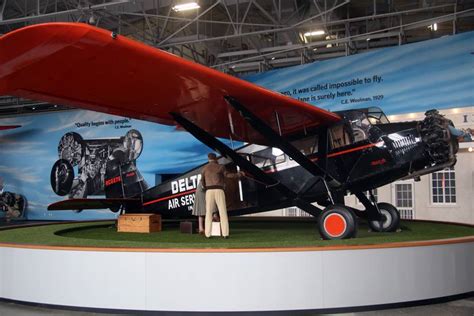
Delta operated the Travel Air S-6000-B only until late 1930, a brief blip in the airline’s long history. After a lucrative airmail contract was awarded to a competing airline, Delta ceased passenger operations entirely and returned to its roots in crop dusting, reorganizing as Delta Air Corporation. Passenger flights resumed in 1934 under the Delta Air Lines name, this time using the Stinson Model T Trimotor monoplane. The company’s name was officially changed in 1945. While the Travel Air S-6000-B was only part of Delta’s story for a short time, its significance cannot be overstated. It was the aircraft that launched Delta’s passenger service and set the airline on a path toward becoming the global carrier it is today.
Douglas DC-8: Bringing Delta Into the Jet Age
By the mid-1950s, Delta had established itself as a major player in the US domestic market, though it remained far from being the nation’s largest airline. The industry was on the cusp of a revolution. Boeing was selling its 707 jet airliner, a plane that promised to be far more capable and economical than earlier jet models like the De Havilland Comet. The 707 was an impressive aircraft, but Boeing was still a relatively new entrant in the commercial aircraft market, having last delivered a commercial aircraft in 1950 with the 377 Stratocruiser. Douglas Aircraft Company, the leading commercial manufacturer of the era, launched its own rival to the 707, the DC-8, and several airlines took notice, including Delta.
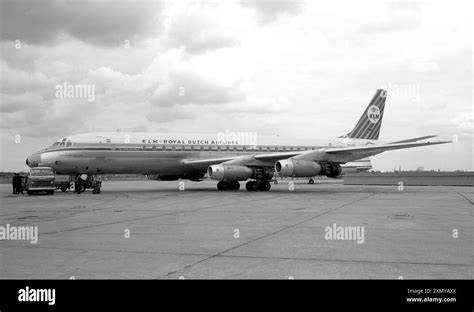
Delta had a long and successful history with Douglas propeller airliners, and the DC-8 was a compelling proposition. When rival carrier Eastern Air Lines canceled its first delivery slots, Delta moved quickly to secure them. Alongside United Airlines, Delta became a worldwide launch operator of the DC-8, with both carriers starting operations on the same day. Delta acquired 22 examples of the original DC-8 lineup, all sharing a single fuselage length with only minor variations. In 1967, the airline began receiving the stretched and improved DC-8-61, part of the Super 60 series, which offered greater capacity and efficiency.
The original DC-8s were retired by 1981, while the DC-8-61s were re-engined with CFM56 powerplants between 1982 and 1983, transforming them into DC-8-71s. Although Delta never operated a massive fleet of DC-8s, the type holds a special place in the airline’s history as its first jet airliner. These durable workhorses remained in service until Delta retired them in 1989, bridging the gap between the propeller era and the widebody age that would follow.
Lockheed L-1011 TriStar: The Widebody That Defined an Era
The Boeing 747 is often credited with revolutionizing air travel, its widebody design enabling lower per-seat costs and making flying accessible to the masses. While the 747 deserves its accolades as the first widebody, it was hardly the only revolutionary aircraft of its time. McDonnell Douglas released the DC-10 shortly after the 747, and Lockheed entered the widebody market with the L-1011 TriStar, the third American widebody. Delta did purchase a handful of 747-100s, but the airline overwhelmingly favored the TriStar, and that preference would define its fleet strategy for decades.
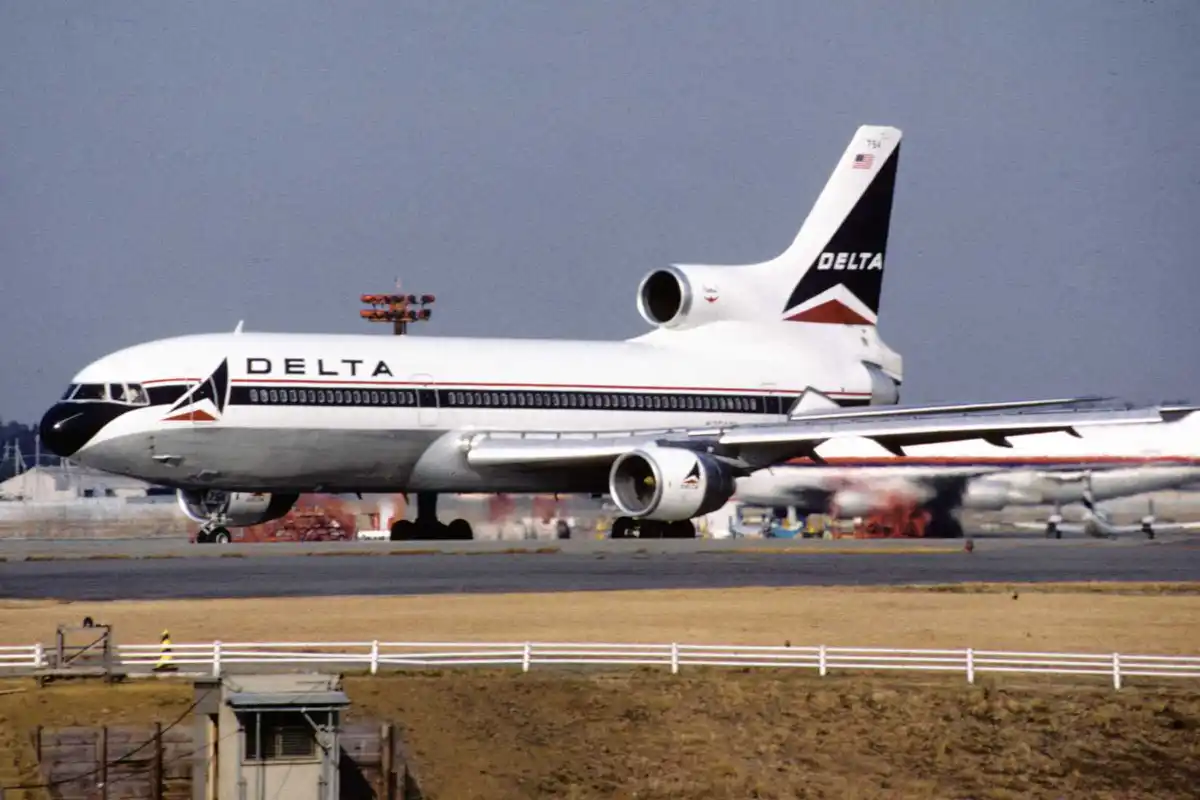
In the 1970s and 1980s, US carriers regularly deployed widebodies on shorter domestic routes, and it was common for airlines to operate large fleets of aircraft like the DC-10. Delta, however, was notable for becoming the largest TriStar customer in the world, accumulating a total of 70 examples over the 28 years it operated the type. While the L-1011 was never the largest fleet Delta operated, it was a mainstay of the airline’s operations, and no other carrier came close to matching Delta’s TriStar fleet size. Delta retired its 747-100s in 1977 and briefly operated DC-10s in the 1970s due to delays with the L-1011 program. The airline also inherited nine DC-10s from its merger with Western Airlines in the mid-1980s, though these were quickly discarded.
The L-1011s, by contrast, were Delta’s primary domestic widebody from the moment they entered service, and they remained so for decades. Delta also acquired 17 long-range L-1011-500s, mostly secondhand, which extended the type’s reach across the Atlantic and beyond. The fleet served Delta valiantly until 2001, when the last TriStars were finally retired. For a generation of travelers, the L-1011 was Delta, and its distinctive profile became synonymous with the airline’s brand of comfortable, reliable service.
Boeing 757: The Workhorse That Became Synonymous With Delta
As Boeing’s successor to the legendary 727, which was then the best-selling jet airliner of all time, the 757 was incredibly appealing to airlines around the world, Delta included. The 757 was originally launched with the Rolls-Royce RB211, marking the first time a Boeing aircraft was launched with non-US engines. Pratt & Whitney also offered its PW2000 engine on the 757 and promised ambitious fuel economy targets to Delta specifically, even agreeing to pay compensation if those targets were not met. Delta agreed to purchase 60 757s and launched the PW2000 program, setting the stage for what would become one of the most enduring relationships between an airline and an aircraft type.
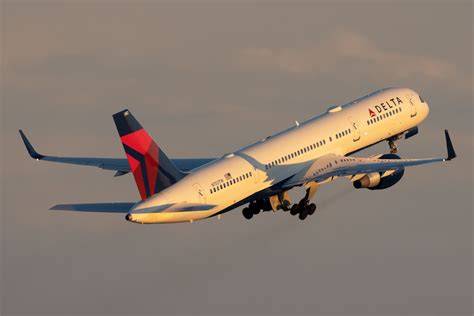
Delta grew a large fleet of 757s, as did carriers like American, Northwest, and United. The 757s were primarily used for domestic services, which was their standard mission in the 1980s and early 1990s. When ETOPS certification became widespread, Delta joined other carriers in deploying the 757 across the Atlantic, though this was never the fleet’s primary role. In 2008, Delta merged with Northwest Airlines, gaining a huge number of 757-200s and inheriting a small fleet of 757-300s. The total 757 fleet approached nearly 200 aircraft, making Delta the largest 757 operator in the world.
Although the 757 fleet has been shrinking in recent years, Delta remains notable for its commitment to the type. These aircraft continue to serve short-range domestic trunk routes, far longer than 757s flown by competitors in the past. United Airlines is now the only other passenger 757 operator in the United States, and it uses the type mainly for transcontinental and transatlantic routes. Delta, by contrast, uses its 757s to serve destinations like Orlando and Las Vegas, demonstrating the aircraft’s versatility and enduring value to the airline’s domestic network.
Airbus A350: Ushering In a New Era of Long-Haul Growth
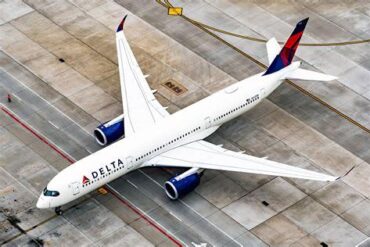
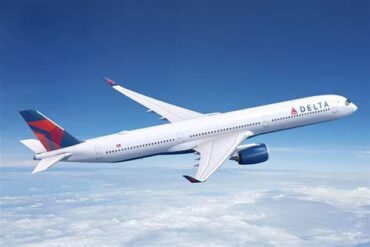
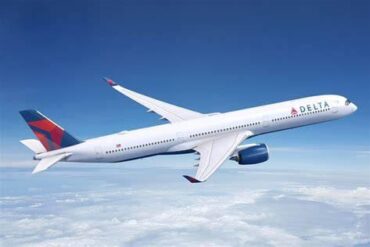
The Airbus A350 is by far the newest aircraft type on this list, and although it has served with Delta for nearly a decade, its inclusion reflects a strategic shift that may prove as consequential as any in the airline’s history. More than any other aircraft in Delta’s current fleet, the A350 represents a new focus on organic long-haul growth. Delta was historically a domestic airline, and much of its long-haul network today came from the acquisition of Pan Am’s transatlantic routes in 1991. Since then, the carrier has leaned heavily on joint venture partners Air France, KLM, and Korean Air to extend its global reach.
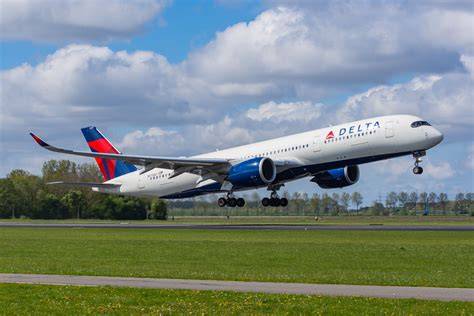
Recent market trends in the United States and new terms within Delta’s pilot contract have seen the airline commit to operating more widebody flights, with a particular focus on Asia. The A350 is the aircraft for this role, and it is being used for organic growth across the Pacific in particular. This represents the first time in decades that Delta has attempted organic network growth in this market on such a large scale. It also represents Delta challenging United Airlines in a region where United has been the undisputed market leader for decades.
Whether this initiative will succeed or fail remains to be seen, but the A350’s impact on Delta’s strategic direction is undeniable. The aircraft reflects a significant change in how Delta approaches its long-haul network, moving from reliance on partners to a more independent, growth-oriented posture. The A350 is the crucial tool in this initiative, and its role in Delta’s future will likely be as defining as the DC-8, L-1011, and 757 were in their respective eras.
A Century of Strategic Aircraft Choices
The five aircraft that have most defined Delta Air Lines’ century-long history share a common thread: each represented a strategic bet on the future. The Travel Air S-6000-B launched passenger service when the very idea was novel. The Douglas DC-8 brought Delta into the jet age and positioned it alongside the world’s leading carriers. The Lockheed L-1011 TriStar made Delta a widebody powerhouse and defined its domestic product for nearly three decades. The Boeing 757 became synonymous with Delta’s domestic network and remains a workhorse to this day. The Airbus A350 signals Delta’s ambition to grow organically across the Pacific and challenge for global leadership.
Together, these aircraft tell the story of an airline that has always looked forward while respecting its past. Delta’s ability to select the right aircraft for each era, to adapt to changing market conditions, and to extract maximum value from every fleet decision has been central to its longevity. As Delta enters its second century, the lessons of these five legendary airliners will continue to inform its strategy. The airline that once flew six-passenger Travel Air monoplanes now operates some of the most advanced widebody jets in the world, and the journey between those two points is a remarkable testament to the power of strategic fleet planning and the enduring appeal of flight.