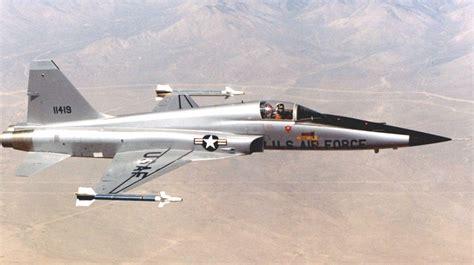
The Northrop F-5 stands as one of the most successful and widely exported light fighter aircraft in aviation history. Designed with a sharp focus on affordability, reliability, and performance, the F-5 family exemplifies the pinnacle of Cold War-era aerospace engineering. While often overshadowed by larger, more technologically complex platforms, the F-5’s role in global defense aviation has been nothing short of monumental.
Design Origins and Engineering Philosophy
The F-5’s story begins in the late 1950s, under the leadership of Edgar Schmued, a legendary figure who also led the designs of the P-51 Mustang and F-86 Sabre. Northrop’s response to NATO’s NBMR-1 requirement was radical for its time: a lightweight, cost-effective, high-performance jet fighter that could excel in close combat and serve for decades.
Schmued and chief engineer Welko Gasich pushed the idea of reversing the trend toward larger and more complex aircraft. The result was a fighter that prioritized engineered growth potential, allowing extended service life and easy modernization. Central to this vision was the use of the General Electric J85 turbojet engine, originally developed for cruise missiles. With thrust-to-weight ratios between 6.25 and 7.5, the J85 gave the F-5 an exceptional power-to-weight balance that enabled supersonic performance.
The F-5A/B Freedom Fighter: A Tactical Breakthrough
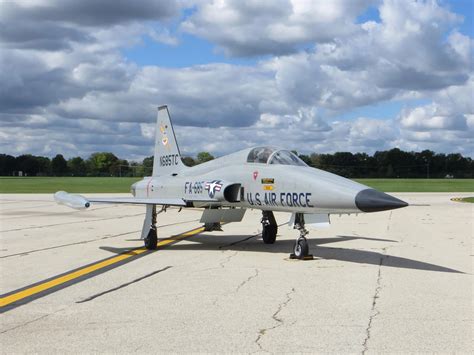
First flying on 30 July 1959, the single-seat F-5A Freedom Fighter was born out of the N-156F project. Despite early skepticism from the USAF, the Kennedy Administration endorsed the aircraft in 1962 as part of the Military Assistance Program (MAP). Northrop began deliveries in 1964, with Norway becoming the first international customer.
The F-5A and F-5B (a two-seat trainer) proved invaluable in Cold War proxy theaters. Over 1,100 Freedom Fighters were produced, many under license by Canadair and CASA. Though light, the aircraft delivered formidable air-to-ground and air superiority capabilities, especially in environments where cost and maintenance simplicity were paramount.
Tiger II Evolution: Enhanced Air Superiority
By 1970, Northrop answered calls for enhanced performance with the F-5E/F Tiger II, developed under the International Fighter Aircraft (IFA) competition. First flown on 11 August 1972, the F-5E brought significant upgrades:
- Two powerful J85-21 engines (3,600 lbf dry, 5,000 lbf with afterburner)
- Enlarged wing leading edge extensions (LEX) for better agility
- Increased fuel capacity
- AN/APQ-153 radar and later AN/APQ-159 planar array radar
- Optional air-to-air refueling, INS, ECM, and TACAN systems
The F-5F retained combat capabilities with dual seats and one M39 cannon, unlike the earlier F-5B. With production totals of 792 F-5E, 146 F-5F, and 12 RF-5E reconnaissance versions, the Tiger II became the standard for export air forces globally.
Technological Experiments and Upgrades
The F-5 became a testbed for advanced radar, cockpit modernization, and weapons integration. Among key upgrades:
- AN/APQ-159 radar boosted range to 20 nmi
- AN/APG-69 radar with ground mapping for advanced targeting
- Singapore’s F-5S/T added Grifo-F radar, AIM-120 AMRAAM, and Python missiles
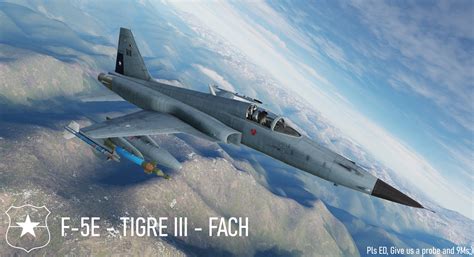
- Chile’s Tiger III Plus adopted Elta EL/M-2032 radar
- Brazil’s F-5M received the Derby BVR missile, Python IV, SMKB smart bombs, and advanced avionics
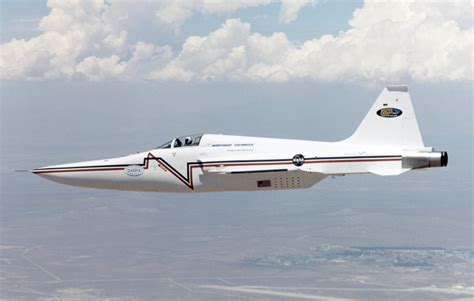
NASA even used a modified F-5E in the Shaped Sonic Boom Demonstration, showcasing its airframe adaptability.
U.S. Operational Service and Adversary Role
Though the USAF never adopted the F-5 in frontline combat, its role in testing and training was critical. From 1964, it was used in Project Sparrow Hawk and later in Skoshi Tiger, where 12 modified F-5C aircraft flew 2,600+ combat sorties in Vietnam.
The 10th Fighter Squadron, Commando extended these operations, flying over 7,300 missions, losing 9 aircraft. Despite limited deployment, the F-5 was praised for agility and reliability.
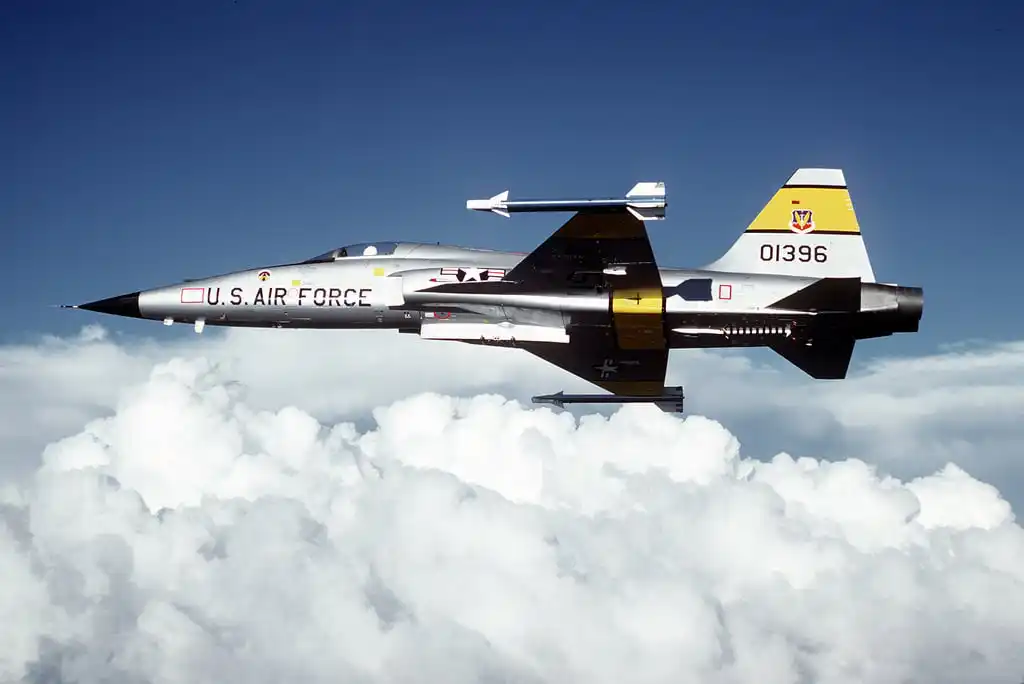
Its true American legacy lies in aggressor training. Beginning in 1975, USAF, USN, and USMC aggressor squadrons adopted the F-5E/N/F to simulate Soviet MiG-21s in Dissimilar Air Combat Training (DACT). Notable squadrons include:
- 64th and 65th Aggressor Squadrons (USAF)
- TOPGUN at NAS Miramar (USN)
- VMFT-401 at MCAS Yuma (USMC)
The 2006 acquisition of 36 low-hour Swiss F-5s rejuvenated the U.S. fleet, ensuring continued adversary training into the 2020s.
Global Adoption and Combat Proven Track Record
Brazil
Starting with a 1974 order, Brazil integrated F-5EM/FM upgrades with Grifo F radar, HOTAS, NVG, and data-link connectivity with the R-99 AEW&C fleet. These aircraft remain frontline assets.
Ethiopia
In the 1977–78 Ogaden War, Ethiopian F-5Es gained air superiority against Somali MiG-21s, scoring 25 kills in 6 weeks. Ace pilot Legesse Tefera alone claimed 6–7 aerial victories.
Iran
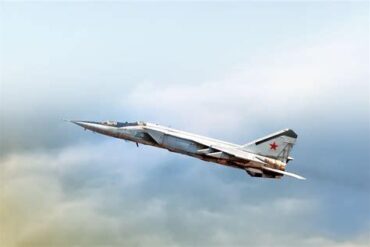
The Imperial Iranian Air Force operated over 100 F-5s pre-1979. Post-revolution, the IRIAF kept them operational during the Iran–Iraq War, reportedly downing Iraqi aircraft—including a possible MiG-25 kill in 1983. Iran’s indigenous jets Azarakhsh, Saeqeh, and Kowsar all evolved from F-5 airframes.
Singapore
A major Tiger II user, Singapore ordered 18 F-5Es and 3 F-5Fs in 1976, later upgraded to F-5S/T standard with multi-role capacity. These aircraft remained active until the early 2010s.
Morocco
Morocco deployed its F-5s extensively in the Western Sahara War, facing SAM threats and executing both strike and reconnaissance missions. Modernization included RWRs, refueling probes, and IR countermeasures.
Others
- Greece operated ~120 aircraft from 1965 to 2002.
- Norway flew 108 F-5s, retiring the last squadron in 2000.
- Mexico, Malaysia, Kenya, and Philippines integrated the F-5 into both defense and counterinsurgency roles.
- The Netherlands fielded 75 NF-5As and 30 NF-5Bs, later sold to Turkey, Greece, and Venezuela.

Legacy and Enduring Relevance
More than 3,800 F-5s and T-38s were produced between 1959 and 1987, a testament to their design resilience. The F-5 has proven adaptable to diverse combat environments, budgets, and training requirements. Its low operating cost, ease of maintenance, and combat versatility have cemented its place as one of the most enduring fighters of the 20th century.
Today, dozens of F-5s remain operational across the globe, either in active combat roles, aggressor squadrons, or strategic reserves. Even as newer platforms dominate modern skies, the legacy of the Northrop F-5 continues to influence military aviation doctrine and defense procurement strategies worldwide.