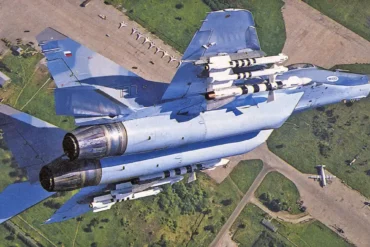
Few aircraft in military aviation history have inspired as much fascination, misunderstanding, and outright fear as the Mikoyan-Gurevich MiG-25. Known in the West as the Foxbat and often called the “Soviet flying brick” due to its immense size and angular design, this formidable interceptor forced the United States to radically rethink its air superiority doctrine, leading directly to the development of the F-15 Eagle. Despite its nickname, the MiG-25 remains a technological marvel of its time, pushing the boundaries of speed and altitude while embodying the fierce arms race of the Cold War.
The Birth of a Beast – MiG-25 Development and Design Philosophy
In the early 1960s, Soviet defense strategists faced an emerging threat: high-speed, high-altitude bombers like the American B-70 Valkyrie and the fast-reconnaissance SR-71 Blackbird. These aircraft could potentially evade traditional air defenses, demanding an entirely new class of interceptor. Thus, the MiG-25 was born, optimized for blistering speed and unprecedented altitude.

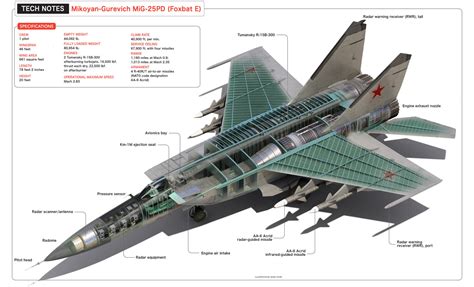
Built primarily from nickel-steel alloys to withstand the intense heat of high-Mach flight, the MiG-25 sacrificed agility for pure power and speed. It featured a pair of Tumansky R-15B-300 engines, each capable of producing over 11,000 kgf (108 kN) of thrust, allowing the aircraft to reach Mach 3.2 in emergency situations, although this often came at the cost of engine damage. Its high wing loading, limited maneuverability, and crude avionics earned it the “flying brick” moniker, but it remained a formidable interceptor, particularly against high-flying, fast-moving targets.
Legacy and Lineage – MiG-25 to MiG-31 Evolution
Despite its shortcomings, the MiG-25 laid the groundwork for its successor, the MiG-31 Foxhound, a more sophisticated, faster, and longer-range interceptor. While the MiG-31 shares the MiG-25’s basic airframe design, it boasts numerous advancements, including a new radar system, more efficient D-30F6 engines, and the ability to operate at lower altitudes and higher speeds for sustained periods. This evolution marked a significant shift in Soviet air defense strategy, extending the MiG-25’s operational concept into the 21st century.
F-15: America’s Response to the Soviet Challenge
The United States, alarmed by early intelligence suggesting the MiG-25 could outrun and outclimb any known fighter, launched the F-X (Fighter Experimental) program, culminating in the F-15 Eagle. The F-15 was designed to surpass the MiG-25 not just in speed and altitude but in maneuverability, firepower, and electronics. Unlike its Soviet counterpart, the F-15 emphasized air superiority, boasting a lightweight, high-thrust design that prioritized dogfighting agility without sacrificing speed. Its Pratt & Whitney F100-PW-100 engines offered both reliability and power, helping the Eagle achieve its now-legendary combat record of over 100 confirmed kills with no losses.

Design and Variant Differences
The MiG-25 and F-15 families evolved in parallel yet distinctly different directions. The MiG-25, initially conceived as a high-speed interceptor, inspired the MiG-31 with its reinforced structure and updated avionics, transforming it into a versatile, long-range missile platform. Meanwhile, the F-15 has continued to evolve through numerous variants, including the F-15E Strike Eagle for ground attack roles and the F-15EX with cutting-edge avionics, digital fly-by-wire controls, and increased payload capacity, ensuring its continued relevance in modern air combat.
Extreme Speed and Engine Limits
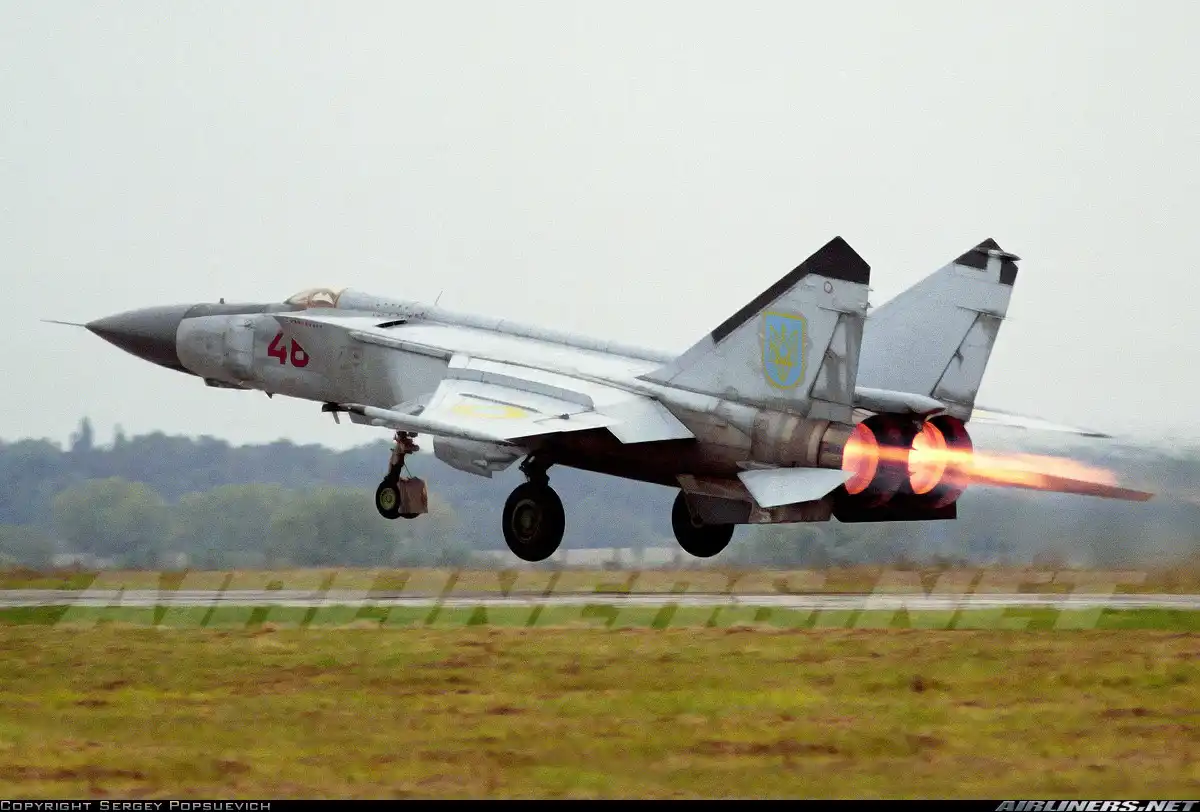
One of the most remarkable aspects of the MiG-25 was its ability to reach extreme speeds, sometimes touching Mach 3.2 during critical missions. However, this came at a significant cost. The R-15B-300 engines, originally designed for missile applications, had limited lifespans, often requiring replacement after just a few hours of maximum afterburner use. Later variants, like the R-15BD-300, extended this lifespan significantly, but the engine’s fundamental design remained a limiting factor.
Myths, Reality, and Combat Legacy
Despite its fearsome reputation, the MiG-25’s actual combat record is mixed. Its speed and altitude performance proved valuable for reconnaissance and interception, but it struggled in close-quarters dogfights against more agile Western fighters. This reality, coupled with the more balanced design of the F-15, reinforced the importance of versatility in air combat. The F-15’s combat record, boasting over 100 air-to-air kills without a single loss, stands as a testament to this philosophy.
Conclusion
From the frozen runways of Siberia to the scorching deserts of the Middle East, the MiG-25 carved out a unique place in aviation history, forcing Western engineers to rethink the very nature of air superiority. While the “Soviet flying brick” may be retired, its influence on modern air combat continues, a lasting legacy of speed, power, and the ever-present drive to push the limits of technology.