The evolution of Soviet and Russian commercial aviation tells a tale of ambition, engineering resilience, and strategic adaptation in a world dominated by Western aerospace powers. From the post-WWII jet age to the technologically burdened 21st century, Russia’s aerospace sector has delivered a lineage of airliners that, despite economic and political headwinds, have carried millions across vast distances. Below, we explore five pivotal airliners that have defined the nation’s commercial air transport from Soviet times to modern-day Russia.
The Sukhoi Superjet 100: Russia’s Modern Comeback Attempt
In the early 2000s, the Sukhoi Superjet 100 (SSJ100) emerged as Russia’s bold re-entry into the competitive world of regional jetliners. Developed by Sukhoi Civil Aircraft, the SSJ100 first took flight in 2008 and entered service in 2011, with Aeroflot among its launch customers.
Despite high hopes and a modern fly-by-wire system, the Superjet faced considerable hurdles from the outset. Engineered with the help of international partners, it included French-built engines and Western avionics, enabling it to gain EASA certification in 2012—a symbolic nod of approval from Europe.
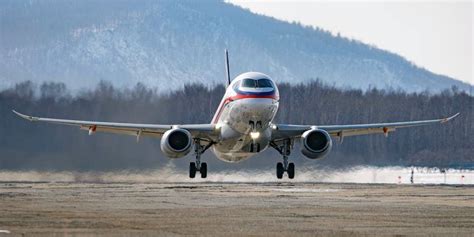
However, the geopolitical aftershocks following Russia’s 2022 invasion of Ukraine triggered sanctions that revoked its European certifications and cut off access to crucial foreign-made components. Russia has since sought to “Russify” the SSJ100 with domestic alternatives like the PD-8 engine, but this adaptation process has delayed further deliveries and clouded its production outlook. As of early 2024, the aircraft’s future remains precarious—trapped between international isolation and domestic dependency.
Tupolev Tu-154: The Workhorse of Soviet Regional Aviation
For decades, no aircraft symbolized Soviet-era air travel as dominantly as the Tupolev Tu-154. Conceived in the mid-1960s, the Tu-154 was designed to replace the aging Tu-104 and serve the Soviet Union’s sprawling domestic and international networks. With over 1,000 aircraft built, it became one of the most prolific tri-jet airliners outside the Western world.
The Tu-154’s rugged trijet configuration, which bore a striking resemblance to the Boeing 727, was tailored for unprepared airfields and harsh Arctic environments—a necessity given the USSR’s geography. Its versatility allowed it to operate in remote Siberian outposts, as well as in international destinations across Eastern Europe, Asia, and even Africa.
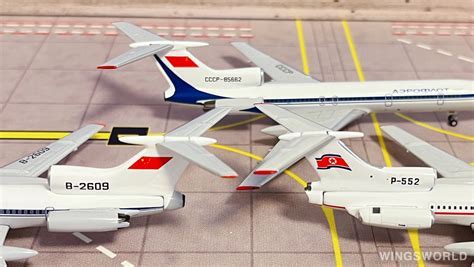
Despite safety criticisms and its high fuel consumption, the Tu-154 remained in civil service until 2020, when Russian carrier Alrosa performed its final commercial flight with the type. The aircraft still sees occasional use by military and government operators, but its civil aviation chapter has conclusively closed.
Yakovlev MC-21: Russia’s Answer to the Boeing 737 MAX
The Yakovlev MC-21, previously developed under the Irkut brand, is perhaps the most technically ambitious Russian airliner since the fall of the Soviet Union. Intended to rival the Airbus A320neo and Boeing 737 MAX, the MC-21 was designed with advanced composite wings, a roomy cabin, and modern engine options, including the Pratt & Whitney PW1400G and Russia’s own PD-14.
Though it made its maiden flight in 2017, only a handful of prototypes have been produced due to repeated production delays, Western sanctions, and the loss of international suppliers. Sanctions introduced in 2022 halted access to composite materials and avionics systems from abroad, forcing Russia to accelerate a domestic overhaul of the supply chain.
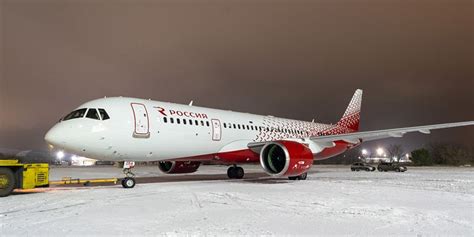
With over 300 orders on the books, mostly from Russian airlines, the aircraft is now scheduled for service entry in 2025–2026, pending successful completion of Russified certification and systems testing. The MC-21’s eventual success or failure will serve as a barometer for Russia’s long-term ability to independently compete in the global commercial aircraft market.
Ilyushin Il-86: The Soviet Union’s First Widebody Airliner
Launched into service in 1980, the Ilyushin Il-86 holds the distinction of being the first widebody passenger jet developed by the Soviet Union. A response to the growing dominance of Western giants like the Boeing 747 and Airbus A300, the Il-86 represented a leap forward in Soviet aerospace engineering.
The aircraft could accommodate over 350 passengers and featured a twin-aisle configuration, catering to increasing domestic travel demand and improving passenger comfort. However, its performance was hampered by outdated Kuznetsov engines, which were less fuel-efficient and heavier than Western counterparts.
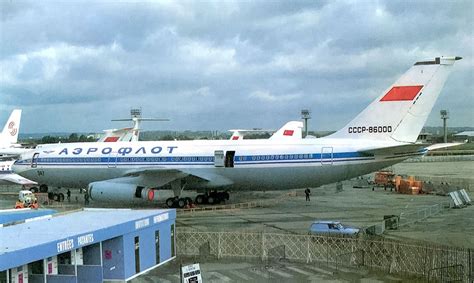
Production ran from 1976 to 1991, ceasing shortly after the USSR’s dissolution. A mere three aircraft were exported—ironically to China—while the rest served with Aeroflot and a handful of state carriers. The Il-96, its intended successor, struggled to gain traction, leaving Russia without a viable competitor in the widebody market for decades.
Today, no Il-86s are in civil operation, though a few airframes are preserved or repurposed for training or storage. Yet, it remains a monumental symbol of Cold War aviation ambition.
Tupolev Tu-205 (Tu-204): The Soviet 757 Contender
Developed during the final years of the Soviet Union, the Tupolev Tu-205 (commonly known as Tu-204) was envisioned as the region’s answer to the Boeing 757. First flown in 1989, the Tu-204 featured a twin-engine, narrowbody layout with modern avionics and a range suitable for both domestic and international routes.
The aircraft was built to carry 142 to 215 passengers, depending on configuration, and was offered with Russian PS-90 engines or Rolls-Royce RB211s for export models. Despite solid design fundamentals, the Tu-204 suffered from chronic production delays, limited manufacturing capacity, and a lack of financial backing in post-Soviet Russia.
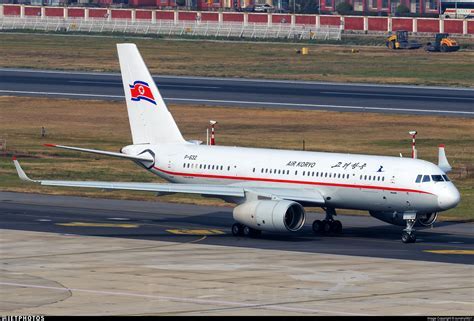
As of 2024, only 90 aircraft have been produced, many of which have found homes in Russian charter airlines, North Korea’s Air Koryo, and briefly in Cuba’s Cubana de Aviación. The Tu-204 continues to operate in niche roles, including government and cargo variants, and production is slated to continue until at least 2030, albeit at minimal volumes.
The aircraft’s legacy is one of missed potential—a technically competent platform overshadowed by economic instability and global competition.
Conclusion: Legacy and the Limits of Isolation
From the pioneering Il-86 to the currently suspended MC-21, Russian and Soviet-built airliners have charted a course that is at once ambitious and constrained. They were designed not only to serve an immense national network but to project technological independence on the global stage. However, that ambition has often collided with economic hardships, bureaucratic inertia, and in recent times, crippling geopolitical sanctions.
Today’s efforts to indigenize production and reduce reliance on Western components signal both resilience and necessity. But without access to global markets, cutting-edge technologies, or large-scale foreign orders, Russia’s future in commercial aviation remains bounded by the very isolation it seeks to overcome.