Military aviation evolves rapidly. New fighters, bombers, and surveillance platforms appear every decade, each promising revolutionary performance and cutting-edge technology. Yet a fascinating contradiction exists within the world’s most powerful air forces: some of the most important aircraft in service today were designed more than half a century ago.
These aircraft were born during the early Cold War, an era defined by intense geopolitical rivalry and rapid military innovation. Engineers at the time embraced a philosophy of over-engineering, structural strength, and operational resilience, creating aircraft that could survive extreme environments and decades of evolving mission demands. Instead of being replaced, these platforms continuously evolved through avionics upgrades, new engines, modular sensor systems, and digital warfare capabilities.
Today, these enduring aircraft act as technological foundations. Their airframes remain largely unchanged, but their internal systems are constantly upgraded, allowing them to operate effectively alongside modern stealth fighters, satellites, and advanced missile systems. The result is a remarkable group of aircraft that have served for generations—and will likely continue flying for decades to come.
Below are six military aircraft with the longest service lives, each representing a unique blend of engineering brilliance, adaptability, and historical significance.
6. Boeing KC-135 Stratotanker – The Backbone of Global Aerial Refueling
Introduced in 1957, the Boeing KC-135 Stratotanker has spent nearly seven decades enabling one of the most important capabilities in modern warfare: aerial refueling.
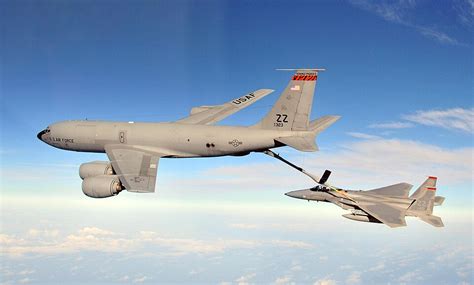
Based on the design of the early Boeing 707 jetliner, the KC-135 transformed military aviation by allowing aircraft to refuel while airborne. This innovation extended mission ranges dramatically, allowing fighters, bombers, and surveillance aircraft to travel vast distances without landing.
In practical terms, the tanker network created by the KC-135 allows the United States and its allies to project air power across the entire globe. Fighter jets can launch from distant bases and reach operational zones thousands of miles away while maintaining combat readiness.
For example, F-22 Raptors deploying from Alaska to Japan rely heavily on tanker support to sustain high-speed flight across the Pacific. Without aerial refueling, such rapid redeployment would be nearly impossible.
The KC-135’s design prioritized durability and simplicity. Its airframe proved remarkably resilient, allowing thousands of flight hours without significant structural fatigue. Over time, the aircraft received numerous upgrades, including:
- Modernized cockpit avionics
- Improved navigation systems
- Enhanced communication suites
- Engine upgrades for improved efficiency
Although the Boeing KC-46 Pegasus is gradually replacing the Stratotanker, the transition has been slower than expected due to development challenges with the newer platform. As a result, many KC-135 aircraft continue operating today and will likely remain in service into the 2030s.
For an aircraft derived from one of the world’s earliest jetliners, the KC-135 remains one of the most strategically important aircraft in the skies.
5. Lockheed U-2 Dragon Lady – The High-Altitude Intelligence Legend
First introduced in 1956, the Lockheed U-2 Dragon Lady remains one of the most extraordinary reconnaissance aircraft ever built.
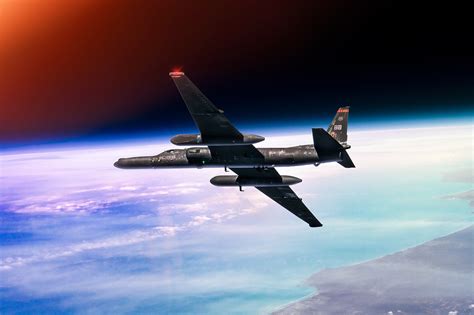
Designed during the height of Cold War espionage, the U-2 was created to fly higher than enemy interceptors and surface-to-air missiles could reach. Its slender wings and lightweight structure allow it to operate at astonishing altitudes exceeding 70,000 feet, placing it near the edge of the atmosphere.
Flying at these altitudes presents unique challenges. The margin between the aircraft’s maximum speed and stall speed can shrink to as little as 13 mph, forcing pilots to maintain extremely precise flight control for hours at a time.
The cockpit environment is equally demanding. At such altitudes, atmospheric pressure is too low to support human life. Pilots therefore wear full pressure suits similar to those used by astronauts, ensuring survival in case of cabin decompression.
Despite the rise of satellite surveillance and unmanned drones, the U-2 remains valuable because of its remarkable flexibility. Unlike satellites, which follow predictable orbital paths, the U-2 can be rapidly deployed to emerging intelligence hotspots.
Its internal systems have undergone continuous modernization. Recent upgrades introduced an open-mission avionics architecture, allowing the aircraft to integrate new sensors quickly. This modular design enables rapid adaptation to evolving intelligence requirements.
Modern U-2 missions often include:
- Signals intelligence collection
- High-resolution aerial imaging
- Advanced synthetic aperture radar surveillance
- Data relay between older and newer aircraft
The aircraft can even serve as a communication bridge between fourth-generation fighters and stealth aircraft like the F-35, translating data across incompatible systems.
With a payload capacity of over 5,000 pounds of advanced sensors, the Dragon Lady continues to play a crucial role in modern intelligence operations. Although retirement is planned later this decade, its nearly 70-year operational life stands as a remarkable achievement in aviation engineering.
4. Lockheed C-130 Hercules – The Most Versatile Military Transport Ever Built
Few aircraft in history can match the Lockheed C-130 Hercules in terms of adaptability and global impact.
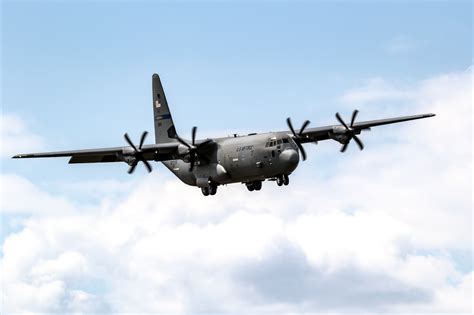
Introduced in 1956, the C-130 has achieved the longest continuous production run of any military aircraft. More than 70 countries operate the Hercules, using it for an astonishing variety of missions.
Originally designed as a tactical airlifter, the aircraft’s high-wing configuration and rugged landing gear allow it to operate from unprepared runways, dirt strips, and remote airfields where most aircraft cannot land safely.
The rear cargo ramp enables rapid loading of heavy equipment, vehicles, and paratroopers, making it invaluable for military logistics and humanitarian missions alike.
Over time, the Hercules evolved into a multi-role platform, supporting numerous specialized variants:
- AC-130 Gunship – Provides close air support with heavy cannons and precision missiles
- KC-130 Tanker – Refuels aircraft and helicopters mid-air
- EC-130 Compass Call – Conducts electronic warfare operations
- WC-130 Hurricane Hunter – Flies directly into tropical storms to collect weather data
This extraordinary versatility has ensured the aircraft’s continued relevance across generations.
Modern versions, particularly the C-130J Super Hercules, incorporate major technological upgrades. The aircraft now features a fully integrated glass cockpit, digital flight systems, and powerful Rolls-Royce AE 2100D3 turboprop engines.
These engines deliver approximately 25% greater thrust and 15% improved fuel efficiency, extending the aircraft’s operational capability and reliability.
Even after nearly seventy years, no aircraft matches the Hercules in its unique combination of cargo capacity, rugged field performance, and relatively low operating cost. As a result, analysts expect the global C-130 fleet to remain operational well into the 2060s.
3. Tupolev Tu-95 Bear – The Loudest Strategic Bomber Ever Built
Among the most recognizable aircraft in military aviation is Russia’s Tupolev Tu-95 Bear, a massive strategic bomber that first entered service in 1956.
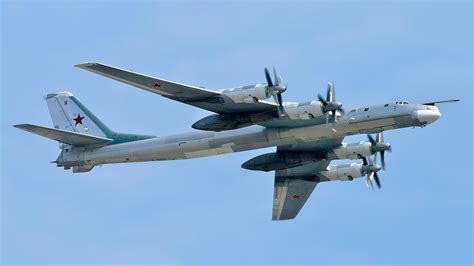
Unlike most strategic bombers, which rely on jet engines, the Tu-95 uses four powerful Kuznetsov NK-12 turboprop engines driving distinctive contra-rotating propellers. Each engine powers two eight-bladed propellers rotating in opposite directions, creating tremendous thrust.
This unusual configuration allows the aircraft to achieve speeds of around 575 mph (925 km/h) while maintaining excellent fuel efficiency for long-range missions.
However, the design also produces an extraordinary side effect: the Tu-95 is widely considered the loudest aircraft ever built. The propeller tips rotate faster than the speed of sound, producing a distinctive acoustic signature detectable by sensors hundreds of miles away.
During the Cold War, NATO radar stations frequently tracked Tu-95 patrol flights near Western airspace. Even today, the aircraft continues conducting long-range strategic patrols.
Modernized variants such as the Tu-95MS and Tu-95MSM carry advanced long-range cruise missiles including the Kh-101 and Kh-102. These weapons can strike targets over 3,000 miles away, allowing the bomber to remain far outside enemy air defenses.
Interestingly, many operational Tu-95 aircraft were built during the 1980s and early 1990s, making them younger than their design suggests. Continuous modernization programs have upgraded navigation systems, electronic warfare equipment, and weapons integration.
Russia currently plans to keep the Tu-95 in service until at least 2040, extending the operational life of this remarkable bomber to nearly 85 years.
2. Boeing B-52 Stratofortress – The Bomber That Refuses to Retire
Few aircraft symbolize endurance better than the legendary Boeing B-52 Stratofortress, which first entered service in 1955.
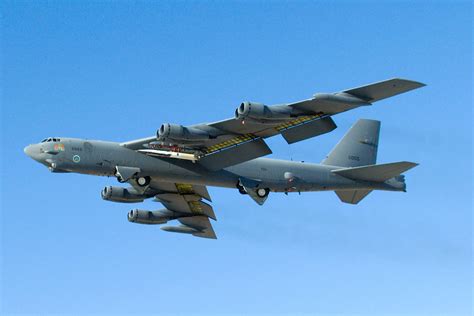
Nicknamed the “BUFF” (Big Ugly Fat Fellow) by its crews, the B-52 has served as the backbone of the United States Air Force’s strategic bomber fleet for more than seven decades.
Its longevity stems largely from its immense structural strength and incredible payload capacity. The aircraft can carry up to 70,000 pounds of bombs, missiles, and other ordnance, making it one of the most capable weapons platforms ever built.
Over the years, the B-52 has participated in nearly every major U.S. military conflict, including:
- The Vietnam War
- Operation Desert Storm
- Operations in Afghanistan and Iraq
Continuous upgrades have kept the bomber relevant in modern warfare. New radar systems, digital avionics, and advanced targeting technologies allow the aircraft to deliver precision-guided munitions with extraordinary accuracy.
In the coming decades, the B-52 will evolve into a long-range missile carrier, supporting stealth aircraft such as the B-21 Raider. While stealth bombers penetrate heavily defended airspace, the B-52 will remain at safer distances and launch advanced weapons, potentially including hypersonic missiles.
Another advantage is its endurance. With aerial refueling, the aircraft can remain airborne for extremely long missions, limited mainly by crew fatigue rather than fuel capacity.
Major modernization programs are currently underway, including new Rolls-Royce F130 engines, improved radar systems, and upgraded electronic warfare equipment. These improvements are expected to keep the aircraft operational until at least 2050, meaning the B-52 could achieve nearly 100 years of active service.
1. Antonov An-2 Colt – The Indestructible Biplane That Defied Time
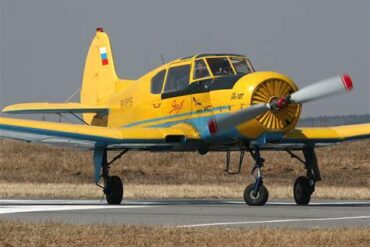
The longest-serving military aircraft on this list may also be the most surprising. The Antonov An-2 Colt, first introduced in 1947, remains operational today in several countries.
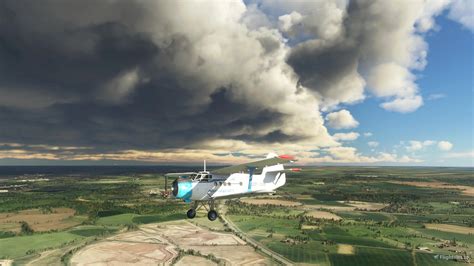
At first glance, the aircraft looks like a relic from the early days of aviation. Its biplane configuration, radial engine, and fabric-covered wings resemble designs from the 1930s.
Yet this rugged aircraft possesses flight characteristics that modern aircraft still struggle to replicate.
One of the An-2’s most remarkable traits is its extremely low stall speed. Thanks to automatic leading-edge slats, the aircraft can maintain controlled flight at speeds as low as 25–30 mph when facing a strong headwind.
In some conditions, the aircraft can even appear to hover or move backward relative to the ground while maintaining full control.
The An-2 was designed to operate in the most remote regions of the Soviet Union, where runways were often little more than dirt fields. It requires minimal ground support and can take off in approximately 560 feet while landing in about 705 feet.
Because the airframe consists largely of wood and canvas, the aircraft also has a naturally low radar signature. This unusual characteristic has led some militaries, including North Korea, to use the An-2 as a covert infiltration platform for transporting special operations forces.
In recent conflicts, the aircraft has even found new life as an unmanned drone platform. During the Nagorno-Karabakh conflict and the war in Ukraine, modified An-2 aircraft were reportedly used as expendable drones to trigger enemy air defenses.
Despite its simple appearance, the An-2 remains a fascinating example of engineering practicality. More than 75 years after its introduction, the aircraft continues to perform missions that modern high-tech aircraft cannot easily replicate.
Why Some Military Aircraft Last for Generations
The extraordinary longevity of these aircraft reveals an important truth about military engineering. Longevity is rarely accidental. Instead, it emerges from robust structural design, adaptable mission architecture, and continuous technological upgrades.
Rather than replacing entire aircraft fleets every decade, military planners often choose to modernize proven platforms, installing new avionics, engines, sensors, and weapons systems inside durable airframes.
This approach offers several advantages:
- Lower development costs
- Proven operational reliability
- Rapid integration of new technology
- Extended service life for existing fleets
Aircraft like the B-52, C-130, and U-2 demonstrate how a strong foundational design can evolve across generations of technology.
Conclusion
The history of military aviation is often associated with speed, stealth, and revolutionary breakthroughs. Yet some of the most important aircraft ever built achieved greatness through longevity rather than novelty.
From the B-52 Stratofortress approaching a century of service to the Antonov An-2 continuing to fly decades after its introduction, these aircraft represent engineering philosophies focused on durability and adaptability.
Their continued presence in modern air forces proves that when an aircraft is designed with structural strength, operational flexibility, and upgrade potential, it can transcend generations of technology.
In an age where many systems become obsolete within years, these legendary aircraft demonstrate that exceptional design can endure for nearly a century in the skies.