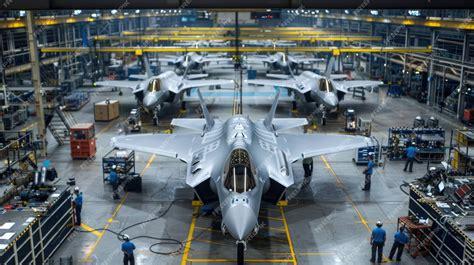
Military aviation is usually associated with cutting-edge technology, stealth fighters, hypersonic weapons, and next-generation aircraft. However, some of the most successful military aircraft in service today are designs that first appeared decades ago. Their continued production is not a sign of outdated technology. Instead, it reflects a rare combination of reliability, adaptability, affordability, and proven battlefield performance.
The world’s longest-running military aircraft production lines demonstrate that a well-designed aircraft can remain relevant far beyond its original expectations. While fighter aircraft often become outdated quickly because of rapid advances in sensors and weapons, transport aircraft, helicopters, and upgraded tactical platforms can evolve continuously through new engines, avionics, and mission systems.
These aircraft have survived because manufacturers and military operators understood one important principle: a proven platform with constant modernization can often deliver more value than an entirely new design. From the Lockheed Martin C-130 Hercules to the Boeing F-15 Eagle, these aircraft represent decades of engineering evolution and operational experience.
Lockheed Martin C-130 Hercules: The World’s Longest-Running Military Aircraft Production Line
Production began: 1954
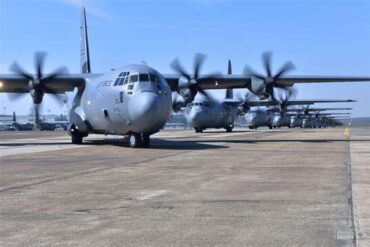
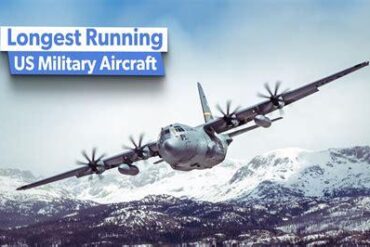
The C-130 Hercules holds the distinction of being the longest continuously produced military aircraft in history. First flown in the 1950s, the Hercules was created as a tactical transport aircraft capable of operating from short and poorly prepared airfields. More than seven decades later, the aircraft remains one of the most important airlift platforms in the world.
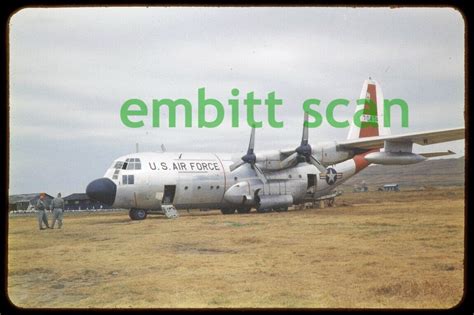
The original concept behind the C-130 was relatively simple: create a rugged aircraft that could move troops, equipment, and supplies into difficult environments. That straightforward philosophy became one of its greatest strengths. Unlike many specialized aircraft that became limited by changing technology, the Hercules was designed with enough flexibility to accept major upgrades.
Over the years, Lockheed and later Lockheed Martin developed more than 40 military and civilian variants. The aircraft has served as a cargo transporter, airborne command center, aerial refueling aircraft, maritime patrol platform, gunship, weather reconnaissance aircraft, and special operations support aircraft.
The current production model, the C-130J Super Hercules, represents a significant transformation from the original aircraft. It features modern Rolls-Royce AE 2100 engines, advanced composite propellers, digital avionics, improved performance, and greater efficiency. Although the airframe design dates back to the 1950s, the aircraft delivered today shares little operational capability with the earliest versions.
The continued success of the C-130 comes from its unmatched versatility. Developing a completely new aircraft for the same missions would require enormous investment while providing only limited advantages. Military forces around the world already have maintenance systems, pilot training programs, and operational experience built around the Hercules family.
Because of this, the C-130 remains a rare example of a military aircraft that has effectively bridged multiple generations of aviation technology.
Bell UH-1 Huey Family: The Helicopter Line That Became a Military Icon
Production began: 1956
Few military aircraft have achieved the cultural recognition of the Bell UH-1 Huey. Originally developed for the United States Army, the helicopter entered service in 1959 and became internationally recognized during the Vietnam War, where it performed troop transport, medical evacuation, command, and combat support missions.
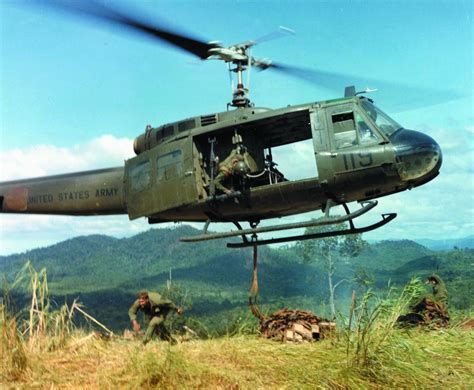
The Huey represented a major shift in military aviation because it was among the first widely deployed turbine-powered helicopters used by the US military. Its speed, reliability, and ability to operate in challenging environments made it a revolutionary aircraft during the middle of the 20th century.
The basic Huey design proved extremely adaptable. Instead of replacing the aircraft completely, Bell continued developing improved versions with stronger engines, better electronics, and enhanced survivability.
Today, the Huey lineage continues through the UH-1Y Venom and the AH-1Z Viper. While these helicopters have significantly different roles, they share common systems and components, allowing the US Marine Corps to reduce maintenance complexity and training requirements.
The UH-1Y Venom serves primarily as a utility and transport helicopter, while the AH-1Z Viper is designed for attack missions. Both aircraft incorporate modern glass cockpits, advanced sensors, digital flight controls, and improved weapons capabilities.
The continued evolution of the Huey family demonstrates how military aircraft do not always need a completely new design to remain effective. A reliable foundation combined with modern technology can extend an aircraft’s operational life for generations.
Boeing CH-47 Chinook: Six Decades of Heavy-Lift Helicopter Production
Production began: 1962
The Boeing CH-47 Chinook is one of the most recognizable helicopters ever built and remains a cornerstone of military heavy-lift operations. Developed by Vertol in the late 1950s before becoming part of Boeing, the tandem-rotor helicopter entered US Army service in 1962.
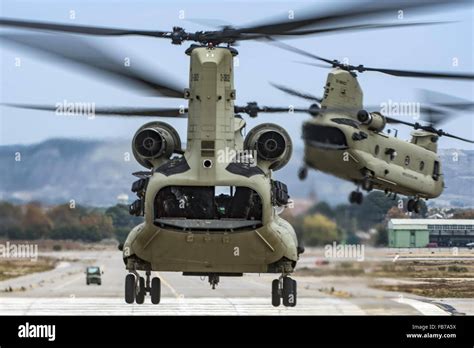
Unlike conventional helicopters, the Chinook uses two large counter-rotating rotors, eliminating the need for a tail rotor and allowing it to carry heavy payloads efficiently. This configuration gave the aircraft exceptional lifting capability and stability.
The Chinook has supported military operations across the world, transporting troops, artillery, vehicles, disaster relief supplies, and special operations forces. Its ability to carry large loads while operating in difficult environments has made it valuable for both combat and humanitarian missions.
The current CH-47F Block II represents one of the most advanced versions of the aircraft. It includes upgraded engines, improved avionics, enhanced structural components, and increased payload capability. Boeing has also continued producing the MH-47G special operations variant for demanding missions.
One of the reasons the Chinook production line has remained active for more than six decades is that its core mission has not fundamentally changed. Armies still need a reliable heavy-lift helicopter capable of moving equipment quickly without requiring extensive infrastructure.
The US Army has chosen modernization rather than replacement, with upgraded Chinooks expected to remain operational well into the 21st century.
Boeing F-15 Eagle: A Fighter Aircraft Production Line That Defied Expectations
Production began: 1972
The Boeing F-15 Eagle represents one of the most successful fighter aircraft programs in aviation history. Developed by McDonnell Douglas as an air superiority fighter for the US Air Force, the aircraft entered service in 1976 after being designed to counter emerging threats during the Cold War.
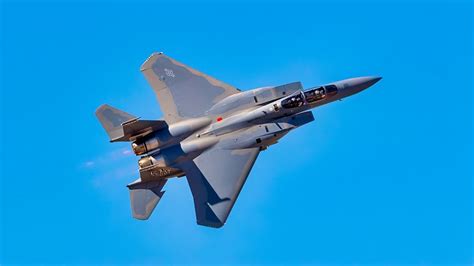
The F-15 was built around one clear objective: achieve air dominance. Its powerful engines, advanced aerodynamics, large radar system, and high maneuverability made it one of the most capable fighters of its generation.
For decades, the aircraft maintained an extraordinary combat record. Its reputation was strengthened by its effectiveness in numerous international operations and by its exceptional air-to-air performance.
Although many fourth-generation fighters have been replaced by stealth aircraft, the F-15 continued evolving. After McDonnell Douglas merged with Boeing in 1997, Boeing developed upgraded versions, including the F-15E Strike Eagle and the modern F-15EX Eagle II.
The F-15EX includes advanced avionics, an improved electronic warfare system, a modern radar, fly-by-wire controls, and increased weapons capacity. These upgrades allow the aircraft to perform missions that would have been impossible for the original F-15 design.
The continued production of the F-15 proves that not every mission requires stealth technology. A heavily armed, long-range fighter with modern sensors can still provide significant combat capability at a lower cost than developing an entirely new aircraft.
Lockheed Martin F-16 Fighting Falcon: The Enduring Multirole Fighter
Production began: 1973
The F-16 Fighting Falcon became one of the most widely operated military aircraft in the world after its introduction. Originally developed by General Dynamics, the aircraft was designed as a lightweight, highly maneuverable fighter that could provide advanced capability at a lower cost.
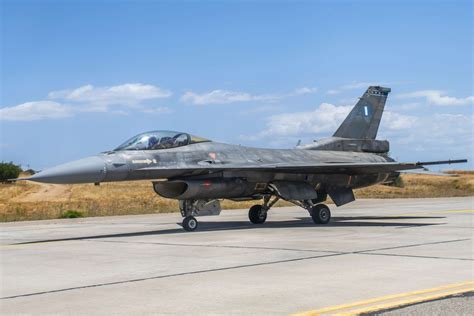
The prototype F-16 appeared in 1973, and the aircraft entered US Air Force service in 1980. General Dynamics later transferred the program to Lockheed, which eventually became Lockheed Martin after its merger with Martin Marietta.
The F-16’s success came from its combination of agility, affordability, and upgrade potential. The aircraft was intentionally designed with aerodynamic instability, allowing exceptional maneuverability when combined with its fly-by-wire control system.
Modern versions, especially the F-16V Viper, have transformed the original fighter into a highly advanced combat aircraft. The upgraded model includes an active electronically scanned array radar, improved cockpit displays, modern electronic warfare systems, and enhanced mission computers.
Many older F-16s can also receive similar upgrades, extending their service lives and maintaining their combat relevance.
With thousands of aircraft operated by air forces around the world, the F-16 remains one of the most important fighter platforms ever produced. Its continued manufacturing shows how a successful design can adapt to changing military requirements for more than half a century.
Why These Aircraft Production Lines Continue Surviving
The longest-running military aircraft production lines share several common characteristics. They are not successful simply because they are old. They remain active because they continue solving important military problems effectively.
Modern aircraft development is extremely expensive and time-consuming. A new clean-sheet design requires enormous research investment, new supply chains, new training systems, and years of testing. For many missions, upgrading an existing platform provides nearly the same operational benefit at a much lower cost.
These aircraft also benefit from decades of reliability data. Military operators understand their strengths, weaknesses, maintenance requirements, and battlefield performance. That knowledge is difficult to replace.
The continued production of the C-130, Huey family, Chinook, F-15, and F-16 demonstrates a central truth in military aviation: innovation does not always mean replacing the old. Sometimes, the smartest approach is continuously improving a proven aircraft until it becomes a completely new capability built on a legendary foundation.