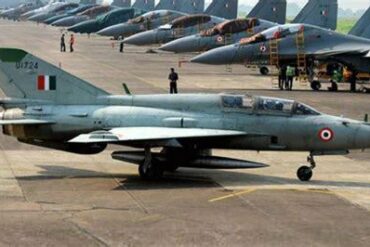
Commercial aviation rarely looks backward. It is an industry obsessed with efficiency curves, fuel burn charts, and regulatory math. Yet high above cargo corridors, remote government airfields, and specialist mission zones, a peculiar mechanical species continues to operate with quiet defiance: the three-engined jet. Once the elegant compromise between early twinjets and hulking four-engine giants, the trijet now occupies a narrow but fascinating niche. These aircraft are no longer mainstream, but they are far from extinct. They persist because they still solve very specific problems better than anything else.
The trijet era emerged from a moment when aviation technology and regulation were misaligned. Early jet engines were powerful but not yet trusted for long overwater or remote operations with only two powerplants. Four engines solved the safety question but imposed brutal penalties in weight, complexity, and cost. Three engines offered balance. Redundancy without excess. Range without oversizing. Flexibility without fragility. The result was an entire generation of aircraft that reshaped route networks, airport design, and airline economics.
By the early 2000s, most of these aircraft vanished from passenger schedules, pushed aside by ultra-reliable twin-engine designs and tightening noise and emissions standards. Yet in 2026, a small but compelling collection of trijets remains active. Some haul freight. Some serve governments. One launches rockets. Others quietly ferry executives across oceans. Each tells a story not of obsolescence, but of adaptation.
Why Three Engines Once Made Perfect Sense
The logic behind three engines was rooted in both physics and policy. Early turbofans lacked today’s reliability metrics, and regulators imposed strict limits on how far twin-engine aircraft could fly from diversion airports. This effectively blocked long overwater and polar routes for twins, while four-engine jets were expensive overkill for many missions.
A third engine offered redundancy without the drag and maintenance burden of a fourth. Trijets could operate from shorter runways, handle hot-and-high conditions more confidently, and meet safety rules that twins could not. Mounting the engines at the rear also kept wings aerodynamically clean, improving cruise efficiency and reducing cabin noise.
The configuration became especially attractive for airports with limited infrastructure. Aircraft like the Boeing 727 could land at fields that lacked long runways or advanced ground equipment, thanks to features such as built-in airstairs and robust landing gear. Trijets were not just airplanes; they were problem-solvers.
Boeing 727: The Trijet That Defined an Era
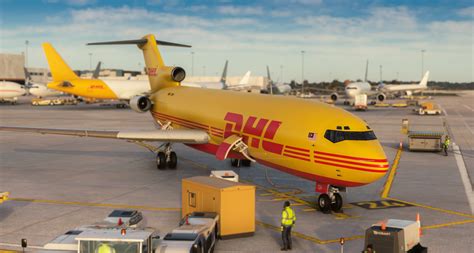
The Boeing 727 did more than popularize the trijet layout; it normalized jet travel for hundreds of smaller cities. First flown in 1963, the 727 was engineered for a world where many airports were short, lightly equipped, and far from major hubs. Its three Pratt & Whitney JT8D engines, mounted at the rear in a distinctive T-tail configuration, delivered impressive performance while keeping foreign object damage risks low.
Airlines embraced the design with enthusiasm. Over 1,800 examples were built, making the 727 the most successful trijet in history. It became the backbone of domestic networks across North America and beyond, operating reliably into airports that could not accommodate larger jets. The aircraft’s versatility was legendary, from its steep-approach capability to its self-contained boarding systems.
By the 1990s, however, the economics turned against it. Fuel prices rose, noise regulations tightened, and twinjets like the Boeing 737 and Airbus A320 family proved they could do the same work more efficiently. Passenger services disappeared first, but the airframe itself proved stubbornly durable.
In 2026, only a handful of Boeing 727s remain airworthy, almost all in specialized roles. Converted freighters continue to serve niche cargo markets where acquisition cost matters more than fuel efficiency. Governments and militaries operate others for transport and training. A few aircraft function as flying laboratories or zero-gravity platforms, exploiting the 727’s robust structure and predictable handling.
What keeps the 727 alive is not nostalgia, but practicality. It is fully paid for, mechanically well understood, and capable of operating where newer jets are either too expensive or unnecessary. Its continued presence is a reminder that good engineering ages gracefully.
DC-10 and MD-11: Widebody Trijets Built for Heavy Lifting
If the 727 was the trijet of regional expansion, the McDonnell Douglas DC-10 represented its leap into the widebody age. Designed to carry large payloads over long distances, the DC-10 entered service in 1971 at a time when airlines needed capacity but could not yet rely on twins for intercontinental routes.
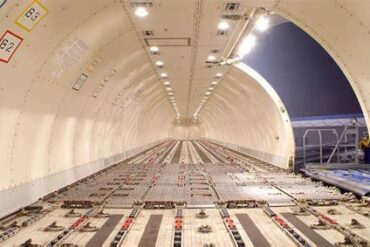
The aircraft’s early reputation was marred by high-profile accidents, most notably the crash of American Airlines Flight 191. Yet subsequent investigations led to design improvements, and the DC-10 went on to build a long and productive career. Its spacious fuselage and strong floor structure made it especially attractive for cargo conversion.
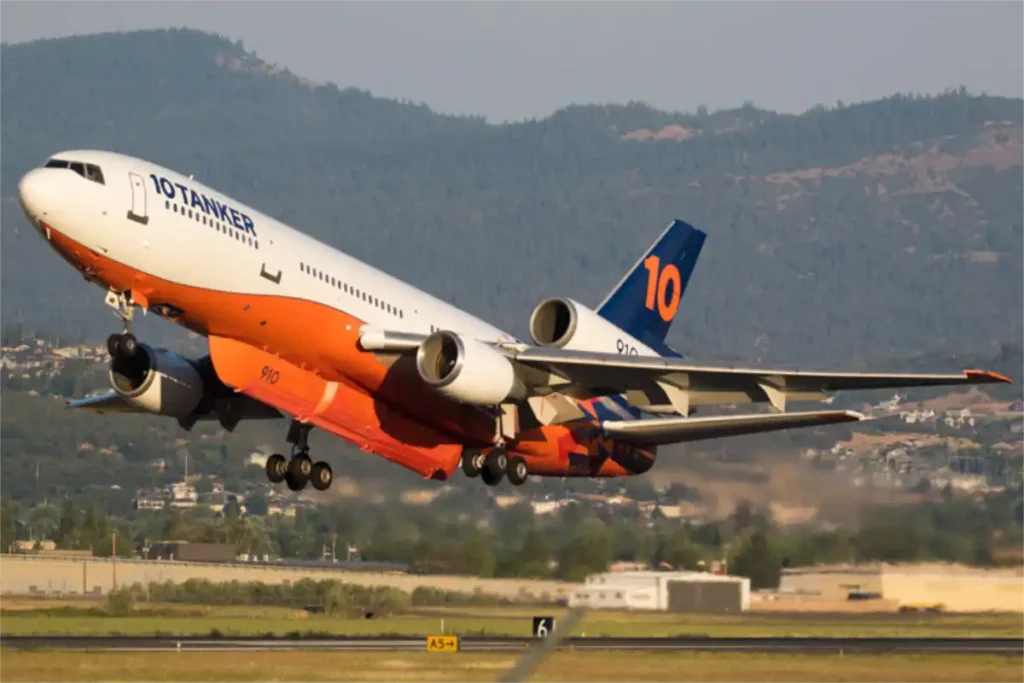
The MD-11, introduced in 1990, was an ambitious attempt to modernize the DC-10 concept. It featured advanced avionics, a two-crew cockpit, more efficient engines, and aerodynamic refinements. On paper, it promised impressive fuel savings and extended range. In reality, it fell short of some performance targets, particularly in passenger service, arriving just as highly efficient twin-engine widebodies began to dominate the market.
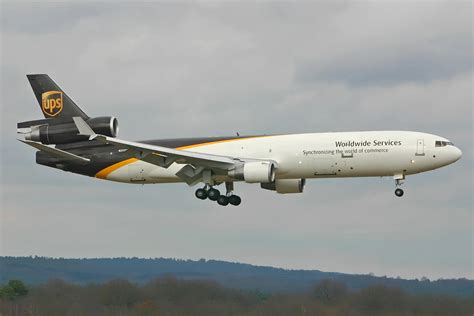
Passenger operators phased out both types by the mid-2010s, but cargo carriers saw enduring value. The MD-11, in particular, found a second life as a long-range freighter. Its ability to carry heavy payloads over intercontinental distances made it a favorite for express carriers.
As of early 2026, roughly 70 MD-11s remained airworthy, almost all in cargo service. FedEx and Western Global Airlines continued to operate significant fleets, while UPS’s final retirement of the type marked a symbolic turning point. Even so, the MD-11 stands as the last widely used commercial trijet, a bridge between analog aviation and the digital age of flight management systems and glass cockpits.
The DC-10 survives in even more specialized roles. Firefighting tankers rely on its payload capacity to deliver massive volumes of retardant. Refueling aircraft exploit its endurance. Humanitarian missions, such as flying hospitals, depend on its cavernous interior. These aircraft are no longer common, but where they fly, nothing else quite replaces them.
Lockheed L-1011 TriStar: One Aircraft, One Extraordinary Mission
Among aviation enthusiasts, few aircraft inspire the affection reserved for the Lockheed L-1011 TriStar. Sleek, quiet, and technologically ambitious, it was arguably the most advanced widebody of its generation. Its automated flight control systems reduced pilot workload, and its Rolls-Royce RB211 engines delivered smooth, reliable power once early development issues were resolved.
Commercially, the TriStar suffered from timing and circumstance. Engine delays slowed deliveries, and competition from the DC-10 limited market share. Only 250 examples were built, and most left airline service by the early 2000s.
Yet one TriStar refuses to retire.
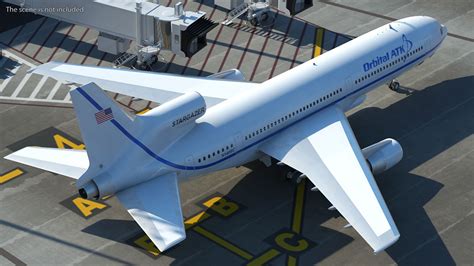
Registered as N140SC and operated by Northrop Grumman, the aircraft known as “Stargazer” serves as the launch platform for the Pegasus rocket system. Taking off from conventional runways, it carries orbital rockets to high altitude before releasing them into space. This role exploits the TriStar’s strength, stability, and generous payload capability in a way no modern airliner could easily replicate.
In 2026, Stargazer remains the only airworthy L-1011 in the world. Its continued operation is not a museum piece in motion, but a functional, mission-critical asset. Few aircraft better illustrate how a design can outlive its original purpose by finding a new one entirely.
Russian Trijets: Built for Harsh Realities
While Western aviation moved decisively toward twin-engine fleets, trijets persisted longer in the Soviet Union and its successor states. Geography played a major role. Vast distances, limited infrastructure, and extreme weather demanded aircraft that were robust, self-sufficient, and tolerant of rough operating conditions.
The Yakovlev Yak-40 was among the world’s first regional jets, entering service in the late 1960s. Designed to operate from short, unpaved runways, it carried around 30 passengers and required minimal ground support. Its three small engines provided redundancy and reliability in remote regions.
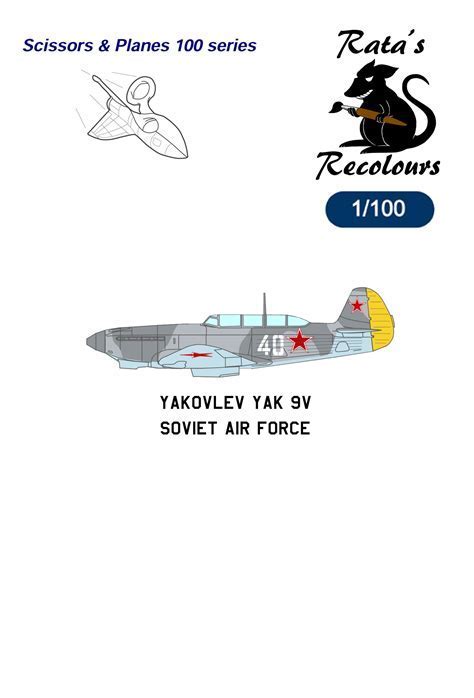
Despite its age, dozens of Yak-40s remain active in 2026, mostly in charter, government, and utility roles. Many have been reconfigured for VIP transport or specialized missions, proving the durability of the original design.
The Yak-42, a larger successor, followed a similar philosophy on a bigger scale. Fewer than 200 were built, but nearly two dozen continue to fly, valued for their toughness and ability to operate where newer aircraft might struggle.
The most famous of these designs is the Tupolev Tu-154. Often compared to the Boeing 727, it served as the backbone of Soviet and post-Soviet air transport for decades. Over 1,000 were built, and although commercial operations have effectively ended, around 25 remain active in military and government service across Russia, China, and Central Asia.
These aircraft are rarely visible on Western flight tracking platforms, yet they continue to fulfill essential roles. Their persistence is less about sentiment and more about suitability. In environments where infrastructure is sparse and conditions are unforgiving, rugged engineering still matters.
Dassault Falcon Trijets: Where the Concept Never Died
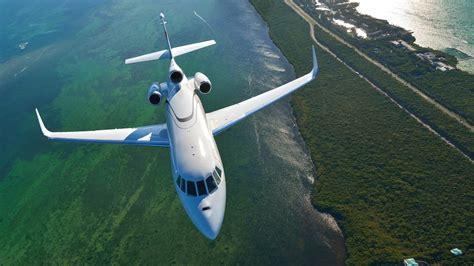
While commercial airlines abandoned the trijet, business aviation quietly perfected it. Dassault Aviation recognized early that corporate and government operators value different metrics than airlines. Range, runway performance, and redundancy often outweigh fuel burn per seat.
The Falcon trijet family, beginning with the Falcon 50 and evolving through the Falcon 900, 7X, and 8X, demonstrated how three engines could thrive in a modern context. These aircraft offer exceptional short-field capability, allowing access to airports off-limits to larger business jets. The third engine enhances performance in hot-and-high conditions and provides additional reassurance for long overwater flights.
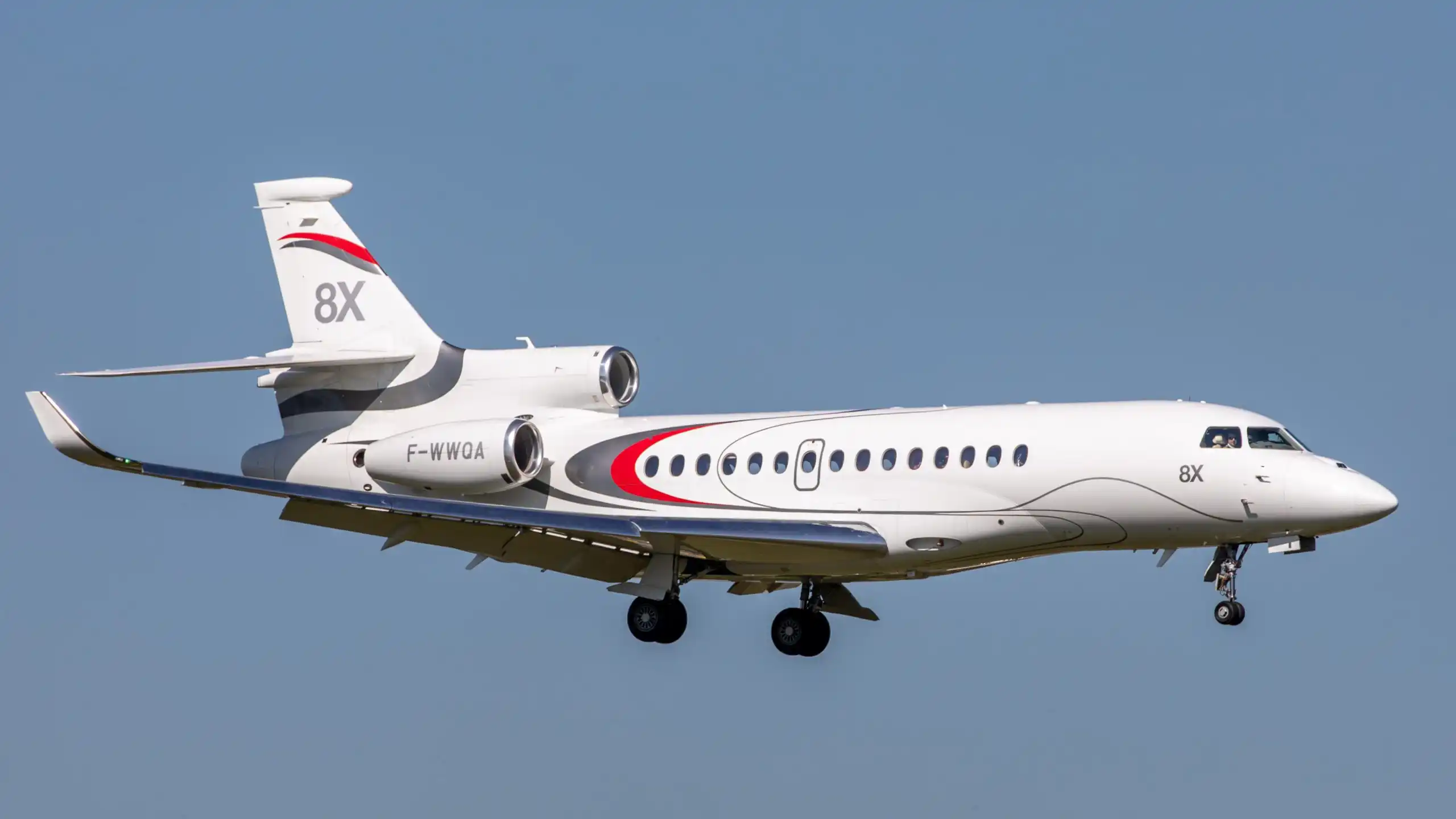
Unlike legacy trijets, these aircraft are not survivors on borrowed time. Hundreds remain active worldwide, and newer variants continue to serve at the highest end of the business aviation market. Advanced avionics, fly-by-wire systems, and efficient engines have kept them competitive well into the 2020s.
In many ways, Dassault’s Falcons represent the trijet concept refined rather than preserved. They are proof that the configuration itself was never flawed; it was simply mismatched to the economics of mass airline transport.
Why These Aircraft Still Matter in 2026
The survival of three-engined aircraft is not an accident. Each remaining operator has made a deliberate calculation that the benefits outweigh the drawbacks. Fully depreciated airframes reduce capital costs. Unique performance characteristics enable missions that newer aircraft cannot easily replicate. Specialized roles reward capability over efficiency.
These trijets also serve as living case studies in engineering philosophy. They reflect an era when designers solved problems with hardware rather than software, redundancy rather than optimization. Their continued operation highlights the diversity of aviation needs beyond the tidy assumptions of airline spreadsheets.
The Trijet’s Legacy in Modern Aviation
Although no new commercial trijets are likely to enter airline service, their influence persists. Concepts pioneered on these aircraft shaped modern design thinking, from systems redundancy to cockpit ergonomics. They trained generations of pilots and engineers, many of whom carried those lessons into the development of today’s aircraft.
The last three-engined aircraft still flying are not ghosts of aviation’s past. They are working machines, adapted to roles that value their strengths. From cargo corridors to space launch platforms, from executive travel to remote state missions, the trijet continues to earn its keep.
In an industry that relentlessly pursues the next efficiency gain, these aircraft offer a different lesson. Longevity is not just about being new. Sometimes, it is about being exactly right for the job, even decades later.