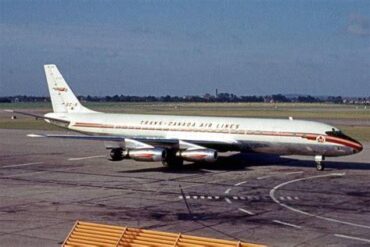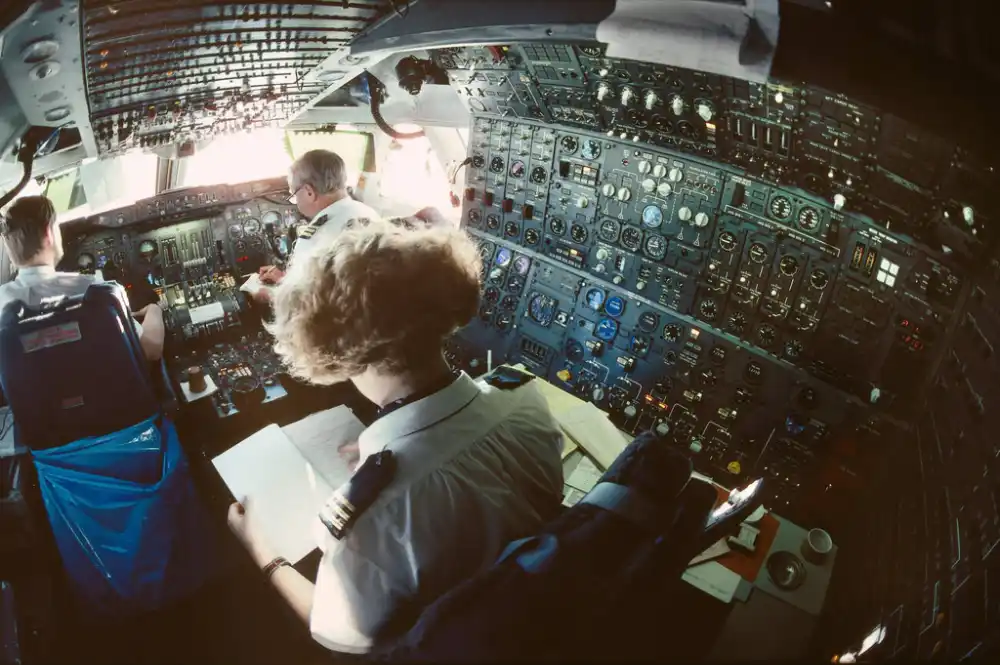
The quiet disappearance of the flight engineer from American cockpits did not arrive with drama or ceremony. It arrived through software updates, blinking screens, and the steady replacement of analog dials with digital logic. Yet the last plane in America built with a flight engineer represents something far larger than a staffing change. It marks the end of a philosophy of flight that trusted human judgment over automation, redundancy over efficiency, and tactile systems over invisible code. In tracing that final aircraft, the story becomes one of technological ambition, cultural change, and the relentless march toward autonomy.
For decades, the flight engineer was the invisible backbone of long-haul aviation. While pilots commanded the aircraft, the engineer commanded the machine itself, constantly balancing fuel, monitoring pressurization, watching temperatures, and anticipating failures before warning lights ever appeared. These professionals were not assistants; they were system managers in an era when aircraft demanded constant mechanical attention. Their disappearance reshaped cockpit culture as profoundly as the introduction of jet engines themselves.
Understanding which aircraft was truly the last American plane with a flight engineer depends on how narrowly the term “American” is defined. Commercial, military, experimental, and niche platforms each tell a slightly different version of the same ending. Together, they form a definitive closing chapter in US aviation history.
Why Flight Engineers Once Defined Long-Range Aviation
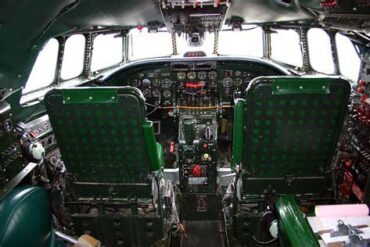
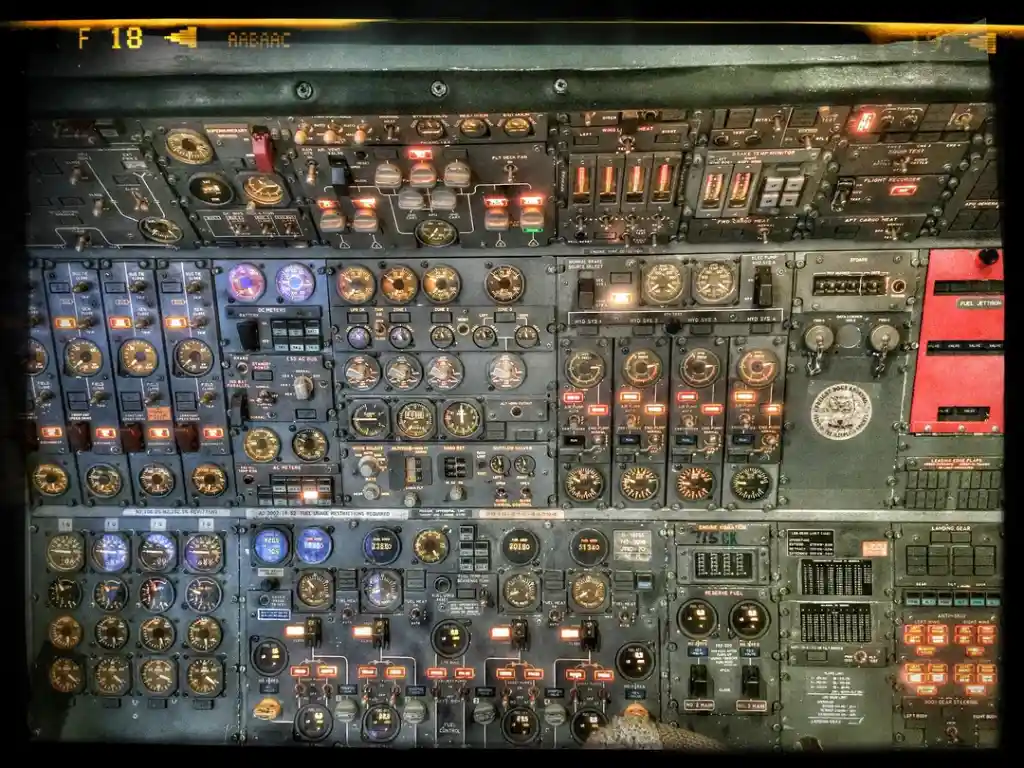
The flight engineer emerged because early large aircraft were not self-managing machines. They were complex, interdependent systems that required continuous human oversight. Fuel did not simply flow automatically to maintain balance. Electrical loads had to be manually distributed. Cabin pressure demanded constant adjustment. Engines needed vigilant temperature and vibration monitoring. Every phase of flight introduced new variables, and the engineer’s panel existed to wrestle those variables into submission.
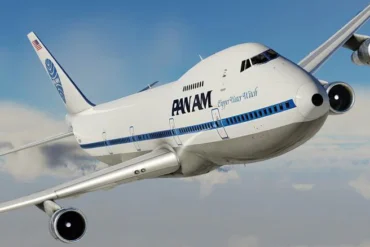
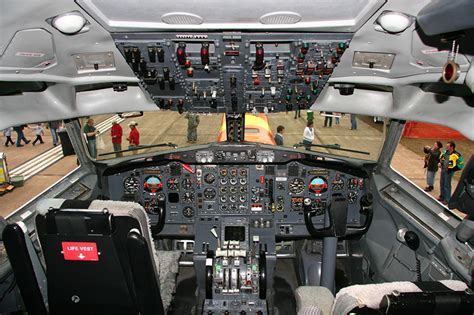
In aircraft like the Boeing 707, Boeing 727, Boeing 747-100 and 747-200, Douglas DC-8, and Lockheed L-1011 TriStar, the flight engineer sat behind the pilots, surrounded by an expansive console of switches, gauges, and circuit breakers. This was not a passive position. During takeoff and climb, engineers actively managed power settings, fuel sequencing, and system health. During cruise, they optimized efficiency while guarding against cascading failures. In emergencies, they were often the difference between diversion and disaster.
This three-crew cockpit was not a luxury. It was a necessity imposed by technological limits. Computers were neither fast nor reliable enough to assume these responsibilities, and redundancy came in the form of human expertise rather than silicon logic.
The Technological Shift That Made Engineers Obsolete
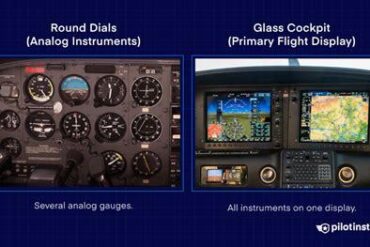
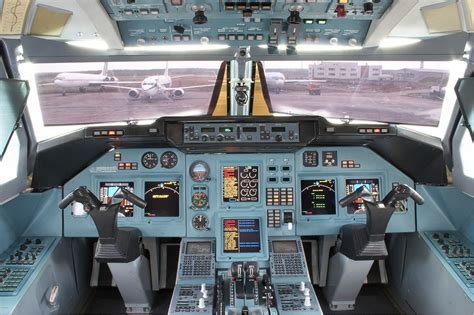
The elimination of the flight engineer was not driven by airlines seeking smaller crews alone. It was driven by a revolution in electronics. The arrival of compact, powerful microprocessors in the late 1970s and early 1980s transformed aircraft design. Digital engine controls replaced manual throttling logic. Fuel management computers eliminated the need for constant balance adjustments. Integrated warning systems replaced dozens of individual gauges with prioritized alerts.
By the time aircraft such as the Boeing 767, Airbus A310, Airbus A300-600, and later the Boeing 747-400 entered service, cockpit automation had reached a threshold. Systems no longer required continuous human mediation. Instead, they required supervision. Two pilots could safely manage aircraft that were both larger and more capable than their three-crew predecessors.
This transition did not happen overnight. Early widebodies still included flight engineer stations, but they increasingly functioned as backups rather than necessities. Eventually, manufacturers eliminated the station entirely, redesigning flight decks around glass cockpits and centralized computers.
Defining “The Last Plane” Depends on the Category
If the question is limited strictly to US-built commercial passenger aircraft, the answer becomes remarkably precise. The final American commercial airplane delivered with a dedicated flight engineer station was a Boeing 747-200, completed in 1991. That aircraft, a 747-200F freighter, carried manufacturer serial number 25171 and was originally delivered to Nippon Cargo Airlines. Unlike later jumbo variants, it retained the classic three-crew cockpit design.
This aircraft still exists today, flying under Iranian registration as EP-FAB. Its continued operation underscores the durability of these older designs and the enduring relevance of flight engineers where automation remains limited. In this narrow commercial sense, 1991 marks the definitive end of the flight engineer era in American civilian aircraft production.
However, aviation history rarely fits neatly into a single category.
Military Aviation Extended the Engineer’s Lifespan
While commercial production moved on, the US military continued purchasing aircraft designs rooted in older platforms. The Boeing E-3 Sentry, based on the 707 airframe, required a flight engineer due to its legacy systems and mission complexity. These aircraft remained in production into 1992, making them the last US-built military aircraft delivered with a flight engineer station.
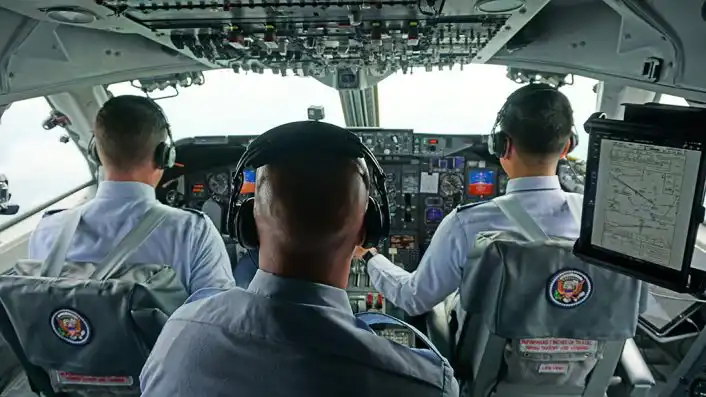
Other military aircraft still rely on flight engineers today. The VC-25A, better known as Air Force One, is based on the Boeing 747-200B and retains a three-crew cockpit. The Boeing E-4 Nightwatch, the airborne command post designed for nuclear contingencies, also depends on flight engineers. The Lockheed C-5M Super Galaxy, one of the largest aircraft ever built, employs multiple engineers to manage its immense systems.
In military aviation, redundancy and human oversight remain valued traits, even as commercial operators pursue efficiency above all else.
The Stratolaunch Roc: A 21st-Century Exception
The most recent American aircraft built with a flight engineer is neither commercial nor military in the traditional sense. It is experimental, monumental, and singular. The Scaled Composites Model 351 Stratolaunch, nicknamed Roc, first flew in 2019. With a wingspan wider than a football field and six engines salvaged from retired Boeing 747s, it is the largest aircraft currently flying by span.
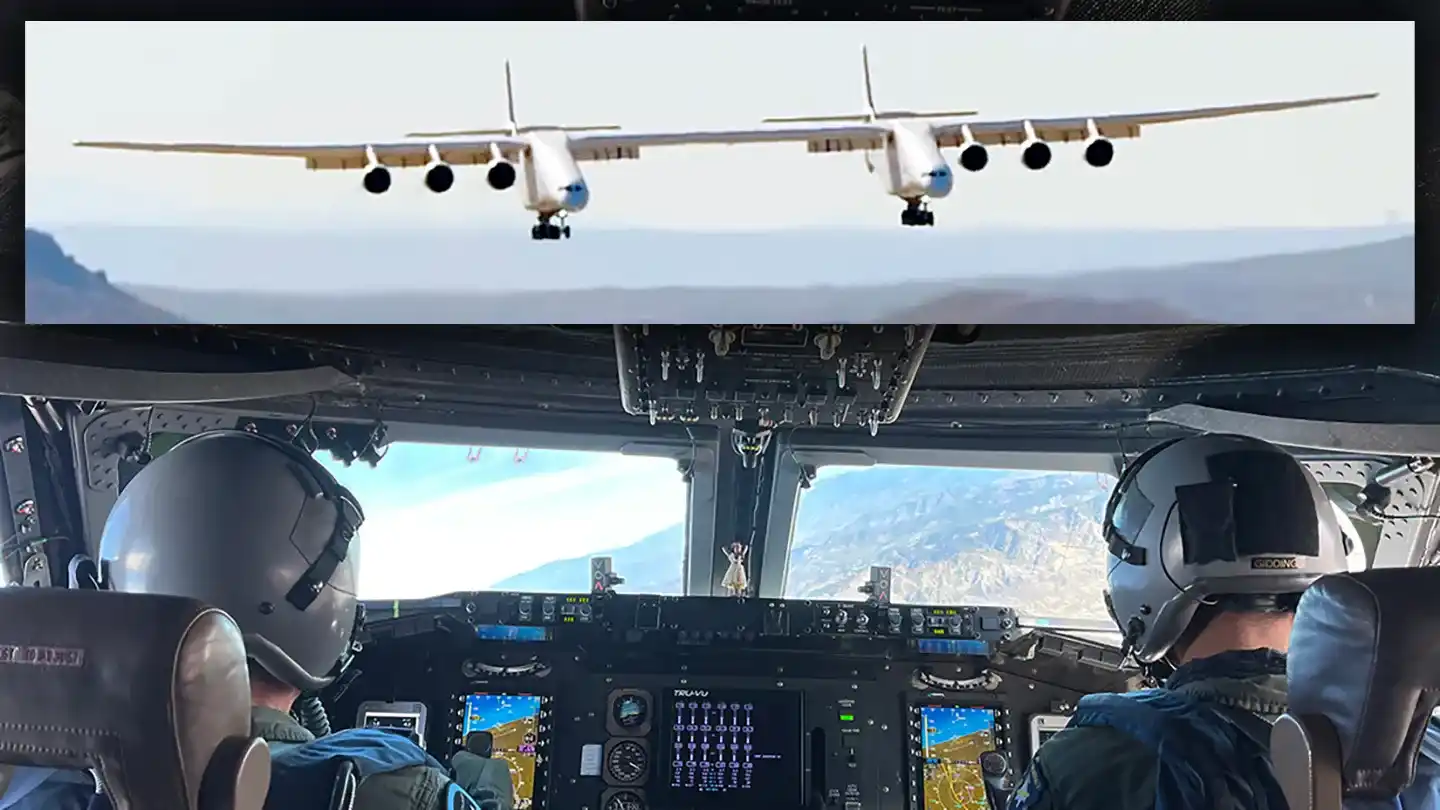
Roc employs two pilots and one flight engineer, a necessity dictated by its unconventional design and mission profile. As a hypersonic launch platform, it operates in flight regimes and configurations that defy standard automation models. Only one example exists, and it has flown fewer than thirty missions, but its existence proves that the flight engineer role has not vanished entirely. Instead, it has retreated into highly specialized niches where automation alone is insufficient.
Why Airlines Abandoned the Role Completely
Commercial airlines did not mourn the flight engineer’s departure. Eliminating the third crew member reduced training costs, scheduling complexity, and long-term labor expenses. More importantly, automation proved statistically safer. Computers do not tire, misread gauges, or overlook subtle trends under pressure. When properly designed, they outperform humans at repetitive monitoring tasks.
Freight operators were the last holdouts. FedEx continued flying Boeing 727s with flight engineers until 2013, and DC-10s until 2021, though many were later converted to MD-10 configuration with two-crew cockpits. Passenger airlines followed a similar pattern, with Northwest Airlines’ 747-200s among the final examples in US passenger service before retiring in 2009.
By then, the role had become an anachronism, preserved only where redesign costs outweighed operational benefits.
The Difference Between Flight Engineers and Licensed Aircraft Engineers
It is essential to distinguish flight engineers from Licensed Aircraft Engineers (LAEs). Flight engineers operate onboard during flight, actively managing systems in real time. LAEs, by contrast, are ground-based professionals responsible for inspecting, maintaining, and certifying aircraft airworthiness. The disappearance of flight engineers has not reduced the importance of maintenance engineering; if anything, it has increased reliance on highly skilled ground crews to ensure system reliability before takeoff.
Confusing the two roles obscures the unique contribution flight engineers once made. They were airborne troubleshooters, capable of improvisation in ways no algorithm can fully replicate.
Russia and the Possibility of a Return
Ironically, the only place where flight engineers may see a resurgence is outside the United States. Western sanctions imposed in 2022 severely restricted Russia’s access to modern avionics and components. As a result, Russian manufacturers have explored restarting production of older aircraft such as the Tupolev Tu-214 and Ilyushin Il-96, designs that predate high-automation cockpits.
These aircraft require three-crew operations, with flight engineers responsible for tasks modern jets handle automatically. Restarting production would require retraining an entire generation of engineers and pilots in antiquated systems. Russian airlines have expressed reluctance, and ongoing efforts aim to reduce crew requirements, but the possibility remains. If these aircraft return, they would stand as living reminders of an aviation philosophy the West has largely abandoned.
1991 or 2019: Two Valid Endpoints
So which aircraft truly deserves the title of the last plane in America with a flight engineer? The answer depends on perspective. From a commercial production standpoint, the 1991 Boeing 747-200 represents the final chapter. From a broader engineering and manufacturing standpoint, the 2019 Stratolaunch Roc is the most recent example of an American aircraft deliberately designed to include the role.
Both are correct. One marks the end of an era defined by mass air travel. The other represents a specialized exception driven by experimental necessity. Together, they bracket the flight engineer’s journey from indispensable crew member to rare specialist.
What the Flight Engineer’s Disappearance Really Means
The removal of the flight engineer is not merely about crew size. It reflects a deeper shift in how humans relate to machines. Modern pilots manage systems rather than operate them. Decision-making has moved upward, away from switches and toward abstraction. While this has improved safety and efficiency, it has also narrowed the tactile connection between crew and aircraft.
Flight engineers embodied a holistic understanding of the airplane as a living system. Their panels told stories through vibrations, temperature gradients, and subtle anomalies long before alarms sounded. That knowledge has not vanished, but it now resides in code rather than consciousness.
As aviation moves toward optionally manned and eventually pilotless aircraft, the flight engineer stands as an early casualty of automation’s advance. Their legacy remains etched into the aircraft they once guarded, and into the safety record they helped build during aviation’s most formative decades.
The last American aircraft with a flight engineer did more than close a chapter. It sealed a philosophy of flight that trusted human intuition at 35,000 feet, and it handed the future decisively to machines.