The McDonnell Douglas MD-80 occupies a rare and almost mythical place in aviation history. It was not the fastest jet of its generation, nor the most technologically advanced. Yet it achieved something no other American-built commercial aircraft can claim: it became the last airliner in America designed around a fundamentally analog cockpit.
In an aviation era increasingly dominated by touchscreen interfaces, flight computers, and digital automation, the MD-80 represents the closing chapter of a distinctly human style of flying. Its cockpit was noisy, crowded, mechanical, and unapologetically tactile. Pilots did not simply manage systems through elegant software layers. They manipulated switches, monitored needles, interpreted gauges, and physically worked the airplane.
The aircraft became a defining symbol of late twentieth-century commercial aviation, serving airlines across North America, Europe, Latin America, and beyond for decades.
After its debut in commercial service with Swissair in 1980, the MD-80 evolved into one of the world’s most recognizable short-haul workhorses. More than 1,191 aircraft rolled off production lines before manufacturing ended in 1999. Remarkably, dozens remain active today.
What Made The MD-80 Cockpit Truly Analog?
To understand why the MD-80 matters, it is essential to understand what an analog cockpit actually means.
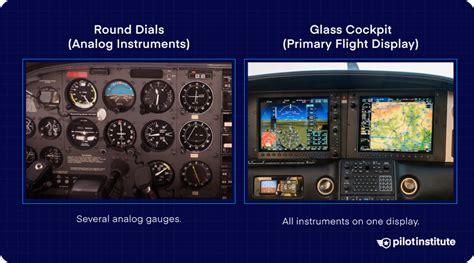
Modern airline flight decks revolve around digital displays known as glass cockpits. Information is consolidated into multifunction screens that dynamically change based on flight phase, aircraft condition, or pilot selection.
The MD-80 came from a different philosophy entirely.
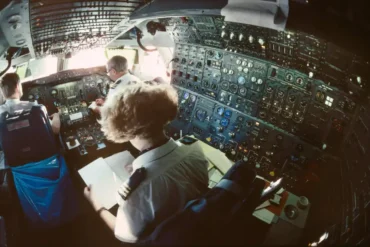
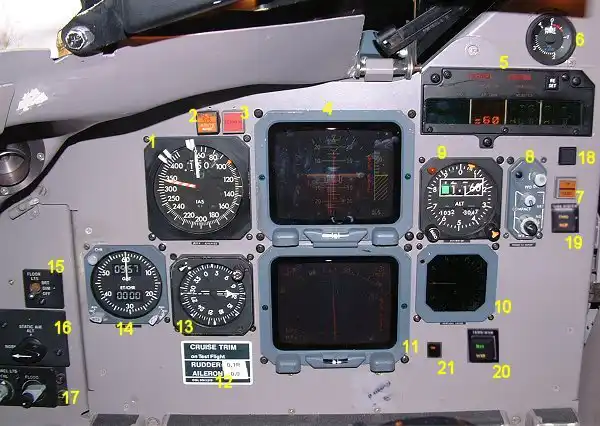
Its cockpit relied on a classic arrangement of electromechanical instruments and dedicated displays. The pilot’s eyes constantly scanned multiple physical gauges displaying vital flight information. Instead of colorful LCD panels presenting neatly integrated data, pilots interpreted individual instruments spread across the panel.
Five core flight parameters formed the backbone of the cockpit’s information environment:
- Airspeed
- Altitude
- Vertical speed
- Heading
- Turn coordination
Each instrument possessed its own physical identity, display style, operating quirks, and visual cues.
Flying the aircraft demanded continual instrument cross-checking. Pilots built situational awareness not from synthesized software dashboards but from actively combining information across numerous analog indicators.
This difference was not cosmetic. It fundamentally shaped pilot behavior, cockpit workload, and decision-making.
The MD-80’s flight deck also featured an abundance of mechanical switches, rotary selectors, push buttons, and guarded controls. Nearly every aircraft function had a dedicated physical interface. Fuel systems, hydraulics, anti-ice operations, electrical management, air conditioning, and bleed-air configurations all required hands-on manipulation.
There was little abstraction between pilot and machine.
Inside The MD-80 Flight Deck: A Cockpit Built For Hands-On Flying
Step into an MD-80 cockpit and the contrast with a Boeing 787 or Airbus A350 becomes immediately obvious.
The layout feels dense, functional, and intensely operational.
The primary instrument panel dominates the forward view, packed with essential flight displays positioned between captain and first officer. Above, the overhead panel resembles an industrial control station overflowing with switches governing critical aircraft systems.
The center pedestal houses thrust levers, communications controls, navigation inputs, and autopilot interfaces. Alongside the cockpit walls, pilots encounter side panels filled with electrical controls, lighting adjustments, and extensive arrays of circuit breakers.
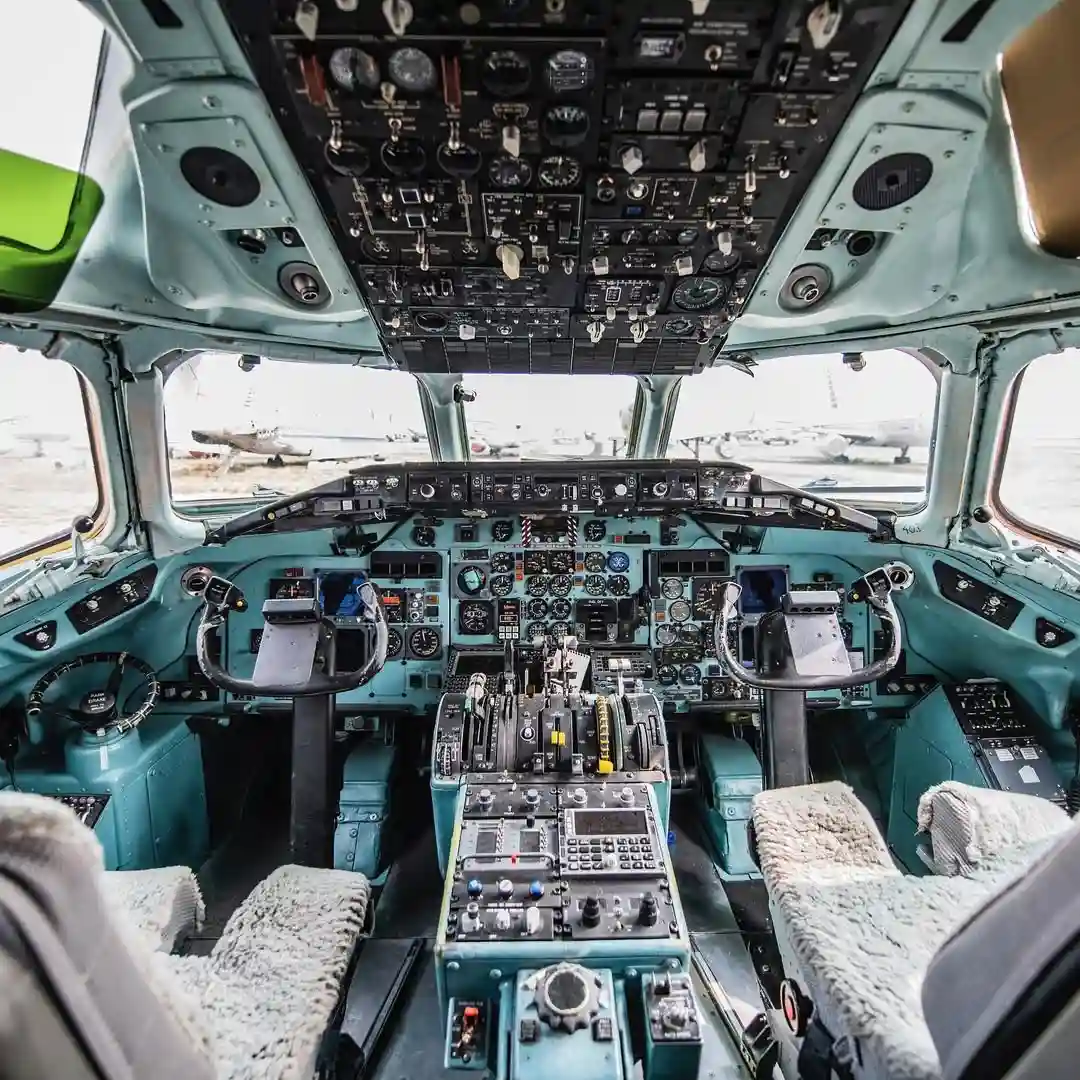
Nothing about the environment feels simplified.
Yet for many aviators, that complexity is precisely the attraction.
MD-80 pilots frequently describe the aircraft as a “pilot’s airplane.” It rewards discipline, procedural precision, and active engagement. Flying it often involves a richer blend of manual aircraft handling and system management than newer highly automated designs.
The aircraft does include automation features, but they do not dominate the experience in the way they do aboard modern jets.
Instead, crews remain deeply connected to aircraft behavior.
Many veteran aviators value this tactile relationship. Physical switches provide unmistakable feedback. Mechanical actions reinforce system awareness. Pilots feel more directly involved in configuring, monitoring, and controlling the aircraft.
That intimacy, however, comes at a cost.
Analog operations generally impose a higher cognitive workload. Monitoring duties increase. Checklist execution becomes more demanding. Crew coordination grows more important.
For pilots trained primarily on modern digital aircraft, entering an MD-80 cockpit can feel surprisingly overwhelming. Rather than interacting with streamlined software menus and configurable displays, they face an environment crowded with levers, knobs, annunciators, and analog instrumentation.
The MD-80’s Origins: How A DC-9 Evolution Became An Aviation Legend
The story of the MD-80 begins in 1977, when McDonnell Douglas pursued a larger, more capable evolution of the successful DC-9 family.
Originally developed under the designation DC-9-80, the aircraft introduced a stretched fuselage, improved economics, and updated performance capabilities aimed at the booming short-haul airline market.
Certification arrived in August 1980.
Commercial service followed rapidly.
Swissair became the launch operator and eventually deployed 29 MD-80s within its fleet. From there, adoption accelerated across global aviation markets.
The aircraft’s appeal was straightforward: dependable operations, respectable economics for its era, and passenger capacity well-suited to medium-density domestic routes.
American carriers embraced it enthusiastically.
No airline became more closely associated with the type than American Airlines, whose MD-80 fleet eventually reached an astonishing 391 aircraft. For years, the sight of polished aluminum MD-80s departing major U.S. hubs became a defining image of American domestic aviation.
Other major operators included Delta Air Lines, Trans World Airlines, Alitalia, Scandinavian Airlines, Allegiant Air, Continental Airlines, and Aeromexico.

Safety Record, Incidents, And The Complex Legacy Of The MD-80
Like many aircraft families with long operational careers, the MD-80 accumulated a substantial incident history.
Across decades of worldwide service, the type became associated with approximately 90 major incidents, including dozens of hull losses.
Several tragedies remain deeply embedded in aviation history.
Northwest Airlines Flight 255 crashed shortly after departure from Detroit in August 1987 following improper takeoff configuration. The disaster killed nearly everyone onboard and claimed lives on the ground.
Two decades later, One-Two-GO Airlines Flight 269 crashed while attempting landing operations during poor weather conditions at Phuket.
In 2008, Spanair Flight 5022 suffered a catastrophic accident during departure from Madrid, becoming one of the deadliest MD-80 disasters.
These events underscore a critical reality of commercial aviation: aircraft safety depends not solely on airframe design, but on a multilayered interaction involving crew procedures, operational environments, maintenance standards, training systems, and organizational oversight.
Despite its accident history, the MD-80 also accumulated millions of successful flight hours across thousands of routes worldwide.
Its operational longevity reflects both its durability and its adaptability.
From Analog Gauges To Glass Cockpits: Why Aviation Left The MD-80 Era Behind
The aviation industry ultimately moved beyond analog cockpits for compelling reasons.
Modern aircraft such as the Boeing 787 and Airbus A350 deliver dramatic advances in information management, automation, ergonomics, and operational efficiency.
Large digital displays consolidate enormous quantities of flight data into customizable layouts. Advanced flight management systems reduce workload. Electronic alerts improve situational awareness.
Fly-by-wire architecture has also transformed aircraft control philosophy.
Instead of relying heavily on mechanical linkages, modern jets transmit pilot inputs through electronic signal systems. Airbus employs side-stick controls. Boeing retains traditional yokes while integrating sophisticated fly-by-wire logic beneath the interface.
The result is a cockpit environment optimized around information clarity and workload reduction.
Compared with these contemporary flight decks, the MD-80 appears almost defiantly old-school.
Yet that old-school character explains why pilots, aviation enthusiasts, and historians continue to admire it.
The Last Survivors: Can You Still Fly On An MD-80 Today?
Despite widespread retirement across major airlines, the MD-80 has not vanished entirely.
More than 100 aircraft remain active globally, proving the durability of the design.
Among passenger operators, LASER Airlines in Venezuela continues deploying MD-80 aircraft across regional networks. In cargo operations, Mexico-based Aeronaves TSM maintains one of the world’s largest active fleets.
The type’s persistence illustrates a broader aviation truth: practical utility often outlives mainstream visibility.
While passengers increasingly travel aboard digitally optimized aircraft filled with software-driven systems, the MD-80 survives as a living artifact of a different aviation philosophy.
It represents the final American commercial aircraft cockpit built around analog mastery rather than digital mediation.
In the MD-80, flying still looks and feels mechanical. Gauges still matter. Switches still demand attention. Pilots still work inside a machine that expects continuous involvement.
That is why the MD-80 is more than an aging airliner.
It is America’s last analog cockpit in the sky.