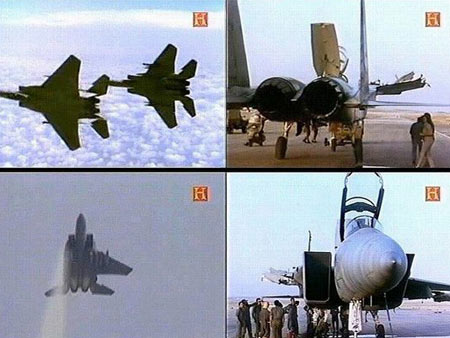
On May 1, 1983, the aviation world witnessed an event that seemed to defy the very principles of aerodynamics. An Israeli Air Force F-15D collided mid-air with an A-4N Skyhawk during a training exercise over the Negev Desert. Despite losing its entire right wing, the aircraft was miraculously landed by pilot Jon “Yon” Aesly and his instructor. This extraordinary feat remains one of the most legendary moments in military aviation history.
Collision and Immediate Aftermath
The incident occurred during a simulated dogfight, a high-speed aerial combat training maneuver. As the F-15D engaged with the A-4N, the two aircraft collided. The A-4N exploded instantly, with its pilot ejecting safely. However, the F-15D suffered catastrophic damage, losing its right wing from the root outward.
The aircraft immediately went into an uncontrolled spiral, described as “flying like a headless fly in a strange corkscrew trajectory.” This erratic movement indicated a complete loss of normal aerodynamic stability. Aesly, facing an almost certain ejection, instead fought to regain control of his crippled jet.
Regaining Control
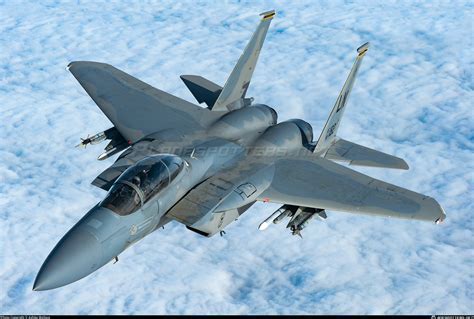
Aesly’s ability to stabilize the aircraft was nothing short of remarkable. The F-15’s electronic flight control system played a crucial role. By reconnecting the system, Aesly restored partial authority over the remaining control surfaces—ailerons, flaps, and horizontal stabilizers.
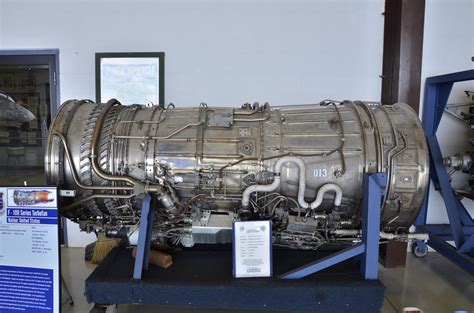
More critically, the thrust-to-weight ratio of the F-15 became the defining factor in its survival. The aircraft’s powerful Pratt & Whitney F100 engines provided immense thrust, allowing Aesly to generate enough lift from the fuselage and left wing to maintain level flight. By engaging afterburners and increasing speed, he turned what should have been an uncontrollable descent into a controlled flight path.
Key Survival Factors
Several unexpected factors contributed to Aesly’s successful landing:
1. Unawareness of Damage
Aesly was initially unaware that his right wing was missing. The cockpit warning systems remained silent, failing to alert him to the extent of the damage. This lack of immediate panic allowed him to focus on regaining control rather than ejecting prematurely.
2. Hydraulic and Electrical Integrity
Despite the violent impact, the F-15 retained hydraulic power and engine functionality. This allowed continued control adjustments, which proved essential in counteracting the severe asymmetry.
3. High-Speed Landing Approach
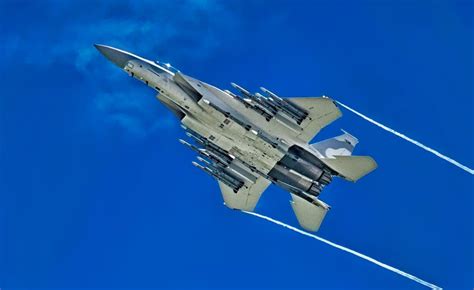
With one wing missing, a normal landing speed was impossible. Instead, Aesly approached the runway at 480 km/h (260 knots)—twice the standard landing speed for an F-15. The missing wing resulted in reduced drag, forcing reliance on engine thrust to control descent.
Emergency Landing Execution
Upon final approach, Aesly faced another critical challenge: stopping the aircraft safely on the runway. The Israeli Air Force’s F-15s were equipped with an arrestor hook, a feature typically used on aircraft carriers. However, the impact of the high-speed landing caused the arrestor hook to snap, leaving the aircraft dependent on a runway arrestor net to bring it to a complete stop.
Against all odds, the F-15 came to a halt without rolling over or bursting into flames. Aesly later recounted how, after exiting the aircraft and turning back, he saw the entire right wing was missing, an image that left even experienced military personnel in disbelief.
Why the F-15 Defied Aerodynamic Logic
The survival of the F-15 in this incident seemed to contradict conventional aerodynamics. However, several design elements of the aircraft made this extraordinary event possible:
1. Fuselage Lift
Unlike most fighter jets, the F-15’s wide, flat fuselage is designed to generate lift, particularly at high speeds. This feature compensated for the missing right wing and allowed Aesly to sustain flight.
2. Thrust Dominance
The twin Pratt & Whitney F100 engines delivered enough thrust to counteract asymmetric drag. Their high power output ensured that the jet could maintain stability even with one wing missing.
3. Pilot Skill and Training
Aesly’s calm and calculated decision-making was pivotal. His ability to assess the situation, trust his instincts, and focus on control rather than ejecting was a testament to his exceptional training. As he later stated, “I worked like a machine… fear was absent.”
Aftermath and Legacy
Following the incident, the F-15 was repaired with a new wing and returned to service within two months—a remarkable testament to the aircraft’s robust construction.
McDonnell Douglas, the manufacturer of the F-15, initially dismissed the event as “aerodynamically impossible.” However, photographic evidence forced them to acknowledge the incident as a true engineering anomaly.
Comparison to Other Fighter Jets
The event underscored the unique survivability of the F-15 compared to other aircraft:
- Su-27 Flanker: Unlike the F-15, the Su-27’s landing gear is mounted in the wing roots. Had a similar incident occurred, catastrophic landing gear failure would have been likely.
- Fly-by-Wire Systems: Unlike newer aircraft that rely entirely on digital controls, the F-15’s mechanical control backup allowed continued operation despite severe damage.

Conclusion
The one-wing landing of the F-15 Eagle remains one of the most astonishing events in aviation history. It serves as a powerful reminder of the importance of engineering excellence, pilot skill, and the resilience of military aircraft. Jon “Yon” Aesly’s remarkable feat continues to inspire aviation safety protocols and military pilot training programs worldwide.
FAQ
1. How did the F-15 generate lift with only one wing?
The F-15’s wide fuselage and high-speed aerodynamics allowed the aircraft to generate enough lift to compensate for the missing wing. Additionally, the powerful engines maintained stability through thrust control.
2. Why didn’t the pilot eject immediately?
Aesly did not initially realize that an entire wing was missing. The aircraft’s control systems did not indicate immediate failure, allowing him to focus on recovery rather than ejecting.
3. Has any other aircraft survived a similar incident?
While other aircraft have sustained severe damage in flight, the F-15D’s one-wing landing remains unique in military aviation history. Most aircraft with similar damage would have crashed due to loss of control and lift.