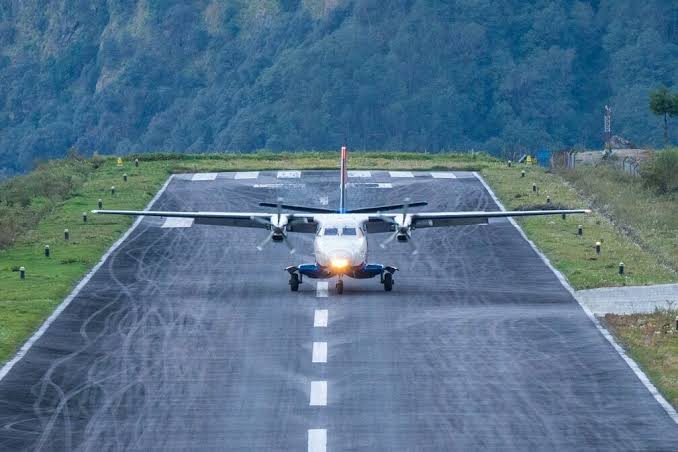
Every commercial flight is carefully planned, with sophisticated navigation systems, experienced flight crews, and multiple layers of safety designed to make air travel remarkably reliable. Yet despite these technological advances, weather remains one of aviation’s greatest challenges. Wind, turbulence, fog, low clouds, mountain waves, and rapidly changing atmospheric conditions continue to influence how aircraft approach and land at airports across the world.
While thousands of airports operate safely in all kinds of climates, a handful stand apart because of the unique way geography and weather combine to create exceptionally demanding approaches. In these locations, mountains channel powerful winds, oceans generate unpredictable gusts, and narrow valleys leave pilots with little room for correction. Landing at these airports is never about bravery—it is about precision, training, discipline, and respecting nature’s limits.
Airlines serving these destinations invest heavily in specialized pilot qualifications, simulator training, and strict operational procedures. Flights are frequently delayed, diverted, or canceled whenever conditions exceed established safety limits, demonstrating that modern aviation always prioritizes safety over schedules.
Why Weather Can Be More Dangerous Than Terrain
Many travelers assume short runways or surrounding mountains make an airport difficult. While those factors certainly matter, weather often becomes the deciding element that transforms a routine landing into a highly technical maneuver.
Strong crosswinds force pilots to maintain precise alignment while counteracting sideways drift. Wind shear can suddenly change an aircraft’s airspeed and lift. Mountain waves create invisible turbulence capable of producing abrupt altitude changes. Low cloud ceilings and rapidly changing visibility reduce the time available to identify runway references.
These hazards rarely occur in isolation. Instead, they frequently combine with complex terrain, creating situations where pilots must continuously evaluate changing conditions while maintaining exact aircraft control.
Modern aircraft are designed to withstand significant turbulence and strong winds, but every airplane has operational limitations. If conditions exceed those limits, crews simply discontinue the approach and either hold, divert, or attempt another landing when weather improves.
The following five airports have become internationally recognized because weather consistently adds another layer of complexity to already demanding environments.
Paro Airport, Bhutan: Flying Through the Himalayas Without Instrument Guidance
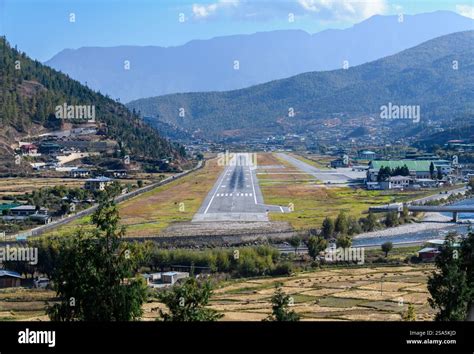
Hidden deep inside the Himalayan Mountains, Paro Airport (PBH) is widely regarded as one of the world’s most technically challenging commercial airports. Sitting approximately 7,200 feet (2,200 meters) above sea level, the airport is surrounded by towering peaks exceeding 18,000 feet, creating one of aviation’s most dramatic operating environments.
Unlike many major airports equipped with sophisticated instrument landing systems, Paro depends almost entirely on visual flight procedures. Pilots cannot simply descend through clouds while following electronic guidance to the runway. Instead, they must remain in visual contact with surrounding terrain throughout the approach.
The challenge becomes even greater because Himalayan weather changes rapidly. Air flowing around steep mountain slopes generates localized turbulence, rotor winds, and unpredictable wind shear. Seasonal monsoon systems introduce heavy rainfall, mist, and sharply reduced visibility.
Rather than following a long, stabilized final approach, aircraft weave through a narrow valley, making several carefully timed turns before finally aligning with the runway. The runway itself appears only during the final moments of descent, leaving virtually no opportunity for significant corrections.
Because of these demanding conditions, only a relatively small group of pilots worldwide receive certification to operate commercial services into Paro. Extensive simulator sessions, mountain-flying experience, and airport-specific instruction are mandatory before captains are authorized to conduct flights independently.
Paro perfectly illustrates how weather and geography together can create an airport unlike almost any other in commercial aviation.
Wellington Airport, New Zealand: Crosswinds That Never Truly Rest
Located at the southern tip of New Zealand’s North Island, Wellington Airport (WLG) occupies one of the windiest urban locations anywhere on Earth. Its position adjacent to Cook Strait places it directly within a natural wind corridor where weather systems funnel between New Zealand’s North and South Islands.
Unlike airports challenged primarily by mountains, Wellington’s defining obstacle is persistent, powerful crosswinds.
These winds rarely remain steady. Instead, aircraft often encounter sudden gusts that fluctuate dramatically in speed and direction during the final stages of landing. Nearby hills disturb the airflow further, producing turbulence that can change noticeably within only a few hundred feet of altitude.
Passengers frequently notice aircraft rocking from side to side while approaching Wellington. Although these movements may appear alarming, they are typically well within certified aircraft operating limits and are anticipated by experienced flight crews.
Pilots continuously adjust rudder, aileron, and throttle inputs throughout the approach to compensate for shifting winds. Maintaining runway alignment requires constant attention, especially when gusts increase unexpectedly just before touchdown.
Weather systems crossing the Tasman Sea regularly intensify these conditions. During severe storms, airlines often postpone operations until winds decrease sufficiently to remain within safe landing limits.
Rather than fearing Wellington, pilots respect it because every arrival demands continuous precision from the beginning of descent until the aircraft comes safely to a stop.
Madeira Airport, Portugal: Atlantic Winds Meet Rugged Island Terrain
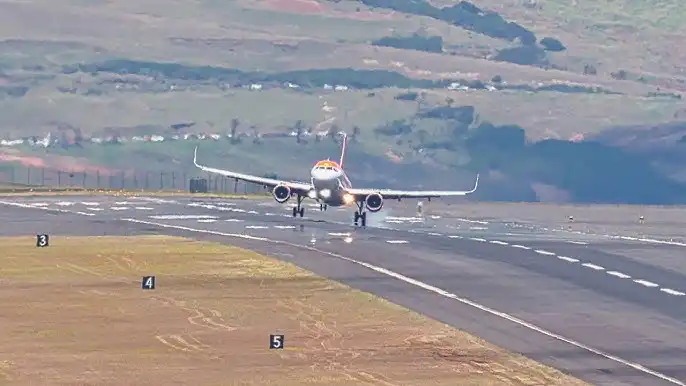
Officially named Cristiano Ronaldo International Airport (FNC), Madeira Airport has earned worldwide recognition through dramatic videos showing aircraft landing in spectacular crosswinds. While these videos sometimes exaggerate public perceptions, they accurately capture the airport’s greatest operational challenge.
Madeira rises steeply from the Atlantic Ocean, and its mountainous landscape dramatically alters local airflow. Ocean winds striking the island split, accelerate, and rotate around mountain ridges before reaching the runway.
The result is a constantly changing mixture of:
- Strong crosswinds
- Mechanical turbulence
- Localized wind shear
- Sudden gusts during final approach
Instead of enjoying a straightforward approach aligned miles in advance, pilots often perform carefully planned visual maneuvers before intercepting the runway centerline.
This means aircraft crews simultaneously manage aircraft configuration, monitor changing wind conditions, and execute precise turns while maintaining stable flight parameters.
Weather forecasts provide valuable guidance, but terrain-induced airflow cannot always be predicted perfectly. Wind conditions can change significantly within minutes as Atlantic weather systems evolve.
Specialized airport qualification programs help prepare pilots for Madeira’s unique characteristics. Airlines serving the airport ensure crews understand both the published procedures and the subtle weather behaviors that make every arrival slightly different from the last.
Innsbruck Airport, Austria: Alpine Weather Creates Constant Uncertainty
Surrounded by the towering Austrian Alps, Innsbruck Airport (INN) demonstrates how mountainous terrain can dramatically influence local meteorology.
Mountain valleys act like enormous funnels, accelerating air currents and producing complex wind patterns that vary across remarkably short distances. Aircraft approaching Innsbruck frequently encounter changing winds as they descend through different sections of the valley.
Unlike airports located on flat terrain, conditions reported only a few miles away may differ substantially from those directly surrounding the runway.
Cloud formation presents another significant challenge.
Moist air forced upward by mountain slopes cools rapidly, producing low clouds that can suddenly obscure sections of the approach path. Pilots may begin the descent under clear skies only to encounter deteriorating visibility closer to the airport.
Terrain restrictions also prevent flexible approach options. Mountains dictate exactly where aircraft can safely fly, leaving little room for improvisation.
Winter further complicates operations.
Snowstorms, icing conditions, freezing temperatures, and reduced visibility frequently accompany Alpine weather systems. Aircraft must account not only for runway conditions but also for atmospheric icing and turbulence throughout the descent.

Advanced navigation procedures, careful air traffic management, and rigorous pilot training allow airlines to operate safely despite these demanding conditions. Nevertheless, Innsbruck remains one of Europe’s most respected airports among professional flight crews because every successful landing requires thorough preparation and disciplined execution.
Lukla Airport, Nepal: Where Mountain Weather Changes Everything
Officially known as Tenzing-Hillary Airport (LUA), Lukla serves as the primary aerial gateway for trekkers and mountaineers traveling toward Everest Base Camp.
Its reputation as one of the world’s most challenging airports comes from far more than its famously sloped runway.
The airport sits within one of Earth’s most rugged mountain environments, where weather evolves with extraordinary speed.
Morning sunshine may quickly give way to dense fog, low clouds, rainfall, or rapidly decreasing visibility as moist Himalayan air interacts with steep terrain.
Unlike airports with multiple approach options, Lukla offers pilots a confined corridor surrounded by mountains. Aircraft must remain precisely positioned throughout the approach because terrain leaves almost no margin for significant deviation.
The runway itself increases operational complexity. One end terminates against a mountainside while the opposite end overlooks a steep drop, requiring aircraft to land and depart in specific directions.
Visibility is often the deciding factor.
If pilots lose essential visual references during the approach, continuing the landing may no longer be safe. As a result, flights are commonly delayed until weather improves rather than attempting operations under marginal conditions.
Only specially trained pilots with airport-specific qualifications are permitted to operate commercial flights into Lukla. Their expertise includes understanding local wind behavior, mountain weather patterns, aircraft performance at high elevations, and strict adherence to visual procedures.
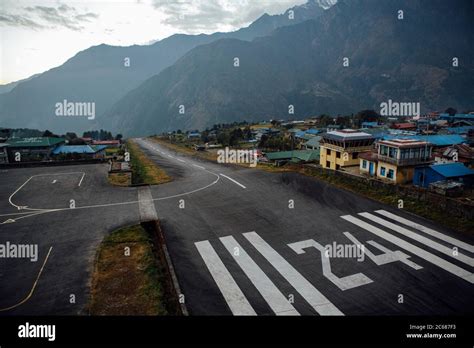
For visitors heading toward Mount Everest, the flight to Lukla often becomes one of the most memorable parts of the entire journey—not because of danger, but because it showcases aviation operating in one of the planet’s most extraordinary environments.
Why Specialized Pilot Training Matters at These Airports
Although each airport presents unique challenges, they all share one critical characteristic: weather demands exceptional pilot preparation.
Special airport qualifications typically include:
- Extensive simulator sessions recreating local weather scenarios.
- Airport-specific operating procedures that differ from standard approaches.
- Mountain flying instruction where applicable.
- Strict operational limitations regarding wind, visibility, and cloud ceilings.
- Regular proficiency checks to maintain qualification.
These measures ensure pilots understand not only aircraft systems but also the unique environmental characteristics that define each destination.
Just as importantly, airlines establish conservative decision-making policies. If conditions exceed predetermined limits, crews are expected to abandon the approach without hesitation. A go-around or diversion is considered a normal demonstration of sound judgment rather than a failure.
Extreme Weather Highlights the Precision of Modern Aviation
The five airports featured here illustrate how nature continues to influence even the most advanced aircraft. Powerful Atlantic storms, Himalayan valleys, Alpine weather systems, and persistent crosswinds remind both pilots and passengers that flying is a continuous partnership between technology, human expertise, and environmental awareness.
Paro demands visual navigation through towering mountains. Wellington tests pilots with relentless crosswinds. Madeira combines Atlantic winds with rugged terrain. Innsbruck challenges crews with rapidly changing Alpine weather, while Lukla demonstrates how high-altitude mountain climates can dictate every aspect of flight operations.
Despite these extraordinary conditions, commercial aviation maintains an exceptional safety record because of rigorous training, carefully engineered procedures, conservative operational limits, and a culture that always places safety first. For passengers, a turbulent landing at one of these airports may feel dramatic, but behind every smooth touchdown lies years of preparation, thousands of hours of experience, and an unwavering commitment to precision in some of the world’s most demanding weather environments.