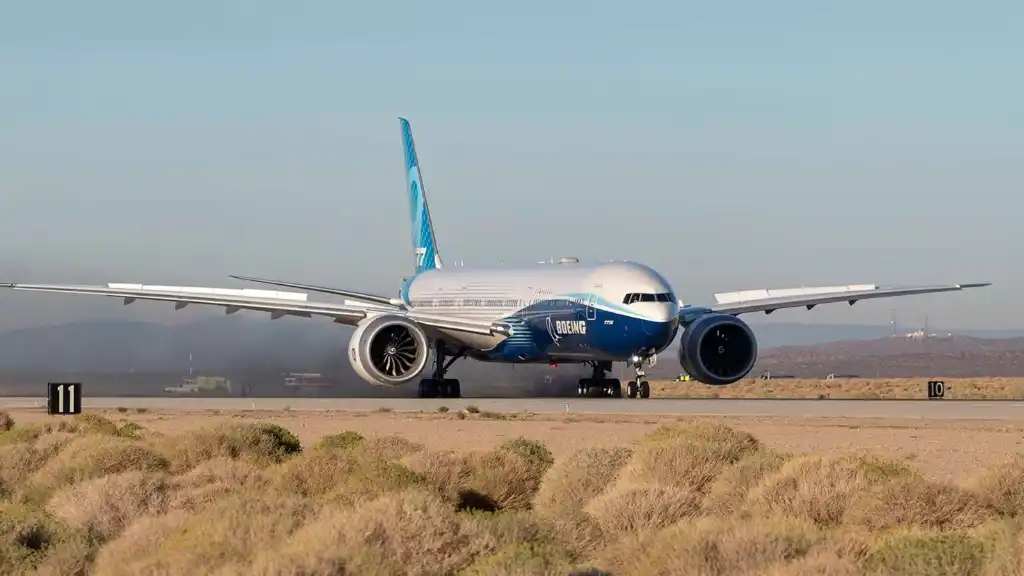
The Boeing 777-9 has cleared one of aviation’s most demanding certification hurdles, demonstrating extraordinary stopping capability in a high-energy rejected takeoff (RTO) test. Conducted in early 2026, the trial simulated a worst-case scenario: a fully loaded aircraft accelerating to near takeoff speed before abruptly aborting. What followed was a controlled but punishing display of engineering precision, as the aircraft’s braking system absorbed immense kinetic energy and reached temperatures of approximately 2,500°F (1,370°C).
This milestone is far more than a routine test. It validates the aircraft’s ability to safely halt at V1 speed, the critical threshold where pilots must decide whether to continue takeoff or stop. At that moment, there is no margin for hesitation—and no room for failure. The 777-9’s successful performance under these extreme conditions signals that the aircraft is on track to meet the stringent safety standards required for global certification.
The scale of the test underscores the sheer physical demands placed on modern widebody aircraft. With a maximum takeoff weight of 775,000 pounds (351,550 kg), the 777-9 must dissipate enormous energy within seconds during an aborted takeoff. That energy has nowhere to go except into the braking system, transforming motion into heat at levels few mechanical systems on Earth are designed to withstand.
Extreme Heat and Advanced Carbon Brake Technology
At the heart of this achievement lies the 777-9’s advanced carbon brake system, a critical evolution from older steel-based designs. These carbon composite brakes are engineered to endure intense thermal stress while maintaining structural integrity and consistent performance. During the RTO test, they absorbed hundreds of megajoules of energy, a figure that reflects the brutal physics involved in stopping a fully loaded jet traveling at near takeoff speed.
Unlike conventional materials, carbon brakes offer superior heat resistance, reduced weight, and improved durability. As temperatures climbed past 2,000°F, the brake assemblies began to visibly glow—a dramatic but expected outcome in such tests. Engineers closely monitored thermal behavior, ensuring that the system continued to perform without degradation or risk of failure.
The test procedure itself is deliberately unforgiving. Pilots accelerate the aircraft to just below rotation speed, then apply maximum braking force while deploying spoilers to kill lift. Notably, thrust reversers are not used, placing the entire burden of deceleration on the braking system. This creates a pure, uncompromised assessment of braking capability under peak stress.
Pushing Tires and Systems to Their Limits
The intensity of the RTO test extends beyond the brakes. The aircraft’s tires are also subjected to extreme thermal and mechanical stress, often leading to controlled deflation. This is not a failure but a safety feature—fuse plugs embedded in the wheels are designed to melt under excessive heat, releasing pressure and preventing explosive tire rupture.
Engineers meticulously analyze multiple parameters during the test, including:
- Brake energy absorption
- Stopping distance within runway limits
- System redundancy and reliability
- Post-stop thermal conditions
Every variable must meet strict regulatory benchmarks. The aircraft must come to a complete stop without external assistance, proving it can handle emergencies independently.
Captain Heather Ross, a project pilot for the program, emphasized the deliberate intensity of the test, noting that engineers aim to “put the most energy we possibly can into those brakes.” It’s a philosophy rooted in realism—if the system can survive this, it can handle anything operational service might throw at it.
Understanding V1 Speed and the Critical Decision Point
The concept of V1 speed is central to the importance of this test. Below V1, pilots can safely abort a takeoff if a critical issue arises, such as an engine failure or onboard fire warning. Beyond V1, the aircraft no longer has sufficient runway to stop, making takeoff the only viable option.
This razor-thin decision window makes RTO certification essential. The 777-9 must prove that even at the edge of this threshold, it can stop safely, predictably, and within runway constraints. The successful test confirms that its braking system is not only powerful but also precisely controllable under extreme conditions.
Rejected takeoffs are rare in commercial aviation, but when they occur, they demand flawless execution from both pilots and aircraft systems. The 777-9’s ability to handle such scenarios repeatedly over its operational life is a key factor in its certification and long-term reliability.
Engineering for Safety Beyond the Stop
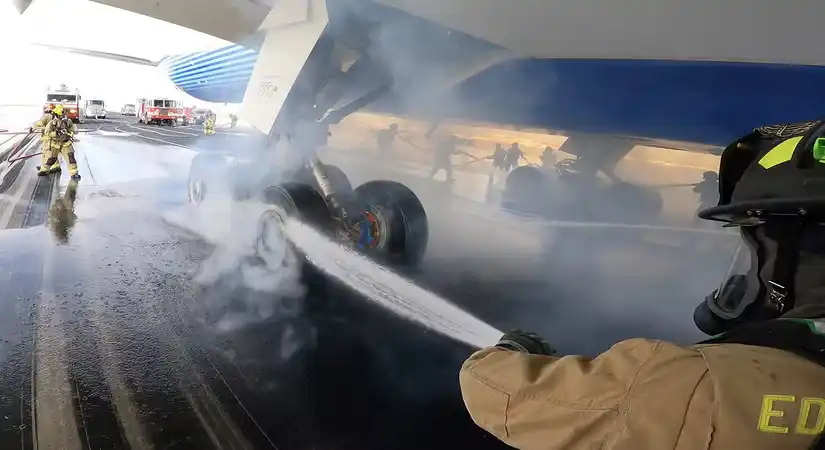
Stopping the aircraft is only part of the equation. Equally important is what happens after the aircraft comes to rest. The immense heat generated during the test poses potential risks, including fire hazards and structural stress.
To address this, engineers evaluate:
- Brake cooling rates
- Residual heat distribution
- Potential ignition sources from tire debris
- System integrity after shutdown
Even with systems powered down, the aircraft must demonstrate that no dangerous conditions persist. This ensures that, in a real emergency, passengers and crew can evacuate safely without exposure to fire or excessive heat.
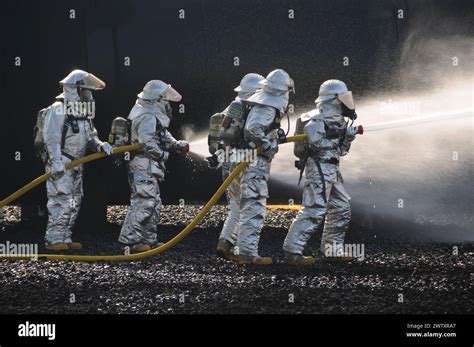
Airport fire crews are typically on standby during such tests, although intervention is rarely necessary. The design philosophy is clear: the aircraft must be self-sufficient in managing extreme scenarios.
Why This Milestone Matters for the 777X Program
The successful RTO test is a pivotal moment for the 777X program, reinforcing confidence in the aircraft’s readiness for certification and eventual entry into service. As the largest member of the 777 family, the 777-9 introduces a range of innovations, including folding wingtips and next-generation GE Aerospace engines, designed to improve efficiency by around 10% compared to earlier models.
However, increased size and weight also mean greater kinetic energy during takeoff and braking, raising the stakes for safety systems. This makes the success of the RTO test even more significant—it proves that the aircraft’s design can handle the most extreme operational scenarios without compromise.
Historically, aircraft like the 777-300ER and 787 Dreamliner have undergone similar tests, but advances in materials science—particularly in carbon composites—have dramatically improved performance. These innovations not only enhance safety but also reduce maintenance costs and extend component lifespan.
Looking ahead, further developments may include enhanced cooling technologies and predictive maintenance systems that use real-time data to monitor brake health. These advancements will continue to push the boundaries of what modern aircraft can achieve.
Ultimately, the 777-9’s successful demonstration of stopping power is more than an engineering triumph—it’s a powerful assurance that even in the most extreme conditions, the aircraft is built to protect every life on board.