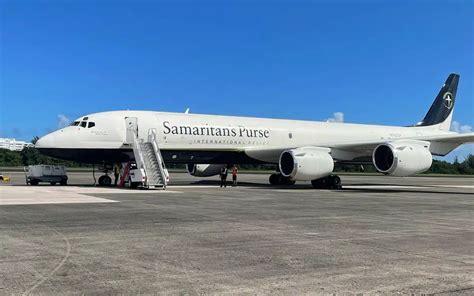
The era of the McDonnell Douglas DC-8 has officially come to a close in the United States. With a legacy spanning over six decades, the final American-registered DC-8, designated N782SP, has completed its swan song, marking the end of a remarkable chapter in aviation history. From its maiden flight in 1969 to its recent retirement, this legendary aircraft has witnessed global transformations, technological leaps, and the evolution of air transport. Now, it rests permanently at Lynchburg Regional Airport, where it will inspire future generations.
The Birth of the Jetliner: Douglas’ Answer to Boeing
In the post-war aviation boom, Douglas Aircraft Company—already renowned for its propeller-driven DC-3 and DC-6—found itself under pressure to compete with the pioneering Boeing 707. The result was the DC-8, a four-engine jetliner that debuted in 1958 and helped usher in the Jet Age. While it never quite matched the commercial success of the 707, the DC-8 played a pivotal role in transforming how the world traveled, particularly on transoceanic and long-haul routes.
The DC-8’s adaptability was one of its greatest strengths. Over time, it evolved through multiple series, culminating in the Super 70 series, which introduced CFM56 high-bypass turbofan engines—an upgrade that dramatically improved fuel efficiency and noise performance. This re-engining effort extended the aircraft’s life well into the 21st century, particularly in freight and military service.
N782SP: A Legacy in Motion
The aircraft now known as N782SP first took to the skies in 1969 as a DC-8-62CF, line number 427, delivered to Finnair as OH-LFR. Configured with 12 first-class and 124 economy seats, it served for over a decade before being retired from passenger service in 1981. That same year, it received the transformative CFM56 re-engining, becoming a DC-8-72CF—a hybrid of flexibility and endurance.
Following its tenure with Finnair, the aircraft joined the French Air Force, flying as F-RAFG until 2004. Thereafter, it entered commercial charter service with Air Transport International, reregistered as N721CX, before finally being acquired by Samaritan’s Purse in 2015. By that time, it was already a rare bird in the skies, but its low acquisition cost and ability to serve both cargo and passenger missions made it invaluable to the evangelical humanitarian organization.
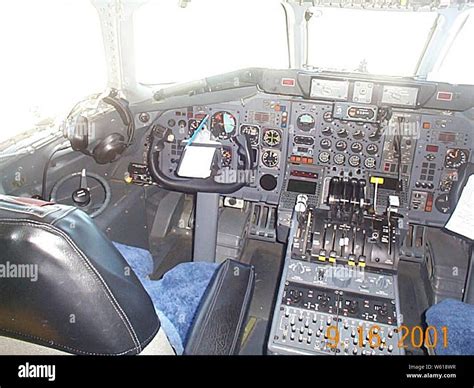
A Workhorse for Humanitarian Aid
For nearly a decade, Samaritan’s Purse utilized the DC-8 on 218 missions, often delivering critical relief supplies and medical equipment to disaster-struck regions. The aircraft’s combi configuration—32 economy seats with a sizable cargo hold—offered unique flexibility, enabling the transport of both personnel and supplies.
Its final mission took place in December 2025, when it flew to Jamaica with relief supplies for Hurricane Melissa victims. It was also part of Operation Christmas Child, where 9,200 shoeboxes were distributed to children affected by the hurricane. Members of Liberty University, a long-time partner of Samaritan’s Purse, joined the crew on this last flight—a symbolic gesture marking the transition of the aircraft into its new role as a display piece.
The Decision to Retire: Time Catches Up
Despite its sentimental value, the DC-8 had become increasingly impractical. With four engines, limited spare parts, and rising maintenance demands, operating the aircraft was a costly endeavor. More importantly, modern alternatives offered increased reliability, better fuel efficiency, and lower training costs.
Samaritan’s Purse began updating its fleet over the last few years. In 2022, they took delivery of a Boeing 757-200F, followed by a Cessna 408 SkyCourier in 2024. The final nail in the coffin for N782SP came in February 2025, when the organization acquired a 19-year-old Boeing 767-300F. Not only does the 767 offer greater cargo capacity, but it also shares cockpit similarities with the 757, reducing the overhead costs of crew training and flight operations.
A New Home at Liberty University
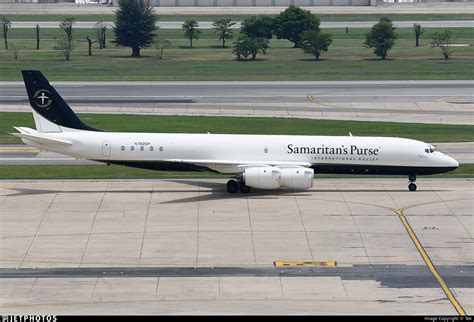
The DC-8’s final destination is Liberty University in Lynchburg, Virginia, where it will be preserved and displayed as an aviation landmark. The university, home to one of the nation’s more prominent aeronautics programs, now houses a jet with deep historical roots and spiritual symbolism, reflective of both its mission and that of Samaritan’s Purse.
Though no timeline has been specified for public access or integration into the curriculum, N782SP is expected to be one of the most iconic aircraft on any American university campus. Its final landing was more than symbolic—it was a homecoming of legacy, values, and education.
The Broader Decline of the DC-8 Fleet
While the US has retired its last DC-8, two examples continue to operate globally:
- OB-2231-P, operated by Skybus Jet Cargo of Peru
- 9H-AJO, flown by Trans Air Cargo Service in the Democratic Republic of the Congo
Both are DC-8-73CF models, part of the Super 70 re-engining program. Though still airworthy, these aircraft fly infrequently and face the same logistical challenges as N782SP—chief among them the scarcity of parts and qualified technicians. Their days, too, are numbered.
Evolution and Obsolescence: Why the DC-8 Had to Go
When United Airlines and Delta began retiring DC-8s in the 1980s and early 1990s, the writing was on the wall. Compared to newer aircraft like the Boeing 757, which matched or exceeded DC-8 performance with fewer engines and reduced operating costs, the DC-8’s age showed.
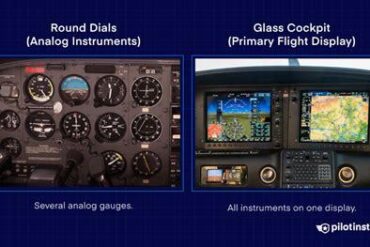
Moreover, modern aircraft are designed around two-person cockpits, fuel-saving aerodynamics, and digital avionics, whereas the DC-8 still required a flight engineer and relied on now-archaic systems. Even in cargo roles, where longevity is more forgiving, the economics no longer worked.
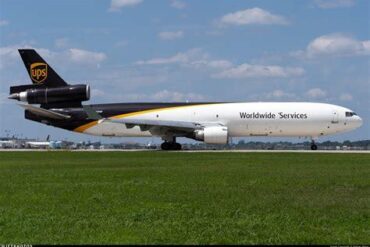
UPS Airlines, once a major operator of DC-8 freighters, ended its operations with the type in 2009, favoring more modern aircraft such as the 767-300F and MD-11F. While the DC-8 outlived the Boeing 707 in commercial service, its journey, too, had to conclude.
The End of an Icon: More Than Just Metal
The retirement of N782SP isn’t just a footnote in the history of aviation. It’s the closure of an era—a time when airliners had four engines, analog dials, and the raw power to span oceans without digital assistance. The DC-8 represented the bold optimism of mid-20th century aerospace engineering, and its long service life across continents and missions is a testament to its robust design.
From Finnair’s cold Nordic routes, to French military operations, to Christian humanitarian missions, the airframe known as N782SP lived many lives. In each one, it played a role more significant than any ledger or cargo manifest could fully capture.
What Comes Next?
Now grounded forever, the aircraft will become a living museum at Liberty University—a space where students can understand the evolution of aviation, the engineering of a jet age pioneer, and the logistics of global humanitarian relief.
We may never again hear the thunder of its four engines, nor see its silhouette streak across the sky. But in its retirement, the DC-8 will continue to inspire, educate, and remind us that machines, like the people who fly them, can leave lasting legacies.