The story of a man turning his backyard into a living piece of aviation history begins not with tools, but with imagination. For Léon Ellison, a British electronics engineer from Berkshire, the spark was ignited in childhood by a wartime film that refused to fade from memory. What followed was not a passing hobby, but a two-decade pursuit of precision, history, and craftsmanship—a project so ambitious it would ultimately find a permanent home in a museum.
Ellison’s inspiration came from the iconic 1955 film The Dam Busters, which dramatized one of the most daring missions of the Second World War. The film’s portrayal of Royal Air Force pilots navigating treacherous night skies left a lasting impression, embedding a fascination with the legendary Avro Lancaster bomber deep into his psyche. That fascination matured into an obsession with detail, accuracy, and authenticity.
What makes this story extraordinary is not simply the scale of the project, but its intent. Ellison did not aim to build a static model. Instead, he envisioned a fully immersive, historically faithful cockpit replica, one that would allow future generations to experience the physical and emotional reality of wartime aviation.
Recreating the Legendary Lancaster Cockpit From Scratch
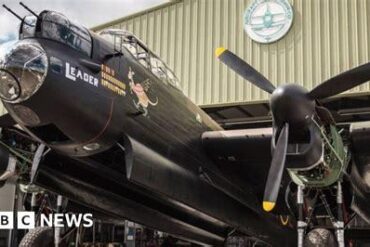
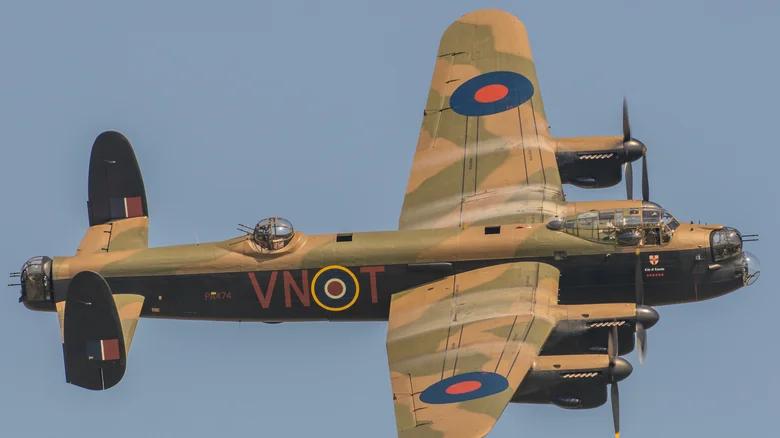
The Avro Lancaster was not just any aircraft—it was the backbone of Britain’s strategic bombing campaign during World War II. With its four Rolls-Royce Merlin engines, expansive 102-foot wingspan, and distinctive twin-tail design, it became synonymous with night raids over Europe. Recreating its cockpit demanded more than enthusiasm; it required engineering discipline and historical rigor.
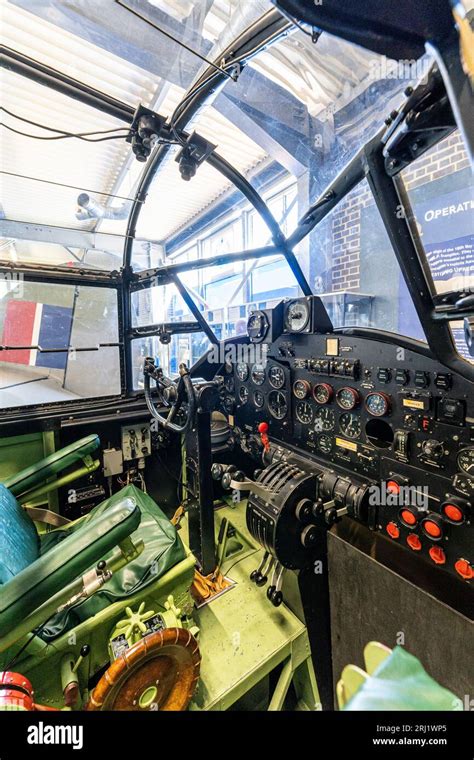
Ellison spent over 20 years meticulously constructing the cockpit using original technical drawings. Working largely alone in his backyard workshop, he fabricated most components by hand, carefully replicating instruments, panels, and structural elements. Every dial, switch, and surface was crafted with astonishing attention to period accuracy, resulting in a replica that goes far beyond visual resemblance.
This was not a superficial build. It was an exercise in reverse engineering history—understanding how wartime engineers thought, how pilots interacted with their environment, and how design translated into survival under extreme conditions.
The Historical Weight Behind the Design
The Lancaster’s legacy is inseparable from Operation Chastise—the 1943 mission carried out by RAF 617 Squadron, later known as the “Dambusters.” Tasked with breaching heavily defended German dams, the mission introduced the revolutionary “bouncing bomb,” a weapon designed to skip across water before detonating against dam walls.
Nineteen Lancasters were specially modified for the operation, stripped of excess armor to improve range and payload capacity. The mission came at a devastating human cost: 53 of the 133 aircrew lost their lives, yet the operation succeeded in crippling key industrial infrastructure.
Ellison’s cockpit replica embodies this history. It is not merely a tribute to engineering, but a memorial to courage, innovation, and sacrifice—a physical space where history can be felt, not just read.
From Private Passion to Public Exhibition
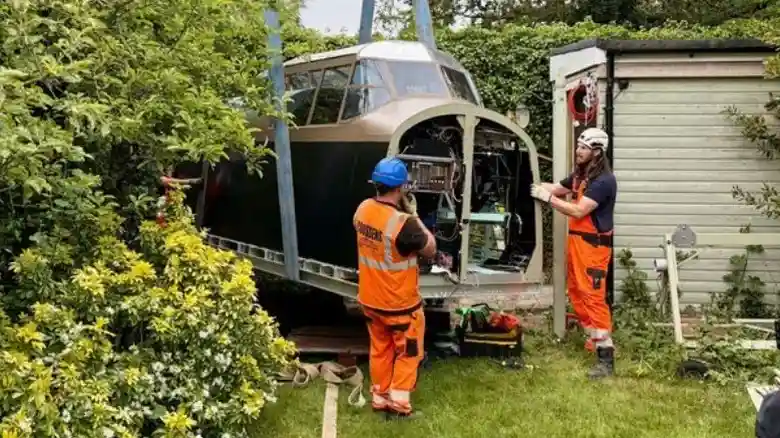
After Ellison’s passing, his unfinished dream faced an uncertain future. The cockpit, still housed in his backyard, represented thousands of hours of labor and a lifetime of dedication. Recognizing its significance, his family sought a way to preserve and share his work with a wider audience.
In May 2026, the structure was carefully removed and transported to the Metheringham Airfield Visitor Centre in Lincolnshire—a location deeply connected to Lancaster operations during the war. The move marked a transformation: from private obsession to public historical artifact.
The museum plans to complete Ellison’s original vision by converting the replica into a working simulator. Visitors will eventually be able to step inside, experiencing the cramped, instrument-heavy environment that wartime crews once navigated under immense pressure.
An Immersive Experience Rooted in Authenticity
Unlike conventional exhibits, this installation is designed to be intensely personal. Due to the confined space of the cockpit, tours will be conducted on a one-to-one basis, allowing for a deeply immersive encounter. Visitors won’t just observe history—they will sit within it, surrounded by the intricate details Ellison painstakingly recreated.
The inclusion of original components further enhances the authenticity, bridging the gap between replica and relic. Combined with interpretive materials about Ellison’s life and process, the exhibit becomes a layered narrative: a story about history, and a story about the man who refused to let it fade.
A Legacy That Extends Beyond Craftsmanship
Ellison’s project stands as a powerful reminder that history is not only preserved in archives and textbooks, but also in the hands of those willing to rebuild it. His cockpit is more than a model—it is a testament to patience, expertise, and unwavering dedication.
In an age of digital simulations and virtual experiences, there is something profoundly compelling about a structure built by hand, shaped by years of study and passion. It invites a different kind of engagement—one rooted in texture, scale, and presence.
As the cockpit prepares to open its doors to the public, it carries forward both the legacy of the Lancaster and the spirit of the man who brought it back to life.