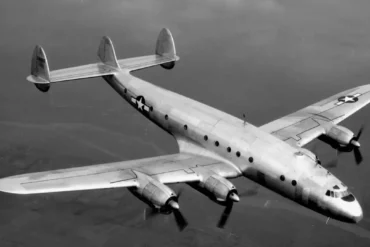
The Lockheed C-121 Constellation, known affectionately as the “Connie,” remains one of the most elegant machines ever to take flight. With its unmistakable triple-tail silhouette, dolphin-smooth fuselage, and quartet of thunderous radial engines, the Constellation did not merely transport passengers and generals—it reshaped expectations of what long-range air travel could be. In 2026, only two airworthy examples of this legendary aircraft remain capable of lifting themselves from the runway under their own power. They are not static relics polished for museum floors. They are living, breathing machines of aluminum, oil, and controlled combustion.
To understand why the final flying Connies matter, one must step back into the world they helped create—a world just emerging from war, hungry for connection, and daring enough to pressurize cabins and climb above the weather. The Constellation was not simply built; it was engineered at the frontier of possibility.
The story of the last airworthy Lockheed C-121 Constellations is not a nostalgic footnote. It is a testament to engineering audacity, volunteer devotion, and the stubborn human refusal to let beauty fade quietly into scrap.
From Secret Meeting to Sky Sovereign: The Birth of the Constellation
In June 1939, behind closed doors at a Beverly Hills hotel, aviation magnate Howard Hughes, TWA president Jack Frye, Lockheed president Robert Gross, and chief engineer Clarence “Kelly” Johnson conceived a radical idea. They wanted an aircraft that could carry sleeper-equipped passengers across the United States nonstop, cruise 10,000 feet higher than the Douglas DC-3, and fly roughly 100 mph faster.
That ambition required a technological leap: cabin pressurization. Pressurization allows an aircraft to maintain breathable air pressure inside the cabin while flying at high altitudes where oxygen is thin. Boeing’s 307 Stratoliner had introduced the concept, but the Constellation would make it practical at scale.
The result was the L-049 Constellation, sleek and pressurized, powered by four Wright R-3350 radial engines. Yet global events intervened. As World War II intensified, the U.S. government requisitioned every early Constellation, converting them into C-69 military transports for the United States Army Air Forces.
Rather than derail the project, war refined it. The aircraft ferried troops and supplies across oceans, proving range and durability under operational stress. When peace returned, the Constellation entered commercial service already hardened by conflict and primed for the jet-age mindset.
Engineering Beauty: Why the Constellation Was Technologically Revolutionary
The Constellation’s grace was not cosmetic. Every curve concealed engineering purpose.
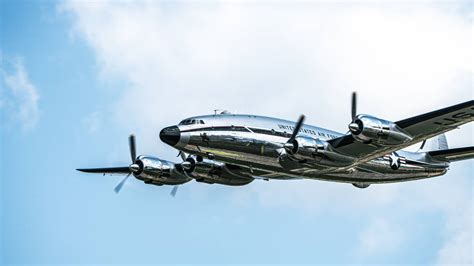
The aircraft’s iconic triple-tail configuration was a practical compromise. A single tall vertical stabilizer would have exceeded hangar height limits of the 1940s. By dividing the tail into three fins, Lockheed preserved directional stability while allowing the aircraft to fit existing infrastructure. It is a reminder that innovation often arises from constraint rather than indulgence.
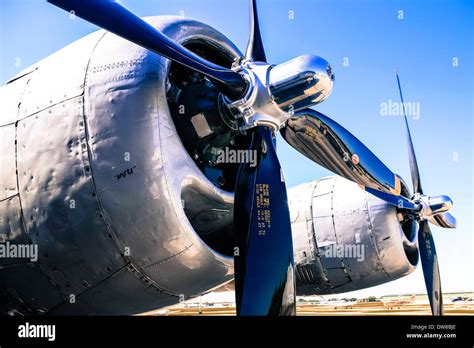
Under the wings sat four Wright R-3350 Turbo-Compound engines, each capable of producing up to 3,400 horsepower in boosted configuration. These engines used exhaust-driven turbines to reclaim wasted energy—an early attempt at efficiency enhancement long before modern turbofans optimized bypass ratios. The system was powerful but complex. Flight engineers constantly monitored intercooler temperatures, mixture settings, and propeller pitch, juggling performance against reliability.
The Constellation cruised near 375 mph and reached a service ceiling of 25,000 feet, high enough to avoid most weather disturbances. Its 4.75 psi cabin differential pressure kept passengers comfortable at altitude equivalent to roughly 8,000 feet above sea level. In an era when flying was still exotic, this was transformative. Air travel became smoother, faster, and more predictable.
Military Evolution: From C-69 to C-121
After 1962, U.S. military Constellations were redesignated C-121, though the lineage traces back to the C-69. Military Connies fulfilled three principal roles: long-range transports, VIP aircraft, and airborne warning-and-control platforms.
The C-121C Super Constellation extended the fuselage and incorporated weather radar. The VC-121 variants served as airborne command posts, their interiors transformed into executive suites capable of hosting generals and presidents. Meanwhile, the RC-121 and EC-121 variants bristled with radar domes and electronic surveillance equipment, acting as precursors to modern AWACS platforms.
More than 600 military-configured Constellations served from 1943 through the early 1970s. They operated alongside emerging jet transports, bridging eras. The Connie’s piston engines roared beneath the contrails of jetliners, a mechanical symphony of two technological philosophies sharing the same sky.
VH-EAG “Southern Preservation”: Australia’s Flying Super Connie
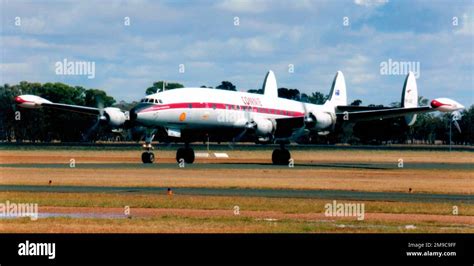
One of only two airworthy Lockheed C-121 Constellations today is VH-EAG, known as “Southern Preservation.” Originally built as a C-121C for the United States Air Force in 1955, serial number 54-0157 served multiple Air National Guard units before retirement to Davis-Monthan Air Force Base in 1977. There it rested under the Arizona sun, aluminum slowly oxidizing in desert silence.
Its resurrection reads like improbable fiction. Members of Australia’s Historical Aircraft Restoration Society (HARS) discovered the airframe while sourcing parts for a Lockheed Neptune. What began as a search for spares became a five-year restoration odyssey involving 47 volunteer trips from Australia to Arizona and roughly 16,000 hours of labor.
In 1996, after nearly two decades grounded, the restored Super Constellation departed the United States and embarked on a 39.5-hour ferry flight to Sydney via Oakland, Honolulu, Pago Pago, and Nadi. The image of a piston-powered propliner crossing the Pacific in the jet age bordered on poetic defiance.
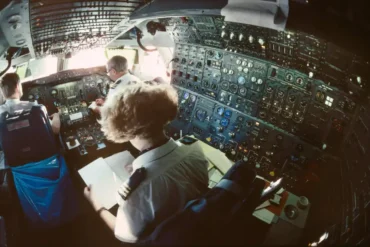
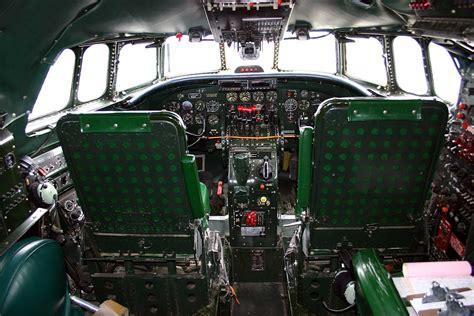
Today, VH-EAG wears Qantas livery, honoring Australia’s aviation heritage. Based at Illawarra Regional Airport, it conducts demonstration flights and airshow appearances. Passengers who step aboard encounter analog instrumentation, celestial navigation astrodomes, and a cockpit requiring coordination between pilots and flight engineer. Flying this aircraft is not automation management; it is choreography.
N422NA “Bataan”: From MacArthur’s Command to Apollo Support
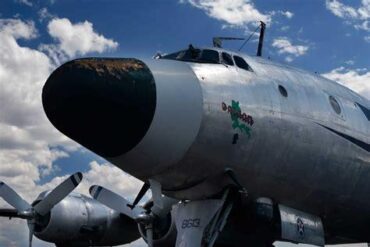
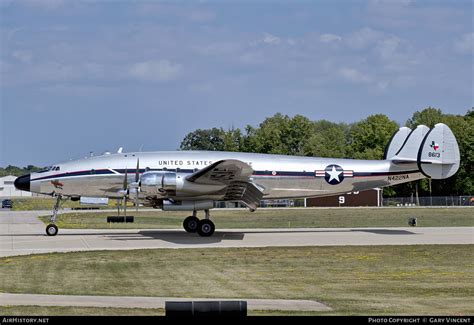
Across the Pacific, the second airworthy example carries even deeper layers of history. VC-121A 48-0613, later registered as N422NA, is widely known as “Bataan.”
Delivered in 1948, it initially served in the Berlin Airlift before conversion into a VIP aircraft. Outfitted with weather radar—the first of its kind in USAF service—and an executive interior, it became the personal transport of General Douglas MacArthur during the Korean War. The aircraft carried him on battlefield inspection tours and to his historic meeting with President Truman at Wake Island.
The Constellation’s cabin became a flying command center. Its combination of speed, range, and relative comfort gave military leadership unprecedented mobility. Strategy could now travel at 300-plus miles per hour.
After its VIP tenure, Bataan entered a second life with NASA from 1966 to 1970. Re-registered under NASA tail code N422NA, it supported the Apollo program by transporting calibration equipment and telemetry hardware to tracking stations worldwide. It quietly assisted humanity’s leap to the Moon.
Years of outdoor storage threatened to reduce this layered history to corrosion. Rescue came in 1993 when the Planes of Fame Air Museum in Chino, California, undertook restoration. Structural corrosion in wing spars, obsolete avionics, and aged systems required meticulous attention. The result is an aircraft restored not as an approximation, but as a working artifact faithful to its period configuration.
What It Takes to Keep a 1950s Propliner Airworthy
Maintaining a 70-year-old piston aircraft in flight condition is an exercise in mechanical archaeology. Spare parts are scarce. Original manufacturers have long since ceased production. Engineers must reverse-engineer components or salvage parts from retired airframes.
The Wright R-3350 engines alone demand reverence. Radial engines use cylinders arranged like spokes around a crankshaft. They are robust yet temperamental. Oil leaks are less an anomaly than a lifestyle. Mechanics monitor magnetos, carburetors, and turbo-compound recovery turbines with the attentiveness of cardiologists.
Regulatory compliance adds further complexity. Modern airworthiness standards were not written with mid-century propliners in mind. Each flight requires careful documentation, inspection, and risk management. The dedication required borders on monastic.
Yet when the four radials ignite in sequence and the triple tail lifts against the horizon, the effort justifies itself in vibration and sound.
Why the Last Airworthy Lockheed C-121 Constellations Matter
These final flying Connies are not mere nostalgia machines. They are kinetic textbooks. They demonstrate a transitional era when piston technology reached its zenith just before jets redefined the skyline. They reveal a moment when engineers squeezed astonishing performance from reciprocating engines and aluminum alloy.
Watching a Constellation climb is to witness controlled complexity. Propeller tips approach transonic speeds. Exhaust turbines recover energy from waste gases. Pressurization systems hum with pre-digital ingenuity. It is engineering without microchips, reliant on analog gauges and human intuition.
The aircraft also serve as cultural bridges. Veterans see memory. Younger generations see wonder. In a world of composite fuselages and fly-by-wire systems, the Connie offers tactile authenticity. Rivets are visible. Control cables can be traced by eye. Systems can be understood in mechanical terms rather than software abstraction.
The Future of the Final Flying Connies
Preserving airworthy Lockheed C-121 Constellations will only grow more challenging. Skilled engineers familiar with radial engines are retiring. Fuel costs rise. Insurance and regulatory burdens intensify. The survival of these aircraft depends on partnerships between museums, educational institutions, sponsors, and volunteers willing to apprentice in analog craftsmanship.
There is also a philosophical dimension. Aviation history is often preserved statically, behind ropes and placards. The Constellation rejects stillness. It was designed to move, to cross oceans, to bend geography into connection. Keeping it airworthy honors that original purpose.
When a Super Constellation rolls down a runway in 2026, it does more than entertain. It collapses time. It links wartime logistics, postwar optimism, Cold War strategy, and lunar exploration into a single airborne narrative.
The last airworthy Lockheed C-121 Constellations are proof that heritage and motion can coexist. They are reminders that progress does not erase beauty—it layers upon it. And as long as at least one Connie’s triple tail rises into the sky, the golden age of aviation remains not a memory, but an experience written in contrails.