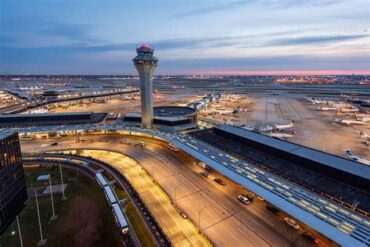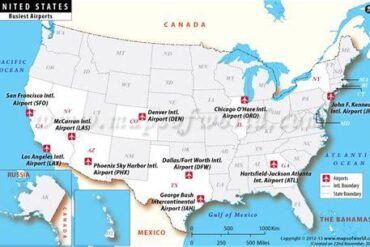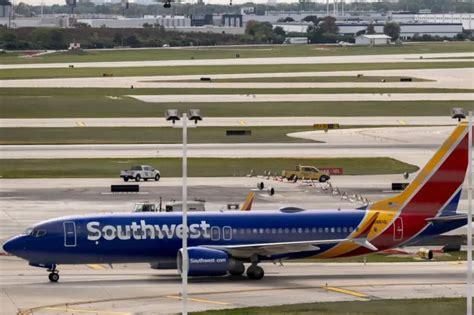
Chicago O’Hare International Airport has long been one of the most important aviation hubs in the world, handling millions of passengers and serving as a critical gateway for domestic and international travel. Yet in 2026, Southwest Airlines officially ended its operations at O’Hare after only five years, marking a surprising retreat from one of the most recognizable airports in the United States.
Southwest Airlines’ Short-Lived Chicago O’Hare Expansion
Southwest Airlines’ arrival at Chicago O’Hare International Airport (ORD) in 2021 was viewed as a strategic move designed to capture new opportunities created by changing travel patterns after the coronavirus pandemic. Before that expansion, Southwest’s Chicago presence was heavily concentrated at Chicago Midway International Airport (MDW), where the airline had built one of its strongest operational bases.
The decision to add O’Hare service reflected a broader industry trend. Airlines were adjusting networks, searching for new sources of demand, and attempting to compete for passengers who had shifted travel habits. For Southwest, entering O’Hare offered access to a larger airport with extensive connectivity and a stronger presence among business travelers.
However, the experiment never reached the scale that Southwest originally envisioned. Although O’Hare is among the world’s busiest airports by aircraft movements, operating there presented challenges that were difficult for Southwest to overcome. The airport’s size, congestion, and complex operating environment made it less efficient compared with the airline’s established Midway operation.
Why Southwest Airlines Pulled Out of Chicago O’Hare
The primary reason behind Southwest’s departure was not a collapse of demand in Chicago. Instead, the move was part of a larger network consolidation strategy aimed at improving efficiency and focusing resources where the airline already had a stronger competitive position.
Southwest explained that ending O’Hare service would allow the company to refine its network while maintaining a significant presence in the Chicago market through Midway. The airline emphasized that passengers would continue to have extensive service options from its traditional Chicago base.
The difference between O’Hare and Midway is significant. O’Hare is a massive airport dominated by major network carriers, including large operations from United Airlines and American Airlines. Managing flights in such an environment can require additional resources, while competition for gates, slots, and passenger demand is intense.
Midway, by contrast, has historically been closely associated with Southwest Airlines. The airport’s smaller size, simpler layout, and strong local customer base fit better with Southwest’s operational model. The airline has spent decades developing its Midway network, making it easier to schedule aircraft, manage crews, and maintain reliable service.
Southwest’s Five-Year O’Hare Route Network
During its time at O’Hare, Southwest operated a relatively limited network compared with its larger airport bases. Between 2021 and 2026, the airline served 13 destinations from the airport, including popular routes such as Austin, Dallas, Denver, Las Vegas, Nashville, Phoenix, Orlando, Tampa, and Fort Lauderdale.
The airline’s O’Hare schedule initially grew after launch. In 2021, Southwest scheduled approximately 6,921 departures from O’Hare. That number increased to 9,792 departures in 2022 as travel demand recovered.
The peak came in 2023, when Southwest scheduled more than 10,000 departures from O’Hare. However, after that point, flight activity began declining. Scheduled departures dropped to around 6,934 in 2024 and approximately 4,587 in 2025.
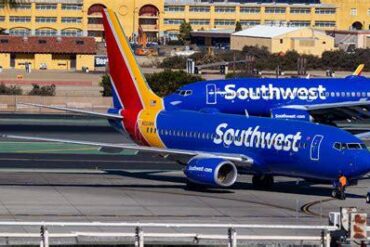
By early 2026, Southwest’s O’Hare operation had already become much smaller, with only 1,833 scheduled departures between January and June. The airline operated its Boeing 737-700, Boeing 737-800, and Boeing 737 MAX 8 aircraft on these routes.
The gradual reduction showed that O’Hare was becoming less central to Southwest’s strategy. Instead of expanding the operation, the airline increasingly shifted capacity toward airports where it could achieve better aircraft utilization and stronger financial performance.
Chicago Midway Remains Southwest Airlines’ True Chicago Hub
Southwest’s exit from O’Hare does not represent a withdrawal from Chicago. In reality, the airline remains one of the dominant carriers at Midway, where it continues operating thousands of flights every month.
Chicago Midway better matches Southwest’s traditional business model. The airline’s point-to-point network, frequent domestic service, and simplified operations have historically performed well at airports where it can maintain a strong presence without directly competing against large international hubs.
From Midway, Southwest continues serving numerous domestic destinations, including major markets such as Denver, Dallas, and New York. The airline also maintains international services to destinations including Cancun and Punta Cana.
The decision reflects a broader trend across the airline industry. Rather than simply chasing the largest airports, carriers are increasingly focusing on locations where their business models work most effectively.
A Strategic Retreat Rather Than a Failure
Southwest Airlines’ departure from Chicago O’Hare highlights an important reality of modern airline operations: size does not always guarantee success. While O’Hare remains one of the world’s most important airports, its advantages do not automatically translate into profitability for every airline.
For Southwest, the move represents a careful adjustment rather than a failure. The company tested O’Hare, evaluated the results, and decided that concentrating resources at Midway would produce better long-term results.
The airline’s five-year O’Hare experiment demonstrates how aviation networks constantly evolve. Airports compete for airlines, airlines compete for passengers, and carriers must continuously adapt their strategies to changing market conditions.
By leaving O’Hare and strengthening Midway, Southwest is choosing efficiency over expansion. The decision may appear surprising given O’Hare’s global importance, but it reflects the airline’s long-standing focus on operational simplicity, cost control, and maintaining strong positions in markets where it has a proven advantage.