How Autoland Allows Widebody Aircraft To Land Without Seeing The Runway
Dense fog is one of the most demanding conditions in commercial aviation. From a passenger’s perspective, a landing through thick fog may appear almost impossible. The aircraft approaches a runway hidden behind a wall of gray, and the outside world may remain invisible until just moments before touchdown—or even until after the wheels are already on the ground.
Yet modern widebody aircraft can safely land in near-zero visibility thanks to a highly advanced system known as autoland. Instead of depending on a pilot’s eyesight to locate the runway, the aircraft follows precise electronic guidance from ground-based navigation equipment and onboard sensors. The airplane essentially flies along an invisible pathway created by radio signals, computers, and automated flight controls.
Autoland is not an automatic replacement for pilots. It is a sophisticated safety system that combines aircraft technology, airport infrastructure, and human decision-making. During a Category III instrument approach, multiple flight computers, autopilot channels, radio navigation systems, and sensors work together to guide a large commercial aircraft from thousands of feet above the ground to a controlled touchdown.
The process represents one of aviation’s greatest achievements: allowing aircraft such as the Boeing 777, Boeing 787, Airbus A350, and Airbus A380 to continue operating safely when normal visual landing references disappear.
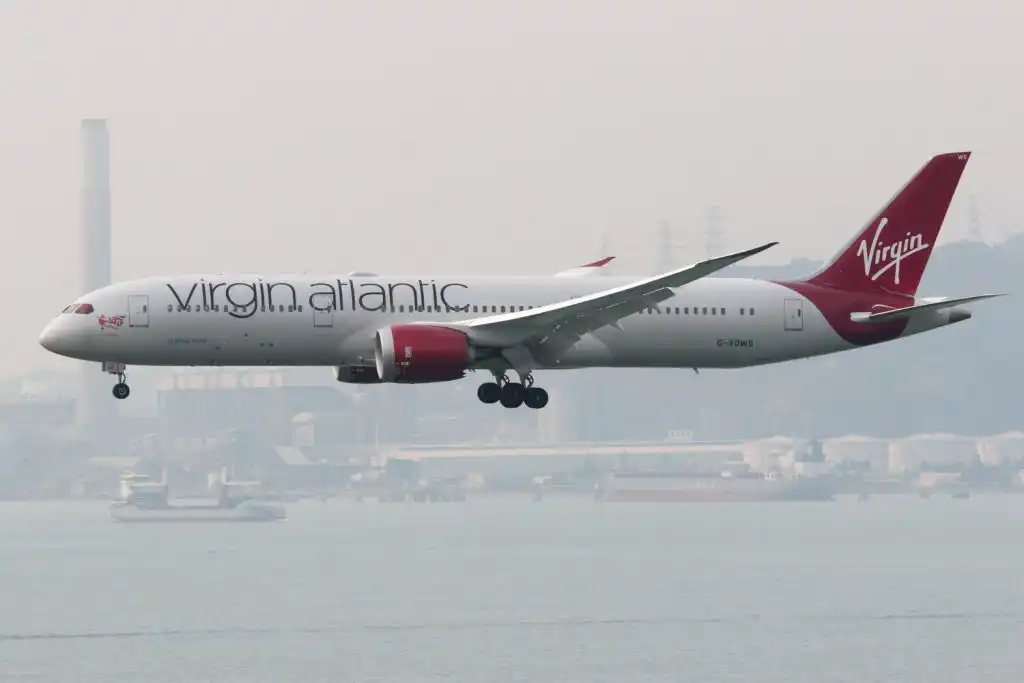
The Instrument Landing System Creates An Invisible Runway Path
Every successful autoland begins with the Instrument Landing System (ILS). Although modern aircraft use advanced satellite navigation and flight management computers, ILS remains the foundation of precision approaches in extremely poor visibility.
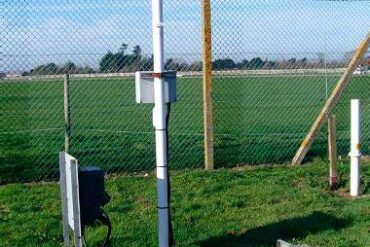
The ILS works by transmitting two highly accurate radio signals from equipment located near the runway. These signals create an invisible three-dimensional path that the aircraft follows during its descent.
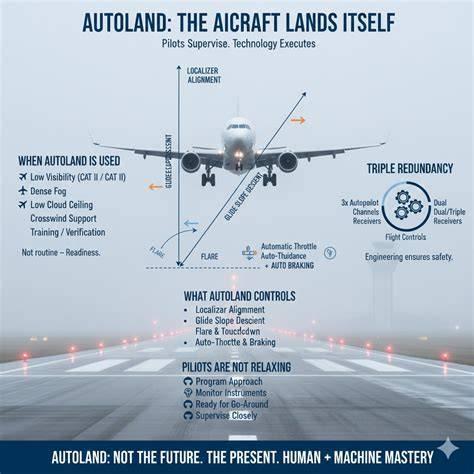
The first component is the localizer, which provides horizontal guidance. It creates a radio beam aligned with the runway centerline. The aircraft constantly measures its position relative to this signal and automatically makes small corrections to remain perfectly centered.
If the aircraft moves slightly left of the runway centerline, the autopilot detects the deviation and commands a correction. If it moves right, the system makes the opposite adjustment. These changes happen smoothly and continuously, often with precision far beyond what a human pilot could maintain manually during a completely blind approach.
The second component is the glideslope, which provides vertical guidance. This signal establishes the correct descent angle, usually around three degrees, allowing the aircraft to maintain a stable approach toward the runway threshold.
Together, the localizer and glideslope create an electronic tunnel leading directly to the runway. The aircraft does not need to see the airport environment because it is following information received through radio signals.
Before reaching the final approach segment, pilots carefully configure the aircraft for autoland operations. They verify the correct runway, check weather conditions, confirm system availability, and engage multiple autopilot channels when required.
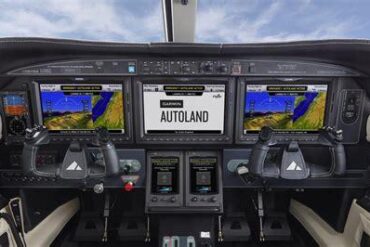
As the aircraft captures the ILS signals, the flight deck displays indications such as LOC and G/S, confirming that the autopilot is tracking the localizer and glideslope correctly. These mode indications are continuously monitored because they provide pilots with confirmation that the automated landing sequence is functioning normally.
Even though the computer is controlling the aircraft, pilots remain responsible for every decision. They monitor the approach, review aircraft performance, complete required checklists, and remain prepared to disconnect the system instantly if conditions change.
What Happens During The Final Seconds Before Touchdown
The most impressive part of an autoland occurs during the final moments before the aircraft reaches the runway. At this stage, the airplane is only a few hundred feet above the ground, and the margin for error becomes extremely small.
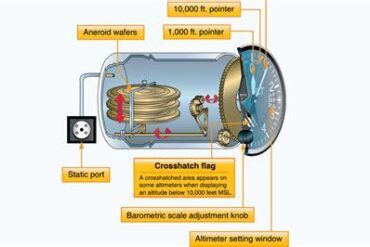
While the ILS continues providing guidance, the aircraft begins relying heavily on onboard sensors, especially the radio altimeter. Unlike a traditional barometric altimeter that measures altitude based on air pressure, the radio altimeter directly measures the aircraft’s height above the terrain by sending radio waves toward the ground and calculating the return signal.
This information becomes critical during the flare phase of landing.
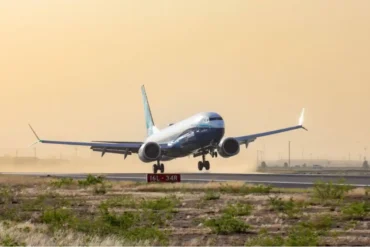
At approximately 50 feet above the runway, the autoland system begins raising the aircraft’s nose slightly to reduce the descent rate. This maneuver, known as the flare, prepares the aircraft for a smooth touchdown.
At around 30 feet, the autothrottle reduces engine power toward idle. The aircraft continues descending in a controlled manner until the main landing gear contacts the runway.
For a passenger sitting inside the cabin, the landing may feel completely normal. However, behind the scenes, a complex sequence of automated actions is occurring within seconds.
After touchdown, the aircraft does not immediately hand control back to the pilots. Many autoland-capable aircraft continue into an automated rollout phase.
During rollout, the system uses runway guidance information, rudder controls, and nosewheel steering inputs to keep the aircraft aligned with the runway centerline while it slows down.
This capability is especially valuable in dense fog. A pilot may still have little or no outside visibility immediately after landing, but the aircraft can maintain directional control until the crew takes over.
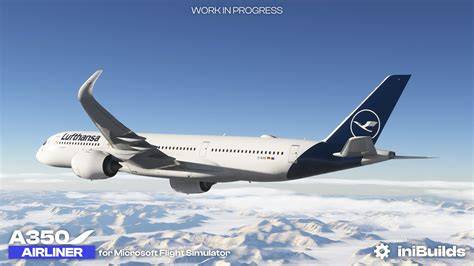
Why Widebody Aircraft Need Multiple Backup Systems For Autoland
The reason autoland is trusted during the lowest visibility conditions is not because it depends on one perfect computer. Instead, it is designed around redundancy.
Modern widebody aircraft use multiple independent systems that constantly monitor each other. A typical Category III autoland system may involve two or three autopilot channels working simultaneously.
These systems compare calculations, verify performance, and detect disagreements. If one component develops a problem, the remaining systems can identify the failure and determine whether the landing can continue.
This approach creates different levels of autoland capability.
A fail-passive system is designed to remain safe after a failure but may disconnect automation and require pilots to take control. In many cases, the crew will immediately perform a go-around rather than continue the approach.
A fail-operational system provides a higher level of protection. It can tolerate a single failure while continuing the landing automatically. This capability is essential for the most demanding Category IIIb approaches, where runway visual range may be extremely limited.
In Category IIIb conditions, pilots may have a decision height of nearly zero, meaning they might not see the runway before touchdown. The aircraft must therefore be capable of completing the landing without relying on human visual confirmation.
However, autoland safety does not come only from the aircraft itself. Airports must also meet strict requirements.
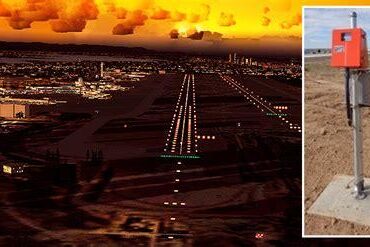
A runway supporting Category III operations needs:
- Highly accurate ILS equipment
- Protected areas around navigation antennas
- Reliable runway lighting systems
- Backup electrical power
- Specialized low-visibility operating procedures
Air traffic controllers also play an important role by managing vehicle movements and aircraft spacing. A vehicle or another aircraft positioned too close to ILS equipment could interfere with the sensitive signals required for precision guidance.
Autoland is therefore not simply an aircraft feature. It is an entire aviation ecosystem working together.
Pilots Still Control The Mission During An Automatic Landing
The biggest misunderstanding about autoland is the idea that pilots simply press a button and allow the aircraft to land itself.
In reality, pilots remain deeply involved throughout the entire procedure.
Before beginning a Category III approach, flight crews must confirm that the aircraft, airport, and weather conditions meet operational requirements. They review system status messages, configure the aircraft, and ensure all necessary equipment is functioning.
During the approach, pilots continuously monitor the flight mode annunciator, which displays exactly what the aircraft automation is doing.
They verify that the airplane captures the localizer, follows the glideslope, enters flare mode, and transitions correctly into rollout.
If any important system behaves unexpectedly, the crew immediately evaluates the situation. A failed autopilot channel, incorrect guidance information, or unstable approach can result in a missed approach procedure.
The ability to recognize when automation should be trusted—and when it should be abandoned—is one of the most important skills in modern airline operations.
Pilots also train extensively for these scenarios. Full-flight simulators allow crews to practice extremely low-visibility approaches, including situations where automated systems fail moments before landing.
This training ensures that pilots remain fully prepared even though most modern aircraft complete thousands of successful automated approaches every year.
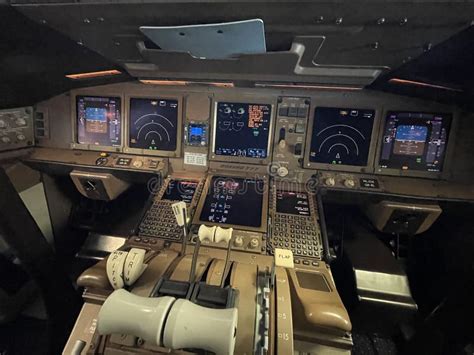
The Evolution Of Automatic Landing Technology
The development of autoland technology began decades ago as airlines searched for ways to improve reliability during poor weather.
One of the earliest commercial aircraft to demonstrate advanced automatic landing capability was the Lockheed L-1011 TriStar. Its development showed that large passenger aircraft could safely use automation to complete approaches and landings in conditions that previously caused major operational disruptions.
Since then, advances in computer processing, digital flight controls, sensors, and navigation technology have transformed autoland into a standard capability on many modern airliners.
Today’s widebody aircraft contain far more computing power than early systems could provide. Flight computers can process enormous amounts of information, compare multiple sources of data, and react instantly to small changes in aircraft position.
However, the philosophy behind autoland has remained consistent: automation supports pilots rather than replacing them.
The system exists because humans have limitations. Vision becomes unreliable in fog, workload increases during difficult approaches, and maintaining precise control manually can become challenging.
Autoland provides an additional layer of protection when environmental conditions become extreme.
Why Autoland Does Not Make Pilots Less Important
Modern aviation is often described as highly automated, but automation has not removed the need for skilled pilots. Instead, it has changed their role.
A pilot flying a modern widebody aircraft is not simply moving control surfaces manually. The job involves managing complex systems, evaluating risks, making operational decisions, and understanding when technology should be used.
During a near-zero visibility landing, the aircraft may perform the physical movements required for touchdown, but the pilots remain responsible for ensuring that the entire operation is safe.
They decide whether the approach should begin. They verify that the equipment is available. They monitor every stage of the landing. They are prepared to intervene immediately.
The safest flights occur when advanced technology and human expertise work together.
The Future Of Low-Visibility Landings
Future developments in aviation technology will likely make low-visibility operations even more capable. Improvements in satellite navigation, digital communication systems, and flight control software may provide additional options for precision approaches.
However, the fundamental principles of autoland are unlikely to change. Safety will continue to depend on accurate guidance, reliable aircraft systems, properly equipped airports, and highly trained flight crews.
When a widebody aircraft lands in thick fog, the event may appear simple from the cabin. Passengers may feel only a smooth touchdown and the sound of landing gear meeting the runway.
Behind that moment is a remarkable combination of engineering and human expertise.
The aircraft follows invisible signals. Computers make thousands of adjustments. Pilots monitor every decision.
In near-zero visibility, autoland allows the airplane to find the runway—but it is the partnership between automation and pilots that brings the aircraft safely home.