Qatar Airways has continued to strengthen its presence in North America with the return of the Doha–Philadelphia route, but the airline’s overall US capacity picture in 2026 tells a more complicated story. While the carrier has expanded its US network to 12 destinations, operational adjustments, geopolitical uncertainty, and aircraft deployment changes have resulted in a significant reduction in available flights and seats compared with the previous year.
According to current scheduling data from Cirium, Qatar Airways is operating fewer services to the United States in August 2026 than during the same period in 2025. The airline’s total US-bound flights have declined by 9.2% year-on-year, falling from 465 monthly flights to 422. More importantly, available seat capacity has decreased by 10.6%, dropping from 153,512 seats to 137,232.
The decline highlights how international airlines are adapting their networks in response to changing market conditions. Qatar Airways remains one of the world’s leading long-haul carriers, but its US operations show that even major global airlines must constantly balance demand, aircraft availability, and regional challenges.
Qatar Airways Restores Philadelphia Route With Airbus A350 Service
The most positive development for Qatar Airways’ American network is the return of Philadelphia International Airport. On August 1, 2026, the airline officially restarted daily flights between Doha Hamad International Airport and Philadelphia, making Philadelphia the carrier’s 12th US destination.
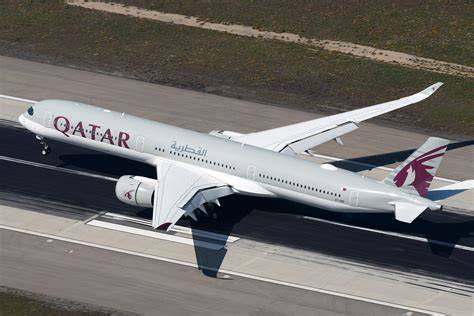
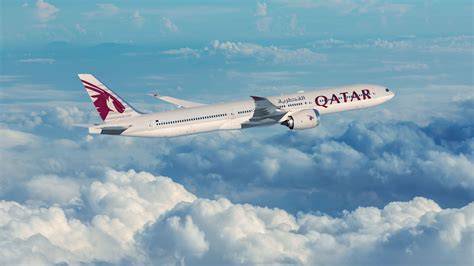
The route is operated by the Airbus A350-900, one of Qatar Airways’ flagship long-haul aircraft. Passengers traveling on this service benefit from the airline’s premium Qsuite business class, along with upgraded connectivity through onboard satellite internet services.
Flight QR727 departs Doha at 7:30 AM local time and arrives in Philadelphia after approximately 14 hours. The return service, QR728, leaves Philadelphia at 9:30 PM and arrives in Doha the following day after a shorter overnight journey of around 12 hours and 55 minutes.
The Philadelphia restart represents a strategic move for Qatar Airways because the city provides access to a major US metropolitan area and strengthens connections between North America, the Middle East, and onward destinations across Asia and Africa.
However, the additional Philadelphia flights have not been enough to offset reductions elsewhere across the airline’s American network.
Major US Routes Experience Frequency Reductions
Although Qatar Airways continues to serve key US markets, several important routes have experienced lower frequencies compared with August 2025. The airline’s network currently covers destinations including New York JFK, Chicago, Dallas, Houston, Seattle, Los Angeles, Miami, San Francisco, Atlanta, Boston, Washington, and Philadelphia.
Some markets have remained relatively stable. New York JFK has actually seen an increase in scheduled flights, rising from 80 monthly services last year to 89 in 2026. Daily operations have also continued at Chicago O’Hare, Houston, and Seattle, while Dallas Fort Worth remains one of Qatar Airways’ strongest US markets with twice-daily service.
Other cities, however, have seen noticeable reductions. Washington Dulles previously received twice-daily flights during the same period in 2025, reaching 62 monthly services. In 2026, that number has fallen to 44 flights.
Meanwhile, Atlanta, Boston, Los Angeles, and San Francisco have all been reduced from daily operations to approximately four flights per week. Miami has also experienced a decline, with monthly flights dropping from 44 to 31.
These adjustments reflect a broader trend in aviation where airlines increasingly prioritize routes with the strongest demand and profitability rather than maintaining maximum frequency across every market.
Aircraft Changes Reduce Available Seats Even Further
The reduction in Qatar Airways’ US capacity is not only caused by fewer flights. Changes in aircraft selection have also played a major role.
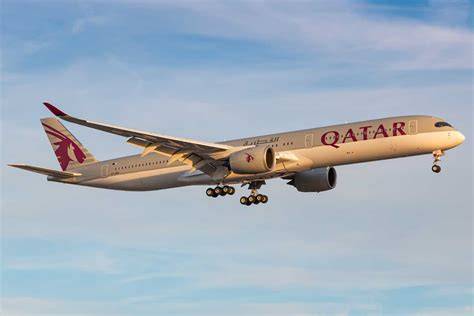
The airline has reduced its use of larger widebody aircraft on American routes. The Airbus A350-1000, one of Qatar Airways’ highest-capacity aircraft, has decreased from 248 US flights last year to 209 flights in 2026. Similarly, the Boeing 777-300ER has dropped from 155 operations to 124.
At the same time, Qatar Airways has increased the use of smaller aircraft types. The Boeing 777-200LR, which did not operate US services during the same period last year, has returned with 18 scheduled rotations. The Airbus A350-900 has also increased slightly, rising from 62 flights to 71.
This fleet reshuffle allows Qatar Airways to maintain connectivity while matching aircraft size with passenger demand. Operating smaller aircraft on certain routes can help improve efficiency, especially when demand does not justify the use of larger jets.
A Strategic Adjustment During a Challenging Aviation Environment
Qatar Airways’ US network changes demonstrate the complexity of modern international aviation. Adding Philadelphia while reducing frequencies elsewhere shows that the airline is not abandoning the American market. Instead, it appears to be pursuing a more targeted approach.
The carrier continues to rely on the strength of its Doha hub, which connects passengers between North America and destinations throughout Asia, Africa, and the Middle East. However, shifting travel patterns and regional uncertainties have encouraged airlines to become more selective with capacity decisions.
For passengers, the changes mean fewer weekly options on some routes but continued access to Qatar Airways’ premium long-haul experience. For the airline, the strategy represents an effort to protect profitability while maintaining an important global network.
Qatar Airways’ US operations in 2026 therefore provide a clear example of how international carriers are adapting. Expansion and reduction can happen at the same time, with new routes opening while existing markets are carefully adjusted to meet changing aviation realities.