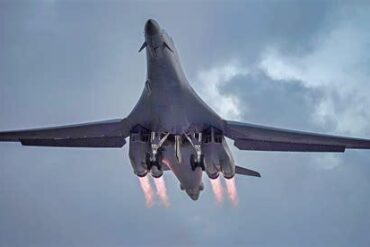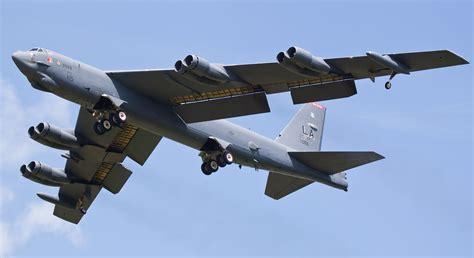
The US Air Force is holding daily meetings to track down spare parts for its B-52 Stratofortress and B-1 Lancer bombers, an unusual level of attention that highlights how difficult it has become to keep some of America’s most important long-range aircraft ready for combat. The effort, known as the North Star Readiness Campaign, brings together Air Force Global Strike Command, Air Force Materiel Command, and the Defense Logistics Agency in an attempt to move urgently needed components through a supply system that has struggled to keep pace with the demands of an aging bomber fleet.
The objective is straightforward: increase the number of bombers that are actually available for missions. Rather than waiting for major modernization programs to transform the fleet, the Air Force is concentrating on a problem that can be addressed immediately. Parts that previously took a week or more to locate and deliver are now being targeted for turnaround times of roughly two or three days. For aircraft that can spend significant periods waiting for components before returning to service, that difference can have a direct effect on fleet availability.
The timing of the initiative has also attracted considerable attention. North Star was launched shortly after a B-52 crash at Edwards Air Force Base that killed all eight people aboard, although there is no indication that the accident was caused by a shortage of spare parts or maintenance delays. The mishap remains a separate investigation, but it occurred against the backdrop of a bomber fleet in which some airframes have been flying for more than six decades. That extraordinary age makes the broader challenge of maintaining the aircraft impossible to ignore.
B-52 and B-1 Readiness Has Fallen Sharply
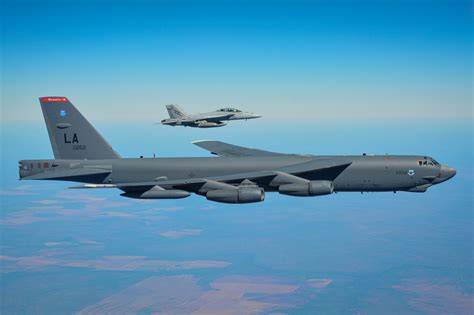
The need for North Star becomes clearer when the Air Force’s readiness figures are examined. In fiscal year 2024, the B-52’s mission-capable rate was about 54%, down from approximately 59% in 2022 and more than 66% in 2020. The B-1 experienced an even more severe decline. Its mission-capable rate fell from about 55% in 2022 to just 43% in 2024.
Those figures do not mean that only 43% or 54% of the aircraft physically exist or can fly. Mission-capable rates measure whether aircraft are available to perform assigned missions, and they can be affected by maintenance, inspections, modernization work, component shortages, and other factors. Nevertheless, sustained declines make it harder for commanders to generate the required number of aircraft without placing additional pressure on the bombers that remain available.
North Star is designed to attack one of those problems directly. Maintenance officials, flight-line personnel, logisticians, and acquisition leaders are being brought into much closer coordination. Instead of allowing a parts shortage to remain buried within separate organizational processes, the daily meetings create a mechanism for identifying the problem, determining where the required component is located, and accelerating its movement toward the aircraft.
According to the Air Force, the approach has already produced a measurable result. Mission-impacting parts faults have reportedly fallen from more than 450 to roughly 160 since the campaign began. That is a substantial reduction, although the more important question will be whether the improvement can be sustained after the immediate push receives less attention.
North Star Is Really a Supply Chain Intervention
North Star is not a completely new bureaucracy created specifically to solve the bomber problem. Instead, it brings together several existing efforts and organizations that were already working on aircraft availability. Air Force Materiel Command has been attempting to accelerate the return of aircraft from deep maintenance and depot-level overhauls, while Global Strike Command has focused on ensuring that the operational force has enough aircraft available for its missions.
The daily meetings effectively put these activities under a much more aggressive management rhythm. That matters because a parts shortage can involve several separate delays. A component may exist somewhere in the military inventory but not be immediately identified. Another part may require repair before it can be installed. A third may need to be manufactured, inspected, transported, or released through another organization.
For an aircraft sitting on the ground, those distinctions can become irrelevant. The bomber simply remains unavailable until the required component reaches the maintenance team. North Star attempts to shorten every step between identifying the problem and getting the aircraft back into service.
That makes the campaign less dramatic than a new engine, radar, or weapon, but potentially just as important in the short term. A bomber cannot contribute to combat power while it is waiting for a component, regardless of how capable its weapons and sensors may be.
The B-52 Is Being Rebuilt While It Ages
The B-52 presents an especially complicated maintenance challenge because the aircraft was designed in an entirely different technological and industrial era. The B-52H entered service in the 1960s, and some of the aircraft still flying today are older than many of the people responsible for maintaining them.
The Air Force’s long-term solution is the B-52J modernization program, which will replace the bomber’s eight aging engines with new Rolls-Royce F130 turbofans under the Commercial Engine Replacement Program. The new engines are expected to reduce fuel consumption by as much as 30% while increasing the aircraft’s range beyond 11,000 miles.
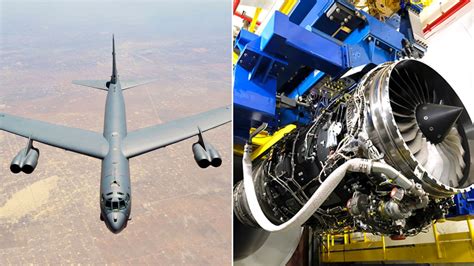
The engine replacement program is a major industrial undertaking. The contract is valued at as much as $2.6 billion, with more than 600 engines planned for the fleet of 76 B-52 aircraft. The program passed its Critical Design Review on May 4, representing an important milestone in the modernization effort.
But the modernization schedule also explains why the Air Force needs North Star today. The first new engines for an operational B-52 are not expected until 2027, while the broader recapitalization timeline has stretched into fiscal year 2033. The B-52 therefore has to remain operational for years before its most important modernization changes are fully realized.
That creates a difficult balancing act. The Air Force must spend money and manpower maintaining the existing aircraft while simultaneously investing in the technology intended to keep the type in service for decades more.
The B-1 Faces a Different Set of Problems
The B-1 Lancer has its own modernization path. Unlike the B-52, which traces its origins to the 1950s, the B-1 was developed during the Cold War as a high-speed bomber capable of penetrating hostile airspace at low altitude. Its original mission included both conventional and nuclear roles, although its nuclear external weapon capability was subsequently removed.
Today, the B-1 is being upgraded primarily for conventional warfare. New weapons integration efforts are expected to increase its missile capacity by approximately 50%, while updated software and other systems are intended to make the aircraft more useful against modern threats.
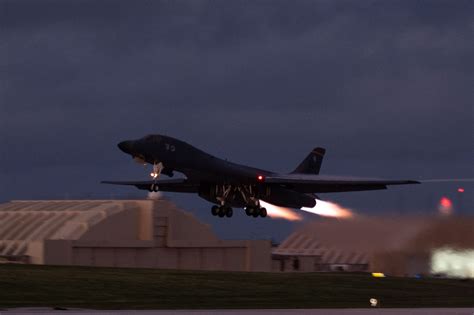
Yet modernization cannot solve a component shortage overnight. The B-1 must still depend on an industrial and logistics system capable of supporting an aircraft that has accumulated decades of flight hours. Earlier readiness assessments showed how quickly B-1 availability could fall when supply problems became more severe.
That is why North Star matters to the Lancer even as the Air Force prepares for its eventual retirement. The campaign is effectively buying operational time for a fleet that still has important missions to perform before the next generation of bombers becomes available in sufficient numbers.
The B-21 Raider Cannot Arrive Fast Enough
The long-term answer to America’s aging bomber fleet is the Northrop Grumman B-21 Raider, but the Raider cannot immediately replace dozens of B-1s and B-52s.
The Air Force and Northrop Grumman have indicated that the first operational B-21 is expected to arrive at its South Dakota base in 2027. That schedule itself represents a shift from earlier expectations that deliveries would begin in the mid-2020s. Even once the first aircraft arrives, a handful of new stealth bombers will not instantly replace the combat capacity provided by an established bomber fleet.
The transition will therefore take years. The B-21 has to move through testing, production expansion, crew training, maintenance development, weapons integration, and operational deployment before it can assume a large share of the missions currently performed by legacy bombers.
That leaves the Air Force with a straightforward problem. The B-52 and B-1 have to remain sufficiently reliable until enough new-generation aircraft are available. North Star is essentially a bridge between today’s readiness problems and tomorrow’s bomber force.
An Aging Fleet Cannot Be Fixed With Meetings Alone
The success of the campaign should not be confused with a permanent solution to the Air Force’s deeper logistics problem. Daily meetings can identify a missing component more quickly, but they cannot automatically make obsolete parts easier to manufacture.
This distinction is particularly important for engines and systems designed decades ago. The industrial base supporting legacy aircraft can become increasingly fragile as suppliers disappear, production lines close, tooling ages, and demand becomes too small to justify conventional manufacturing processes.
The Air Force has already faced similar availability problems elsewhere. Its KC-46 tanker fleet, despite being much newer than the B-52 and B-1, has struggled to meet certain availability and readiness targets. Assessments have identified replacement-part shortages and reliability problems as contributors to those difficulties.
The lesson is that aircraft age and supply-chain health are closely connected, but they are not exactly the same problem. A new aircraft can experience parts shortages, while an old aircraft can remain highly useful if its logistics system is robust. The challenge for the B-52 and B-1 is that both conditions increasingly overlap.
The B-52 Crash Raises the Stakes
The June 15 B-52 crash at Edwards Air Force Base has inevitably added urgency to discussions surrounding the bomber fleet. The aircraft was involved in testing associated with a radar upgrade and carried eight people, including active-duty Air Force personnel, government employees, and Boeing employees.
The crash was described by officials at the base as unsurvivable, and it was the deadliest B-52 accident since 1982. It was also the first loss of a B-52 since the 2016 crash in Guam.
There is an important distinction here: the available information does not establish a connection between the crash and the spare-parts shortages targeted by North Star. The accident investigation must determine its own causes. Nevertheless, the tragedy has placed renewed attention on the risks involved in keeping aircraft from the 1960s flying while their successors remain years away from widespread operational deployment.
That is precisely why the Air Force’s supply-chain campaign has significance beyond a simple inventory exercise. Every improvement that keeps a bomber properly maintained and available contributes to the wider effort to manage a fleet operating during a prolonged transition.
B-52J and B-21 Will Define the Next Transition
The first B-52J modification work is expected to begin at Boeing’s San Antonio facility, while the first new F130 engines for an operational bomber are not expected until 2027. The upgraded aircraft is now projected to achieve combat readiness around 2033, considerably later than the original ambitions for the program.
At the same time, B-1 modernization will continue as the Air Force prepares to keep the Lancer flying into the late 2030s alongside the B-2. That means North Star is not a temporary solution measured in weeks. Its results could affect bomber availability across much of the remaining service life of both aircraft.
The real test will therefore be consistency. Reducing mission-impacting parts faults from more than 450 to around 160 is significant, but the Air Force needs the improvement to survive beyond an intensive campaign. If shortages begin climbing again once the daily attention fades, the underlying industrial problem will remain.
For now, however, the daily meetings reveal just how important the supply chain has become to American long-range aviation. The B-52 and B-1 do not simply need modernization programs; they need parts today. Until the B-21 is available in meaningful numbers and the B-52J begins returning to the fleet, the Air Force has little choice but to keep extracting as much readiness as possible from aircraft that were designed generations ago.
North Star is therefore less about finding a revolutionary new way to operate bombers than about making the existing system move faster. In a fleet where a missing component can keep an otherwise valuable aircraft grounded, sometimes the difference between a bomber sitting on the ramp and a bomber ready for a mission is simply knowing where the right spare part is—and getting it there before another day is lost.