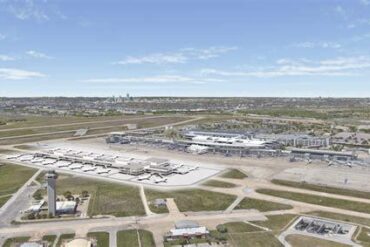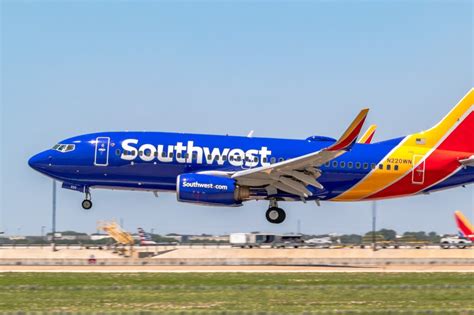
Southwest Airlines is significantly expanding its network from Austin-Bergstrom International Airport (AUS), adding 11 nonstop routes that will launch across 2026 and 2027. The expansion strengthens the airline’s already dominant position in Austin, where it now operates more flights, offers more seats, and carries more passengers than any other airline.
Southwest has served Austin for 49 years, making its presence in the Texas capital one of the longest-running parts of its network. According to Cirium Diio data, the airline averages about 218 daily aircraft movements at AUS in 2026, counting both departures and arrivals. That figure is already 5% higher than the previous record set in 2025.
Southwest Airlines Adds 11 Routes From Austin
The scale of Southwest’s operation is particularly striking when measured against competitors. The airline accounts for about 41% of scheduled aircraft movements at Austin, nearly twice the share held by second-place Delta Air Lines. Its new routes therefore build on an already extensive network rather than representing a standalone expansion.
The 11 routes cover a broad mix of leisure and business markets, including destinations in Tennessee, Ohio, Washington, Florida, Michigan, Costa Rica and California. Several are entirely new markets for Southwest from Austin, while others represent the return of routes the airline previously operated.
The expansion began on March 7, 2026, with new service to Steamboat Springs and Palm Springs. Cincinnati and Seattle followed on June 4. Knoxville became the latest addition on September 24, while Memphis is scheduled to begin on October 1.
Further additions are planned for October and March 2027, giving Southwest a continuing stream of new Austin services rather than concentrating the growth around a single launch period.
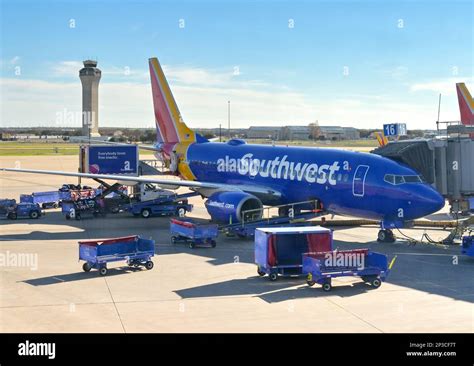
Full List of Southwest’s 11 New Austin Routes
The new routes and their currently announced schedules are:
- Austin–Steamboat Springs: Began March 7, 2026; weekly in 2026 and potentially daily in 2027.
- Austin–Palm Springs: Began March 7, 2026; two weekly initially, increasing later in 2026 and potentially daily in 2027.
- Austin–Cincinnati: Began June 4, 2026; mainly daily.
- Austin–Seattle: Began June 4, 2026; mainly daily. Southwest previously served the market until 2018.
- Austin–Knoxville: Began September 24, 2026; up to two daily flights around the launch period, with reduced seasonal service afterward.
- Austin–Memphis: Starts October 1, 2026; mainly six weekly flights. Southwest previously served Memphis until 2016.
- Austin–Destin-Fort Walton Beach: Starts October 3, 2026; weekly, but scheduled only through October 24.
- Austin–Santa Rosa: Starts October 3, 2026; weekly through October 24.
- Austin–Fort Myers: Starts March 7, 2027; up to two weekly flights.
- Austin–Detroit: Starts March 11, 2027; six weekly flights. Southwest briefly served the market in 2024.
- Austin–San José, Costa Rica: Starts March 13, 2027; weekly service using the Boeing 737 MAX 8.
The aircraft assigned across these routes include the Boeing 737-700, 737-800 and 737 MAX 8, allowing Southwest to adjust capacity according to expected demand.
Palm Springs Results Highlight the Challenge of New Routes
Not every new Austin route has produced equally strong results. Southwest’s initial experience on the Austin–Palm Springs market illustrates the difficulty airlines face when expanding into competitive leisure destinations.
Between March and May 2026, Southwest carried 3,373 round-trip passengers on the route, according to U.S. Department of Transportation data. When measured against the number of seats available, the airline recorded a 61.3% load factor during the period.
The monthly figures were particularly weak in April and May, when load factors fell to 42.0% and 42.4%, respectively. Southwest plans to resume service in November, creating an opportunity to determine whether a different schedule or seasonal demand pattern can improve the route’s performance.
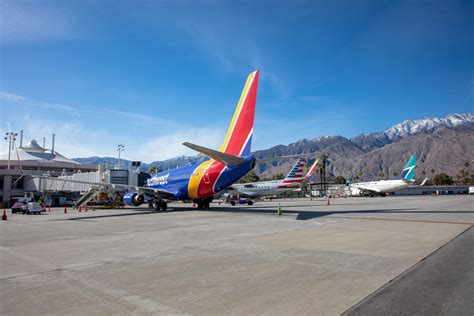
The market has historically been difficult for multiple airlines. Alaska Airlines operated between Austin and Palm Springs in 2021 and 2022 and achieved a 67.3% load factor. American Airlines served the route from 2022 through 2024, recording 69.8%, while Delta reached 62.8% in 2025.
Southwest and Delta also overlapped on the route during March and April 2026. Delta filled just 57.1% of its available seats during that period, suggesting that sustaining multiple competing nonstop services could prove difficult.
Austin Remains a Major Southwest Connecting Hub
Despite the mixed performance of individual routes, Austin plays an important role in Southwest’s broader network. DOT data for the 12 months ending June 2026 shows that Southwest carried nearly 9.1 million passengers to or from Austin.
Around 6.7 million passengers were local travelers, meaning Austin was their origin or final destination. The remaining approximately 2.4 million passengers connected through AUS, demonstrating that the airport is also an important transfer point within Southwest’s network.
Those connecting passengers generated an estimated $352 million in revenue. Austin remains smaller as a Southwest connecting center than Dallas Love Field and Houston Hobby, where estimated connecting traffic reached approximately 6.4 million and 5.1 million passengers, respectively.
The new routes could therefore serve two purposes: connecting Austin with additional nonstop destinations while also giving travelers in smaller markets more opportunities to reach other cities through Southwest’s network.
Southwest’s Austin Expansion Extends Into 2027
The addition of 11 routes and 12 airports, representing roughly 12,182 network miles, underscores how aggressively Southwest is developing Austin. The destinations range from mountain and desert leisure markets to major business centers and an international destination in Costa Rica.
The schedule is also not static. Several routes are seasonal or scheduled to increase in frequency, meaning the ultimate size of Southwest’s Austin operation could change substantially as demand develops.
For passengers, the expansion provides more nonstop choices from one of Texas’s fastest-growing aviation markets. For Southwest, it represents another attempt to use its strong position at AUS to develop markets that can support both local demand and connecting traffic.