The Convair B-36 Peacemaker was supposed to be the aircraft that made America’s nuclear deterrent credible. When it entered service in 1948, it represented an extraordinary combination of size, range, altitude, and bomb-carrying capacity. It could theoretically leave the United States, reach targets deep inside the Soviet Union, deliver a nuclear weapon, and return without refueling. For a country entering the most dangerous years of the Cold War, that capability was difficult to overstate.
Yet the aircraft that once formed the backbone of America’s strategic bombing force disappeared remarkably quickly. The first B-36 entered service in 1948, while the final operational aircraft left the fleet in 1959. In only 11 years, America’s first true intercontinental nuclear bomber went from being an essential component of national defense to an obsolete relic.
Its disappearance was not caused by one dramatic failure. Instead, the B-36 was caught between rapidly changing technology, an immature nuclear command system, fierce military politics, and an increasingly unforgiving maintenance burden. It had been designed for one particular moment in aviation history. When that moment passed, the enormous Peacemaker had surprisingly little room to evolve.
The B-36 Peacemaker Was Built Before America’s Nuclear System Was Ready
The B-36 entered Strategic Air Command service at a time when America’s nuclear deterrent was still remarkably immature. The United States possessed atomic weapons, but the infrastructure required to deploy them quickly was nowhere near the sophisticated system that would emerge later in the Cold War.
When General Curtis LeMay assumed command of Strategic Air Command in 1948, he encountered an especially serious problem. The military did not directly control the country’s atomic bombs. The weapons were held under the authority of the civilian Atomic Energy Commission, creating an additional layer between strategic planning and actual weapons deployment.
This mattered because the B-36 had been built around the assumption that its enormous range would provide America with a rapid and dependable intercontinental strike capability. In reality, preparing an atomic mission could take days. Smaller bombers needed to travel to storage locations, collect their weapons, and reach suitable forward operating bases before an attack could even begin.
LeMay wanted to reduce that delay. His early strategic thinking increasingly emphasized the possibility of a concentrated opening strike rather than a slow buildup of individual bomber missions. But the available fleet could not immediately support those ambitions. Even in 1950, Strategic Air Command had only 34 B-36 bombers, despite having hundreds of aircraft theoretically capable of carrying atomic weapons.
The contradiction was striking. America’s most important intercontinental bomber existed, but the surrounding nuclear system was not yet organized to exploit it efficiently. The Peacemaker therefore entered service as both an impressive technological achievement and a component of a deterrent force still being assembled in real time.
The B-36 Became a Target in the Revolt of the Admirals
The B-36’s biggest early challenge did not come from Soviet aircraft. It came from Washington.
In 1949, the Truman administration canceled construction of a new American supercarrier while prioritizing funding for long-range Air Force bombers. The decision intensified an already bitter dispute between the services over America’s future military strategy and, more importantly, control of the nuclear mission.
The resulting confrontation became known as the Revolt of the Admirals. Navy officers and supporters questioned the wisdom of spending heavily on the B-36 while reducing resources available for naval aviation. Critics argued that the huge bomber would be vulnerable against increasingly capable enemy fighters and therefore represented a poor investment.
An anonymous document accused senior defense officials of favoritism in the B-36 procurement process. The allegations eventually reached congressional hearings, where Admiral Arthur Radford, among others, questioned whether the bomber could survive against modern jet-powered defenses.
The controversy became serious enough to threaten careers. Admiral Louis Denfeld, Chief of Naval Operations, was removed after openly disagreeing with the administration during testimony.
Congressional investigators ultimately rejected the corruption allegations as unfounded, allowing the B-36 program to continue. But the controversy had exposed a fundamental problem that would follow the aircraft throughout its career: range alone was no longer enough.
The B-36 could travel farther than almost anything else in the American inventory, but the development of high-speed jet fighters and increasingly sophisticated air defenses meant planners were already asking whether such a massive aircraft could actually reach its target.
Ten Engines Made the B-36 Powerful but Difficult to Maintain
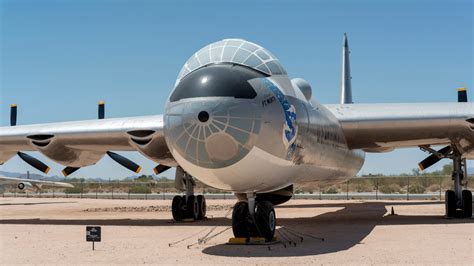
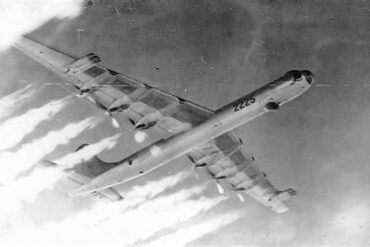
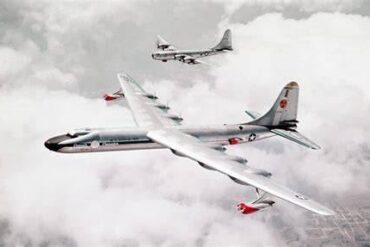
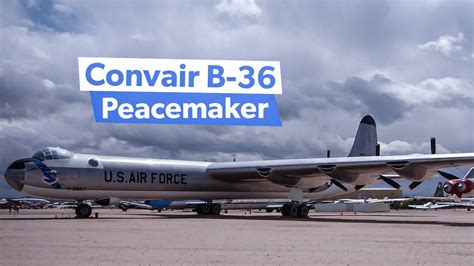
The physical scale of the Peacemaker was extraordinary. Its wingspan exceeded that of any other combat aircraft of its era, while its enormous fuselage provided enough internal space for an unprecedented weapons load.
The original configuration used six Pratt & Whitney piston engines, each driving a propeller mounted at the rear of the wing. Later versions received four additional jet engines installed in pods beneath the wings.
The resulting ten-engine configuration produced the famous crew description: “six turning and four burning.”
When all ten engines were operating, the B-36 could exceed 435 mph. For the early 1950s, that combination of altitude, range, and speed was formidable. The bomber could carry nearly 44 tons of payload and fly approximately 10,000 miles without aerial refueling.
But engineering compromises that looked reasonable during development became increasingly troublesome during everyday operations.
The rear-facing piston engines created serious airflow and cooling problems. The wings interfered with airflow into the engines, contributing to overheating and fires. The aircraft required an enormous amount of maintenance, and the six piston engines contained a total of 336 spark plugs that had to be kept clean and functional.
Crews operating the aircraft in Alaska and other cold environments faced particularly unpleasant maintenance conditions. The famous unofficial description of the engine arrangement became considerably darker than the official slogan: crews joked about engines that were turning, burning, smoking, choking, or otherwise unavailable.
For an aircraft whose primary purpose was to deliver nuclear weapons over intercontinental distances, mechanical reliability was not merely an inconvenience. It was a strategic requirement.
The B-36 Was Involved in a Serious Nuclear Weapon Accident
The Peacemaker’s mechanical vulnerabilities became painfully clear in February 1950.
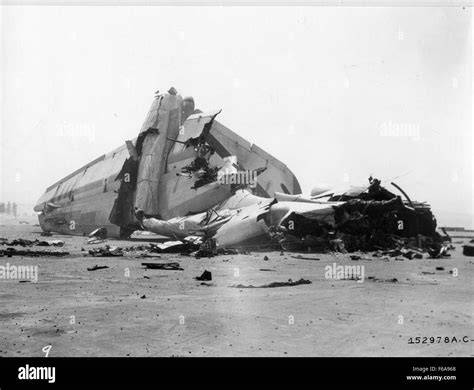
A B-36 carrying an atomic bomb experienced multiple engine fires while flying over the Pacific Northwest. The aircraft could no longer remain safely airborne, forcing the crew to abandon the mission and ultimately leave the aircraft.
The bomb was dropped into the Pacific Ocean before the crew bailed out. Its conventional explosives detonated, although the nuclear weapon did not produce a nuclear explosion.
The incident became one of the earliest major American accidents involving the loss of a nuclear weapon. It demonstrated a particularly uncomfortable reality about the B-36: the aircraft did not need to be attacked by the Soviet Union to create a dangerous nuclear incident.
The Air Force also experimented with unusual solutions to the bomber’s defensive vulnerability. One concept involved carrying a small fighter inside the B-36 so that the bomber could deploy its own escort aircraft when approaching hostile territory.
The idea was ultimately abandoned. Improvements in aerial refueling allowed conventional fighters to extend their range, making the parasite-fighter concept increasingly impractical.
The B-36 therefore remained dependent on its ability to fly high, fly far, and avoid enemy defenses rather than fight its way through them.
The Mark 17 Hydrogen Bomb Made the Peacemaker Uniquely Important
For all its weaknesses, the B-36 possessed one capability that few aircraft could match.
It was capable of carrying extremely large nuclear weapons, including the Mark 17 thermonuclear bomb, the largest hydrogen bomb ever produced by the United States. The weapon weighed more than 41,000 pounds and required a massive parachute system to slow its descent sufficiently for the bomber to escape the blast area.
The ability to carry such a weapon illustrated why the B-36 remained important even as its weaknesses became increasingly obvious. Its enormous airframe had been designed around a period when nuclear weapons were physically huge and long-range aircraft lacked the efficiency of later jet bombers.
For several years, that combination gave the Peacemaker a role that was difficult to replace.
But technological development was moving much faster than the B-36’s designers could have anticipated.
The Boeing B-52 Made the B-36 Obsolete
The decisive change came from jet propulsion.
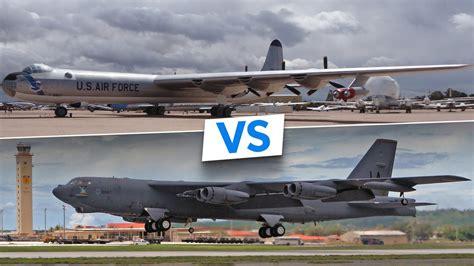
The Boeing B-52 prototype first flew in April 1952, and the production aircraft entered service in 1955. Instead of combining six piston engines with four additional jets, the B-52 used eight jet engines and was designed from the beginning around the characteristics of high-speed jet flight.
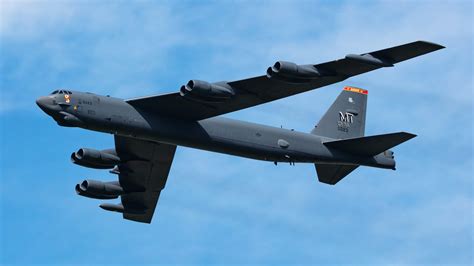
The difference was transformational. The B-52 could cruise at much higher jet speeds while avoiding the enormous maintenance burden associated with the B-36’s piston engines. It was also a cleaner foundation for future modernization.
Convair attempted to preserve the basic concept by developing an all-jet evolution of the B-36 with swept wings. But by then, the Air Force had already moved toward a fundamentally new aircraft.
The B-52 was not simply a faster replacement. It represented a new philosophy of strategic aviation. Instead of building an enormous aircraft around one particular nuclear weapon and one particular range requirement, Boeing produced a platform with considerably greater potential for future adaptation.
That distinction became critical.
Why the B-36 Could Not Survive Into a New Era
The B-36 was essentially optimized for a narrow window in military history.
Its enormous range mattered enormously when aerial refueling was less developed. Its huge bomb bay mattered when nuclear weapons were massive. Its ability to operate at high altitude mattered when enemy fighter and missile defenses were less capable.
As those assumptions changed, the aircraft’s advantages became less decisive.
The B-36 was also difficult to convert into a low-level penetration bomber or a platform for later generations of stand-off weapons. Its basic architecture had been shaped around the strategic requirements of the late 1940s rather than a flexible future mission set.
The B-52 proved dramatically different. Its design could absorb new engines, electronics, radar, communications equipment, weapons, and defensive systems. That adaptability allowed an aircraft introduced in the 1950s to remain relevant for generations.
By the time the last B-36s retired in 1959, Boeing had already produced hundreds of B-52s. The Peacemaker had therefore become redundant before its enormous airframe had reached the end of its potential physical lifespan.
Nearly 400 B-36 Bombers Were Reduced to Scrap
The retirement process was remarkably decisive. Nearly 400 B-36 aircraft were built, yet almost the entire fleet was eventually dismantled for scrap.
Only a handful survived as museum aircraft, leaving today’s preserved examples as rare physical reminders of an aircraft that once represented the centerpiece of American strategic power.
That contrast explains why the B-36 can seem almost forgotten compared with the B-52. The Peacemaker was larger, historically significant, and uniquely important to the early nuclear age, but its career was too short to develop the cultural longevity of its successor.
The B-52, meanwhile, continued receiving major upgrades long after its original mission environment had disappeared. Modernized engines, communications systems, radar technology, and weapons have repeatedly extended its usefulness.
The Air Force’s willingness to retain such an old airframe illustrates the importance of adaptability. A platform does not necessarily survive because it is technologically superior at the moment it enters service. It survives when engineers can continue changing it as the strategic environment changes.
The B-36 Peacemaker’s Short Career Reveals a Larger Cold War Lesson
The B-36 Peacemaker was not simply a failed bomber. It was an extraordinary aircraft that solved an enormous problem at a specific moment.
America needed a bomber capable of reaching the Soviet Union without relying on overseas bases or refueling infrastructure. The B-36 provided that capability on a scale that no previous American bomber could match.
But the Cold War moved too quickly for that achievement to remain sufficient.
Jet propulsion improved. Air defenses became more dangerous. Aerial refueling transformed strategic range calculations. Nuclear weapons evolved. Military planners demanded greater flexibility. Each development weakened one of the assumptions behind the Peacemaker.
Its retirement after only 11 years was therefore less a rejection of the aircraft’s historical importance than a demonstration of how rapidly strategic aviation was evolving.
The B-36 entered service when America’s nuclear deterrent was still being assembled and disappeared just as the B-52 Stratofortress was becoming the defining American heavy bomber. The Peacemaker had carried the United States through the first uncertain years of the intercontinental nuclear age, but it was built for a world that had already begun disappearing.
That is ultimately why America’s first intercontinental nuclear bomber was quietly buried. The B-36 had been designed to solve the range problem. The next generation of bombers had to solve a much larger problem: how to remain useful when the technology, weapons, and defenses of an entire era were changing underneath them.