The Convair B-36 Peacemaker earned a reputation for being one of the most extraordinary aircraft ever built, and few stories illustrate its mechanical scale better than the claim that 336 spark plugs had to be replaced every time the bomber came in for service. At first glance, the number sounds almost absurd. Yet the figure itself is entirely real. The question is whether Air Force mechanics actually removed and replaced every one of those plugs after every flight.
The short answer is no—not after every routine landing or short mission. The famous 336-plug figure came from the B-36’s enormous piston-engine installation, while the idea that all 336 were automatically replaced after every flight appears to have grown from genuine maintenance practices associated with the bomber’s demanding long-duration missions. In certain circumstances, particularly after extended flights, replacing the complete set could become a practical necessity.
Understanding the story requires looking closely at the B-36’s engines, its operating environment, and the unusual maintenance challenges created by a bomber designed to remain airborne for extraordinary periods. The Peacemaker was not simply a larger version of earlier piston-engine bombers. It represented the final, enormous expression of piston-powered strategic aviation just as the jet age was beginning to take over.
Why Did the B-36 Have 336 Spark Plugs?
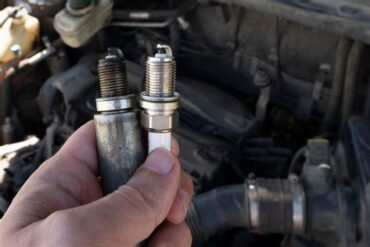
The mathematics behind the legendary number is surprisingly straightforward. The B-36 initially relied on six Pratt & Whitney R-4360 Wasp Major radial engines, each containing 28 cylinders. Every cylinder used two spark plugs, providing both reliable ignition and redundancy. That meant each engine carried 56 spark plugs.
Multiply 56 plugs by six engines, and the result is exactly 336 spark plugs installed throughout the bomber’s piston-engine powerplant system. The number therefore was not an exaggerated estimate, a nickname, or a piece of aviation folklore. There really were 336 spark plugs associated with the six-engine B-36 configuration.
The R-4360 itself was an extraordinary machine. With four rows of seven cylinders arranged in a complex radial configuration, it was among the largest and most powerful piston aircraft engines ever produced in quantity. Depending on the particular installation and variant, the Wasp Major produced roughly 3,000 horsepower, giving the B-36 an enormous amount of piston-engine power.
That scale created an equally enormous maintenance burden. A mechanic working on a B-36 was not dealing with a conventional four-engine bomber. Six huge radials meant 168 cylinders and 336 spark plugs, along with magnetos, ignition wiring, fuel systems, oil systems, cooling arrangements, and numerous other components that demanded constant inspection.
The sheer number of components is what made the 336-spark-plug story so memorable. But counting the plugs is only the beginning. The more interesting question is why so many of them could become maintenance concerns after a long mission.
Long Missions Created Serious Spark Plug Problems
The B-36 was designed around strategic range. Its enormous size and fuel capacity allowed it to undertake missions that could last 24 hours or considerably longer, depending on operational circumstances. This was a radically different requirement from the shorter missions associated with many earlier wartime bombers.
Long-duration piston-engine operation created several problems for spark plugs. One of the most important was lead fouling. High-octane aviation gasoline used by piston aircraft contained tetraethyl lead, which helped engines achieve the high octane ratings necessary for demanding operation but could also leave deposits within the combustion system.
During long periods of relatively low-power cruising, those deposits could accumulate on spark plug electrodes. A plug that became heavily fouled could produce a weak or inconsistent spark, potentially causing rough running or a cylinder to stop firing correctly.
The problem was especially significant because the B-36 could spend many hours at high altitude while operating its piston engines under conditions that were not always ideal for keeping every component perfectly clean. The result was an aircraft that could return from an exceptionally long sortie with a substantial amount of ignition-system work waiting for the maintenance crews.
This is where the legendary 336-plug story becomes more believable. A long mission could make a complete plug change a sensible maintenance decision, even though that does not mean the same procedure was performed automatically after every short flight.
The B-36’s Unusual Pusher Engine Arrangement
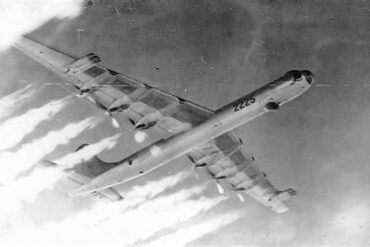
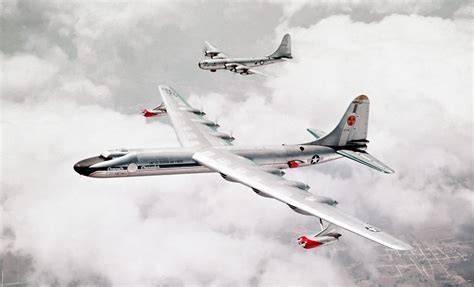
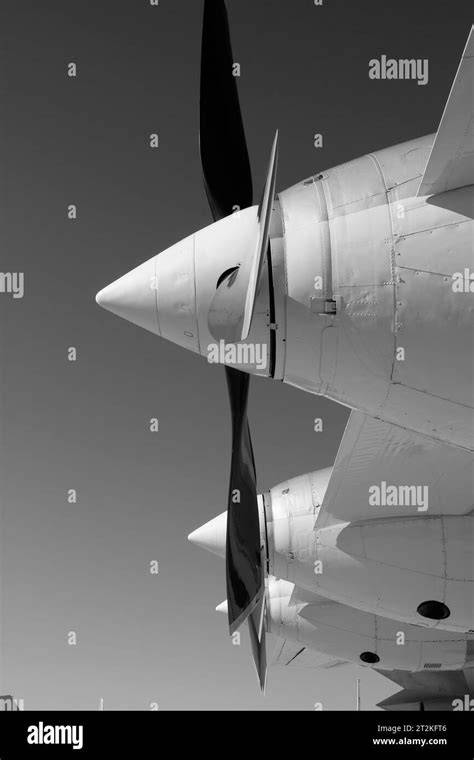
The six piston engines were mounted in an unusual configuration that immediately distinguished the B-36 from most earlier heavy bombers. Rather than placing the propellers at the front of the nacelles, the B-36 used pusher propellers, with the engines installed toward the rear of the wings.
This arrangement contributed to the aircraft’s distinctive appearance, but it also created engineering and maintenance challenges. Airflow around the nacelles and engines was not as straightforward as it was on conventional tractor-propeller installations. Cooling was therefore an important consideration, particularly for an engine as large and thermally demanding as the R-4360.
The B-36’s immense wings also contained internal passageways and working spaces that allowed crew members to reach important equipment. The wings were so massive that maintenance personnel could move through sections of them rather than simply working from the exterior.
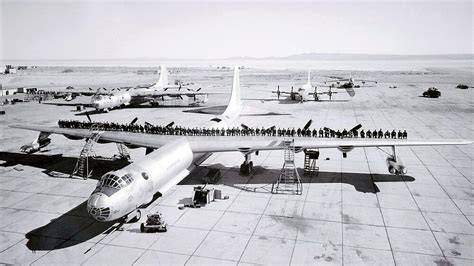
That unusual accessibility became particularly valuable during long missions. The aircraft was designed to carry a large crew, and flight engineers had substantial responsibility for monitoring the health of the engines. The B-36 was therefore not an aircraft where engine condition could simply be ignored until the bomber returned home.
Instead, the aircraft carried sophisticated monitoring equipment for its era, allowing the crew to identify abnormalities while airborne. A problem with an engine or cylinder could sometimes be detected before it developed into a more serious failure.
Did Mechanics Really Replace All 336 Plugs?
This is where the distinction between aviation fact and aviation legend becomes essential.
There is little reason to believe that Air Force maintenance personnel mechanically replaced all 336 spark plugs every time a B-36 returned from a short flight. Such a policy would have consumed an enormous amount of labor and would not necessarily have improved reliability.
A short local training sortie simply did not place the same demands on the ignition system as a 30-hour strategic mission. If the engines were running properly, post-flight inspections and engine checks did not reveal ignition problems, and the plugs remained serviceable, replacing them purely because the aircraft had landed would have been unnecessarily aggressive maintenance.
In fact, removing hundreds of plugs introduces its own risks. Spark plugs screw into cylinder heads, and repeated removal and installation can create opportunities for cross-threading, improper torque, damaged threads, contamination, or installation errors. Every additional maintenance action creates another opportunity for something to go wrong.
For that reason, maintenance decisions were influenced by the actual condition of the engines and the aircraft’s operating history.
After an extremely long mission, however, the calculation could change dramatically. If the plugs showed evidence of heavy fouling, if multiple cylinders had experienced ignition problems, or if other engine conditions indicated that the ignition system had been heavily stressed, changing a large number of plugs—or the entire set—could be the most practical way to return the aircraft to a reliable condition.
Why Changing 336 Spark Plugs Was Such a Huge Job
Replacing 336 spark plugs was not the kind of maintenance task that could be completed casually between two coffee breaks. Six enormous radial engines were distributed across the wings, and mechanics had to work around large amounts of machinery, structure, wiring, oil plumbing, and other components.
The task also demanded careful attention to installation. Spark plugs have to be properly seated and tightened, and technicians had to work within established maintenance procedures. An error involving one plug might create an ignition problem, while errors repeated across hundreds of components could potentially introduce a much larger reliability issue.
This explains why the B-36 developed a reputation for requiring huge numbers of maintenance man-hours for every hour flown. The aircraft was technologically impressive, but technological capability did not automatically translate into easy servicing.
The bomber’s strategic value depended on its ability to remain operational, and that meant maintenance crews were as important to the mission as the pilots and flight engineers. The aircraft could possess extraordinary range, payload capacity, and endurance, but none of those capabilities mattered if its engines could not be kept reliable.
Arctic Bases Made Engine Maintenance Even Harder
The environment in which Strategic Air Command operated its B-36s added another layer of difficulty. Some aircraft were based at locations where winter conditions could become brutally cold, and maintenance personnel could find themselves working in sub-zero temperatures.
Working on a large radial engine under those circumstances was obviously unpleasant, but the problem went beyond discomfort. Cold weather affected tools, lubricants, materials, starting procedures, and the people performing the work. Diagnosing an intermittent ignition fault on a freezing flight line was not an attractive assignment.
The enormous number of spark plugs could therefore become an advantage as well as a burden from a troubleshooting perspective. If mechanics suspected serious ignition trouble in one engine, replacing the affected engine’s plugs could sometimes be more straightforward than attempting to identify one troublesome plug among dozens under difficult conditions.
A complete six-engine replacement was another matter. It represented a tremendous amount of labor and would not have been justified simply because the aircraft had completed an ordinary short flight.
Engine Starts Could Also Cause Fouling
Spark-plug fouling was not limited to the effects of long cruising. Engine-start problems and oil contamination could also create ignition difficulties.
Large radial engines have particular characteristics associated with lubrication and cylinder orientation. Oil could accumulate in lower cylinders under certain conditions, particularly when an engine had been shut down for a period. If starting procedures were poorly managed, excess oil could contribute to fouling.
For a bomber with six Wasp Major engines, even a localized starting problem could become a substantial maintenance event. A mechanic might need to inspect multiple plugs, clean them, replace them, and determine whether the underlying problem involved fuel, oil, ignition, or engine operation.
This reinforces an important point: the B-36’s maintenance system was condition-driven rather than simply based on a universal rule that all 336 plugs had to be replaced after every landing.
The B-36 Later Had Ten Engines
The spark-plug story becomes even more remarkable when looking at later B-36 variants. The B-36D and subsequent versions incorporated four General Electric J47 turbojet engines in addition to the six R-4360 piston engines.
That produced an extraordinary ten-engine aircraft.
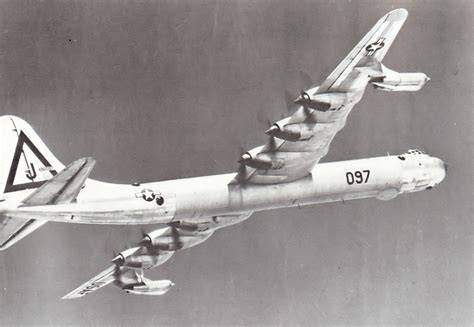
The turbojets were intended to supplement the piston engines, particularly during demanding portions of flight such as takeoff and high-speed operation. They also reflected the rapidly changing technological environment of the early Cold War.
Yet adding jets did not eliminate the piston engines’ maintenance requirements. Instead, crews now had another propulsion system to inspect and maintain. The B-36 thus became a fascinating hybrid representing a transition between two eras of aviation.
Its six piston engines embodied the peak of large-scale reciprocating-engine technology, while the four turbojets pointed toward the future. Within a relatively short period, that future would become dominant.
Why the B-36 Was Eventually Overtaken by Jets
The B-36 was not unsuccessful because it was badly engineered. Quite the opposite: it was an extraordinary solution to a difficult strategic requirement. The problem was that technology was moving faster than the aircraft’s original concept.
When the B-36 was conceived, long-range piston propulsion offered a practical path toward intercontinental strategic bombing. But as turbojet technology matured, aircraft could fly faster, climb higher, and avoid many of the mechanical complications associated with huge reciprocating engines.
Aircraft such as the Boeing B-47 Stratojet demonstrated the potential of jet-powered strategic aviation, while the Boeing B-52 Stratofortress ultimately established a much more sustainable long-term direction for the United States’ strategic bomber force.
Compared with six enormous radial engines, jet propulsion eliminated the need for conventional spark plugs, carburetors, and many of the mechanical components associated with piston-engine combustion. That did not make jet engines maintenance-free, of course, but it changed the nature of the maintenance challenge.
The B-36 therefore became a symbol of a technological crossroads. It was arguably the largest mass-produced piston-engine aircraft ever built, yet it entered service just as piston power was approaching the end of its dominance in military aviation.
The Truth Behind the 336-Spark-Plug Legend
So, did the B-36 require 336 spark plugs to be changed every time it came in for service?
The most accurate answer is not as a universal rule after every flight. The number 336 is completely legitimate: six R-4360 engines, 28 cylinders per engine, and two spark plugs per cylinder produce exactly 336 plugs.
What became exaggerated was the idea that every landing automatically triggered the removal and replacement of all of them. Routine short flights did not necessarily justify such a massive maintenance operation. Instead, the condition of the engines, the duration and character of the mission, ignition performance, fouling, oil contamination, and other maintenance findings influenced what mechanics actually did.
After exceptionally long endurance flights, however, the legendary story had a very real foundation. Hundreds of spark plugs could genuinely require attention, and complete replacement could become a practical part of returning the bomber to a dependable operational condition.
That distinction makes the story more interesting, not less. The B-36 did not need a mythical maintenance ritual to demonstrate how demanding it was. The real aircraft was already extraordinary enough.
Its six R-4360 engines contained 168 cylinders and 336 spark plugs. Later versions added four turbojets, creating a ten-engine strategic bomber of almost unbelievable complexity. Crews flew missions lasting more than a day, while mechanics worked to keep enormous radial engines reliable under conditions ranging from routine peacetime operations to bitterly cold northern bases.
The 336 spark plugs have survived as one of the most memorable statistics associated with the Peacemaker because they capture something larger about the aircraft. The B-36 represented the moment when piston-engine engineering had reached an astonishing physical scale, but also the point at which that scale was becoming increasingly difficult to justify.
The legend says every landing meant replacing 336 plugs. The reality is more nuanced: not every landing, but long and demanding missions could make the number very real. And that may be an even better illustration of the B-36’s remarkable place in aviation history—a machine so enormous that even one routine maintenance figure could involve hundreds of individual ignition components.