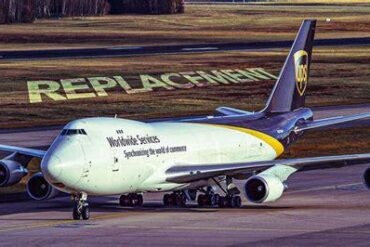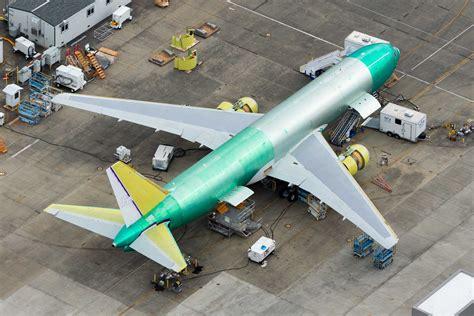
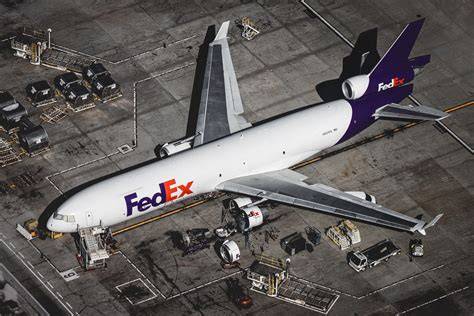
The McDonnell Douglas MD-11 is entering the final chapter of its long career as one of the most recognizable heavy freighters in global aviation. For decades, the three-engine widebody carried everything from express parcels to industrial machinery across major international cargo networks. But its gradual disappearance is forcing cargo airlines to rethink how they move freight, because there is no modern aircraft that perfectly reproduces everything the MD-11 offered.
The change has become particularly visible after UPS Airlines accelerated the retirement of its MD-11 freighter fleet in 2026. FedEx, meanwhile, has taken a different approach by inspecting and returning grounded aircraft to service while extending its own MD-11 operation. These contrasting strategies highlight a larger problem facing the air cargo industry: what replaces a freighter that sits between modern medium-capacity aircraft and today’s largest twin-engine cargo jets?
The answer is increasingly a two-aircraft replacement strategy, centered on the Boeing 767-300F and Boeing 777F. Rather than finding another aircraft with exactly the same payload and range characteristics, cargo operators are dividing the MD-11’s former missions between smaller regional freighters and larger long-haul aircraft.
Why the MD-11 Is So Difficult to Replace
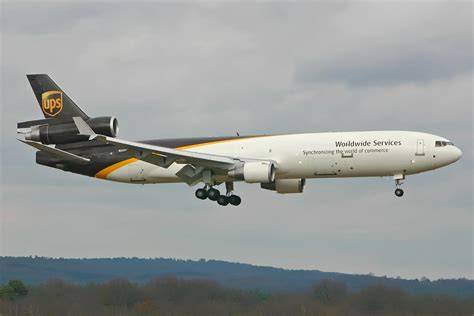
The MD-11F occupies an unusual position in cargo aviation. Its maximum structural payload is approximately 187,393 pounds (85,000 kg), giving it substantially more lifting capability than a Boeing 767-300F while remaining smaller than a Boeing 777F in maximum payload terms.
That middle position once made the MD-11 particularly useful for global integrators. It could carry a large amount of freight without requiring the enormous capacity of the newest generation of heavy freighters. The aircraft also benefited from a large installed base of passenger airframes that could eventually be converted into freighters, creating a relatively accessible supply of used aircraft.
The problem is that this model has become increasingly difficult to sustain. The MD-11’s third engine, mounted at the base of the vertical stabilizer, adds mechanical complexity, while aging airframes require increasingly expensive structural inspections and heavy maintenance. The economics become harder to justify as newer twin-engine freighters offer lower fuel consumption and lower maintenance requirements.
The aircraft’s retirement therefore is not simply a matter of replacing one airframe with another. Cargo airlines are replacing the MD-11’s missions rather than the MD-11 itself.
Boeing 767-300F Takes Over Medium-Range Cargo Routes
For regional and medium-range express operations, the Boeing 767-300F has emerged as one of the most important replacements.
The 767-300F cannot match the MD-11’s payload. Its maximum structural payload is approximately 116,100 pounds (52,662 kg), around 71,293 pounds below the MD-11 baseline. Yet maximum structural payload is not always the limiting factor in express cargo operations.
Package carriers frequently encounter a different constraint: available cargo volume.
The 767-300F offers 24 main-deck pallet positions, compared with approximately 26 on the MD-11F. That relatively small difference in usable main-deck positions means the aircraft can still move substantial quantities of containerized freight despite its lower structural payload.
Its smaller size also creates an important economic advantage. Instead of sending one large aircraft when the freight volume does not justify it, an operator can increase frequency and divide the cargo across several departures.
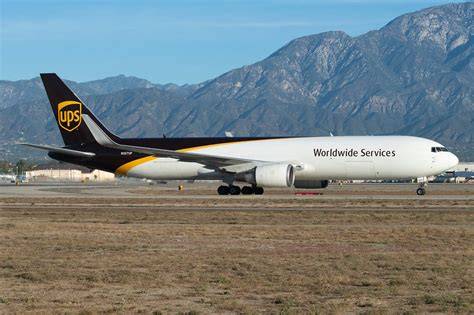
This is particularly useful for express networks built around tightly synchronized sorting operations. At hubs such as Louisville, Memphis, and Cologne, packages arrive in waves, are sorted, and then redistributed onto connecting flights. More frequent 767 freighter departures can allow carriers to match aircraft capacity more closely with these sorting cycles.
In practical terms, an operator might replace two daily MD-11 rotations with three 767-300F flights. The aircraft individually carry less freight, but the additional frequency can preserve overall network capacity while improving scheduling flexibility.
The 767 also benefits from substantially lower operating costs. The reference data indicates that block fuel burn can be roughly 35% lower per flight hour than the MD-11 in comparable operations. That difference becomes increasingly important when fuel represents a major component of cargo-airline operating expenses.
The 767-300F Has a Major Limitation
There is, however, a fundamental reason why the 767 cannot replace every MD-11 route.
Its full-payload range is approximately 3,225 nautical miles (5,972 km). That makes it highly useful for domestic and regional networks, but it is not suited to many deep intercontinental missions.
A cargo carrier cannot simply substitute a 767-300F for an MD-11F on every transatlantic or transpacific route. A flight that was previously operated nonstop may require a technical fuel stop if the smaller aircraft is heavily loaded.
That introduces additional costs through longer block times, additional airport handling, crew requirements, landing fees, and schedule complexity.
This is why the second part of the replacement strategy is equally important.
Boeing 777F Becomes the Heavy Long-Haul Replacement
The Boeing 777F occupies the opposite end of the replacement strategy.
Based on the high-gross-weight 777 family, the freighter offers a maximum structural payload of approximately 224,900 pounds (102,013 kg) and a full-payload range of around 4,970 nautical miles (9,204 km).
Those figures make it far more appropriate for major intercontinental cargo corridors.
Routes connecting major Asian production centers with North American distribution hubs are a good example. A corridor such as Shanghai Pudong to Memphis requires substantially more range and payload capability than the typical 767 mission. Similar requirements exist on major transatlantic freight routes connecting European logistics centers with the United States.
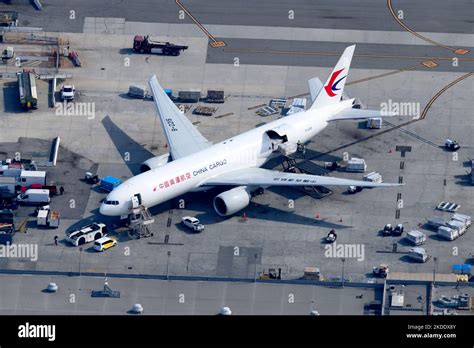
The 777F also provides 27 main-deck pallet positions, one more than the MD-11F, while offering enough internal height for large cargo units and heavy industrial freight. Its twin-engine configuration delivers another major advantage: modern engine technology and aerodynamics allow it to perform these missions with lower fuel consumption than an aging three-engine design.
For airlines moving freight thousands of miles across oceans, that combination of payload, range, reliability, and fuel efficiency makes the 777F a natural successor to the MD-11’s heaviest missions.
Lufthansa Cargo Already Demonstrated the Transition
One of the clearest examples of this strategy can be found in the fleet evolution of Lufthansa Cargo.
The German cargo operator moved away from its MD-11F fleet and toward an all-777F strategy, with additional capacity also provided through its partnership with AeroLogic. The transition demonstrated how a modern twin-engine freighter could absorb missions once assigned to the MD-11.
The significance goes beyond a single airline.
Lufthansa Cargo showed that replacing the MD-11 does not necessarily mean finding an aircraft with identical specifications. Instead, operators can reorganize their networks around aircraft with different strengths.
A 777F can handle the long-haul missions where range and payload matter most, while smaller freighters can absorb regional flows. This creates a network that is more segmented, but potentially more efficient.
UPS and FedEx Are Taking Different Paths
The retirement of the MD-11 has become particularly visible at UPS Airlines.
Following the 2025 crash of UPS Flight 2976 in Louisville, the carrier recorded a $137 million after-tax write-off associated with the permanent retirement of its MD-11 fleet. UPS subsequently accelerated deliveries of Boeing 767-300Fs, with 15 expected to arrive during 2026 according to the supplied reference material.
The strategy illustrates how the 767 is being used to stabilize the carrier’s domestic and regional express operation while larger aircraft handle international freight.
FedEx has followed a different route. Rather than immediately eliminating its MD-11 fleet, the company conducted required inspections and returned aircraft to service, extending its planned retirement horizon toward 2032.
That difference demonstrates that there is no universal timetable for the MD-11’s disappearance. Each cargo operator must balance safety requirements, aircraft availability, maintenance costs, network demand, and the delivery schedules of replacement freighters.
The MD-11 Retirement Is Also a Production Problem
One of the biggest challenges is that cargo airlines cannot simply order unlimited replacements.
The production landscape is changing rapidly. Current-generation freighter programs are approaching their planned production limits, while the next generation of large freighters is still entering development and certification.
The Boeing 767-300F and 777F production era is approaching its end, creating a narrow bridge between today’s proven aircraft and the next generation of cargo jets.
That timing matters because the MD-11 fleet is aging simultaneously.
If too many aircraft leave service before enough replacement freighters arrive, cargo operators could face temporary capacity shortages. This is particularly important for the global express companies, which operate networks where an aircraft shortage in one region can affect package flows across an entire system.
Airbus A350F and Boeing 777-8F Represent the Next Generation
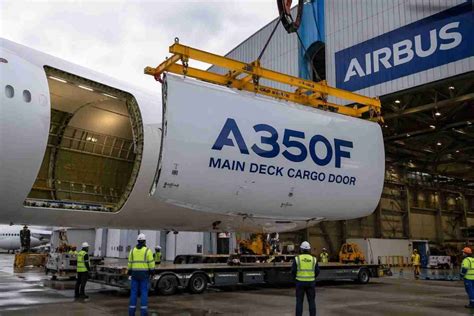
The long-term solution is likely to come from aircraft such as the Airbus A350F and Boeing 777-8F.
The A350F is designed around a maximum structural payload of approximately 245,000 pounds (111,000 kg). Its composite-intensive construction is intended to provide a strong payload-to-weight ratio, while its large main-deck cargo door is designed specifically for modern freight operations.
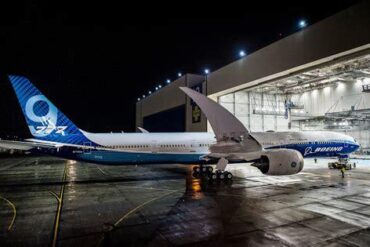
The Boeing 777-8F pushes the concept even further. Its projected structural payload is around 260,800 pounds (118,000 kg), while its composite wing technology comes from the wider 777X family.
Both aircraft represent a major technological departure from the MD-11.
Instead of relying on three engines to provide heavy-lift capability, they use two highly efficient engines combined with advanced aerodynamics, lightweight materials, and modern systems. The objective is not simply to reproduce the MD-11’s cargo capacity, but to deliver substantially greater payload capability with lower fuel consumption and improved environmental performance.
Why the Cargo Industry Is Moving Toward Two Tiers
The disappearance of the MD-11 is therefore creating a more clearly divided cargo fleet.
The first tier consists of medium-range freighters, such as the 767-300F, which can operate frequent services between domestic and regional hubs. Their lower operating costs make them suitable for high-frequency express networks.
The second tier consists of large intercontinental freighters, including the 777F and eventually the A350F and 777-8F. These aircraft are designed for high-density cargo movements over long distances.
This structure may look less elegant than having one aircraft cover a broad range of missions, but it reflects the economics of modern air freight. Different routes have different payload requirements, and using a large aircraft on every sector can result in unnecessary capacity and higher operating costs.
The MD-11’s unique middle ground is disappearing because modern aircraft families have been optimized around different economic priorities.
The End of an Unusual Cargo Era
The McDonnell Douglas MD-11 earned its place in cargo aviation because it combined substantial payload capacity, long-range capability, and a large existing supply of convertible passenger aircraft. Its three-engine configuration was once an advantage in an era when engine technology placed greater constraints on long-range twinjets.
That advantage has disappeared.
Today’s engines can provide the reliability and thrust required for very large twin-engine freighters, while modern airframes deliver better fuel efficiency and lower maintenance requirements. As a result, the industry no longer needs a three-engine freighter to occupy the role that once made the MD-11 so valuable.
The transition will not happen overnight. FedEx MD-11s will remain part of the global cargo landscape for years, while UPS has moved much more rapidly toward replacement aircraft. Other operators will make their own decisions according to fleet age, financial resources, route structure, and access to replacement aircraft.
But the direction is increasingly clear.
The aircraft replacing the MD-11 is not one aircraft. The Boeing 767-300F is taking on many medium-range express missions, while the Boeing 777F is absorbing heavy intercontinental work. Behind them, the A350F and 777-8F are preparing to establish a new generation of long-haul cargo aircraft.
For an airplane as distinctive as the MD-11, that may be the most fitting ending of all. It is not being replaced by a single successor. Instead, its broad range of missions is being divided among a new generation of aircraft built around the economics, technology, and environmental requirements of modern global cargo networks.