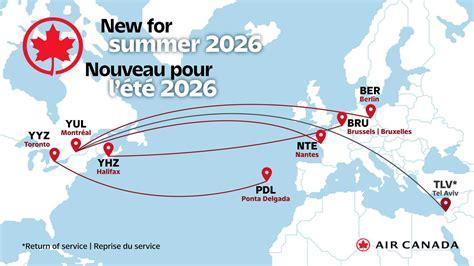
Toronto Pearson International Airport (YYZ) sits at the center of Air Canada’s global strategy, and the carrier’s newest route announcements confirm just how aggressively that strategy is accelerating. As Canada’s largest airline and the airport’s dominant operator, Air Canada accounts for nearly half of Pearson’s total passenger volume and seat capacity. According to scheduled data from aviation analytics firm Cirium, the Star Alliance founding member is set to operate more than 11,600 flights from Toronto Pearson in the fourth quarter of 2026, offering roughly 2.4 million seats — figures that exclude its regional operations entirely. That scale gives the airline both the financial muscle and the slot portfolio to gamble on thinner, longer, more adventurous markets that competitors have long ignored.
The expansion did not begin with this winter’s schedule. Air Canada has already added several routes from Toronto this year, including the return of services to Shanghai Pudong in June, a route it had last served in 2020, and Budapest, which had not appeared on the Toronto map since 2019. Those reinstatements signaled a carrier willing to rebuild Asia and Central Europe connectivity after years of post-pandemic retrenchment. Now, with the Northern Winter schedule beginning on October 25, 2026, Air Canada is launching five new routes from Toronto Pearson for the season, followed by three more European services in summer 2027 — eight new international routes in total.
Air Canada’s Winter 2026 Route Launches From Toronto Pearson
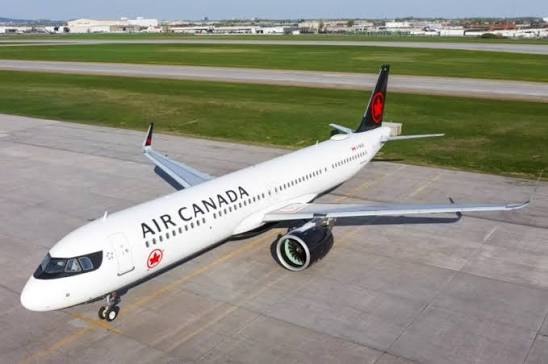
The winter program leans heavily on leisure demand and VFR (visiting friends and relatives) traffic, two segments that have proven remarkably resilient. Tenerife (TFS) opens first on October 25, operating twice weekly on Thursdays and Sundays with the Airbus A321XLR. The 182-seat aircraft carries 14 Signature Class seats arranged 1-1 with fully flat beds and direct aisle access, plus 168 Economy seats — a configuration that makes a five-hour transatlantic narrowbody crossing genuinely comfortable. The launch coincides with a new weekly service from Montreal to the same Canary Island, giving Air Canada a two-hub foothold in the archipelago.
Merida (MID) follows on November 21, flying twice weekly on Mondays and Saturdays with the Airbus A220-300, a nimble jet ideal for the Yucatán Peninsula’s seasonal demand. Guatemala City (GUA) begins December 1 as a weekly Tuesday service on the Airbus A330-300, while Quito (UIO) launches December 5 with a weekly Saturday rotation on the Boeing 787-9. Roatan (RTB), the Honduran dive destination, completes the winter wave on December 13, operating weekly on Sundays under Air Canada Rouge with the Boeing 737 MAX 8.
These routes collectively open a genuinely new market for Air Canada, and the airline will become the only North American operator serving the Canary Islands when flights begin. That exclusivity will not last long. In December, Canadian leisure carrier Air Transat will launch a Toronto route to Las Palmas, another destination in the same archipelago, injecting immediate competition into a corridor Air Canada is still introducing to travelers.
How the Airbus A321XLR Is Reshaping Air Canada’s European Network
Air Canada has placed real institutional trust in the Airbus A321XLR. When Airbus launched this extra-long-range variant, the planemaker positioned it as the answer for “long-thin” routes — markets lacking enough passenger demand to justify a large twin-aisle aircraft but too distant for conventional short-to-medium-haul jets. The Canadian carrier recognized that potential and ordered the type in 2022, receiving its first aircraft in April 2026. Since then it has deployed the jet on several secondary European routes; between June and September 2026, the Star Alliance member operated roughly 477 flights with the type. Destinations included Toulouse, the airline’s first transatlantic A321XLR destination, alongside Lyon, Nantes, Porto, and Berlin.
Next summer, that playbook extends further. From June 2, 2027, Air Canada introduces a four-times-weekly seasonal service to Oslo (OSL), operating Mondays, Wednesdays, Fridays, and Sundays. From June 10, 2027, a three-times-weekly Shannon (SNN) service runs Wednesdays, Fridays, and Sundays. From June 16, 2027, Nice (NCE) joins the network with a twice-weekly Wednesday and Saturday rotation on the Airbus A330-300. Additionally, from May 2027, the airline adds a year-round “day-tripper” A321XLR service from Toronto to London Heathrow, becoming its fifth daily flight to the UK capital. Air Canada had originally intended to fly the A321XLR on that Heathrow route during summer 2026.

More Than 36,000 Flights Planned From Toronto This Winter
For the upcoming winter season, running from October 25, 2026 until March 27, 2027, Air Canada is increasing capacity across its entire network by 10%. At Toronto Pearson alone, the airline and its regional operators are scheduled to operate more than 36,000 flights during the season. Major US hubs — Los Angeles, New York LaGuardia, Newark Liberty, Washington Reagan, and San Francisco — will see multiple daily departures. New York will be the busiest destination, with up to 14 daily departures split between LaGuardia (up to eight flights) and Newark Liberty (up to six).
Beyond the United States, Cancun will see up to four daily departures, with one mainline flight and up to three operated by Air Canada Rouge. London Heathrow will also see up to three daily departures from Toronto. The breadth of this schedule matters because it demonstrates that the eight new international routes are not replacing core flying — they are layered on top of an already dense network, funded by strength in high-frequency business markets.

The full slate of new services — Tenerife, Merida, Guatemala City, Quito, Roatan, Oslo, Shannon, and Nice — spans nine airports and adds thousands of network miles from a single hub. For travelers, the practical effect is a Toronto departure board that now reaches deep into the Canary Islands, Central America, the Andes, and secondary Europe without a connecting flight. For Air Canada, it represents a calculated bet that the A321XLR and disciplined seasonal scheduling can make long-thin flying profitable where widebodies never could.