Few sounds in aviation inspire as much confidence as an engine running smoothly — and few inspire as much dread as hearing that sound suddenly change. Whether you are watching a propeller blur on a four-cylinder trainer or sitting between a pair of massive turbofans at 35,000 feet, everyone aboard depends on those engines to keep turning fuel into fire and fire into thrust. Yet an aircraft engine remains a mechanical asset. It may be built to extraordinarily precise standards, but parts spin, metal expands and contracts under heat, and components gradually wear. That reality makes maintenance the quiet discipline behind every safe departure, and it makes the question of engine hours far more interesting than a simple number on a tachometer.
Why Time Between Overhaul Defines an Engine’s Reputation
As part of certification, the Federal Aviation Administration requires manufacturers to establish a recommended Time Between Overhauls, or TBO. This figure is the manufacturer’s engineering estimate of how long an engine can reliably operate before it should be removed, inspected, and rebuilt to factory tolerances. For private operators flying under Part 91, TBO is generally a recommendation rather than a legal mandate, which gives owners some latitude to run beyond it if oil analysis and compression checks support that decision. For commercial operations such as air taxi services, however, TBO is a hard limit that regulators and insurers treat as a firm boundary. Understanding what TBO means — and why it matters to airplane safety — is essential, because it is the most common shorthand for expressing an engine’s practical lifespan.
There Is No Universal Number for “A Lot” of Hours
So when does an engine actually have a lot of hours? There is no single answer, and any article that offers one is oversimplifying. True reliability depends on operating and environmental conditions, maintenance history, power settings, frequency of use, and the fundamental design of the engine itself. A hard-working powerplant operating in hot, dusty conditions experiences very different stresses from one flown gently in a temperate climate. An engine that spends its life at high manifold pressure on short hops ages differently than one cruising at moderate settings on long cross-countries. Most importantly, acceptable hour counts vary enormously across engine sizes and classes. For one engine, 2,000 hours represents a major milestone worthy of celebration; for another, that same figure is barely out of the box.
How Engine Type Determines What Counts as High Time
Aircraft engines come in several distinct types and sizes, and because their operating principles differ so broadly, comparing their hour counts directly would be misleading. The clearest way to understand engine hour limits is to group powerplants into three categories: small piston engines, turboprops, and commercial turbofans.
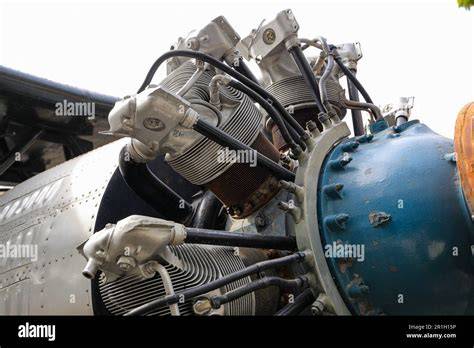
The four- and six-cylinder piston engines found on small single-engine aircraft commonly carry TBO figures in the 1,200-to-2,400-hour range. As a rule of thumb, roughly 2,000 hours has traditionally been their high-time milestone. Notably, for this class of engine, calendar age matters just as much as flight hours. These engines often sit unused for long stretches, which keeps their logged hours low but does nothing to stop corrosion, pitting, and material degradation over time. An engine with 900 hours accumulated over fifteen years of sporadic use may be in worse condition than one with 2,200 hours flown regularly.
Larger turboprops, by contrast, typically have TBO intervals of roughly 3,000 hours, and some can be extended to as much as 6,000 hours, depending on the model and the maintenance program in place. These engines are the workhorses of short- to medium-range civil and tactical military aviation, prized for their fuel efficiency at lower altitudes and their tolerance for rough strips. Like all turbine engines, they are constrained by life-limited parts, or LLPs. Components such as turbine disks, compressor disks, and hubs weaken with repeated use, and each one carries a mandatory maximum lifespan usually measured in cycles rather than hours. Once a part reaches that limit, it must be permanently retired and scrapped regardless of how pristine it looks under inspection.
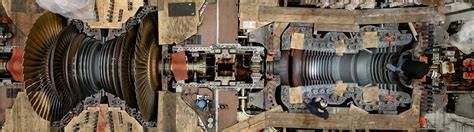
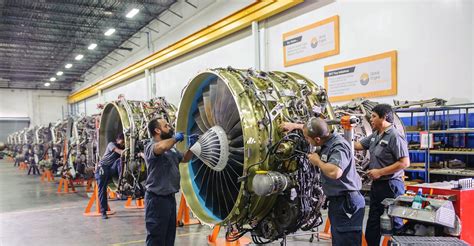
Commercial jet engines occupy an entirely different scale. Built for consistent use and a long, profitable life, large turbofans may accumulate total life hours as high as 150,000. Rather than following a fixed TBO, they are maintained on condition, with shop visits occurring roughly every 20,000 to 30,000 hours — a Ship of Theseus-level teardown in which most major components are replaced or restored. What distinguishes this category is that both engine flight hours and flight cycles are tracked, with LLP limits based on cycles. A flight cycle is one takeoff and one landing, and each one subjects the engine to significant thermal and mechanical stress as temperatures swing from ambient to over 1,000 degrees Celsius and back.
Beyond Flight Hours: What Else Shapes Engine Maintenance Cycles
Flight hours are a solid baseline metric for establishing maintenance cycles, but they provide little context about how that time was accumulated, what loads the engine saw, or how well it was treated. Flight exerts stresses that are nearly impossible to reproduce through ground runs alone. Pressure fluctuations at altitude, components repeatedly heating and cooling, and atmospheric moisture driving condensation and corrosion are among the most common long-term culprits. Hours alone cannot tell the whole story. Flight cycles, environmental exposure, extreme loads, balance issues, and even routine ramp rash all matter, regardless of what the tachometer says.
Consistency is equally important. An aircraft belongs in the air, not on the ground. Prolonged storage — something raw flight hours never account for — can have significant detrimental effects on the health of both engine and airframe. Regular flights keep components lubricated, prevent varnish buildup in fuel systems, and stop seals from drying out and cracking. Much like an athlete, an aircraft cannot be expected to perform at peak after a long stint on the bench.
Finally, as with all machinery, long-term maintenance requirements are shaped by short-term upkeep. Oil needs to be checked and changed regularly. Fuel systems need to be examined for contamination. Excessive vibration, often a sign that a rotating part is out of balance, demands immediate correction rather than a note in the logbook. A thousand hours of clean fluids and balanced operation may do far less harm than 100 hours of rotational imbalance and off-spec Jet A-1. In the end, the number that defines a “lot” of hours is less about the tachometer and more about everything the logbooks, oil samples, and borescope inspections reveal along the way.