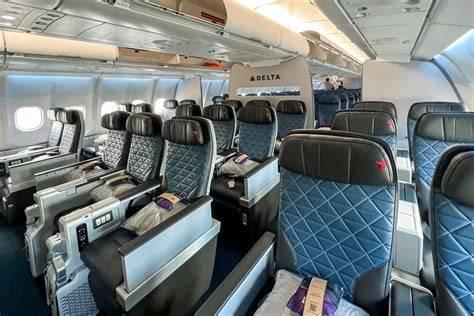
Premium economy between London and New York has become the most contested piece of real estate in the sky, and in 2026 the price passengers pay for it swings further than at any point in the cabin’s short history. A return fare from London Heathrow to New York JFK typically settles somewhere between $1,000 and $1,300, against roughly $500 to $600 for standard economy, which means travelers are routinely asked to pay twice as much for a wider seat, a proper meal, and two checked bags. Yet that headline ratio conceals a far messier reality. On certain departures the gap between premium economy and a discounted business-class seat collapses to almost nothing, and on others the intermediate cabin costs more than a lie-flat bed that a passenger never thought to search for. Understanding why requires looking at who flies the route, what each airline puts behind the curtain, and how dynamic pricing quietly reshapes the value of every fare.
How Much Does Premium Economy Cost Between London and New York in 2026?
The transatlantic corridor remains the world’s most valuable premium market, and the intermediate cabin sits at its commercial heart. Carriers have spent the past decade converting floor space into revenue, squeezing a dedicated premium economy cabin between a dense economy section and a business class that now commands four-figure sums one way. The result is a product that is neither indulgence nor austerity, priced to capture the traveler who will not endure ten abreast in economy but cannot justify $3,000 or more for a flat bed. Broadly, the return premium economy fare lands between $1,000 and $1,300 when booked with reasonable lead time, though the spread widens considerably once departure airport, season, and booking window enter the calculation. Fares booked inside two weeks often push toward $1,600 or beyond, while low-season departures in late January or early February can dip below $900 on the cheapest carriers.
The pricing logic is straightforward once the seat economics are unpacked. A premium economy seat occupies roughly 1.4 to 1.6 times the floor area of an economy seat, so an airline that fills a cabin with thirty-eight of them is sacrificing perhaps twenty economy berths to do so. To make that trade profitable, the average revenue per premium seat must exceed the combined economy yield it displaces, which is precisely why the cabin is priced at roughly double. British Airways and Virgin Atlantic, the two dominant British long-haul operators, have refined this equation over years of transatlantic competition, and their published fares in 2026 reflect a market where demand for the middle cabin has never been stronger. Business travel budgets shrank after the pandemic and never fully recovered, pushing corporate travelers down a cabin, while leisure demand for premium seats surged as a generation of passengers discovered they would rather pay for legroom than for lounge access. Both forces converge on premium economy, and both push its price upward.
Why the Fare Ratio Between Cabins Keeps Breaking Down
The most instructive fare data from 2026 comes not from the averages but from the anomalies, and few are more revealing than the British Airways evening departure from New York JFK to London, where a $1,162 premium economy fare sat alongside $532 economy and a business-class seat at just $1,222. In that snapshot, the upgrade from premium economy to a fully flat bed cost sixty dollars, which is less than a checked bag and a glass of wine at the airport. A separate comparison showed a $1,459 return in premium economy against $737 in economy, a doubling that looks almost reasonable by contrast. The lesson is that the relative value of the three cabins on any given day is set by inventory, not by any fixed price ladder, and a traveler who searches only one cabin is flying blind.
Dynamic pricing systems adjust fares continuously according to remaining inventory in each booking class, historical demand patterns, competitor fares, and the length of the booking window. When premium economy sells briskly, the airline raises those fares until they brush against the cheapest available business-class buckets, and because business class on the transatlantic route is frequently dumped into the market at aggressive prices to fill unsold flat beds, the two cabins collide. Conversely, when premium demand is soft, the intermediate cabin falls back toward economy, and the doubling disappears. This is not a flaw in the pricing model but its intended behavior, and it produces the single most valuable habit a transatlantic traveler can develop: always price all three cabins for the same dates before committing.
Which Airlines Sell Premium Economy on Heathrow to New York?
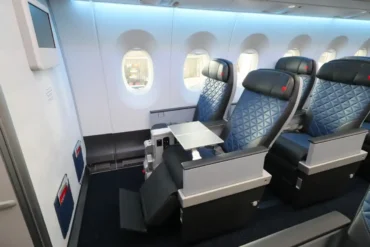
The nonstop lineup between London Heathrow and New York JFK is the broadest in the world, with British Airways, Virgin Atlantic, American Airlines, Delta Air Lines, and JetBlue all operating the roughly 3,440-mile (5,536-kilometer) sector in around eight hours. Not all of them sell a true intermediate cabin, however, and that distinction matters enormously to anyone shopping by name alone. British Airways brands its product World Traveller Plus, Virgin Atlantic calls its cabin simply Premium, American offers Premium Economy on eligible long-haul aircraft, and Delta markets Premium Select on international services. JetBlue is the outlier, pairing its excellent Mint business suite with an economy cabin that includes Even More Space extra-legroom seats, but no dedicated premium economy tier with its own service standard. Passengers who book JetBlue expecting a separate cabin will find themselves in the front rows of economy with a little more room and a lot less differentiation.
Travelers bound for Newark Liberty International Airport face a narrower field, with only British Airways and United Airlines operating nonstop from Heathrow across approximately 3,454 miles (5,559 kilometers) in an average of seven hours and fifty-five minutes. United’s counterpart to World Traveller Plus is Premium Plus, a genuinely comparable product with a wider seat, legroom to spare, and upgraded dining. The selection gap between the two New York airports is the single most consequential structural fact in this market, because five carriers at JFK generate genuine fare competition on any given date, while two at Newark produce something closer to a duopoly that benefits passengers mainly when the two are actively undercutting each other.
What British Airways and Virgin Atlantic Actually Charge
Virgin Atlantic’s own booking engine offers one of the cleanest windows into 2026 pricing. For a return from Heathrow to JFK between November 17 and November 22, 2026, the airline advertised Premium fares starting at approximately $1,529, with published offers on selected dates in May, July, and August 2027 opening at $1,542 to $1,549. These are advertised starting prices, not guarantees, and the lowest available fare on a given date frequently sits well above the headline figure once the cheapest inventory has sold. British Airways publishes World Traveller Plus fares through its own comparison tools, and its pricing tends to track Virgin closely on overlapping city pairs, with the two carriers shadowing each other’s moves in a rivalry that has defined the corridor since the 1980s.
Fares departing London are frequently more attractive than equivalent journeys booked from the United States, a quirk rooted in the structure of point-of-sale pricing and the weight of British outbound leisure demand. Virgin’s $1,529 advertised return shows premium economy can be genuinely accessible when booked early from the UK side, while the higher figures found in US-origin searches reflect a market where business-class fares are more aggressively discounted and premium economy therefore gets pulled upward. For travelers with flexible origins, positioning in London before departure can therefore save several hundred dollars on a return, though the cost and hassle of a positioning flight must be counted against the saving.
What the Extra Money Buys in Seat, Service, and Baggage
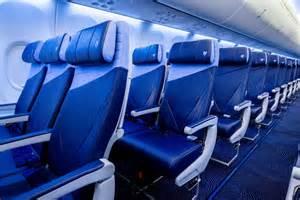
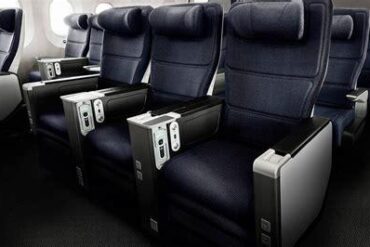
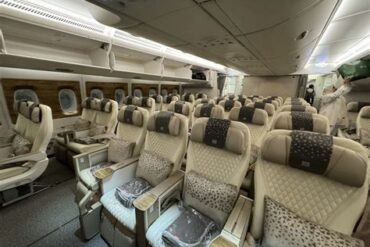
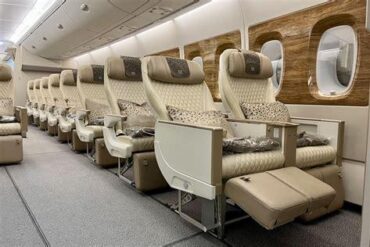
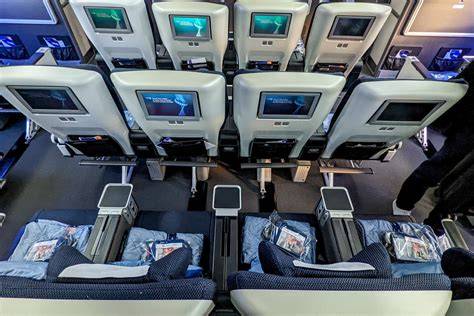
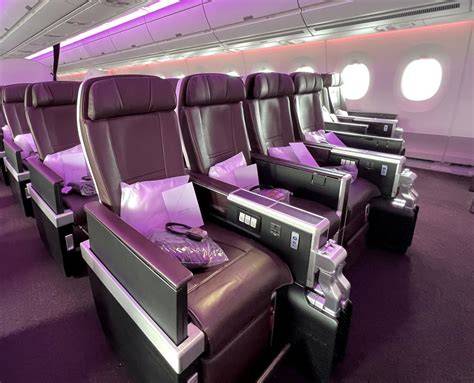
The core of the premium economy proposition is physical space, and on an overnight transatlantic sector that is far from cosmetic. British Airways’ World Traveller Plus cabin offers wider seats, additional legroom, greater recline, lumbar support, and adjustable headrests and footrests, combined with an enhanced meal service, complimentary bar, personal entertainment screens, and priority boarding. Virgin Atlantic’s Premium cabin delivers up to 38 inches of seat pitch, extra room to stretch, a footrest, restaurant-inspired meals served on porcelain dishware, a welcome glass of bubbly, and additional snacks on selected aircraft, though exact seat specifications vary by aircraft type assigned to the route. Both products are meaningfully better than economy in the dimensions that matter on an eight-hour flight: elbow room, the ability to sleep at an angle, and food that does not arrive in a foil tray.
Baggage allowances are where premium economy’s economics improve substantially once the full cost of an economy ticket is calculated. Virgin Atlantic Premium includes two checked bags at 50 pounds (23 kilograms) each, plus a 22-pound (10-kilogram) hand luggage allowance. British Airways World Traveller Plus provides two checked bags on most routes, whereas some economy fares are hand-baggage-only tickets that require payment for every checked item. Adding two checked bags to certain British Airways economy bookings can cost up to $175 each way, which on a return trip erodes roughly $350 of the apparent fare gap. For a family or a passenger traveling with ski equipment, golf clubs, or a month’s wardrobe, the true premium over economy can be far smaller than the headline difference suggests, and in some cases premium economy wins outright on total cost.
Why Premium Economy Can Cost Almost as Much as Business Class
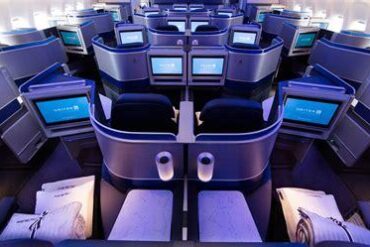
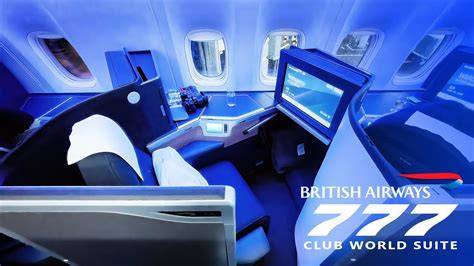
The narrowest and most frequently missed opportunity in this market is the moment when premium economy and discounted business class converge. When a premium fare of $1,162 sits beside a $1,222 business fare, the sixty-dollar difference buys a lie-flat bed, lounge access, priority security, and a materially different overnight experience. The purchase is only rational if the business fare is genuinely available on the same itinerary with the same booking conditions, but when it is, choosing premium economy is a straightforward error of search rather than a considered trade-off. Airlines rarely advertise this collision because it cannibalizes their most profitable cabin, but it appears constantly in fare data during shoulder seasons and on routes where business demand is weak.
Loyalty points add a second layer of comparison that many travelers ignore. British Airways’ Avios redemption chart for London-New York prices a one-way World Traveller Plus award at 46,750 Avios off-peak, rising to 66,000 during peak periods, while economy requires 27,500 Avios off-peak and 33,000 in peak. Taxes and carrier charges are additional and can run into the hundreds of pounds, so an award seat is only good value when the cash fare is high and the redemption rate is favorable. For passengers sitting on a large Avios balance, the calculus often favors redeeming premium economy rather than paying cash, freeing budget for a paid business-class upgrade on a different trip.
Is the Upgrade Worth It on an Eight-Hour Overnight Flight?
Whether premium economy justifies double the economy fare depends on three variables that no generic advice can resolve: the actual fare difference on the chosen dates, the value the traveler places on arriving rested, and the number of checked bags being carried. On an eight-hour eastbound red-eye, the difference between sleeping fitfully in a narrow economy seat and sleeping at a real angle in a wider one is often the difference between a functional first day in London and a wasted one, and that calculation has a real monetary value for anyone traveling on business or arriving before a major event. On a daytime westbound departure, the case weakens, because eight waking hours in a slightly wider seat with better food is a comfort upgrade rather than a functional one.
The competitive landscape gives travelers genuine leverage that is easy to overlook. Five carriers fly Heathrow to JFK and two serve Newark, and comparing both New York airports, shifting departure by a day, and pricing all three cabins simultaneously routinely surfaces opportunities invisible to a single-airline search. Booking six to twelve weeks ahead captures the sweet spot where premium economy inventory is still plentiful but business-class dump fares have not yet collapsed the tier below. Travelers with flexibility should also scan shoulder periods in late January, early February, and November, when transatlantic premium demand dips and fares follow, and should watch for airline sales that occasionally drop premium economy below $1,000 return from London.
Premium economy in 2026 is neither automatically worth twice the economy fare nor reliably a bargain against business class, because the price of all three cabins moves with demand on any given day. The travelers who get the best value are those who treat the corridor as a single competitive market, price every cabin and every New York airport before deciding, count their baggage needs against the fare difference, and recognize that the sixty-dollar gap between a premium seat and a flat bed is the most valuable discovery a transatlantic search can produce.