The Lie-Flat Bed Loses Its Logic on Shorter Sectors
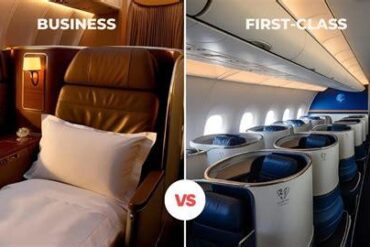
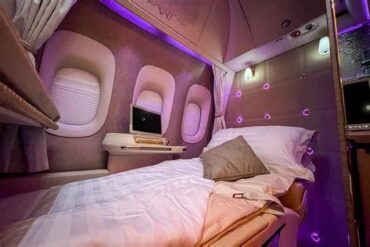
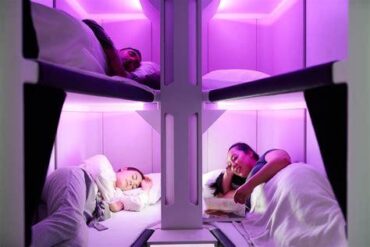
The lie-flat bed has long functioned as corporate travel’s ultimate status symbol, a horizontal sanctuary that converts a punishing overnight sector into something approaching restorative. Yet on a flight that barely outlasts dinner service, that same bed can operate as an extravagantly priced indulgence delivering remarkably little practical return. For the executives, travel managers, and finance leaders authorizing thousands of tickets each year, the defining question has quietly migrated from which cabin is best to how much sleep will this journey genuinely permit. That single reframing anchors the eight-hour flight rule, an informal but increasingly persuasive benchmark reshaping how sophisticated companies allocate their aviation budgets. The rule emerges from no airline tariff manual or IATA regulation; it is a planning heuristic born of operational reality, and its logic compels precisely because it refuses to treat all long-haul flying as interchangeable.
Why Eight Hours Became the Corporate Travel Threshold
The eight-hour threshold functions as a decision aid rather than a formal industry standard, and that distinction matters enormously when travel policies are drafted and defended. On sectors shorter than roughly eight hours, premium economy supplies a genuinely comfortable environment for working, reading, or resting without compelling a company to pay several times the business class fare. The calculation bites hardest on daytime services, where the passenger’s real objective is productivity or relaxed comfort rather than unconsciousness. A traveler who intends to answer email, review a pitch deck, and land ready to walk into a boardroom gains comparatively little from a seat that converts into a bed, because the bed itself is never the operative feature.
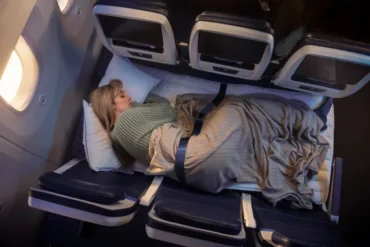
The deeper problem is that advertised block time never translates cleanly into usable sleep. Boarding, taxi, meal service, cabin preparation, cabin crew announcements, duty-free rounds, and the simple friction of settling into a seat all consume the available window. On a nominal eight-hour overnight flight, a passenger may realistically control five to six hours at most, and that assumes the service flow cooperates. Business class then justifies its premium only when the traveler must perform immediately upon arrival and the itinerary protects enough uninterrupted rest to make the flat surface decisive. Where that condition fails, the extra thousands of dollars purchase prestige rather than performance.
According to Business Class Travel’s comparison of premium economy and business class, indicative round-trip premium economy fares commonly fall between $1,400 and $2,200, while business class fares sit between $4,500 and $7,000. These are illustrative figures rather than universal market averages, and they move with route, season, booking horizon, and fare class. Their value lies in exposing the financial stakes. When a business class ticket costs three to four times its premium economy equivalent, the burden of proof shifts decisively onto the more expensive cabin. If it cannot deliver meaningfully better rest, the rational corporate buyer begins interrogating whether the intermediate cabin has quietly closed enough of the comfort gap to make the upgrade unnecessary.
How Qantas and Air France Turned the Middle Cabin Into a Credible Corporate Product
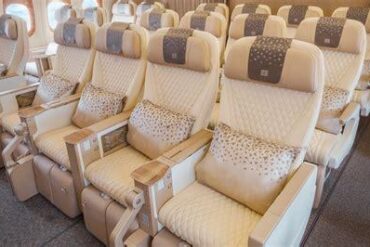
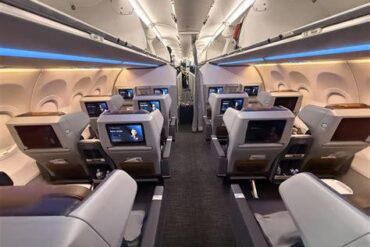
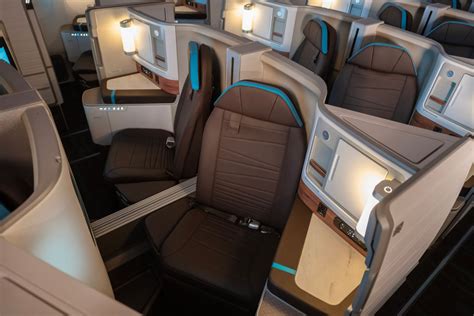
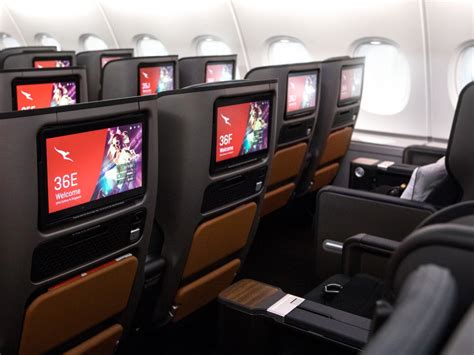
Premium economy has matured from a marketing exercise into a distinct cabin with its own hardware, service choreography, and ground privileges, and two carriers illustrate the evolution with unusual clarity. Qantas and Air France both position the product as a genuine intermediate class rather than an economy seat with a marginally better location, and that positioning is what allows corporate buyers to treat it as a defensible default rather than a consolation prize.
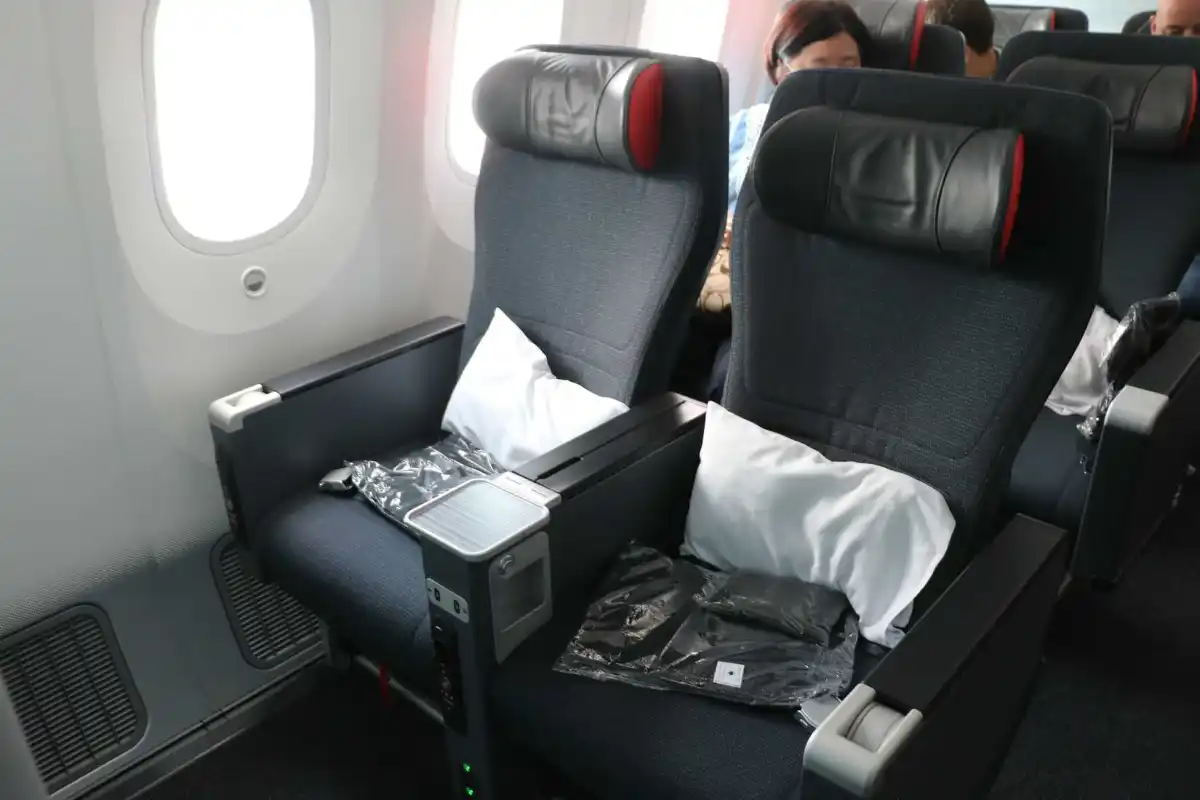
Qantas provides premium economy seating with roughly 38 inches of seat pitch, 20.5 inches of width, and 9 inches of recline, specifications cited in Vertu’s 2026 Qantas cabin comparison. Business class on the same carrier offers a lie-flat sleeping surface measuring approximately 80 inches. The numbers tell an honest story: premium economy furnishes meaningfully more room to sit upright and recline deeply, but it cannot replicate the horizontal posture that transforms an overnight sector into genuine recovery. For employees who need to arrive functional rather than fresh, that reclining seat frequently suffices.
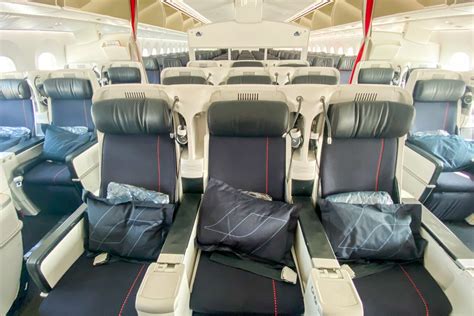
Air France demonstrates the same principle through a different lens. Its premium economy cabin averages approximately 38 inches of pitch, some seven inches beyond the economy benchmark cited by Going’s Air France cabin guide, and depending on aircraft it is arranged in either a 2-4-2 or 2-3-2 configuration. The carrier also promotes an enhanced dining experience inspired by French gastronomy, though specific menus and service standards vary by route and aircraft type. What these products collectively prove is that judging premium economy solely by its deficits against business class misreads the proposition entirely. For a traveler who needs extra room to work, a more supportive seat, and a materially improved onboard experience, the middle cabin can deliver sufficient value at a fraction of the cost.
The Fare Gap That Corporate Travel Managers Cannot Afford to Ignore
The financial argument sharpens considerably when the two cabins are placed side by side. Using the illustrative round-trip fares cited by Business Class Travel, premium economy occupies the $1,400 to $2,200 band while business class spans $4,500 to $7,000. Actual prices naturally depend on route, booking date, fare rules, and availability, yet the directional gap is impossible to dismiss. A company purchasing an $1,800 premium economy return instead of a $5,500 business class return saves $3,700 on a single journey, a reduction of roughly 67 percent. Multiplied across ten comparable trips, that difference approaches $37,000 before corporate discounts, fare fluctuations, or ancillary costs enter the picture.
Scale that arithmetic across a mid-sized organization’s annual travel program and the number becomes a budget line in its own right, capable of funding additional headcount, training, or market expansion. The temptation to declare premium economy the universal answer is therefore strong, and it is also a mistake. The cheapest ticket is not automatically the most economical choice, because travel exists to serve a business purpose rather than to minimize a receipt. If an exhausted employee stumbles into a negotiation, a client presentation, or a regulatory hearing with diminished sharpness, the productivity lost can eclipse the fare saved with uncomfortable speed. The mature response is not a blanket restriction but a differentiated policy that reserves business class for the journeys where its benefits are genuinely load-bearing.
| Measure | Premium Economy | Business Class |
|---|---|---|
| Illustrative round-trip fare | $1,400–$2,200 | $4,500–$7,000 |
| Seat configuration | Wider seat with greater recline | Lie-flat bed on equipped aircraft |
| Indicative Qantas seat pitch | 38 inches | Not directly comparable to bed length |
| Qantas sleeping surface | Reclining seat | Approximately 80 inches |
| Best practical fit | Daytime and shorter journeys | Overnight flights where sleep matters |
Direction, Timing, and Arrival Demands Outweigh Cabin Prestige
A trip-specific booking strategy answers the tension between cost discipline and traveler readiness. Rather than assigning a single cabin across an entire itinerary, companies can evaluate each sector on departure time, duration, and the demands waiting at the far end. The same executive might fly business class on an overnight outbound service before a morning meeting and return in premium economy on a daytime sector where sleeping was never the point. The logic follows the lie-flat seat’s actual purpose, treating it as a tool for protecting rest rather than a reward for seniority.
Consider a traveler departing on an overnight service to an overseas meeting. Even when the scheduled sector approaches eight hours, dinner service and the rituals of preparing for sleep may leave only a narrow band of genuine rest, and a shortened night delivers sharply diminishing returns. Business class remains worthwhile when the itinerary protects a real six-to-seven-hour sleep opportunity and the traveler must perform immediately after landing. On the daytime return, premium economy supplies ample comfort while preserving thousands of dollars, and the traveler loses nothing they actually needed. As Holidays to Asia’s cabin comparison suggests, circumstances rather than prestige should drive the decision.
That framework also exposes a complication many policies overlook. Total journey time can matter more than sector duration, since a modest flight followed by a long connection or an immediate meeting can create a stronger case for business class than the airborne hours alone imply. Conversely, an overnight arrival with generous recovery time before the working day may not justify the highest cabin at all. Travel managers who map these variables explicitly will find their upgrade approvals become easier to defend and considerably harder to game.

The Hidden Trade-Offs Sitting Behind Premium Economy Savings
Seat dimensions capture only part of the comparison, and the remainder is where careless bookings quietly disappoint. Premium economy cabins vary widely in layout, recline, privacy, storage, dining, and baggage allowances, which means two products sharing a cabin name can deliver noticeably different experiences. Travelers should verify the aircraft assigned to their specific flight, because configurations and specifications shift between aircraft types and even between individual services on the same route.
Air France illustrates why these details carry weight. According to Going’s comparison, its premium economy carry-on allowance is 12 kilograms, identical to economy, while business class permits 18 kilograms. An employee carrying presentation materials, demonstration equipment, or several days of business attire may find that six-kilogram difference shapes the entire convenience of the trip. Baggage rules, priority boarding, lounge access, and change flexibility all belong inside the booking decision rather than trailing behind it as afterthoughts.
Qantas leans further into premium economy, offering substantially more space and recline than economy, and its official cabin information outlines the product and onboard experience so that travelers can weigh the benefits against their own needs. Even so, a more comfortable reclining seat is not a fully flat bed, particularly when the flight overlaps with normal sleeping hours. The trade-offs are real, but they are also knowable in advance, which is precisely what separates a well-managed travel program from one that simply reacts to whatever fare appears first.
Designing a Flexible Cabin Rule That Survives Scrutiny
For corporate travel departments, the eight-hour benchmark offers a starting point for more deliberate spending rather than a rigid commandment. Instead of automatically booking the most expensive cabin for senior employees or consigning everyone to a single class, a policy can weigh flight duration, departure time, realistic sleep opportunity, and the importance of the first working hours after arrival. Such an approach makes the rationale for any upgrade transparent, gives finance a defensible audit trail, and helps companies identify the journeys where premium economy is genuinely sufficient.
The commercial implications extend beyond individual passengers. If companies shift more daytime and shorter-haul bookings toward premium economy, airlines gain from demand for a cabin positioned deliberately between standard economy and business class, and carriers already investing in that product will be positioned to capture it. That does not establish that corporate customers are migrating at any particular rate, but the concrete alternatives now available give travel managers real leverage when policies come up for review.
The eight-hour rule earns its keep when it is treated as a threshold for asking better questions rather than as an answer in itself. A lie-flat bed justifies its premium when it yields meaningful rest that a reclining seat cannot supply; when that benefit turns marginal, premium economy becomes the more rational corporate purchase. The test for any organization is whether it can measure that value flight by flight, holding the cost of the ticket in one hand and the productivity of the person sitting in it in the other. Companies that build that discipline into their travel policy will spend less, travel smarter, and defend every dollar they do spend with evidence rather than habit.