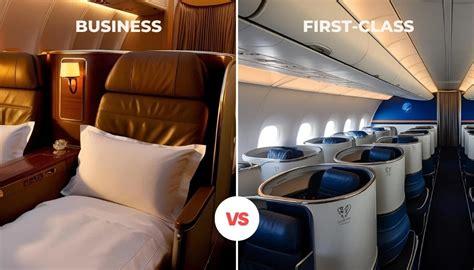
Modern long-haul aviation has created an unusual problem for travelers willing to spend heavily on sleep: the difference between first class and business class is no longer necessarily the bed itself. On many of the world’s newest premium cabins, business class passengers can stretch out on a fully flat surface measuring more than 80 inches, close a privacy door, receive a mattress and duvet, and sleep in an environment that would have been considered first-class territory a generation ago.
That raises a practical question. If a business class suite can provide a bed that is just as long, or sometimes longer, than the one at the front of the aircraft, what exactly does first class buy? The answer is increasingly less about raw mattress dimensions and more about everything surrounding the mattress: cabin density, noise, privacy, service patterns, personal space, seat architecture, and the ability to remain undisturbed.
For travelers booking an overnight international flight, those differences can matter more than another few inches of bed length. A perfectly engineered sleeping surface is useful, but it exists inside an aircraft cabin where other passengers are walking around, crew members are working, galley equipment is moving, lights are changing, and meal services are taking place. The environment can determine whether an excellent bed produces excellent sleep.
Why Business Class Beds Have Caught Up With First Class
The most important change in premium aviation is the rapid improvement of business class lie-flat seats. Airlines once used business class primarily to provide a wider reclining seat, while first class delivered a genuine bed. That distinction has largely disappeared on long-haul routes.
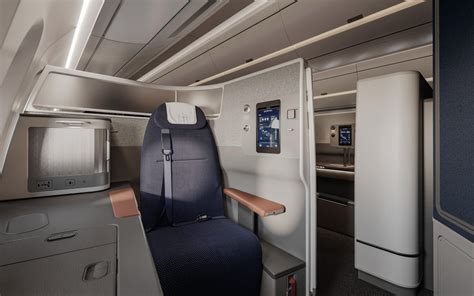
An 80- to 82-inch sleeping surface, roughly 203 to 208 centimeters, has become a common target for premium long-haul seating. That is long enough for most passengers to lie completely flat, and newer designs can go even further. Lufthansa’s Allegris business class, for example, includes an Extra Long Bed option extending to approximately 86 inches (218 centimeters) in lie-flat mode. For a tall passenger, that can be more meaningful than the label printed on the cabin bulkhead.
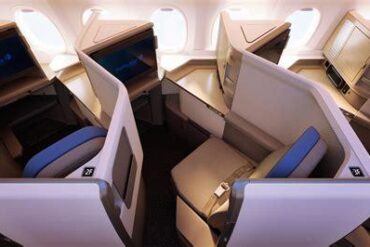
Other modern business products have pushed privacy and personal space in the same direction. Japan Airlines’ international business class and Virgin Atlantic’s A350 Upper Class demonstrate how far business seating has moved from the traditional open-plan arrangement. Sliding doors, direct aisle access, large footwells, ottomans, storage compartments, and substantial bedding have transformed the basic business seat into a private sleeping suite.
This creates an important distinction between what a seat is called and how it functions. A passenger lying on an 82-inch business class bed may have essentially the same horizontal sleeping position as someone several rows ahead in first class. Paying more does not automatically produce a longer bed.
Bed Length Is Only One Part of Sleep Comfort
Length receives considerable attention because it is easy to measure, but sleep ergonomics are much more complicated. A passenger can have plenty of room from head to toe and still struggle to sleep because the mattress becomes narrower toward the feet or because the shoulders have insufficient space to move naturally.
Width can be just as important as length, particularly for passengers who sleep on their side. Traditional business class seats often became narrower around the footwell, creating an unusual sleeping shape that was adequate for lying on the back but less comfortable for changing positions.
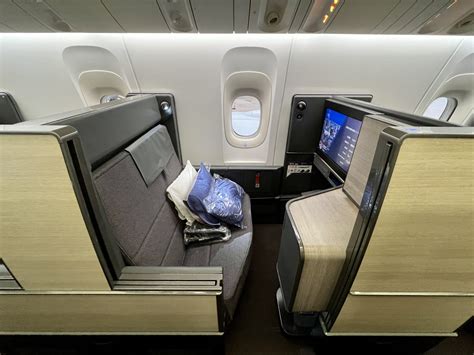
Modern staggered and reverse-herringbone layouts have addressed some of these limitations. ANA’s Boeing 777-300ER business class suite, known as The Room, is a notable example. Its architecture provides an exceptionally broad personal area, with the sleeping surface reaching roughly 33 inches (84 centimeters) in width in some configurations. That is substantially wider than many conventional premium seats.
This illustrates why a simple first-class-versus-business comparison based on ticket labels can be misleading. A business class suite with exceptional lateral space can provide a more natural sleeping position than a first-class seat with a longer but narrower bed. The exact seat design matters.
Mattress construction matters as well. A thick mattress pad can smooth out the hard surfaces and seams beneath it, while a well-designed duvet regulates warmth and reduces the sensation of sleeping directly on an aircraft seat. Pillows, bedding materials and pajamas can also influence comfort, although their effect varies considerably between travelers.
The Real First Class Advantage Is Often the Cabin Around You
If modern business class has largely solved the hardware problem, first class retains a different advantage: environmental isolation.
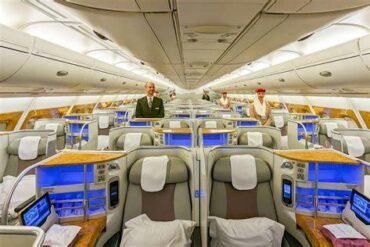
A business class cabin can contain dozens of passengers. Even when every passenger has a private suite, there are still considerably more people moving through the surrounding space. Someone may visit the lavatory, reach into an overhead compartment, speak with a companion, request something from the crew, or simply walk toward the galley.
First class cabins are usually much smaller. A dedicated section might contain only four, six or eight suites. That dramatically changes the rhythm of the cabin.
During an overnight flight, fewer passengers generally means fewer opportunities for movement and interaction near the sleeping area. The difference is particularly noticeable during service periods. In a large business class cabin, meals can create a prolonged period of activity as crews deliver trays, collect dishes, adjust lighting and respond to individual requests. First class, with fewer passengers, can operate on a more individualized schedule.
This is where sleep quality can diverge even when the beds are similar.
A passenger may sleep perfectly well in a business class suite for six hours, but the probability of being disturbed by another passenger or nearby service activity is not identical to that in a tiny first class cabin. First class is therefore selling an environment in addition to a seat.
Privacy Doors Help Business Class Close the Gap
Privacy has become one of the most important technologies in premium cabin design. A door cannot make a business class cabin physically smaller, but it can dramatically reduce the amount of visual and psychological activity reaching an individual passenger.
When the door is closed, a business class passenger can create a personal sleeping environment that is visually separated from the aisle. That matters because aircraft cabins are highly active spaces. Even when the passenger is not directly disturbed, movement in peripheral vision can make the cabin feel less restful.
Modern business suites also increasingly incorporate indirect lighting, enclosed storage and high sidewalls. These features reduce exposure to the surrounding cabin and help create a sense of separation.
The result is that the privacy gap between business and first class has narrowed far more quickly than the space gap. A passenger in a fully enclosed business suite may feel substantially more isolated than someone in an older first class seat that uses an open partition.
That is why comparing “first class” and “business class” at the cabin level is becoming less useful. Comparing the actual products is much more revealing.
Seat Conversion Can Quietly Affect Your Sleep
There is another difference that is easy to overlook: how the seat becomes a bed.
Most lie-flat business class seats begin as chairs. At some point, the passenger or crew must convert the furniture into a sleeping position. Depending on the design, that can involve moving the seat electronically, repositioning a footrest, adding a mattress pad, or asking the passenger to stand temporarily while bedding is installed.
None of these actions is especially dramatic, but timing matters. If a passenger wants to sleep immediately after takeoff, waiting for the cabin to complete meal service and bedding preparation can push the actual sleep period later into the flight.
The reverse can happen before landing. A passenger who is already asleep may eventually have to wake up because the seat must be returned to its upright configuration.
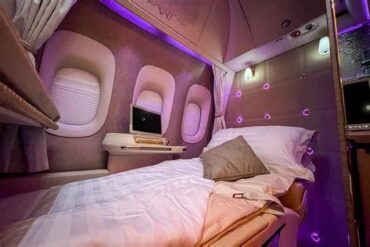
This is one reason some of the most elaborate first class suites remain fundamentally different. Dual-furniture designs separate sitting and sleeping functions. Singapore Airlines’ A380 Suites, for example, have incorporated a dedicated seat alongside a separate bed in certain configurations. Instead of transforming the chair into the bed, the passenger can move between two pieces of furniture.
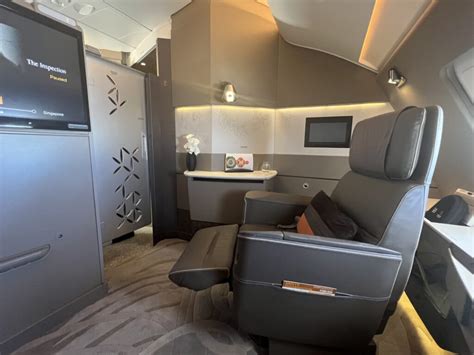
A Dedicated Bed Changes the Sleep Experience
The advantage of a separate bed is not simply extra luxury. It changes the mechanics of the passenger’s entire sleep routine.
A conventional lie-flat seat still contains the geometry of a chair. Even after it becomes horizontal, there may be joins, cushions, angled surfaces or structural components beneath the mattress. A purpose-built bed can be designed around the sleeping position from the beginning.
That can improve the sensation of continuity across the mattress. It can also make the transition from sitting, dining and relaxing to sleeping less disruptive.
However, the commercial cost is enormous. A first class suite with separate furniture can consume dramatically more cabin floor area than a business class suite. That space carries only one passenger and cannot generate the same revenue density as a cabin containing several dozen business class seats.
This is one reason the industry has steadily moved toward sophisticated business class products. Airlines can offer many of the physical benefits of first class without sacrificing as much cabin capacity.
Noise May Matter More Than Another Few Inches of Bed
For an overnight traveler, noise is one of the least glamorous but most consequential differences between cabins.
The engines are obviously present regardless of the cabin, and aircraft type, seat location and individual sensitivity all influence the experience. But cabin-generated noise can also become important. Conversations, service carts, galley activity, lavatory doors and passenger movement can repeatedly interrupt an otherwise comfortable sleep.
A first class cabin cannot eliminate these sounds, but its lower passenger count and greater separation from the main cabin can reduce some sources of activity.
Seat location can sometimes matter nearly as much. A business class passenger sitting immediately beside a galley or lavatory may experience more nighttime movement than someone in a quieter part of the same cabin. Conversely, a strategically chosen business class suite farther from high-traffic areas can provide an extremely peaceful sleeping environment.
That means seat selection can sometimes be more valuable than simply upgrading cabins. A premium ticket does not automatically place a passenger in the quietest possible location.
First Class Still Adds Things That Business Class Cannot Fully Replicate
Despite the convergence, first class has not become meaningless. The remaining differences are simply less concentrated in the basic bed.
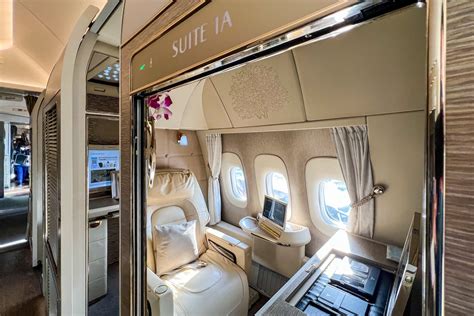
First class may provide more personal floor space, larger suites, more substantial storage, individual wardrobes, dedicated dining areas, higher crew-to-passenger attention and more flexible service. Some products also provide a separate bed, which remains difficult for business class to replicate without consuming enormous amounts of space.
The service model can be particularly important. Business class generally operates within a larger cabin structure, while first class can support a more individualized pace. A passenger who wants to eat immediately, sleep immediately, or remain undisturbed for most of the flight can sometimes experience greater flexibility in first class.
There is also a psychological component that should not be dismissed. A quieter, more spacious and more private environment can make it easier to settle into sleep, even if the mattress dimensions are not dramatically different.
That does not mean every first class cabin will produce better sleep than every business class cabin. Aircraft type, seat location, bedding, passenger behavior and individual sleeping preferences can reverse the expected outcome.
Why Airlines Are Rethinking Dedicated First Class
The economic pressure behind the changing cabin hierarchy is straightforward. First class requires a substantial amount of aircraft real estate for relatively few passengers. Business class can deliver many premium features while accommodating considerably more travelers.
As airlines introduce newer widebody aircraft and redesign cabins, that calculation becomes increasingly important. Dedicated first class has disappeared from a number of international fleets, while other carriers continue to invest in highly distinctive flagship products.
The result is not simply the disappearance of luxury. Instead, luxury is moving downward into business class. Features that once justified first class—flat beds, direct aisle access, privacy, large personal spaces, quality bedding and enclosed suites—are increasingly becoming business class expectations.
The surviving first class products therefore need to offer something beyond those basic characteristics. Separate beds, enormous suites, personalized dining and extremely low cabin density become the differentiators.
So Does First Class Actually Buy Better Sleep?
The answer depends on what is preventing a passenger from sleeping in the first place.
If the problem is bed length, business class may already provide everything necessary. An 82-inch or even 86-inch sleeping surface can accommodate most travelers comfortably, and some business class products offer exceptional width as well.
If the problem is privacy, business class has also made enormous progress. A fully enclosed suite with a door can create a remarkably secluded environment.
But if the problem is cabin activity, noise, service interruptions or the need for a completely separate sleeping surface, first class can still provide a meaningful difference. The smaller cabin and more individualized service pattern can reduce some of the disruptions that remain unavoidable in larger business class sections.
That makes the economics of first class more nuanced than a simple question of whether the bed is better. First class increasingly sells uninterrupted conditions for using the bed, rather than the bed itself.
For travelers deciding how to spend their money on an overnight flight, the most useful approach is therefore to examine the exact aircraft, seat map and cabin design rather than relying on the words “first class” or “business class.” Check the bed length and width, whether the suite has a door, where the seat sits relative to galleys and lavatories, how bedding is provided, and whether the product uses a dedicated bed or a converted seat.
In the modern long-haul market, a carefully selected business class suite can provide an excellent night’s sleep without the enormous premium attached to first class. At the same time, a genuinely spacious first class suite can still create a more controlled and less interrupted sleeping environment.
The biggest change is that first class no longer owns the concept of a great airplane bed. Business class has taken that technology and made it widely available. What remains at the front of the aircraft is the ability to surround that bed with more space, fewer passengers, less activity and, in the most elaborate products, furniture designed specifically around sleep.
That is the real dividing line now: not simply how flat the bed becomes, but how completely the cabin allows you to disappear into it.