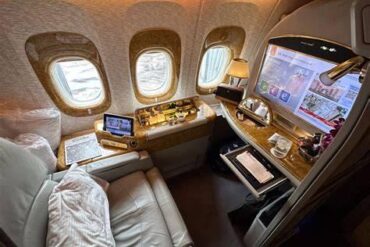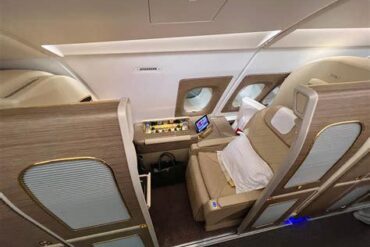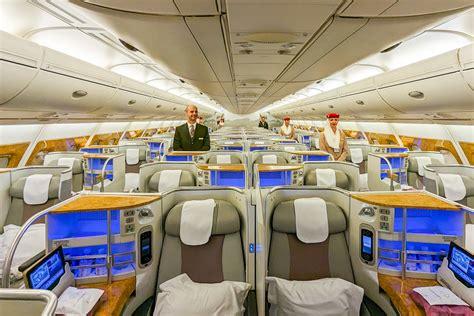
Flying business class on the Airbus A380 operated by Emirates remains one of the most recognizable premium aviation experiences in the world. Even in 2026, few airline products carry the same blend of prestige, comfort, and sheer spectacle. The moment passengers walk onto the upper deck of the double-decker giant, they enter an environment designed to feel more like a private hotel lounge than a commercial aircraft.
That reputation, however, comes with a serious financial commitment. Emirates business class fares on the A380 are rarely cheap, and in many cases they are dramatically more expensive than standard economy or premium economy tickets on the exact same route. Yet demand remains remarkably strong because travelers are not simply purchasing transportation. They are paying for privacy, convenience, premium ground services, elevated dining, and a long-haul experience that transforms exhausting international travel into something genuinely enjoyable.
In 2026, the real cost of flying Emirates A380 business class depends on far more than the route alone. Seasonal demand, route competition, loyalty upgrades, corporate contracts, booking timing, and even geopolitical travel trends all influence ticket pricing. A passenger flying from Dubai to London may pay less than half of what another traveler spends for the identical seat only days later.
The result is a pricing ecosystem where Emirates continuously adjusts fares in real time, maximizing revenue on one of the aviation industry’s most profitable premium products.
Why Emirates A380 Business Class Still Defines Premium Long-Haul Travel
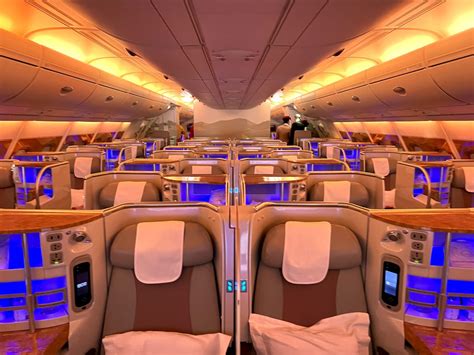
The Emirates A380 business-class experience has become iconic largely because the aircraft itself allows the airline to offer features impossible on smaller jets. The upper deck layout creates a naturally quieter and more exclusive environment, separated from the dense economy sections below. Instead of feeling like an upgraded seat within a crowded cabin, the experience feels intentionally premium from boarding to landing.
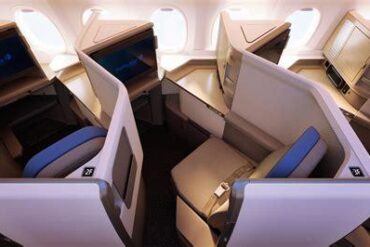
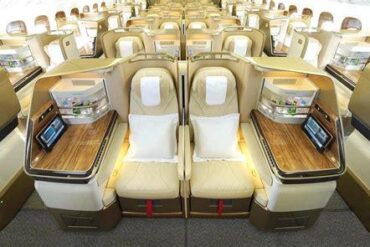
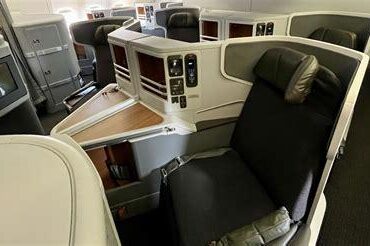
Passengers receive fully flat beds arranged in a spacious 1-2-1 configuration, ensuring every traveler enjoys direct aisle access. Unlike older-generation business-class cabins still found on some global carriers, nobody needs to climb over another passenger during overnight flights. Privacy is significantly improved, and the cabin atmosphere feels calmer and more refined.
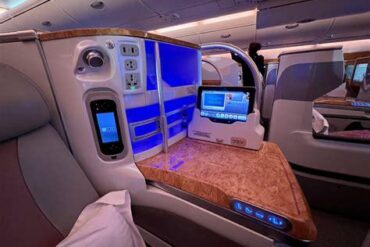
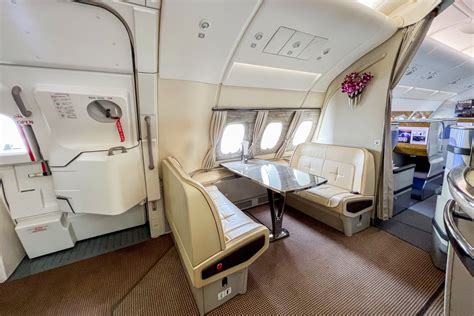
Emirates has also mastered the emotional side of premium travel. Mood lighting, polished wood-style finishes, gold accents, premium beverage programs, and carefully staged cabin service all reinforce the perception of luxury. The onboard lounge at the rear of the upper deck remains one of the airline’s most famous features, allowing passengers to socialize, stretch, or enjoy cocktails while cruising at 40,000 feet.
For many travelers, the lounge alone turns the flight into an event rather than merely a means of transportation.
How Much Emirates A380 Business Class Actually Costs In 2026
The price range for Emirates A380 business class in 2026 is extremely broad, but several realistic market averages have emerged across major international routes.
On lower-demand dates or during promotional sales, one-way fares can occasionally begin around $2,500 to $3,500. These are typically limited inventory “Saver” fares released well in advance. Travelers who book early and maintain flexible travel dates are usually the ones who capture these lower price points.
More commonly, however, passengers booking major intercontinental routes encounter substantially higher pricing.
Typical one-way fare ranges in 2026 include:
- Dubai to London: roughly $3,500 to $6,000
- Dubai to New York: roughly $4,500 to $7,000
- Dubai to Sydney: often $5,000 or higher
- Los Angeles to Dubai: frequently above $6,000 during peak periods
- Multi-segment itineraries: commonly exceed $8,000 round-trip
Round-trip business-class fares on flagship routes regularly settle between $5,000 and $10,000 depending on demand conditions. During holiday periods, major events, or last-minute corporate bookings, fares can climb even further.
It is not unusual for fully flexible last-minute business tickets to exceed $8,000 one way on premium-heavy routes where time-sensitive travelers are less price sensitive.
Why The Same Seat Can Vary By Thousands Of Dollars
One of the biggest misconceptions about airline pricing is the assumption that seats have fixed values. In reality, Emirates uses an advanced dynamic pricing system that constantly recalculates ticket costs based on expected demand and remaining inventory.
Every business-class cabin is divided into multiple fare buckets. The cheapest buckets sell first. Once they disappear, only more expensive inventory remains available. This is why a passenger checking prices on Monday may discover the exact same flight costs dramatically more by Friday.
Timing plays a massive role. Travelers booking six to nine months in advance often secure significantly lower fares than passengers purchasing tickets only days before departure. Emirates knows late-booking passengers are frequently corporate travelers or affluent customers with less flexibility, allowing the airline to command premium pricing.
Seasonality also changes everything. Demand spikes during:
- Christmas and New Year travel
- Summer vacation periods
- School holidays
- Ramadan and Eid travel peaks
- Major sporting or business events
- European summer tourism seasons
Competition influences pricing too. On routes where Qatar Airways, Etihad Airways, or Singapore Airlines aggressively compete for premium travelers, Emirates often moderates fares to remain competitive.
Conversely, on routes where Emirates enjoys a stronger network advantage or limited nonstop competition, pricing tends to remain much firmer.
What Travelers Actually Receive For The Price
The sticker shock attached to Emirates A380 business class becomes easier to understand once the entire premium ecosystem is examined. Passengers are not merely paying for extra legroom.
The experience begins before passengers even arrive at the airport. In many markets, Emirates still offers chauffeur-driven transfers for premium passengers, removing the hassle of airport transportation. Dedicated check-in counters, priority security lanes, and premium boarding processes further reduce travel stress.
Inside the airport, Emirates business-class lounges are often enormous, featuring restaurant-quality dining, shower facilities, premium drinks, quiet seating zones, and direct boarding access in some terminals.
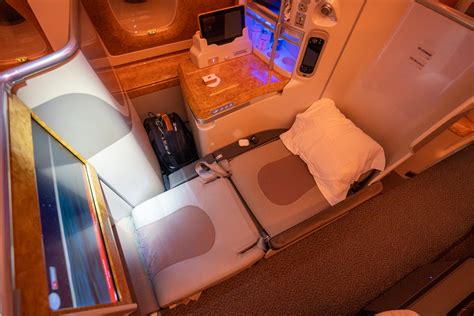
Once onboard, the A380’s business-class seat transforms into a fully flat bed roughly 78 inches long. Large entertainment screens, extensive storage compartments, premium bedding, noise-reducing cabin acoustics, and gourmet meal services all contribute to the experience.
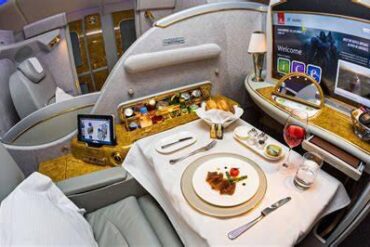
The onboard dining program remains one of Emirates’ strongest competitive advantages. Multi-course meals, premium wines, cocktails, desserts, and regionally tailored menus help justify the premium positioning.
Meanwhile, the famous onboard lounge acts almost like a flying cocktail bar. It is one of the few commercial aviation spaces where passengers can casually socialize during ultra-long-haul flights.
The Massive Difference Between The A380 And Boeing 777 Experience
One critical detail many travelers overlook when booking Emirates business class is that not all aircraft offer the same product quality.
The A380 remains Emirates’ flagship premium experience by a substantial margin.
On the A380, the business-class cabin uses a modern 1-2-1 layout with direct aisle access for every seat. The cabin feels spacious, airy, and intentionally luxurious. Because the business cabin occupies the upper deck, it also feels more isolated from the noise and traffic of economy.
However, many Emirates Boeing 777 aircraft still use older 2-3-2 business-class configurations. That means some passengers lack direct aisle access entirely, a setup increasingly considered outdated in premium aviation.
The middle seat arrangement on certain 777 business cabins significantly reduces privacy and overall exclusivity. Travelers expecting the full Emirates “Instagram luxury” experience can feel disappointed if they unknowingly book one of these aircraft instead of the A380.
This distinction matters because Emirates sometimes prices both aircraft similarly despite the enormous difference in passenger experience.
Savvy travelers therefore monitor aircraft assignments carefully before booking.
Emirates Business Class Versus First Class In 2026
While business class is unquestionably luxurious, Emirates still positions first class as its true flagship experience.
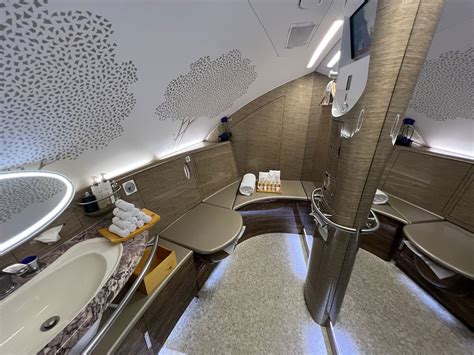
First-class passengers on the A380 receive private suites with sliding doors, more personalized dining service, upgraded champagne offerings, and exclusive access to the aircraft’s onboard shower spa facilities. The experience is designed to compete with the world’s best ultra-premium airline products.
Yet the price jump between business and first class is enormous.
In 2026, first-class fares on flagship Emirates A380 routes often exceed $10,000 to $15,000 round-trip and can climb dramatically higher during peak demand periods.
That pricing gap explains why business class remains the airline’s most commercially important premium cabin. It captures affluent leisure travelers, corporate passengers, and luxury-focused consumers who desire an elevated experience without entering the extreme pricing territory of first class.
For many travelers, Emirates business class represents the sweet spot between indulgence and relative financial realism.
Can Travelers Use Miles Or Partner Programs To Reduce Costs?
One reason Emirates business class remains accessible to some travelers is the availability of mileage redemptions and upgrade strategies.
The airline’s own loyalty system, Skywards, allows members to redeem miles for both outright award tickets and upgrades from economy or premium economy. Depending on demand conditions, upgrading into business class can deliver significantly better value than purchasing a full-fare premium ticket outright.
Emirates also partners with select international airline loyalty programs, even though it does not belong to a major alliance like Star Alliance or oneworld.
Programs such as:
- Japan Airlines Mileage Bank
- Air Canada Aeroplan
- Qantas Frequent Flyer
can sometimes access Emirates award inventory.
The challenge is availability. Emirates tightly controls premium award seats, particularly on high-demand A380 routes. Travelers often discover that award space disappears quickly or requires enormous mileage balances during peak periods.
Nonetheless, flexible travelers willing to monitor inventory closely can still secure tremendous value relative to cash fares.
Why Premium Airline Demand Remains So Strong
Despite global economic uncertainty and rising airfare prices, premium long-haul cabins continue generating outsized profits for major international airlines.
Emirates benefits enormously from this trend because its brand has become deeply associated with aspirational luxury travel. Many passengers view flying the airline’s A380 business class as a bucket-list experience rather than simply a transportation purchase.
Corporate travel also remains critical. Executives traveling between financial hubs like Dubai, London, New York City, and Sydney often prioritize productivity, rest quality, and schedule convenience over ticket price alone.
For airlines, premium passengers generate disproportionately large revenue shares relative to the number of seats occupied. A single business-class passenger may generate the same revenue as multiple economy travelers combined.
That financial reality explains why Emirates invests so aggressively in maintaining the glamour and exclusivity surrounding its premium cabins.
The Real Bottom Line On Emirates A380 Business Class Pricing
Emirates A380 business class in 2026 remains one of aviation’s defining luxury experiences, but it is also one of the industry’s most expensive mainstream premium products.
Most travelers realistically spend somewhere between $4,000 and $8,000 round-trip on major long-haul routes, though promotional pricing, mileage upgrades, and strategic booking windows can reduce costs significantly. At the same time, peak-season and last-minute fares can escalate into genuinely eye-watering territory.
Yet for many passengers, the value proposition extends beyond the seat itself. The combination of lounge access, lie-flat comfort, premium dining, attentive service, and the unmistakable atmosphere of the A380 upper deck creates an experience few competitors fully replicate.
In an aviation world increasingly focused on efficiency and density, Emirates continues selling something far more emotional: the feeling that air travel can still be glamorous.