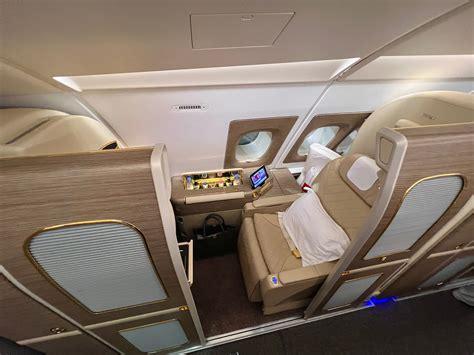
Flying first class on the Airbus A380 operated by Emirates is no longer just about transportation—it is a statement of wealth, exclusivity, and indulgence. In 2026, this experience sits at the absolute pinnacle of commercial aviation, blending private jet-level comfort with global airline connectivity. But how much does it really cost, and what exactly are passengers paying for when ticket prices climb deep into five figures?
The reality is both fascinating and, frankly, a little outrageous—in the best possible way.
The True Cost of Emirates A380 First Class in 2026
The price of an Emirates A380 first-class ticket in 2026 varies dramatically depending on route length, demand cycles, and booking timing. However, the baseline numbers reveal just how exclusive this product has become.
For shorter or regional premium routes, fares may begin around $1,800, but those flights rarely feature the full A380 experience. The real benchmark lies in long-haul international routes—where the aircraft’s full luxury offering is deployed.
Typical one-way fare ranges in 2026 include:
- New York (JFK): $8,500 – $16,000
- Los Angeles (LAX): $9,200 – $17,000
- Boston (BOS): $8,800 – $15,000
- London Heathrow (LHR): $4,800 – $8,500
- Paris (CDG): $5,200 – $9,000
- Sydney (SYD): $7,800 – $12,500
Return tickets amplify these figures significantly. A Sydney–London round trip, for instance, can easily reach $25,000 to $35,000, placing it firmly in the realm of ultra-luxury consumption.
And for the longest routes—such as Dubai to San Francisco—single tickets exceeding $10,000 are now common.
This pricing isn’t accidental. It reflects a carefully engineered positioning strategy: Emirates doesn’t compete on affordability in first class—it dominates on experience.
Why These Prices Are So High—and Why People Still Pay
At first glance, spending the price of a luxury car on a flight might seem excessive. But the value proposition shifts when you understand what Emirates is offering: a fully immersive, high-end lifestyle experience compressed into a single journey.
Passengers are not simply buying a seat. They are purchasing:
- Privacy equivalent to a boutique hotel suite
- Personalized service ratios unmatched in commercial aviation
- Access to exclusive onboard amenities unavailable anywhere else in the sky
In a world where time is the ultimate currency, Emirates has mastered the art of turning travel time into premium leisure time.
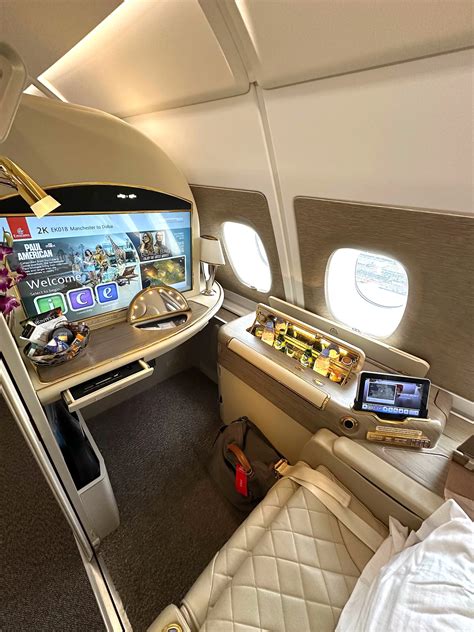
Inside the Emirates A380 First Class Suite
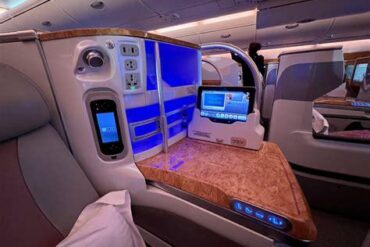
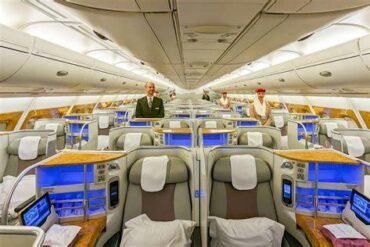
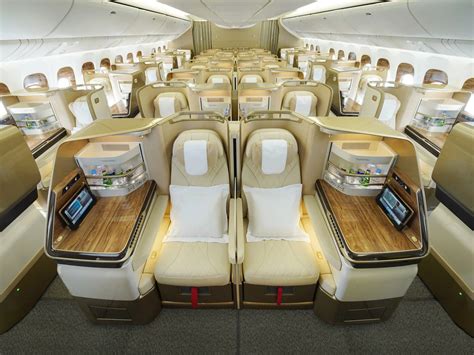
Step inside the first-class cabin, and the difference becomes immediately apparent. Each passenger occupies a fully enclosed private suite, complete with sliding doors, ambient lighting controls, and plush seating that transforms into a fully flat bed.
The design blends luxury materials, gold accents, and cutting-edge technology, creating an environment that feels closer to a high-end hotel than an aircraft cabin.
Passengers enjoy:
- A wide leather seat with adjustable firmness
- A full-length bed with mattress topper
- A large HD entertainment screen
- Personal minibar and storage compartments
Unlike many competitors, Emirates has perfected the balance between privacy and openness—you can isolate yourself completely or engage with the cabin at will.
The Famous Onboard Shower Spa Experience
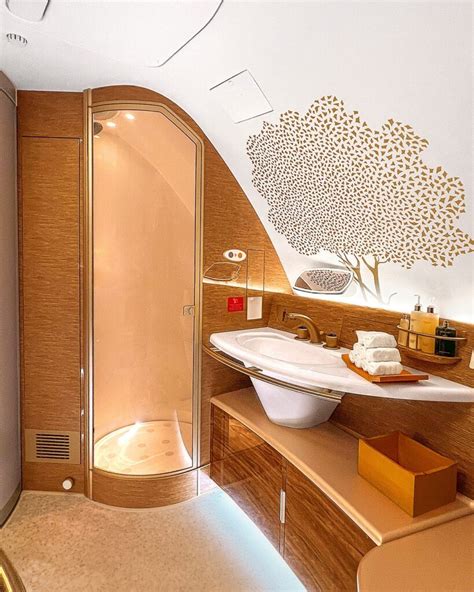
Perhaps the most iconic feature of the Emirates A380 first class is its onboard shower spa—a concept that still feels almost surreal.
Each first-class passenger can reserve a 30-minute time slot, with approximately five minutes of running hot water, carefully managed for efficiency. While that may sound restrictive, the experience itself is anything but.
The shower suites are equipped with:
- Heated floors
- Full-length mirrors
- Luxury toiletries from VOYA and Bvlgari
- Premium towels and spa-grade finishes
It’s not just about hygiene—it’s about arriving at your destination feeling refreshed, revitalized, and ready to perform.
Dining at 40,000 Feet: A Culinary Experience Without Limits
Dining onboard Emirates first class is deliberately designed to rival fine dining restaurants.
Passengers can order à la carte meals on demand, rather than adhering to fixed service schedules. This flexibility transforms the cabin into a personal restaurant in the sky.
Signature offerings include:
- Premium caviar service
- Gourmet meat and seafood dishes
- Artisan desserts
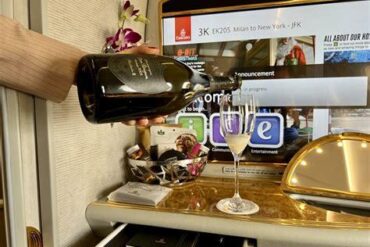
- Extensive wine list and vintage champagnes, including Dom Pérignon
What sets the experience apart is not just the quality of the food—but the timing, presentation, and personalization.
Whether you want a full multi-course meal or a midnight snack, it’s delivered exactly when you want it.
The A380 Upper Deck Lounge: Social Luxury at Altitude
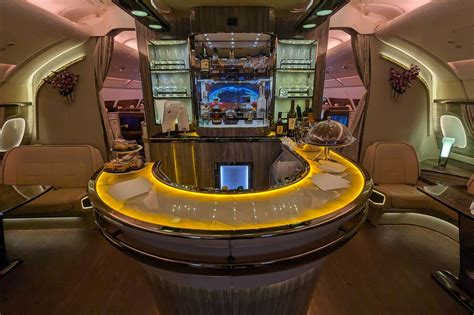
Beyond the private suites, first-class passengers gain access to the iconic onboard lounge located on the upper deck.
This space functions as a luxury cocktail bar in the sky, offering:
- Signature cocktails crafted by onboard mixologists
- Premium spirits and champagne
- Comfortable seating areas for conversation and relaxation
It’s a rare opportunity to socialize mid-flight—something most premium cabins fail to achieve without sacrificing privacy.
Emirates A380 Fleet: Scale, Strategy, and Dominance
Emirates operates the world’s largest fleet of A380 aircraft, with over 100 active units. This scale allows the airline to deploy its flagship product across a wide network of global destinations.
The A380 first entered Emirates service in 2008, connecting Dubai with New York, and has since become the backbone of its long-haul operations.
Unlike many airlines that retired the aircraft due to cost concerns, Emirates doubled down—optimizing routes, maximizing load factors, and building an ecosystem where the A380 thrives.
Today, it remains one of the last strongholds of true first-class aviation.
How Emirates First Class Compares to Other Airlines
Despite its high price, Emirates is not alone in the ultra-premium segment. Airlines such as Qantas and Singapore Airlines also offer first-class products—but with notable differences.
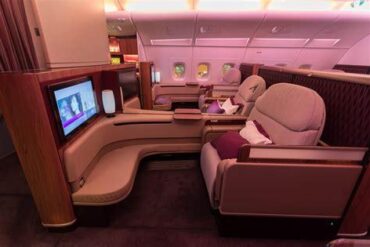
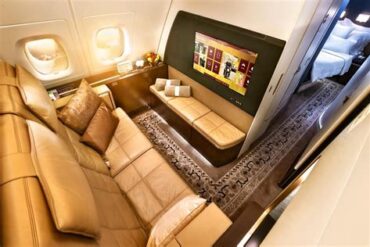
For example, Qantas’ A380 first class emphasizes communal luxury, blending private suites with shared dining experiences. However, it lacks fully enclosed doors, reducing the sense of personal space.
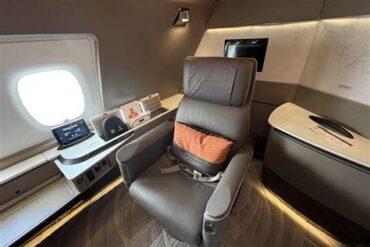
Singapore Airlines, on the other hand, focuses on suite-style cabins, but its deployment is more limited compared to Emirates’ expansive A380 network.
Price-wise, the industry average for long-haul first class sits between:
- $15,000 and $28,000 (round-trip)
This places Emirates firmly within market expectations—though its shower spa and onboard lounge still give it a distinctive edge.
Is Emirates Business Class a Smarter Alternative?
For travelers who hesitate at five-figure ticket prices, Emirates business class presents a compelling alternative.
Located on the same upper deck, business class offers:
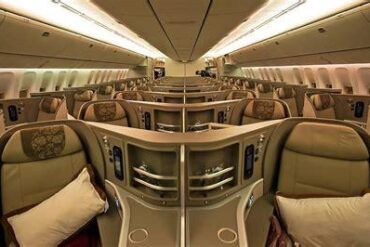
- Lie-flat seats
- Premium dining
- Access to the onboard lounge
- High-end service standards
The key differences come down to:
- Privacy: No fully enclosed suites
- Space: Smaller personal footprint
- Exclusivity: Shared cabin environment
While business class delivers exceptional comfort, it lacks the transformational luxury that defines first class.
Why First Class Is Slowly Disappearing—But Not at Emirates
Across the aviation industry, first class is becoming increasingly rare. Airlines are shifting toward enhanced business class products, which offer similar comfort at a lower cost and higher seat density.
Modern business cabins now include:
- Fully flat beds
- Direct aisle access
- Privacy partitions
- Elevated dining
This evolution has reduced the gap between business and first class, making the latter harder to justify economically.
However, Emirates continues to invest in first class for one critical reason: brand power.
First class is not just a revenue stream—it is a marketing engine. It reinforces Emirates’ image as the world’s most luxurious airline, attracting premium customers across all cabin classes.
The Psychological Value of Flying Emirates First Class
Beyond tangible features, Emirates first class delivers something less measurable—but equally powerful: emotional impact.
Passengers consistently describe the experience as:
- Memorable
- Indulgent
- Transformational
There is a distinct psychological shift when stepping into a private suite at 40,000 feet. It creates a sense of detachment from the ordinary, turning travel into an event rather than a necessity.
For high-net-worth individuals, this emotional payoff often justifies the cost.
Will Emirates Keep First Class Alive Into the 2040s?
The future of first class remains uncertain—but Emirates is uniquely positioned to sustain it.
With a fleet strategy centered around the A380 and a strong premium customer base, the airline has both the infrastructure and demand to continue offering this product well into the next decade.
However, challenges remain:
- Aging aircraft
- Rising operational costs
- Shifting consumer preferences
At the same time, the prestige of offering one of the world’s last true first-class experiences provides a compelling reason to continue.
Final Verdict: Is Emirates A380 First Class Worth It?
The answer depends entirely on perspective.
From a purely financial standpoint, the cost is undeniably steep. But when evaluated as a luxury experience, Emirates A380 first class delivers something few products in the world can match.
It combines:
- Private suite living
- Fine dining
- Spa-level amenities
- Social luxury spaces
- World-class service
All while traveling across continents in a matter of hours.
For those who can afford it, it is not just a flight—it is one of the most extraordinary ways to move through the world.