The Airbus A321XLR has changed the economics of long-haul narrowbody flying, but it has also created an unusually difficult question for airlines: how much cabin space should be given to passengers who want something better than economy without paying for business class? On a widebody aircraft, the answer has increasingly been premium economy. On the A321XLR, however, the argument is far less straightforward.
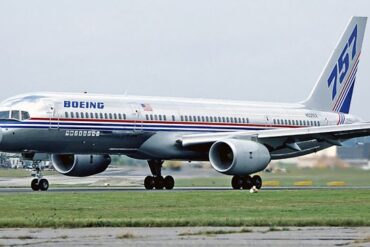
The aircraft occupies a very specific position in the global fleet. It is capable of flying routes that were historically associated with aircraft such as the Boeing 757, yet it retains the physical limitations of a single-aisle fuselage. That combination is precisely what makes the A321XLR so attractive to airlines seeking to open thinner long-haul routes. It is also what makes every row of seats exceptionally valuable.
Today, the A321XLR is being used by a growing group of airlines for missions that can stretch deep into long-haul territory. Yet among the six launch operators discussed here, only American Airlines and United Airlines have chosen to create a dedicated premium economy section. Air Canada, Aer Lingus, Iberia, and Qantas have instead pursued different cabin strategies, generally placing more emphasis on business class, extra-legroom economy, and overall seat capacity.
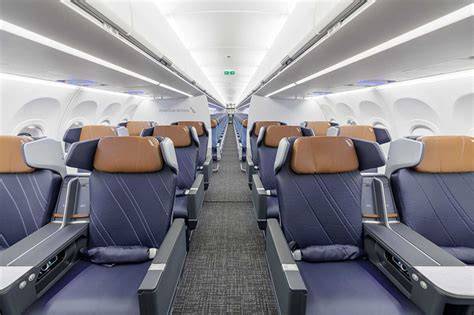
That split is more than a difference in airline branding. It exposes a fundamental economic problem. A premium economy seat can command a substantially higher fare than an ordinary economy seat, but the airline must sacrifice the physical space that could have accommodated additional lower-fare passengers. On a widebody, there is enough room to absorb that trade-off more comfortably. On an A321XLR, the decision is much harder because the entire cabin is effectively a competition for scarce square footage.
Six Airbus A321XLR Operators, Six Different Cabin Strategies
The most revealing way to understand the premium economy debate is to examine how the early A321XLR operators have actually configured their aircraft. Their cabins show that there is no universally accepted formula for long-haul single-aisle flying.
American Airlines has selected a 155-seat configuration consisting of 20 Flagship Business suites, 12 premium economy recliners, and 123 economy seats. United Airlines’ comparable configuration contains 20 business-class seats, 12 premium economy seats, and 118 economy seats, producing a total of 150 seats. In both cases, premium economy occupies only a small portion of the aircraft.
The other airlines have taken a different route. Air Canada’s A321XLR configuration places 14 business-class suites ahead of 168 economy seats, creating a 182-seat aircraft without a dedicated premium economy cabin. Aer Lingus similarly uses 16 business-class seats and 168 economy seats, producing 184 seats. Iberia uses 14 business seats followed by 168 economy seats for 182 passengers.
Qantas has gone even further toward density. Its A321XLR configuration is planned around 20 recliner-style business-class seats and 180 economy seats, producing 200 seats without a premium economy cabin. The difference between that aircraft and American’s 155-seat layout is enormous when considered over the same basic fuselage.
The figures illustrate the central dilemma. A premium economy cabin is not simply an additional product placed between business and economy. It changes the entire revenue architecture of the aircraft. Every premium economy row consumes space that could otherwise become economy capacity, while also requiring the airline to determine whether the resulting higher fares will compensate for those lost seats.
Why Narrowbody Space Changes the Premium Economy Equation
Premium economy has become one of the most commercially attractive cabin products on many long-haul widebody aircraft. Airlines have discovered that a significant group of passengers wants more space, better food, improved service, and a more comfortable seat, but does not want to pay business-class prices.
That middle market can be extremely valuable. Industry analysis cited in the reference material indicates that premium economy can generate substantially more revenue per square foot than economy on long-haul aircraft. American Airlines previously stated that premium economy fares could reach roughly twice standard economy fares, illustrating why airlines have been eager to expand the product.
But the A321XLR is not a widebody.
A twin-aisle aircraft can distribute premium economy across a comparatively spacious cabin while maintaining separate galleys, lavatories, aisles, and service areas. The physical separation helps premium passengers feel that they are receiving a distinct product rather than simply a larger economy seat.
The A321XLR has one aisle. Its fuselage is narrow. Its galleys and lavatories must serve everyone onboard. There is less room for creating meaningful separation between cabin classes, and every additional premium seat directly competes with the number of economy seats that can be installed.
That makes the economics particularly sensitive to seat count. If an airline removes three or six economy seats to create a premium economy section, it needs to generate enough incremental revenue from the replacement seats to offset the lost capacity. The calculation becomes even more complicated when the premium cabin also requires additional catering, service time, storage, and potentially more cabin crew.
The Lavatory Problem Reveals the A321XLR’s Limitations
Cabin density is not the only issue. The location of galleys and lavatories can have an enormous impact on the passenger experience, particularly on flights lasting eight to 11 hours.
None of the initial six configurations originally placed a mid-cabin lavatory in the same way that many passengers might expect from a long-haul widebody. That creates a difficult situation for the rear cabin because passengers and crew can be concentrated around the same limited facilities.
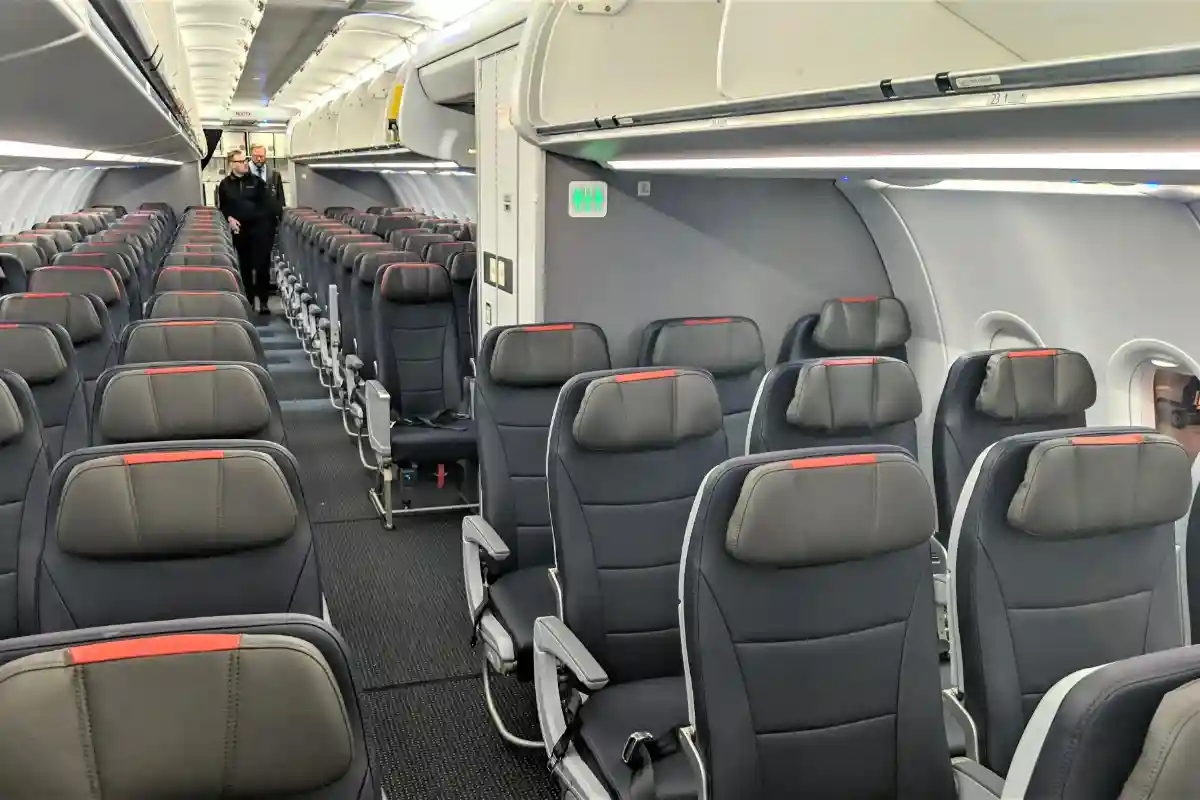
American’s economy passengers, for example, share three rear lavatories. With 123 economy passengers in its A321XLR configuration, the ratio is considerably more manageable than some of the denser alternatives, but the premium economy cabin does not receive its own dedicated restroom. The same facilities and much of the same galley infrastructure therefore support passengers who may have paid dramatically different fares.
Iberia’s configuration highlights the operational problem from another angle. Its three lavatories are located at the rear, meaning passengers from a large economy cabin have to move toward the same area during busy periods. Reports from the airline’s early A321XLR operation described queues developing around the rear galley during service.
Qantas faced an even more obvious problem with its original configuration. Two economy lavatories serving a cabin with approximately 180 economy passengers created an unusually high passenger-to-lavatory ratio. The airline subsequently changed its approach for later aircraft, adding a mid-cabin restroom and removing a row of three economy seats.
That change is revealing because it demonstrates exactly how constrained the A321XLR can become. Even a seemingly small operational improvement requires the airline to surrender revenue-generating seating capacity.
American Airlines’ 12-Seat Premium Economy Experiment
American Airlines provides perhaps the clearest example of the question facing airlines that choose premium economy on a narrowbody.
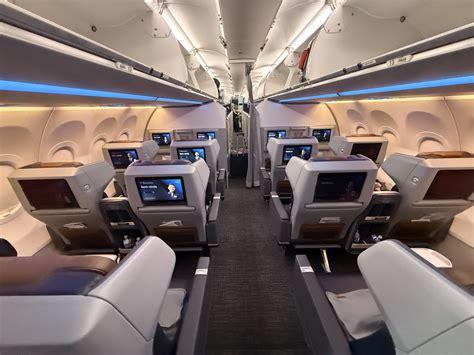
Its A321XLR premium economy section contains just 12 seats, using Recaro R5 recliners with approximately 37 inches of pitch, 21 inches of width, and eight inches of recline. Those dimensions give the seats a substantial advantage over conventional economy seating and create a product that can feel meaningfully different during a long transatlantic flight.
The seat itself is therefore not necessarily the problem. The difficulty is everything surrounding it.
The premium economy cabin shares the aircraft’s limited galley and lavatory infrastructure with the other passengers. The galley serving the front portion of the cabin is particularly compact, and reports from early flights indicated that meal service placed significant pressure on the crew because of the restricted workspace.
The pricing makes the question even more interesting. A premium economy fare can be dramatically higher than Basic Economy and may approach business-class pricing on certain dates. One example cited in the reference material showed Basic Economy at $379, Main Cabin at $421, Main Cabin Extra at $526, and premium economy at $1,050 for a sample itinerary.
At that level, passengers naturally expect more than a better seat.
The A321XLR premium economy product therefore has to justify a substantial fare premium despite lacking many of the physical features that make premium cabins feel separate on a widebody. There is no dedicated premium lavatory, no spacious premium galley, and no broad cabin footprint separating the product from economy.
The Missing Middle Seat Opportunity
Another issue concerns American’s decision to allocate only 12 seats to its premium economy cabin.
The airline could have created a larger extra-legroom economy section by removing a standard row and expanding the number of seats with additional pitch. Instead, its Main Cabin Extra offering is concentrated around the exit rows.
That creates an unusual hierarchy. A passenger can pay significantly more for premium economy, while another passenger can purchase an extra-legroom economy seat that still uses much of the same cabin infrastructure. The distinction is primarily the physical seat and the associated premium-cabin positioning.
This raises an important question about what passengers are actually purchasing. If the principal benefit is seat comfort, then a larger extra-legroom section could potentially satisfy some of the same demand while preserving a simpler two-class cabin architecture.
There is no universal answer because passenger demand varies by route. A business-heavy transatlantic market may support a genuine premium economy cabin, while a leisure-oriented route may produce stronger returns from additional economy seats. The A321XLR’s flexibility makes that distinction especially important.
Why Air Canada, Iberia, Aer Lingus, and Qantas Said No
The decision by four launch operators to omit premium economy becomes easier to understand when the alternatives are examined.
Air Canada uses its limited cabin space for lie-flat business-class suites and extra-legroom seats rather than building a separate middle cabin. Iberia and Aer Lingus follow a broadly similar philosophy. Their passengers receive a clear choice between the airline’s premium front cabin and conventional economy rather than being presented with three distinct long-haul products.
This approach simplifies the aircraft. It also allows the airlines to devote more seats to economy while retaining a premium business-class product capable of attracting higher-paying customers.
Qantas takes the density argument furthest. Its 200-seat configuration reflects the possibility that on certain routes, volume matters more than cabin segmentation. If an A321XLR is being used to connect cities that cannot support a widebody, the ability to carry 200 passengers may be more valuable than sacrificing several rows for a premium product.
That does not mean premium economy cannot work. It means the airline has to prove that its revenue contribution exceeds the opportunity cost of the seats and space it consumes.
United Airlines Shows Another Path
United’s A321XLR strategy is particularly interesting because the airline has explored more than one cabin configuration. Its standard arrangement includes 20 business-class seats, 12 premium economy seats, and 118 economy seats, creating a relatively low-density 150-seat aircraft.
The airline’s more premium Elevated Interior concept goes much further, with a substantially more spacious cabin arrangement featuring Polaris business class and Premium Plus. The lower seat count changes the economics of the aircraft but also changes the passenger experience.
There is an operational benefit as well. A less densely configured aircraft can potentially operate with fewer flight attendants under applicable staffing requirements. That means the airline is not simply sacrificing seats for comfort; it can also alter some operating costs.
This demonstrates why the premium economy debate cannot be reduced to seat revenue alone. Airlines must consider crew costs, catering, airport fees, fuel consumption, passenger demand, connection opportunities, and route economics when determining the optimal configuration.
The Airbus A321XLR May Redefine Premium Economy
The A321XLR could ultimately force airlines to rethink what premium economy means.
On a widebody, premium economy has evolved into a recognizable intermediate cabin with wider seats, greater pitch, upgraded dining, dedicated service, and a clear physical boundary between classes. On a narrowbody, that formula may not always make economic sense.
Instead, airlines could increasingly rely on a combination of lie-flat business class and enhanced economy. Extra-legroom seating, preferred seating, upgraded meals, priority services, and flexible fares can create several monetizable steps without requiring a dedicated cabin.
That model is already visible in the configurations selected by several A321XLR operators. It allows airlines to extract additional revenue from passengers willing to pay for comfort while keeping the aircraft relatively dense.
At the same time, American and United are effectively testing the opposite proposition: that enough travelers will pay a significant premium for a genuinely better seat on a narrowbody long-haul flight to justify surrendering economy capacity.
The answer will depend heavily on route structure. A flight between major financial centers with strong corporate demand could support premium seating much more easily than a seasonal leisure route. The A321XLR’s ability to serve both types of market is precisely why the experiment is worth watching.
The Hard Question Behind the Airbus A321XLR
The real lesson from the A321XLR is not that premium economy is either a success or a failure on narrowbody aircraft. It is that space has a different value on a single-aisle long-haul jet.
On a widebody, an airline can dedicate a meaningful portion of the aircraft to premium economy without making the rest of the cabin feel excessively constrained. On an A321XLR, every row has a direct opportunity cost. A row removed for premium passengers is a row that cannot carry economy passengers, while the premium travelers may still share the same lavatories, galley facilities, and aisle.
That is why six major airlines have arrived at notably different answers. American and United are betting that a carefully sized premium economy cabin can produce enough fare revenue to justify its footprint. Air Canada, Aer Lingus, Iberia, and Qantas have instead emphasized other forms of cabin differentiation or higher passenger capacity.
The outcome will become clearer as the A321XLR long-haul network matures. If passengers consistently pay large premiums for the better seats, the aircraft could establish a new role for premium economy on single-aisle jets. If airlines discover that the additional revenue does not compensate for lost capacity and operational complexity, the two-class model may remain dominant.
Either way, the A321XLR has exposed something that widebody economics can sometimes conceal: premium economy is not simply a cabin product. It is a bet on how much each square foot of an aircraft is worth.