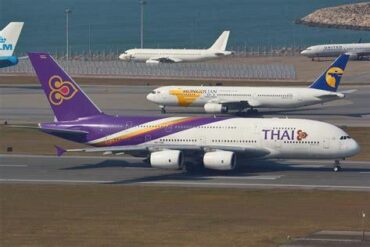
Thai Airways has removed Chief Executive Officer Chai Eamsiri from his position after a severe operational breakdown at Bangkok’s Suvarnabhumi Airport left thousands of bags stranded, disrupted flights and exposed weaknesses in the carrier’s crisis response. The airline’s board made the decision on October 2, while an investigation examines how the disruption was managed.
Thai Airways CEO Removed After Bangkok Airport Baggage Crisis
The leadership change followed heavy flooding in Bangkok and surrounding areas in late September. Flooding prevented some ground-handling employees from reaching Suvarnabhumi, creating staffing shortages as Thai Airways dealt with disrupted operations. The result was a growing baggage backlog, flight delays and cancellations, and interruptions affecting cargo services. Reuters reported that thousands of bags remained unprocessed during the crisis.
The board’s decision came after an emergency meeting chaired by Lavaron Sangsnit, Thailand’s Ministry of Finance permanent secretary and chairman of Thai Airways’ board. Samrit Samniang, a board member and former senior executive at PTT Exploration and Production, was appointed acting chief executive. Thai Airways had already been recruiting a permanent CEO, with applications closing on September 30.
Chai said he was not given a clear explanation for the decision. According to Thai media reports, he remained a company director while the fact-finding process proceeds, with his employment arrangement running until January 2027. He said investigators could examine why the disruption escalated, why its effects could not be contained sooner, and why the airline’s crisis-management plan was not activated as intended. Those points remain matters for investigation rather than established findings.
A Crisis Made Worse By Staffing Shortages
The baggage problems were closely connected to the flooding, but the consequences spread beyond delayed suitcases. Thai Airways reduced flights during the disruption to match available operating capacity, while employees and outside agencies were mobilized to clear baggage. Military personnel also assisted with sorting and handling luggage.
The scale of the disruption was significant because Suvarnabhumi is Thai Airways’ primary operating base and a major international gateway. When ground services become constrained there, delays can quickly spread across multiple flights and connecting itineraries. Transfer baggage is particularly difficult to recover because each item must be matched with onward flights and passenger records, meaning a backlog can persist even after aircraft operations return to schedule.
Thai Airways said it was working toward restoration of scheduled services from October 3. Chai also said additional employees had been assigned to the recovery operation and that the airline had expanded its call-center capacity to help affected passengers. The board’s investigation will examine the management response and crisis procedures.
Thai Airways Had Just Completed A Major Turnaround
Chai’s removal is notable because it follows an important financial recovery effort at Thai Airways. He became CEO in 2023 after spending decades within the airline, having previously held senior finance positions and served as chairman of Thai Smile Airways.
During his tenure, passenger numbers reached 13.76 million in 2023, a 52.7% increase, while EBITDA after lease payments reached 42.88 billion Thai baht, according to figures cited in the reference material.
Those results helped Thai Airways complete its long-running rehabilitation. The airline petitioned Thailand’s Central Bankruptcy Court to end the restructuring process in April 2025, and the court approved the request in June. That ended roughly five years of court-supervised rehabilitation.
Government Influence Remains A Key Issue
Thai Airways is no longer formally a state enterprise, but the government remains connected to its governance. Thailand’s Ministry of Finance is the largest individual shareholder, holding about 38.9%, while its permanent secretary chairs the airline’s board. That structure means major management decisions can attract public scrutiny, particularly when an operational failure affects Thailand’s main international gateway.
The government also became directly involved during the baggage crisis, with military personnel and Thailand Post assisting the recovery effort. Tourism Minister Surasak Phancharoenworakul publicly criticized the handling of the disruption, adding pressure as the airline attempted to restore services.
The immediate priority for acting CEO Samrit is practical: stabilize flight operations, clear remaining baggage and cargo backlogs, and maintain passenger confidence. The longer-term question is what the investigation finds about Thai Airways’ crisis-management systems and whether changes to staffing, ground operations or executive oversight are required.
For Chai, the episode marks an abrupt end to his tenure as CEO after a period defined by financial recovery. For Thai Airways, it creates a leadership transition at a moment when the carrier must demonstrate that the operational breakdown at Suvarnabhumi can be understood, corrected and prevented from happening again.