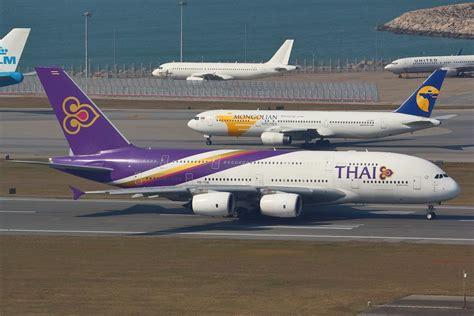
Thai Airways once positioned the Airbus A380 as the centerpiece of its long-haul and high-capacity network strategy, deploying the world’s largest passenger aircraft across some of Asia and Europe’s busiest air corridors. But the airline’s relationship with the superjumbo ended abruptly in 2020 when the collapse in global travel demand during the COVID-19 pandemic forced the carrier to permanently withdraw all six of its Airbus A380s.
The retirement closed a surprisingly short chapter in Thai Airways’ history. Despite investing heavily in the double-decker flagship and operating it on premium international routes, the airline used the aircraft for only around seven-and-a-half years before placing the fleet into retirement. During that time, the aircraft served eight routes from Bangkok Suvarnabhumi Airport, combining dense regional Asian sectors with high-profile long-haul European services.
Thai Airways officially withdrew its Airbus A380 fleet between March and April 2020, ending one of Southeast Asia’s most recognizable superjumbo operations.
Thai Airways Used The Airbus A380 On 8 International Routes
The Airbus A380 entered Thai Airways service in 2012 as the airline sought to increase passenger capacity without dramatically expanding slot usage at congested international airports. The aircraft quickly became a flagship product for the Bangkok-based Star Alliance carrier.
The eight routes operated by Thai Airways with the Airbus A380 included:
- Bangkok – Tokyo Narita
- Bangkok – Osaka Kansai
- Bangkok – Hong Kong
- Bangkok – Singapore
- Bangkok – Nagoya
- Bangkok – Paris Charles de Gaulle
- Bangkok – Frankfurt
- Bangkok – London Heathrow
While the aircraft is often associated with ultra-long-haul flying, Thai Airways heavily utilized the A380 within Asia, where passenger demand remained consistently strong throughout the 2010s.
Tokyo Narita became the airline’s busiest A380 route by a significant margin. Between 2013 and 2020, Thai Airways scheduled nearly 3,000 one-way A380 departures between Bangkok and Tokyo, demonstrating how valuable the aircraft’s massive seating capacity was on premium leisure and business-heavy Japanese routes.
Osaka also became a major A380 destination, while Hong Kong and Singapore saw shorter but strategically important deployments that allowed Thai Airways to maximize seat volume on slot-restricted regional corridors.
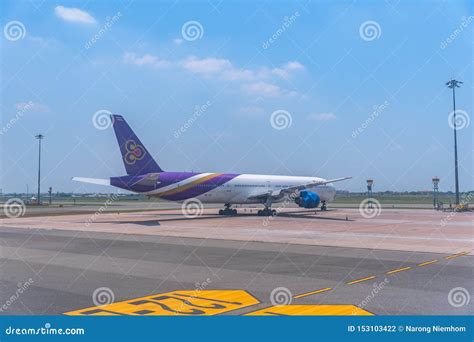
Asian Routes Became The A380’s Most Important Mission
Unlike Emirates, which built its Airbus A380 strategy almost entirely around ultra-long-haul intercontinental flying, Thai Airways found that the aircraft worked exceptionally well on shorter regional sectors across Asia.
This reflected a broader industry reality that emerged during the aircraft’s operational life. Airlines increasingly discovered that the A380’s greatest advantage was not necessarily range, but rather its ability to move enormous passenger volumes between heavily constrained airports.
Bangkok to Tokyo, Osaka, and Hong Kong were ideal examples. These routes consistently attracted strong tourism traffic, business travelers, and connecting passengers flowing through Thailand’s international hub.
Thai Airways also benefited from the aircraft’s prestige factor. During the 2010s, operating the Airbus A380 remained a powerful branding tool for international airlines. The superjumbo symbolized luxury, global reach, and premium service, particularly in Asia where passengers often viewed the aircraft itself as part of the travel experience.
Even Nagoya briefly joined the network in 2017, although the route saw relatively limited A380 utilization compared to Japanese trunk routes such as Tokyo and Osaka.
European Flights Showed The Original Purpose Of The A380
Despite its strong regional performance, the Airbus A380 was fundamentally designed for long-haul intercontinental flying, and Thai Airways deployed the aircraft extensively on three major European routes.
Paris Charles de Gaulle became the airline’s busiest long-haul A380 destination. Between 2013 and 2019, Thai Airways scheduled more than 2,200 one-way A380 flights between Bangkok and the French capital. The route connected two globally important tourism markets while also supporting substantial connecting traffic.
Frankfurt represented the airline’s most consistent A380 operation. The German hub remained part of Thai Airways’ Airbus A380 network from the aircraft’s introduction in 2012 until its retirement in 2020. Over that period, more than 2,180 one-way superjumbo services operated on the route.
London Heathrow joined later, beginning A380 operations in 2015. Although Heathrow is one of the world’s most famous Airbus A380 airports, Thai Airways arrived relatively late compared to carriers such as Emirates, Singapore Airlines, and Qantas. Nevertheless, the route still accumulated roughly 1,580 one-way A380 departures before the fleet’s retirement.
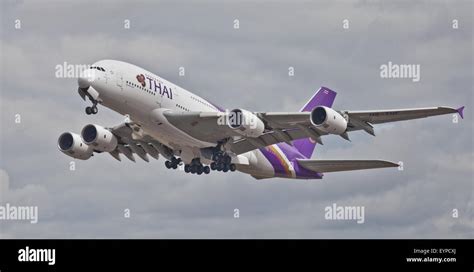
Inside Thai Airways’ 507-Seat Airbus A380 Cabin
Thai Airways configured its Airbus A380 fleet in a three-class layout carrying 507 passengers, balancing premium seating with extremely high economy-class density.
Economy class accounted for 435 seats, occupying the entire lower deck along with part of the upper deck. Passengers seated upstairs generally experienced a quieter and more spacious cabin environment due to the smaller section and wider 2-4-2 seating layout, compared to the denser 3-4-3 arrangement downstairs.
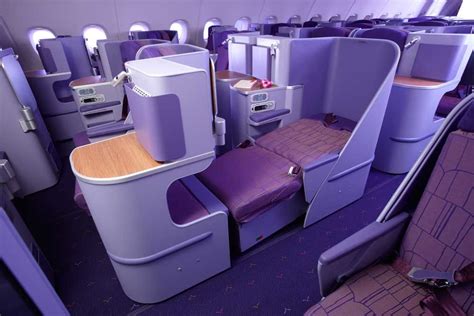
The upper deck’s central section housed 60 Royal Silk business-class flatbeds arranged in a 1-2-1 configuration, giving all passengers direct aisle access. At the very front of the aircraft sat 12 Royal First suites, also configured in a 1-2-1 layout.
For many travelers, the Thai Airways A380 represented one of the airline’s most polished premium experiences. The aircraft combined large cabin spaces, quieter interiors, and smoother boarding flows that distinguished it from smaller widebody jets.
Why Thai Airways Permanently Retired The Airbus A380
The COVID-19 pandemic accelerated problems that had already begun affecting Airbus A380 operators worldwide. Even before 2020, airlines increasingly favored smaller twin-engine aircraft such as the Airbus A350 and Boeing 787, which offered lower operating costs and greater route flexibility.
For Thai Airways, financial pressure made retaining a six-aircraft A380 fleet increasingly difficult to justify. Operating the superjumbo required significant maintenance investment, specialized airport infrastructure, and consistently high passenger demand.
Once international travel collapsed in early 2020, the economics became nearly impossible to sustain.
Thai Airways ultimately decided not to reactivate any of its A380s, making it one of several global carriers to permanently retire the type following the pandemic. The decision marked the end of an ambitious but relatively brief experiment with the world’s largest passenger aircraft.