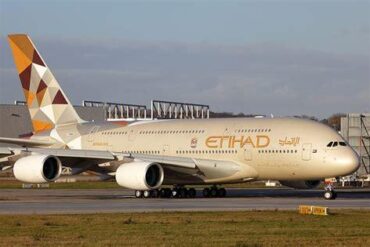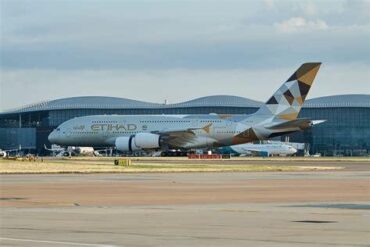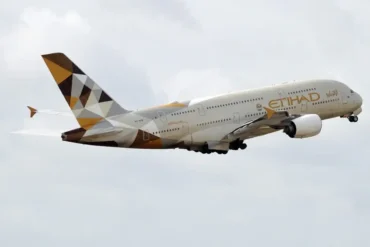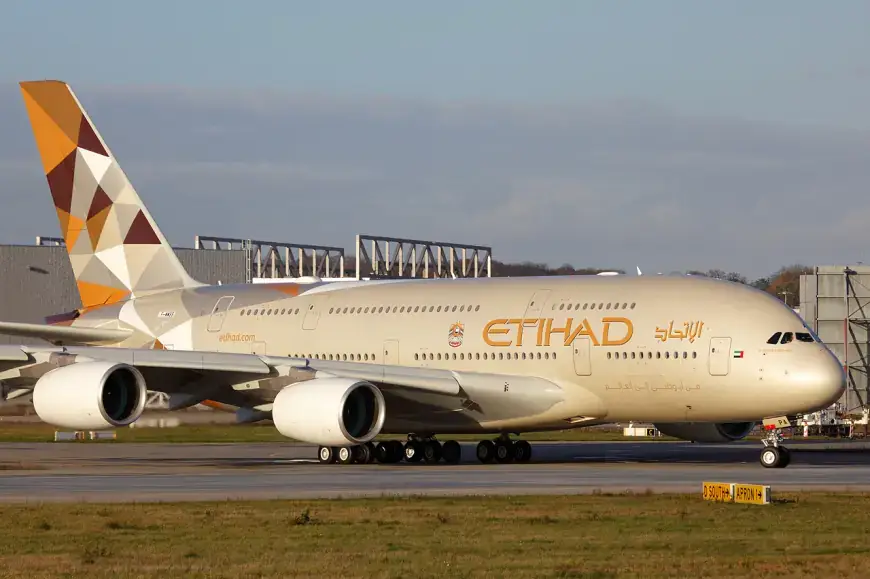
Etihad Airways has locked in its Airbus A380 deployment for 2026, signaling a decisive step in the carrier’s widebody strategy and a renewed confidence in sustained long-haul demand. The Abu Dhabi–based airline will operate the double-decker on five intercontinental routes, with frequencies peaking at levels not seen since before the pandemic. This confirmed schedule provides one of the clearest views yet of how Etihad intends to use its highest-capacity aircraft in a fleet that has become increasingly diversified.
Among the world’s airlines, Etihad sits in a shrinking club: just ten carriers continue to operate the Airbus A380 commercially. The airline originally took delivery of ten examples, though one has since been scrapped and another remains in storage. The reactivation of an eighth aircraft has been pivotal, allowing Etihad to expand the A380 footprint beyond a single showcase route and into a broader, more balanced long-haul network.
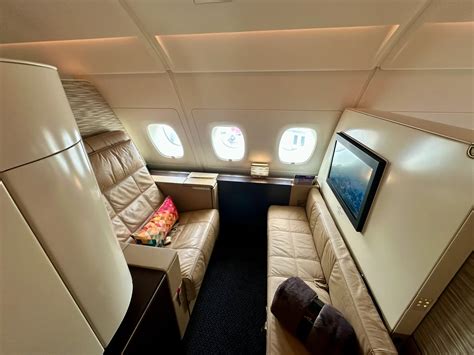
Every Etihad A380 flies with the same 486-seat configuration, simplifying operations and product consistency. At the top end sits the ultra-exclusive The Residence, a multi-room suite unique to the airline, accompanied by nine First Class Apartments in a 2-2 layout. Business Class offers 70 fully flat seats in a 1-2-1 configuration, while Economy accounts for 405 seats arranged 3-4-3 with a 31–32 inch pitch. This uniform layout allows Etihad to swap aircraft seamlessly while maintaining a consistent premium experience.
Where Etihad’s Airbus A380 Will Fly in 2026
The confirmed 2026 network shows Etihad deploying the A380 on five routes from Abu Dhabi, reflecting both capacity needs and premium demand patterns. Schedules remain subject to change, but this snapshot—accurate as of late January—reveals a materially larger A380 operation than in recent years.
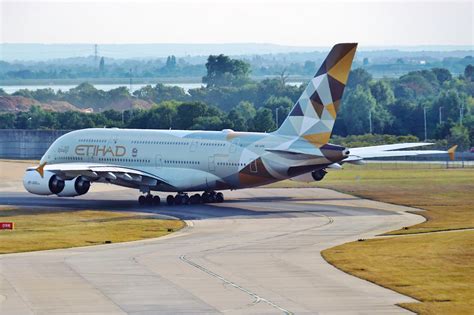
London Heathrow remains the backbone of Etihad’s A380 strategy. Frequencies will rise to as many as 19 weekly flights, a year-over-year increase that keeps Heathrow as the airline’s most heavily served superjumbo destination. Paris Charles de Gaulle and Singapore will each see daily A380 service, reinforcing their roles as premium-heavy markets with strong onward connectivity.
The most notable addition is Tokyo Narita, which will welcome Etihad’s A380 for the first time starting June 17, 2026. The aircraft replaces the Airbus A350-1000 on the route, boosting capacity from 371 seats to 486. For now, the superjumbo is scheduled only through November, making this a seasonal deployment that will be closely watched. Strong performance could see the A380 return to Tokyo during the 2027 summer season.
Toronto completes the lineup, also with daily A380 flights. The Canadian city first saw Etihad’s superjumbo in mid-2025 after replacing New York JFK, a shift widely viewed as being influenced by traffic rights constraints. With competitive dynamics in North America evolving, Toronto has become a strategically valuable high-capacity market for the airline.
| Route from Abu Dhabi | A380 Frequency | Operational Notes |
|---|---|---|
| London Heathrow | 12–19 weekly | Etihad’s largest A380 market |
| Paris CDG | Daily | Stable year-round deployment |
| Singapore | Daily | A380 service since Feb 2025 |
| Tokyo Narita | Daily | June–November only |
| Toronto | Daily | Replaced New York JFK |
Up to Seven Daily A380 Departures from Abu Dhabi
At peak periods in mid-2026, Etihad plans up to seven daily A380 departures from Abu Dhabi, a threshold last reached in early 2020. This marks a symbolic and operational milestone for the carrier, underlining how far its long-haul network has rebounded.
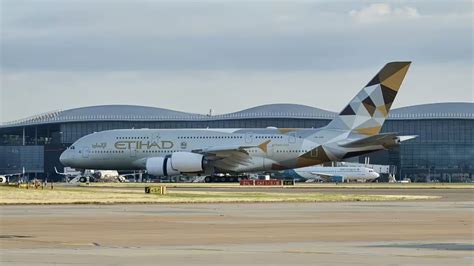
On June 17 alone, departures will be tightly spaced throughout the day, serving Toronto, multiple London Heathrow rotations, Paris, Singapore, and the Tokyo debut flight. This concentration of superjumbo activity cements Abu Dhabi as one of the world’s more significant A380 hubs, even as global A380 operations continue to contract.
From a fleet perspective, the A380 will rank as Etihad’s second most-used widebody type in 2026. Around 2,105 A380 departures are planned, second only to the Boeing 787-9, which dominates the network with nearly 15,000 flights. The A350-1000, 787-10, and 777-300ER all slot in ahead of the A380 in total departures, reflecting Etihad’s preference for flexibility, with the superjumbo reserved for routes where scale and premium density justify its use.
Routes the A380 No Longer Serves—and What That Signals
Etihad’s history with the A380 stretches back over a decade, beginning in December 2014 on the Abu Dhabi–London Heathrow route. Since then, the aircraft has served ten cities on a regular basis, with several others seeing limited or one-off operations.
Regular A380 service has now ended to destinations such as Melbourne, Sydney, New York JFK, Mumbai, and Seoul Incheon. Each removal reflects a shift in demand patterns, fleet economics, or bilateral constraints rather than a retreat from long-haul ambition. Notably, Bangkok—despite its importance in Southeast Asia—has never seen Etihad’s A380, even as Emirates has long deployed the type there.
The 2026 route map shows a clear philosophy at work: the A380 is no longer a network-spanning flagship, but a precision tool deployed where its capacity and premium appeal can be maximized. With seven daily departures, a new foothold in Japan, and sustained growth on core routes, Etihad’s Airbus A380 program has entered a more focused—and arguably more resilient—phase.