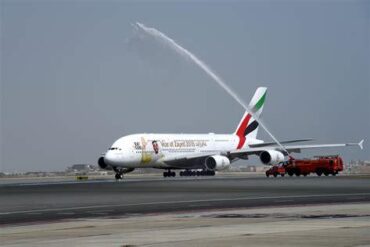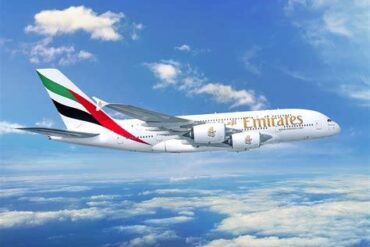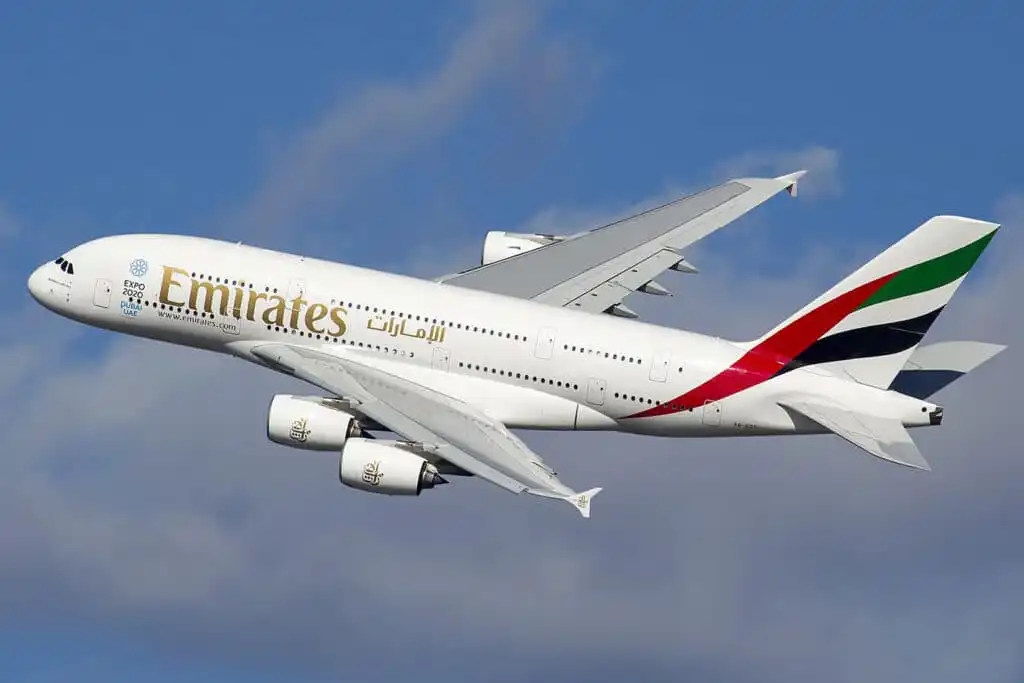
The Airbus A380 remains one of the most remarkable achievements in commercial aviation. More than two decades after its first flight, the world’s largest passenger aircraft continues to prove that high-capacity air travel still has an important role on carefully selected routes. While many airlines retired or downsized their A380 fleets following the pandemic, one carrier has continued to expand the aircraft’s operational significance—Emirates.
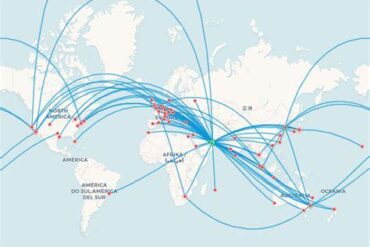
Rather than treating the A380 as a niche flagship reserved for only a handful of ultra-long-haul destinations, Emirates has integrated the aircraft into the backbone of its global network. With more than one hundred A380s in service, the Dubai-based airline deploys the double-decker across Europe, Asia, Africa, Oceania, and even on surprisingly short regional sectors. The strategy allows Emirates to maximize passenger capacity, strengthen premium revenue, and efficiently utilize aircraft between its tightly coordinated connection banks at Dubai International Airport.
The numbers for 2026 demonstrate just how dominant Emirates remains in the A380 market. According to aviation schedule data, five city pairs each exceed one million annual A380 seats, while the busiest route comfortably surpasses 2.2 million seats, an extraordinary figure that highlights both the aircraft’s enduring relevance and Emirates’ unparalleled commitment to the superjumbo.
After examining scheduled capacity, aircraft deployment, network strategy, and passenger demand, these are the five Airbus A380 routes offering the most seats in 2026.
Why Emirates Continues to Dominate Airbus A380 Operations
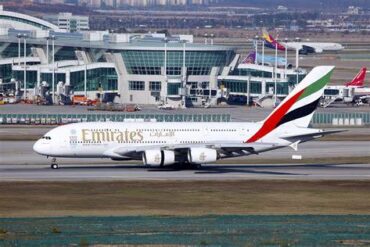
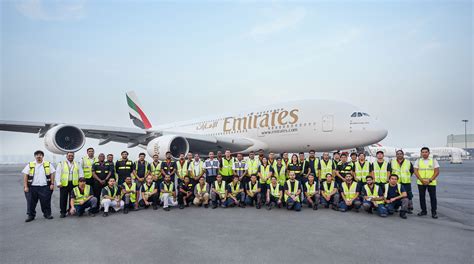
No airline has embraced the Airbus A380 as completely as Emirates. While most operators maintain relatively small fleets of between eight and twelve aircraft, Emirates operates well over one hundred A380s, making it by far the world’s largest superjumbo operator. This fleet size allows the airline to deploy multiple daily A380 flights on the same route—something virtually impossible for any other carrier.
The airline’s hub-and-spoke model at Dubai International Airport (DXB) is perfectly suited to the aircraft. Thousands of passengers arrive from every corner of the world before connecting onto another wave of departures only a few hours later. Instead of adding more flight frequencies, Emirates often consolidates demand onto larger aircraft, allowing it to transport significantly more travelers while operating within the airport’s slot constraints.
The strategy becomes even more profitable because the A380 offers exceptional premium cabin capacity. Depending on configuration, Emirates’ A380s feature combinations of First Class, Business Class, Premium Economy, and Economy, enabling the airline to generate substantial revenue from premium passengers while still accommodating hundreds of economy travelers on every flight.
Rather than serving solely as a prestige aircraft, the A380 has become an essential tool for network optimization, airport efficiency, and premium product differentiation.
5. Dubai – Cairo: Regional Demand Generates More Than One Million A380 Seats
Although the flight between Dubai and Cairo covers only around 2,416 kilometers (1,306 nautical miles), it ranks among the busiest Airbus A380 routes anywhere in the world.
Emirates schedules approximately 2,178 Airbus A380 flights on the route throughout 2026, producing roughly 1,086,612 available seats. The remarkable capacity reflects consistently strong demand between the United Arab Emirates and Egypt, driven by tourism, business travel, expatriate communities, and an enormous volume of connecting passengers traveling through Dubai.
Unlike many regional services operated by narrowbody aircraft, Emirates deploys its three-class A380 configuration featuring between 489 and 519 seats. These aircraft include luxurious First Class suites, spacious Business Class cabins, and hundreds of Economy seats, significantly increasing premium capacity compared with the airline’s Boeing 777 operations.
Interestingly, Emirates supplements its A380 services with Boeing 777-300ER flights configured without First Class. This allows the airline to reserve its highest-end product for the superjumbo while maintaining operational flexibility across multiple daily departures.
The route illustrates how Emirates leverages the A380 not because of distance, but because of passenger volume and premium demand.
4. Dubai – Jeddah: A Short Flight with Extraordinary Capacity
The shortest route among the world’s busiest A380 operations may also be one of the most fascinating.
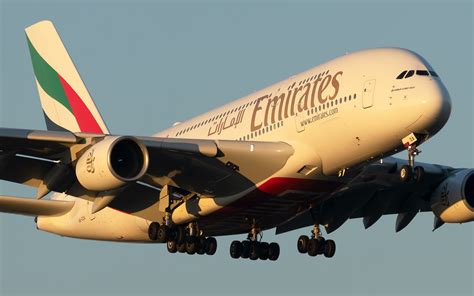
Covering just 1,701 kilometers (919 nautical miles), the Dubai–Jeddah sector requires only around three hours of flying time. Nevertheless, Emirates schedules approximately 2,254 Airbus A380 flights on the route during 2026, creating an annual capacity of roughly 1,164,678 seats.
Several factors explain this unusual deployment.
First, demand between Saudi Arabia and the UAE remains exceptionally strong. Business travel, religious tourism, visiting friends and relatives, and international connections all contribute to consistently high passenger volumes throughout the year.
Second, aircraft utilization plays a major strategic role. Emirates structures its entire network around synchronized arrival and departure banks at Dubai. Between these connection waves, aircraft would otherwise spend valuable hours parked on the ground. Rather than leaving expensive widebody aircraft idle, Emirates sends many of them on short regional missions where demand justifies their enormous capacity.
This approach enables the airline to maximize aircraft productivity without maintaining a separate narrowbody fleet. In fact, Emirates remains unique among major global airlines by operating almost exclusively widebody aircraft, with the Airbus A350 now serving as its smallest passenger aircraft.
The result is one of the world’s most unusual aviation sights: multiple Airbus A380s operating daily on flights lasting little more than three hours.
3. Dubai – Paris: Where Luxury Meets One of Europe’s Largest Markets
The connection between Dubai and Paris Charles de Gaulle represents everything the Airbus A380 was designed to accomplish.
Paris remains one of Europe’s premier financial centers while simultaneously attracting tens of millions of leisure visitors each year. Emirates capitalizes on this enormous demand by scheduling approximately 2,284 Airbus A380 flights in 2026, generating nearly 1,181,922 available seats.
Unlike regional sectors where aircraft utilization is the primary objective, Paris showcases the A380’s flagship role.
Passengers benefit from some of Emirates’ most recognizable onboard features, including the famous onboard lounge, private First Class suites, shower spas, fully flat Business Class seating, and increasingly, Premium Economy on selected aircraft.
The route also demonstrates how airport limitations influence aircraft selection. Both Dubai International and Paris Charles de Gaulle experience significant congestion, making additional flight frequencies difficult to secure. Deploying larger aircraft therefore becomes the most efficient method of increasing passenger capacity.
Competition exists, but Emirates enjoys a considerable capacity advantage thanks to multiple daily A380 departures, allowing it to dominate premium traffic between the Gulf region and one of Europe’s most important cities.
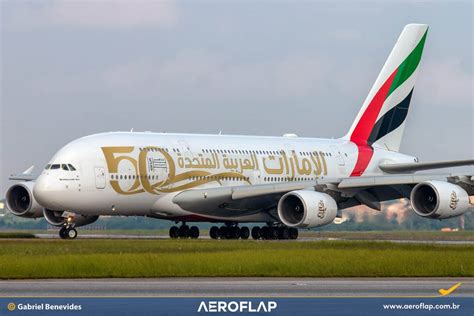
2. Dubai – Bangkok: Tourism and Fifth-Freedom Traffic Drive Massive Demand
Bangkok consistently ranks among the world’s busiest tourism destinations, attracting millions of visitors annually from virtually every continent. Emirates has transformed this demand into one of the largest A380 operations on Earth.
Throughout 2026, Emirates schedules approximately 2,836 Airbus A380 flights between Dubai and Bangkok, producing an extraordinary 1,562,990 available seats.
Unlike several other routes, Bangkok benefits from multiple demand streams simultaneously.
The city itself attracts huge numbers of leisure travelers connecting through Dubai from Europe, Africa, and the Middle East. At the same time, Thailand’s liberal aviation policies permit Emirates to operate fifth-freedom services, allowing some A380 flights to continue onward to Hong Kong while selling tickets on both sectors.
This dramatically improves aircraft utilization and expands revenue opportunities beyond passengers simply traveling to Thailand.
Bangkok also showcases the impressive diversity of Emirates’ A380 fleet configurations. Travelers may encounter aircraft featuring Premium Economy, traditional three-class layouts with First Class, higher-density versions emphasizing Economy seating, or aircraft specifically optimized for connecting traffic.
Depending on configuration, seating capacity ranges from fewer than 470 seats to well over 600 passengers, making Bangkok one of the most flexible destinations within Emirates’ global network.
The combination of tourism, connecting traffic, and onward services ensures that demand remains consistently strong throughout the year.
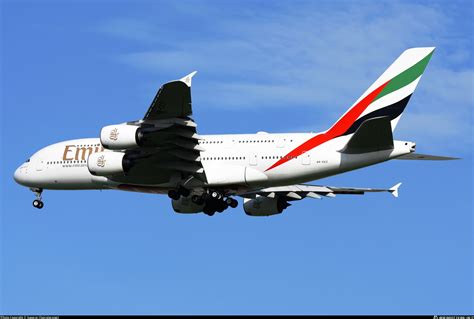
1. Dubai – London Heathrow: The World’s Busiest Airbus A380 Route
No route comes close to matching the sheer scale of Emirates’ operation between Dubai and London Heathrow.
During 2026, the airline schedules between seven and eight daily Airbus A380 flights in each direction, producing approximately 2,231,200 annual seats—comfortably the largest Airbus A380 route anywhere in the world.
This remarkable capacity reflects London’s unique importance within Emirates’ network. Heathrow serves as one of the airline’s most valuable business markets while simultaneously generating enormous volumes of leisure, visiting friends and relatives, and connecting traffic.
Several daily departures feature Emirates’ latest Premium Economy cabin, including prestigious flagship services that attract premium travelers seeking upgraded comfort without paying Business Class fares.
Beyond Heathrow, Emirates also deploys the A380 to London Gatwick, making London one of the very few metropolitan areas receiving superjumbo service at multiple airports.
Historically, the route also featured Airbus A380 competition from British Airways, although those services have been suspended. Today, Emirates remains the undisputed leader in A380 capacity between Dubai and London.
The route perfectly demonstrates why the aircraft continues to thrive despite predictions of its decline. Heathrow’s severe slot restrictions make additional frequencies extremely difficult to obtain, meaning larger aircraft offer the most practical solution for accommodating growing passenger demand.
With more than 2.2 million scheduled seats, Dubai–London Heathrow stands as the definitive flagship Airbus A380 route worldwide.
Why Short-Haul Airbus A380 Flights Make Strategic Sense
One of the most surprising aspects of the rankings is the presence of relatively short regional routes such as Cairo and Jeddah.
Conventional wisdom suggests that ultra-large aircraft belong exclusively on intercontinental services lasting ten hours or more. Emirates has demonstrated that this assumption is not always correct.
Because the airline operates tightly synchronized connection banks at Dubai, aircraft frequently have several hours available before their next long-haul departure. Rather than allowing these high-value assets to remain idle, Emirates assigns them to nearby destinations where passenger demand justifies their deployment.
This strategy improves daily aircraft utilization, spreads fixed operating costs across more flights, and ensures the A380 continues generating revenue throughout the day.
Passengers also benefit by enjoying widebody comfort—including spacious cabins, quieter interiors, and premium amenities—even on relatively short journeys.
The Airbus A380 Continues to Define Emirates’ Global Network
Despite predictions that the Airbus A380 would gradually disappear following the pandemic, the aircraft remains central to Emirates’ long-term strategy. Few airlines possess the passenger demand, airport infrastructure, and global network necessary to justify operating such a large aircraft, but Emirates has successfully built its business model around precisely those strengths.
The five busiest A380 routes of 2026 illustrate how the airline carefully matches capacity with market demand rather than relying solely on flight frequency. From regional links to Cairo and Jeddah to flagship long-haul services serving Paris, Bangkok, and London, each route fulfills a distinct commercial objective while taking advantage of the A380’s unique capabilities.
With more than one million annual seats available on every route in the top five—and over 2.2 million seats on the Dubai–London Heathrow corridor alone—the superjumbo continues to play an indispensable role in global aviation. As long as major international hubs remain slot constrained and premium travel demand continues growing, the Airbus A380 is likely to remain an unmistakable symbol of Emirates’ network for years to come.