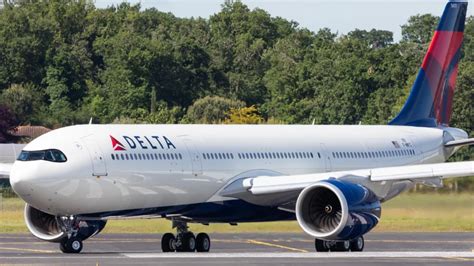
Delta Air Lines is not just participating in the transatlantic market—it is dominating it with precision, scale, and strategic partnerships. As April 2026 unfolds, the airline’s schedule reveals a network engineered for maximum connectivity, high-capacity efficiency, and relentless frequency, particularly across the busiest corridors between North America and Europe. Backed by joint ventures with Virgin Atlantic, Air France, and KLM, Delta’s footprint expands into a coordinated ecosystem of over 370 transatlantic flights, offering travelers both flexibility and reach.
At the core of this expansive network lies a deliberate strategy: concentrate capacity where demand is strongest while reinforcing hubs that can sustain long-haul growth. The result is a schedule where certain routes surge to as many as 90 flights in a single month, a figure that signals not just popularity, but critical economic importance.
Atlanta’s Strategic Supremacy in Transatlantic Aviation
Atlanta stands tall as the beating heart of Delta’s global operations. Hartsfield–Jackson Atlanta International Airport continues to serve as the airline’s most powerful international gateway, and nowhere is that more evident than in its transatlantic schedule.
Routes from Atlanta to Amsterdam and London Heathrow each reach the remarkable milestone of 90 flights in April, underscoring the city’s role as a primary launchpad for European travel. The Atlanta–Amsterdam corridor leads in capacity, delivering 25,350 seats and over 111 million available seat miles (ASMs)—a clear indicator of sustained, high-volume demand.
The equipment deployed on these routes tells its own story. The Amsterdam service benefits from a mix of Airbus A330-300s, A330-900neos, and A350-900s, maximizing both efficiency and passenger comfort. In contrast, the Heathrow route relies exclusively on the Boeing 767-400, a workhorse aircraft optimized for consistent, high-frequency operations.
This fleet strategy highlights a broader truth: Delta’s Airbus A330 family is the backbone of its transatlantic dominance, with more than 80 aircraft enabling flexible deployment across multiple high-demand routes.
New York JFK: The High-Capacity Gateway to Europe
While Atlanta leads in operational volume, New York’s JFK Airport emerges as a formidable transatlantic powerhouse in its own right. With 279 flights across key European destinations, JFK is a hub defined by density, diversity, and premium demand.
Routes from JFK to Paris Charles de Gaulle, Rome Fiumicino, London Heathrow, Amsterdam Schiphol, and Milan Malpensa collectively form a network that delivers over 75,000 seats and approximately 287 million ASMs. Each departure averages around 271 seats, reflecting the use of larger widebody aircraft tailored for long-haul efficiency.
What makes JFK particularly valuable is its dual role. It serves not only as a bridge to Europe but also as a connector for transcontinental traffic. The relaunch of routes such as JFK to Orange County further strengthens its position as a multi-dimensional hub, capable of feeding both domestic and international demand streams seamlessly.
Amsterdam and Paris: The Undisputed European Anchors
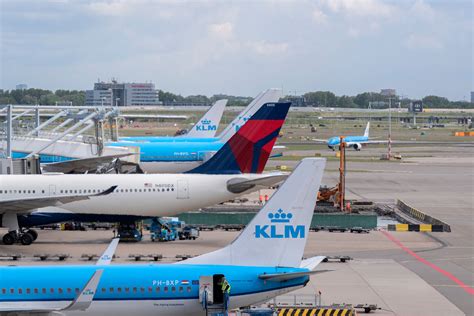
If there are two cities that define Delta’s European strategy, they are Amsterdam and Paris. These destinations are not just popular—they are structurally embedded into Delta’s network through joint ventures, ensuring synchronized schedules and optimized connectivity.
Amsterdam Schiphol alone accounts for 180 flights from Detroit and Minneapolis, generating over 140 million ASMs. Meanwhile, Paris Charles de Gaulle sees 133 combined flights from Atlanta and JFK, delivering a similarly massive capacity footprint.
These routes benefit from strong business travel demand, tourism appeal, and onward connectivity across Europe, Africa, and the Middle East. The synergy with partner airlines amplifies their importance, transforming them into true intercontinental gateways rather than simple endpoints.
Italy’s Rising Influence in Delta’s Network
Italy is no longer a secondary market—it is rapidly becoming a core pillar of Delta’s European expansion. Rome Fiumicino leads the charge with 120 flights in April, offering nearly 34,000 seats and over 157 million ASMs. This makes it one of the most capacity-rich destinations in the entire network.
Milan Malpensa, while smaller in comparison, still commands attention with 43 flights and over 48 million ASMs. These figures reflect a growing appetite for Italian destinations, driven by both leisure travel and increasing economic ties.
Delta’s investment in Italy signals a broader shift toward diversifying beyond traditional hubs, capturing demand in regions where tourism and business travel are simultaneously surging.
Fleet Strategy: The Quiet Engine Behind High Frequency
Behind every successful route is an aircraft choice that aligns perfectly with demand. Delta’s reliance on the Airbus A330 series is no accident. These aircraft offer the ideal balance of range, capacity, and operating efficiency, making them indispensable across medium-to-high density transatlantic routes.
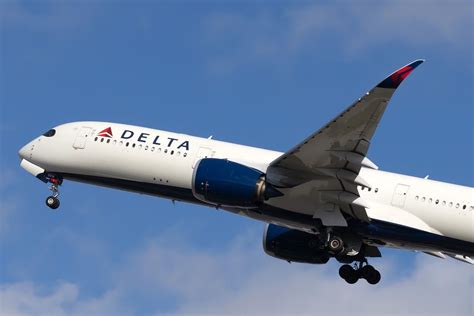
Meanwhile, the selective use of the A350-900 introduces premium capacity on routes where demand justifies it, while the Boeing 767-400 ensures frequency can be maintained without oversaturating capacity. This layered fleet approach allows Delta to fine-tune each route with surgical precision.
A Summer Surge on the Horizon
April’s schedule is only the beginning. Delta is preparing for its largest-ever European expansion, with service to 28 destinations across the continent. New additions such as Malta, Olbia, and Porto hint at an aggressive push into underserved yet high-potential markets.
Upcoming routes—including Atlanta to Tel Aviv and Seattle to Barcelona—demonstrate a willingness to experiment, expand, and capture emerging demand corridors. As frequencies increase and new destinations come online, the airline is positioning itself for a record-breaking summer season.
Conclusion: Frequency as a Competitive Weapon
Delta Air Lines’ transatlantic strategy in April 2026 reveals a simple but powerful truth: frequency drives dominance. By operating up to 90 flights on key routes and deploying a fleet optimized for both capacity and efficiency, the airline has created a network that is resilient, scalable, and deeply aligned with passenger demand.
From Atlanta’s unmatched connectivity to JFK’s high-capacity operations and Europe’s anchor hubs in Amsterdam and Paris, every piece fits into a larger system designed for global reach and operational excellence. As summer approaches, one thing is clear—Delta is not just ready for demand. It is shaping it.