When travelers ask, “What is the busiest airport on the West Coast?”, the answer is decisive: Los Angeles International Airport (LAX). More than a transit point, LAX is a global gateway, a cultural crossroads, and the beating heart of aviation along the Pacific Rim. It does not merely process passengers; it defines how the West Coast connects to the world.
Unlike mega-hubs built primarily for connecting flights, LAX stands apart as the world’s leading origin and destination airport. Nearly 90% of travelers passing through its terminals are either beginning or ending their journeys in Los Angeles. That statistic alone reshapes how the airport operates. While hubs like Atlanta’s Hartsfield-Jackson or Dubai International thrive on transfer traffic, LAX thrives on demand. People want to be in Los Angeles. They are not just passing through.
Another force behind its dominance is structural. Cities such as New York divide passenger loads across multiple major airports. Los Angeles, by contrast, relies heavily on LAX as its primary international and long-haul gateway. Burbank, John Wayne, and Long Beach contribute regional capacity, but none rival the sheer scale of LAX. When Southern California flies abroad, it flies through here.
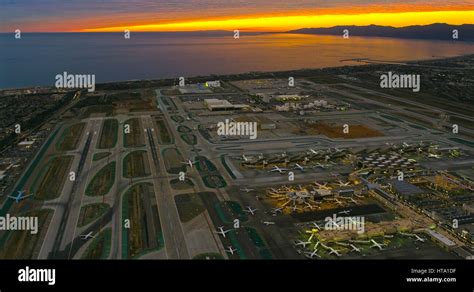
Why Los Angeles International Airport Dominates the West Coast
Measured by aircraft movements, passenger volume, and global connectivity, LAX consistently ranks among the busiest airports in the United States and the world. It is typically the fifth-busiest airport in the U.S. by total passenger traffic, trailing only giants such as Atlanta (ATL), Dallas-Fort Worth (DFW), and Denver (DEN). Globally, it ranks among the top airports for aircraft movements, reflecting relentless operational intensity.
What makes this remarkable is that LAX does not lean on a single dominant airline. Many major airports are effectively controlled by one carrier. LAX is different. It is considered a “battleground hub”, where multiple legacy airlines compete fiercely for market share. That competitive equilibrium fuels frequency, route diversity, and capacity expansion.
The top carriers by scheduled departures illustrate this dynamic:
- Delta Air Lines leads in scheduled departures and available seats.
- United Airlines follows closely behind.
- American Airlines remains a strong third competitor.
- Southwest Airlines dominates the low-cost segment.
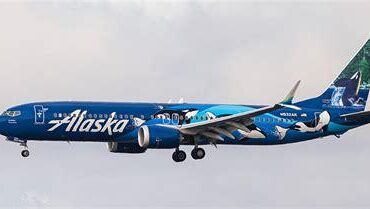
- Alaska Airlines continues expanding after strategic mergers.
Delta’s schedule alone exceeds 110,000 annual departures from LAX, offering more than 17 million seats. United and American are not far behind. The margin between them is narrow, which intensifies competition and ultimately benefits passengers through expanded route networks and pricing pressure.
Alaska Airlines’ expansion following its merger with Virgin America—and deeper integration efforts—has significantly strengthened its presence. Meanwhile, Southwest maintains strong short-haul domestic routes, particularly to Las Vegas and San Francisco. The result is not monopoly, but strategic rivalry.
A Global Gateway to Asia and Oceania
One defining characteristic of Los Angeles International Airport is its Pacific orientation. The airport handles more nonstop routes to Asia and Oceania than any other West Coast airport. For travelers bound for Tokyo, Seoul, Sydney, Auckland, or Shanghai, LAX frequently offers the widest range of options.
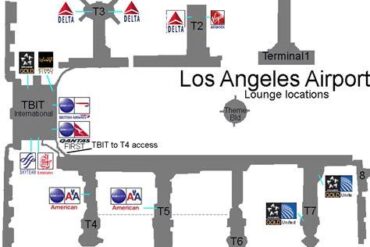
The crown jewel of international travel at LAX is the Tom Bradley International Terminal (TBIT). It represents the airport’s most refined architectural statement. High-end dining, luxury retail, premium airline lounges, and expansive departure halls give TBIT a distinctly modern feel. Airlines from across Asia, Europe, the Middle East, and Oceania operate from this facility, reinforcing LAX’s global stature.
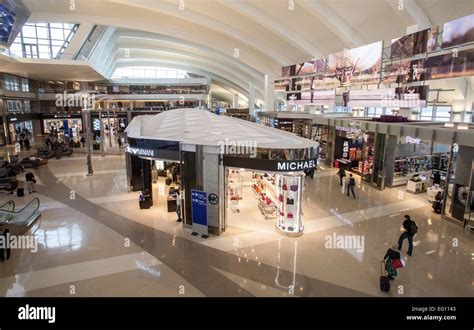
Despite its strengths, LAX does not rank among the very top airports globally for international-only passengers. Airports such as Dubai International and London Heathrow surpass it in that specific metric. Still, LAX remains a heavyweight, particularly for trans-Pacific traffic, where geography gives it a strategic advantage.
The $30 Billion Transformation: Preparing for the 2028 Olympics
Few infrastructure projects in the United States rival the scale of LAX’s $30 billion Capital Improvement Program. With Los Angeles preparing to host the 2028 Olympic and Paralympic Games, modernization has accelerated dramatically.
Nearly every terminal is undergoing renovation, demolition, or complete reconstruction. Terminal 5, for example, was closed and demolished for a full ground-up rebuild, with reopening targeted just before the Olympics. The Tom Bradley International Terminal is undergoing significant upgrades to both arrivals and departures areas to improve capacity and passenger flow.
One of the most anticipated additions is the Automated People Mover (APM). This 2.25-mile elevated train system will connect terminals to a new Metro Transit Center, parking structures, and a massive consolidated rental car facility housing approximately 21,000 vehicles. Once operational, the APM is expected to alleviate one of LAX’s most notorious pain points: landside traffic congestion.
The horseshoe-shaped terminal loop has long been both iconic and problematic. Its design funnels enormous vehicle volume into a limited roadway footprint. Roadway improvements spanning over four miles aim to address these bottlenecks, especially ahead of global events such as the FIFA World Cup and the Olympics.
Reputation: Glamour Meets Friction
Depending on whom you ask, LAX is either a world-class gateway or a logistical maze. The truth lies somewhere in between.
International passengers often praise the airport’s extensive long-haul network and upgraded facilities. Domestic travelers, however, frequently cite traffic congestion, long security lines, and construction disruptions as stress factors. Studies have at times ranked LAX among the more stressful U.S. airports for international arrivals, largely due to immigration processing times.
The introduction of LAX-it, a consolidated rideshare pickup area, removed thousands of vehicles from the terminal loop but introduced additional shuttle transfers for passengers. While operationally beneficial, the experience remains polarizing.
Yet perception is evolving. As terminals reopen and the Automated People Mover nears completion, efficiency gains are expected to reshape traveler experience. Airports are ecosystems; improvements ripple through the system slowly but powerfully.
Private Aviation and Hollywood Prestige
On the private aviation side, the narrative shifts dramatically. Fixed Base Operators such as Signature Aviation and Atlantic Aviation serve high-net-worth individuals, executives, and entertainment industry elites with seamless efficiency.
LAX is also home to PS (formerly The Private Suite), a dedicated private terminal offering discreet TSA screening, luxury lounges, and chauffeured BMW service directly to aircraft. In a city synonymous with celebrity and production studios, this exclusivity reinforces LAX’s global image.

The contrast between commercial terminal congestion and private aviation elegance encapsulates the many faces of LAX. It is both mass transit machine and bespoke luxury portal.
Competition Within Southern California
Interestingly, LAX’s dominance has indirectly fueled growth at nearby airports. Some domestic travelers prefer Burbank (BUR), John Wayne (SNA), or Long Beach (LGB) to avoid construction-related inconveniences and traffic. These airports have experienced record passenger numbers in recent years.
Yet none possess LAX’s intercontinental depth. Regional airports may win on convenience, but they cannot replicate the breadth of international connectivity that defines LAX’s status as the busiest airport on the West Coast.
Recovery and Resilience in a Changing Aviation Landscape
Passenger numbers at LAX dipped during the global pandemic and have not yet fully returned to pre-2020 peaks. Overall traffic remains approximately 15% below earlier highs. However, international passenger counts have shown stronger year-over-year growth compared to domestic volumes.
Globally, airports such as Tokyo Haneda and Shanghai Pudong have rebounded rapidly, intensifying competition. Still, LAX remains strategically positioned due to Southern California’s economic weight, tourism appeal, and trans-Pacific geography.
Forecasts suggest steady recovery as infrastructure improvements conclude and international demand strengthens. The Olympics will likely serve as both catalyst and stress test, accelerating global visibility and operational refinement.
What Makes LAX the Busiest Airport on the West Coast
To understand why Los Angeles International Airport holds its title, one must look beyond raw passenger numbers. It combines scale, strategic geography, competitive airline dynamics, and cultural magnetism.
It is not merely an airport serving Los Angeles. It is a hub linking North America to Asia-Pacific markets. It is a battlefield for legacy carriers. It is a gateway for international tourism, film production logistics, cargo transport, and private aviation.
Its operational intensity, modernization investment, and global connectivity collectively sustain its ranking as the busiest West Coast airport. Other airports along the Pacific corridor—San Francisco (SFO), Seattle-Tacoma (SEA), and San Diego (SAN)—play significant roles, but none match the aggregate power of LAX.
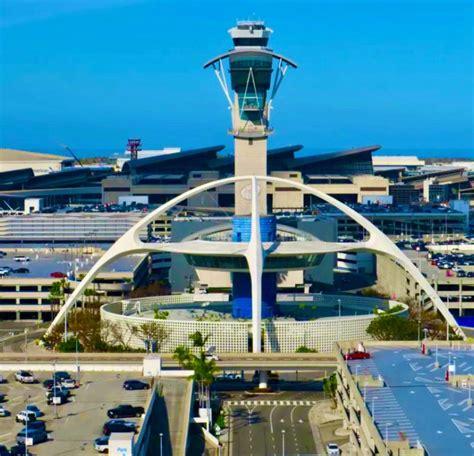
The airport’s story is one of scale and reinvention. From its iconic entrance pylons to the forthcoming Automated People Mover, from its congested horseshoe loop to its luxury private suites, LAX embodies the contradictions of modern air travel: mass mobility and individual experience intertwined.
In the end, the answer to the question is both simple and expansive. The busiest airport on the West Coast is Los Angeles International Airport, and its dominance is rooted in geography, competition, global connectivity, and relentless transformation. As modernization projects approach completion and global events draw nearer, LAX’s role as the Pacific gateway is poised not just to continue—but to intensify.