Southwest Airlines is accelerating its West Coast expansion with five strategic new routes from Southern California, reinforcing its presence in a region where demand continues to surge. The additions—spanning Hawaii, the Pacific Northwest, and intra-California travel—mark one of the carrier’s boldest post-pandemic growth pushes as it works to regain momentum, strengthen its network efficiency, and challenge established rivals in key coastal markets.
The timing is pivotal. After years of financial turbulence and an unexpected activist shake-up from Elliott Investment Management, Southwest is shifting from defensive corrections to growth mode. The carrier is focusing on markets where it maintains strong brand equity and cost advantages, and Southern California fits that blueprint perfectly. These new routes represent a highly targeted strategy to win profitable leisure and visiting-friends-and-relatives traffic while reclaiming competitive ground.
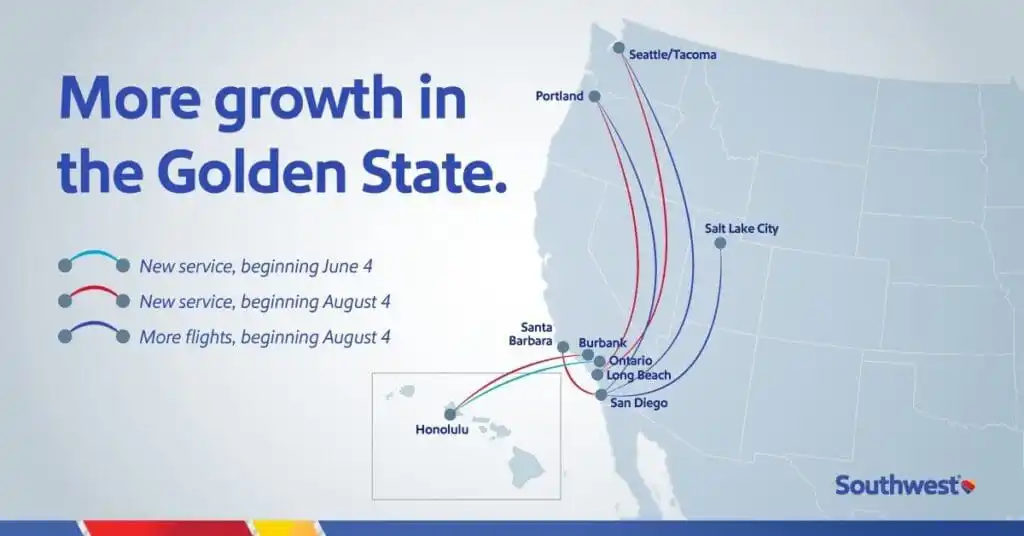
Southwest’s new services roll out in two phases, with the earliest launch scheduled for June 2026 and the remaining routes activating in August 2026.
Nonstop California–Hawaii Growth Anchors Southwest’s Strategy
The most high-profile expansion involves service from Ontario International Airport (ONT) and Hollywood Burbank Airport (BUR) to Honolulu’s Daniel K. Inouye International Airport (HNL). These routes continue Southwest’s steady push into Hawaii, a market where demand remains robust and competition is fierce.
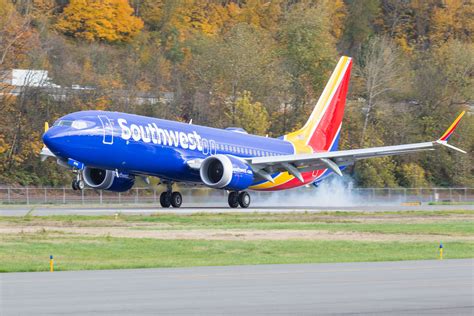
The Ontario–Honolulu flight launches June 4, 2026, operating daily on the Boeing 737 MAX 8. The morning departure from Ontario provides seamless connectivity for Inland Empire travelers looking for direct access to Hawaii without navigating the congestion of Los Angeles International Airport. The evening return strengthens Southwest’s desire to keep aircraft utilization high, a critical metric in route profitability.
Burbank–Honolulu follows closely behind on August 4, 2026, restoring a nonstop Hawaii connection the airport has not seen in more than two decades. This move is especially notable because Alaska Airlines recently announced the same route, creating a head-to-head competitive showdown for one of the most coveted leisure markets in the West.
Combined, these new services give Southwest four Los Angeles area airports with direct service to Honolulu—LAX, Long Beach, Ontario, and now Burbank—creating a robust multi-airport Hawaiian gateway unmatched by any other carrier.
Aircraft Configuration Signals Southwest’s Long-Term Hawaii Commitment
Every Hawaii-bound route uses Southwest’s 737 MAX 8, an aircraft that delivers excellent fuel efficiency and range while keeping operating costs predictable. Each jet features 175 all-economy seats, Collins Meridian interiors, Wi-Fi connectivity, and in-seat power—though still no traditional seatback entertainment. Beginning January 2026, Southwest will also introduce assigned seating and extra-legroom options, signaling a shift away from its long-held open-seating model.
These changes align Southwest more closely with competitors such as Hawaiian, Alaska, and the major U.S. network carriers, particularly on medium- and long-haul routes.
West Coast Expansion: Long Beach and San Diego Gain New Connectivity
Southwest is also reinforcing its dominance across secondary California airports—Long Beach, San Diego, Ontario, and Burbank—where it already holds commanding market share.
Long Beach Airport emerges as one of the biggest winners. On August 4, 2026, Southwest begins service to both Portland International Airport (PDX) and Seattle-Tacoma International Airport (SEA). Each route will run six times per week, plugging Long Beach travelers into two of the most vital business and leisure markets in the Pacific Northwest. These routes also help strengthen Southwest’s broader West Coast network by pairing a high-efficiency airport with two of the region’s most rapidly growing hubs.
Meanwhile, San Diego International Airport (SAN) receives a new daily intra-state connection to Santa Barbara Municipal Airport (SBA). In-state connectivity remains one of the most lucrative yet underserved niches in California air travel. This route offers fast, predictable service on a corridor often slowed by coastal highway congestion.
Southwest is also boosting daily frequencies from San Diego to Salt Lake City, Portland, and Seattle—effectively doubling capacity across all three routes and strengthening its network against increasingly aggressive competition.
Competitive Landscape: Southwest Versus Alaska Airlines
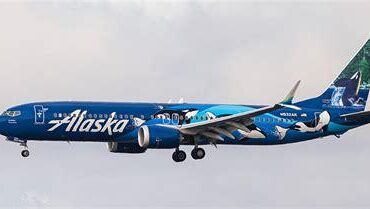
Nearly every new Southwest route comes with a familiar rival: Alaska Airlines. Both carriers dominate West Coast travel, but their footprints differ sharply. Alaska controls key northern markets, while Southwest remains the largest airline in California.
On the Hawaii routes, Southwest will face Alaska at both Burbank and Ontario. Hawaiian Airlines adds another layer of competition in Long Beach, while the legacy carriers remain deeply entrenched at LAX. Surprisingly, the only routes where Southwest avoids direct competition from Alaska are the new Long Beach flights to Portland and Seattle.
This expansion signals that Southwest is no longer ceding West Coast ground. Instead, it’s actively challenging Alaska’s stronghold in routes where both carriers see high yields and steady leisure demand.
Southwest’s Transformation Under Elliott Investment Management
The airline’s network expansion reflects deeper internal changes. Since activist investor Elliott Investment Management began steering the airline’s restructuring, Southwest has undergone a series of reforms—some widely welcomed, others hotly debated.
Participation in global distribution systems (GDS) made corporate travel bookings simpler, improving Southwest’s visibility among business travelers. But the carrier also moved to eliminate free checked bags and abandon open seating—two elements that shaped its brand for decades.
The decisions come with risk. Some longtime loyalists may feel alienated by the shift toward a more conventional airline model. Yet the financial performance shows improvement: profits and revenue efficiency have climbed, giving leadership the confidence to re-enter an expansion phase.
The five new Southern California routes are emblematic of this renewed posture—an airline stabilizing, recalibrating, and preparing to compete aggressively.
A New Competitive Era for West Coast Air Travel
Southwest’s 2026 route refresh is more than a network update; it’s a strategic comeback. By blending Hawaii growth, West Coast reinforcement, and the optimization of high-demand secondary airports, the carrier is positioning itself to reclaim regional dominance.
Southern California—one of the world’s most competitive aviation markets—now sits at the center of Southwest’s resurgence. These five routes represent the start of a broader transformation, one that reflects a more adaptive, financially focused airline ready for its next phase of growth.
The West Coast skies are about to get busier, and Southwest intends to be right at the heart of that momentum.