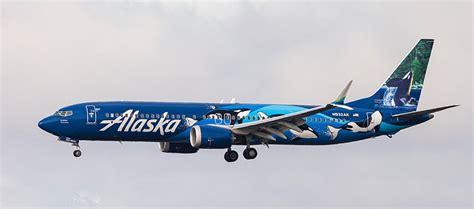
Alaska Airlines is experiencing a powerful resurgence across the United States’ West Coast, with flights filling faster and new routes appearing throughout California, the Pacific Northwest, and Alaska. While much of the aviation industry focuses on flashy intercontinental launches or global alliances, the airline’s true strength lies closer to home. Alaska Airlines has built one of the most strategically focused regional networks in North America, and that focus is now translating into strong demand, expanded capacity, and a steady stream of new routes.
The airline’s strategy is rooted in geography, competition, and a deep understanding of the travel patterns of the Western United States. Unlike many legacy carriers that spread their networks across the country, Alaska Airlines has carefully concentrated its resources on a specific region where it enjoys brand recognition, operational expertise, and loyal customers. This regional dominance across the West Coast has become the engine behind its current boom in flight demand.
In 2026, Alaska Air Group — including Alaska Airlines, Hawaiian Airlines, and regional carrier Horizon Air — will operate flights to 142 destinations worldwide. Yet even with new long-haul services and international ambitions, the majority of its growth remains firmly anchored along the Pacific coastline. The airline is strengthening hubs, adding point-to-point services, and increasing capacity in markets where its brand already carries weight.
The Strategic West Coast Identity Behind Alaska Airlines’ Growth
One of the most defining elements of Alaska Airlines’ success is its deliberate positioning as the West Coast’s hometown airline. Nearly all of its primary hubs sit along the Pacific edge of the United States, creating a geographically cohesive network that allows for efficient operations and high aircraft utilization.
Seattle-Tacoma International Airport serves as the airline’s flagship hub. During peak summer schedules, Alaska Airlines and its affiliates operate more than 350 daily departures from Seattle, making it the largest airline hub west of the Rocky Mountains. This massive operation allows Alaska to connect dozens of smaller cities to major economic centers across the West.
Beyond Seattle, the airline’s network includes significant hubs in:
- Portland International Airport
- San Diego International Airport
- San Francisco International Airport
- Los Angeles International Airport
- Anchorage Ted Stevens International Airport
This concentration of hubs along a single geographic corridor provides a natural advantage. Aircraft rotations are shorter, crews remain within familiar regions, and customers benefit from frequent flights between coastal cities that generate strong business and leisure demand.
Unlike national carriers that must compete equally across multiple regions, Alaska Airlines has carved out a specialized territory where it can compete aggressively and efficiently.
Fleet Expansion Powering Route Growth
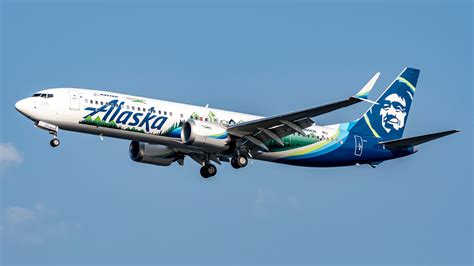
Behind Alaska Airlines’ expanding network lies a rapidly modernizing fleet designed for flexibility and efficiency. The airline currently operates 247 aircraft in the Alaska Airlines livery, with Boeing 737 models forming the backbone of its mainline operations.
The fleet includes large numbers of Boeing 737 Next Generation and Boeing 737 MAX aircraft, which offer lower fuel burn and improved range. By the end of 2025, Alaska had completed deliveries of 80 Boeing 737 MAX 9 aircraft, significantly boosting capacity across its busiest routes.
Future deliveries will further accelerate the airline’s growth trajectory. Alaska expects to receive:
- 11 Boeing 737 MAX 8 aircraft
- 168 Boeing 737 MAX 10 aircraft
- 13 additional Boeing 787 Dreamliners
Meanwhile, regional flying continues to rely on 89 Embraer E175 jets, operated by Horizon Air and SkyWest under the Alaska Horizon brand. These aircraft are particularly valuable for serving smaller West Coast cities where passenger demand is steady but does not justify larger narrowbody aircraft.
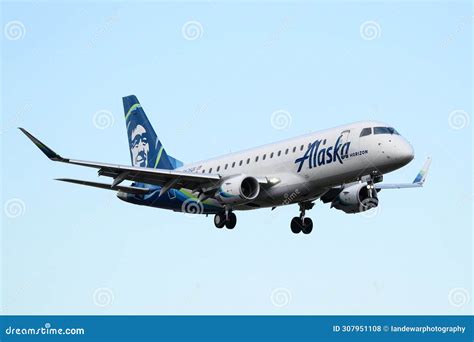
This mix of aircraft allows Alaska Airlines to fine-tune capacity across its network, matching aircraft size to demand while maintaining high flight frequencies.
California Becoming a Major Growth Engine
While Seattle remains Alaska Airlines’ operational heart, California is increasingly becoming the airline’s fastest-growing market. The airline inherited much of its California presence from the acquisition of Virgin America, which gave it access to valuable airport slots and established customer bases in key metropolitan areas.
San Diego International Airport has emerged as one of Alaska Airlines’ most dynamic hubs. In 2026, the airline is launching five new routes from San Diego, signaling its intention to strengthen its foothold in Southern California.
These new routes include connections to cities across the United States, with services operated by both Boeing 737 aircraft and Embraer E175 regional jets. One of the longest additions will link San Diego with Raleigh-Durham, offering travelers a nonstop connection between two rapidly growing technology regions.
Other routes from San Diego expand domestic connectivity while avoiding direct competition with major legacy airline hubs. This approach allows Alaska to capture underserved markets while maintaining operational efficiency.
Another intriguing addition is a new seasonal route from Hollywood Burbank Airport to Honolulu, operated by Alaska Airlines Boeing 737 aircraft. Although Honolulu is traditionally associated with Hawaiian Airlines, the route represents a point-to-point leisure connection rather than a hub-to-hub service.
Perhaps the most unusual route in Alaska’s California expansion connects Ontario International Airport to Santa Rosa, linking two smaller airports that rarely receive nonstop service between each other. This unconventional strategy reflects Alaska Airlines’ willingness to explore niche markets where competition is limited.
Avoiding Costly Battles at LAX and SFO
Interestingly, Alaska Airlines’ expansion strategy intentionally avoids major capacity increases at Los Angeles International Airport (LAX) and San Francisco International Airport (SFO).
Both airports are among the most competitive aviation markets in the world. LAX hosts hubs for all three major U.S. legacy carriers, while SFO serves as a primary hub for United Airlines. Operating large expansions in these environments often leads to price wars and high operational costs.
Instead, Alaska Airlines is focusing on markets where it can achieve stronger margins and higher market share. San Diego provides a perfect example. Southwest Airlines is the largest carrier there, but Alaska Airlines ranks second, meaning it can capture a significant share of passengers without directly confronting multiple legacy hubs.
This strategy is sometimes described as “being a big fish in a smaller pond.” By targeting mid-size airports and underserved routes, Alaska Airlines maintains profitability while expanding its presence across the region.
Strengthening the Pacific Northwest Network
The Pacific Northwest remains the historic core of Alaska Airlines’ network. Cities across Washington, Oregon, and Idaho rely heavily on Alaska Airlines for both regional and national connectivity.
Seattle-Tacoma International Airport continues to anchor this network, but the airport is approaching capacity limits. As gate space and runway slots become increasingly constrained, Alaska Airlines has begun shifting some growth to nearby Portland International Airport.
Portland offers several advantages. It experiences less congestion, lower operating costs, and fewer competing airline hubs, making it an ideal location for expansion.
In 2026, Alaska Airlines is launching eight new routes from Portland, including connections to both nearby regional cities and major destinations across the United States.
New services include flights to:
- Bellingham
- Jackson Hole
- Everett
- Pasco
- Idaho Falls
- Baltimore
- Philadelphia
- St. Louis
These routes transform Portland into a secondary connecting hub that complements Seattle rather than competing with it. Passengers traveling between smaller Western cities can now connect through Portland, reducing pressure on Seattle’s already crowded infrastructure.
Point-to-Point Flying Expanding Across the Region
Beyond traditional hub-and-spoke operations, Alaska Airlines has increasingly embraced point-to-point routes connecting smaller cities directly.
This strategy reflects changing travel behavior. Many passengers prefer nonstop flights that avoid large hubs, particularly for regional journeys. By linking smaller cities directly, Alaska Airlines can attract travelers who might otherwise drive or choose competing airlines.
Examples of new point-to-point routes introduced recently include connections such as:
- Burbank to Eugene
- Burbank to Pasco
- Burbank to Redmond
- Boise to Ontario
- Spokane to Orange County
These routes might not generate headlines, but collectively they strengthen Alaska Airlines’ network density and regional loyalty.
Anchorage Expansion Capturing Summer Tourism
The airline’s namesake state remains an essential part of its identity and network. Anchorage’s Ted Stevens International Airport functions as Alaska Airlines’ gateway to the Last Frontier, though the operation remains relatively modest compared to its West Coast hubs.
During the summer travel season, the airline schedules just over 50 daily departures from Anchorage, reflecting the region’s seasonal demand patterns. Tourism to Alaska surges during warmer months, driven by cruise passengers and outdoor travelers seeking glaciers, wildlife, and national parks.
To capture this seasonal demand, Alaska Airlines is introducing several new routes from Anchorage in 2026. These include connections to Boise and Spokane, both operated with Boeing 737 aircraft on limited weekly schedules.

Another notable addition connects Anchorage to Boston Logan International Airport, operating on Saturdays during the peak summer season. This route targets leisure travelers seeking direct access between New England and Alaska’s tourism industry.
By operating these routes with low frequency but high seasonal demand, Alaska Airlines minimizes financial risk while capturing valuable tourism revenue.
International Ambitions From Seattle
Although regional growth drives most of Alaska Airlines’ expansion, the carrier is also entering a new era of long-haul flying. This transformation became possible through the airline’s acquisition of Hawaiian Airlines, which brought wide-body aircraft and long-distance operational expertise.
Hawaiian’s Airbus A330-200 fleet will remain based in Honolulu, preserving the island hub’s traditional route network. However, Hawaiian’s newer Boeing 787-9 Dreamliners are being integrated into Alaska Airlines’ long-haul strategy from Seattle.
Currently, these aircraft operate routes to Tokyo Narita and Seoul Incheon, establishing Alaska Airlines as a growing transpacific player.
In 2026, the airline will extend its reach into Europe with three new destinations:
- Rome Fiumicino
- London Heathrow
- Reykjavik Keflavik

The London route will operate year-round, while flights to Rome and Reykjavik will run during the summer travel season. These additions represent the airline’s first direct flights from Seattle to Europe.
By 2030, Alaska Airlines plans to operate twelve long-haul routes from Seattle, dramatically expanding its international presence while feeding passengers from its extensive West Coast network.
Competition With Delta in Seattle
The growth of Alaska Airlines cannot be fully understood without acknowledging its rivalry with Delta Air Lines, which has significantly expanded its own hub in Seattle over the past decade.
Delta now operates multiple long-haul routes from the airport and has aggressively pursued corporate travel contracts in the region. Rather than retreating, Alaska Airlines has responded by strengthening its domestic network and expanding internationally.
The strategy relies on network density and regional loyalty. Alaska Airlines offers far more flights to smaller Western cities than any competitor, giving it an advantage when passengers connect through Seattle.
With new Dreamliner routes and continued West Coast expansion, Alaska Airlines is positioning itself to remain Seattle’s dominant airline even as competition intensifies.
Why Alaska Airlines’ West Coast Strategy Works
The surge in Alaska Airlines flights across the West Coast is not a coincidence. It reflects a carefully executed strategy built on geographic focus, fleet efficiency, and targeted route development.
Several factors explain why the airline’s approach is proving so successful:
- Regional specialization that strengthens brand loyalty among West Coast travelers
- Strategic hub placement across key Pacific cities
- Efficient aircraft deployment using Boeing 737 and Embraer E175 fleets
- Point-to-point route experimentation connecting underserved markets
- Selective international expansion supported by Hawaiian Airlines’ wide-body aircraft
Together, these elements create a network that is both resilient and adaptable.
Rather than chasing growth everywhere, Alaska Airlines has doubled down on the markets where it holds the strongest competitive advantages. That disciplined focus is now translating into higher passenger demand, stronger route performance, and a steadily expanding presence across the Pacific coast.
As the airline moves deeper into the decade, its West Coast network will likely remain the foundation of its strategy — even as Dreamliners begin connecting Seattle to Europe and Asia. The result is a carrier that continues to evolve while staying firmly rooted in the region that built its success.