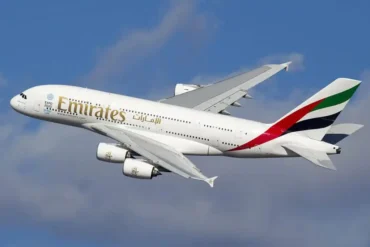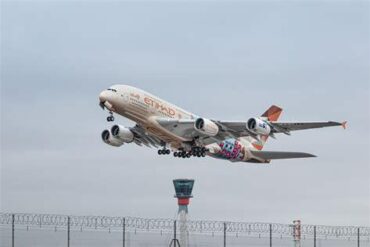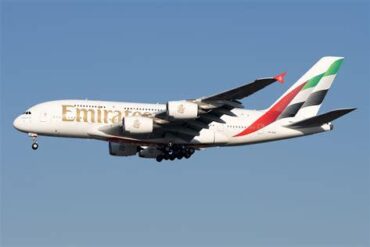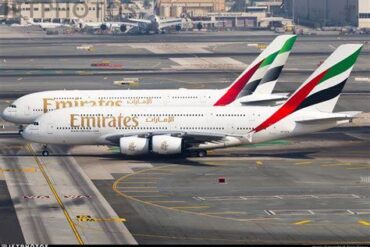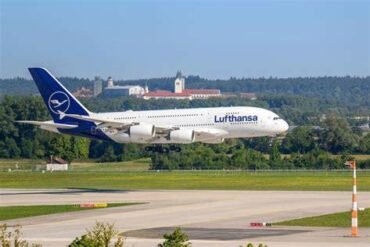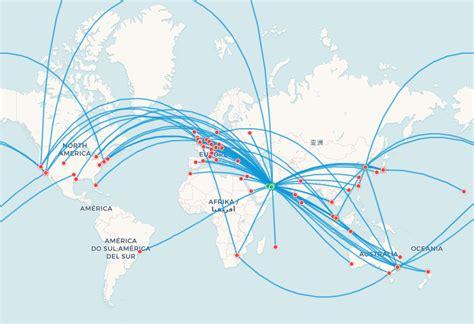
The Airbus A380 continues to prove that the era of the superjumbo is far from over. Although production of the world’s largest passenger aircraft ended years ago, the aircraft remains indispensable on a select group of high-demand international routes where passenger volumes, airport slot constraints, and premium travel demand justify its enormous capacity.
During the first half of 2026, the global A380 network experienced another turbulent period. Emirates continued restoring aircraft that had been parked since the COVID-19 pandemic, but geopolitical instability across the Middle East—particularly military operations and regional airspace disruptions—once again demonstrated how vulnerable the world’s largest passenger jet is to global events. Nevertheless, according to Cirium schedule data covering January through June 2026, several routes continued to rely heavily on the iconic double-decker.
Rather than disappearing quietly, the A380 remains concentrated on a relatively small number of trunk routes linking some of the world’s busiest aviation hubs. These services showcase exactly why Airbus designed the aircraft: transporting enormous numbers of passengers between airports where landing slots are scarce and demand consistently exceeds available capacity.
For airlines like Emirates, Singapore Airlines, British Airways, and Qantas, the aircraft continues to generate significant value on carefully selected routes that simply cannot be served as efficiently by smaller widebody aircraft.
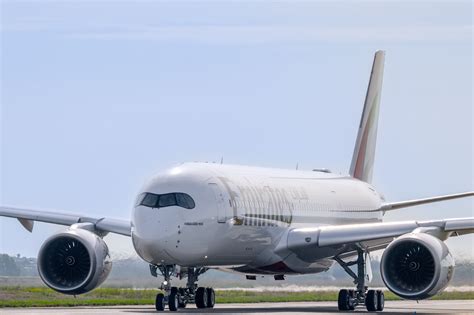
Dubai–Sydney: One of the World’s Longest Scheduled A380 Missions
Ranking eighth among the busiest A380 routes during the first six months of 2026 is the service between Dubai International Airport and Sydney Kingsford Smith Airport. Covering approximately 7,480 miles (12,037 kilometers), it is also the longest route featured in this ranking.
Emirates operated 365 flights in each direction, providing roughly 177,000 seats while generating more than 1.3 billion Available Seat Miles (ASMs). The impressive distance alone makes this one of the flagship deployments for the aircraft.
What makes this route particularly unique is that many flights do not terminate in Sydney. Approximately 181 services continued onward to Christchurch, New Zealand, utilizing fifth-freedom traffic rights. Despite Christchurch having a metropolitan population of only around 400,000 residents, it remains one of the smallest cities regularly welcoming the Airbus A380.
The continuation across the Tasman Sea demonstrates Emirates’ ability to maximize aircraft utilization while connecting smaller international markets with its extensive global hub in Dubai.
Dubai–Cairo: High-Density Regional Flying for the Superjumbo
While many people associate the A380 exclusively with ultra-long-haul flying, the aircraft is equally effective on dense regional markets.
The route linking Dubai and Cairo illustrates this perfectly. Stretching only 1,503 miles (2,419 kilometers), Emirates nevertheless deployed its flagship aircraft extensively, operating 476 A380 flights each way during the first half of 2026.
Those services offered approximately 238,000 seats and generated nearly 358 million ASMs.
Egypt remains the Arab world’s most populous nation, with around 100 million residents, making travel demand between the UAE and Egypt exceptionally strong. Besides tourism, substantial business travel and expatriate traffic contribute to consistently high passenger loads throughout the year.
Although Emirates supplements A380 operations with Boeing 777 services, while EgyptAir also serves the route using both narrowbody and widebody aircraft, the presence of the superjumbo highlights the remarkable passenger demand between the two countries.
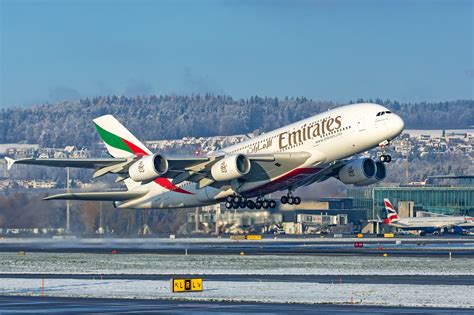
Dubai–Jeddah: A Short-Haul Giant Serving Religious Travel
Few routes better demonstrate the flexibility of the Airbus A380 than Dubai to Jeddah.
Measuring only 1,057 miles (1,700 kilometers), it ranks among the shortest scheduled A380 sectors anywhere in the world. Yet Emirates operated an impressive 482 flights in each direction during the first six months of 2026.
These services collectively carried approximately 246,000 seats, producing around 261 million ASMs.
The extraordinary demand stems largely from Saudi Arabia’s religious significance. Jeddah serves as the primary gateway for millions of Muslim pilgrims traveling to Mecca and Medina each year. High-speed rail links from Jeddah efficiently distribute travelers onward to both holy cities.
To maximize capacity, Emirates has historically deployed specially configured 615-seat Airbus A380s on this route. These high-density layouts allow the airline to accommodate enormous passenger volumes while minimizing operational costs per seat.
Although these aircraft are gradually undergoing cabin reconfiguration, the Dubai–Jeddah market remains one of the best examples of how the world’s largest passenger aircraft can succeed even on relatively short flights.
Dubai–Paris Charles de Gaulle: Europe’s Strongest Emirates A380 Route
Paris remains one of Emirates’ most strategically important European destinations.
Between January and June 2026, Emirates operated 497 Airbus A380 flights each way between Dubai and Paris Charles de Gaulle Airport, making it the fifth busiest A380 route worldwide.
The route spans approximately 3,259 miles (5,244 kilometers), although actual flying distances frequently increased during 2026 because aircraft were forced to avoid restricted Middle Eastern airspace.
These flights generated approximately 257,000 seats and nearly 838 million ASMs, underlining Paris’ enduring importance within Emirates’ European network.
Interestingly, although Air France permanently retired all ten of its Airbus A380s during the pandemic, Paris continues to rank among the world’s busiest superjumbo destinations thanks entirely to Emirates’ operations.
The route also highlights how a city no longer operating its own A380 fleet can still remain one of the aircraft’s busiest global markets.
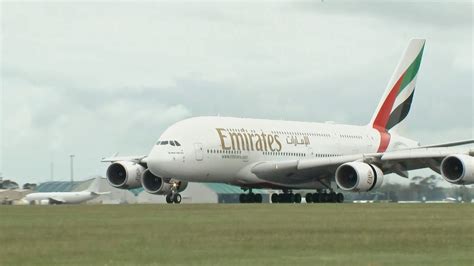
Singapore–London Heathrow: Two Airlines Sustain an Iconic Long-Haul Corridor
The route connecting Singapore Changi Airport and London Heathrow Airport remains one of global aviation’s classic intercontinental services.
Unlike most entries in this ranking, two airlines contribute significantly to total A380 activity.
During the first half of 2026, Singapore Airlines operated 362 flights each direction, while Qantas added another 182 services, bringing the combined total to 544 flights each way.
The route stretches approximately 6,764 miles (10,886 kilometers) and remains perfectly suited to the A380’s strengths, combining enormous passenger demand with limited Heathrow slot availability.
Singapore Airlines carried roughly 171,000 seats, while Qantas contributed approximately 88,000 additional seats.
British Airways also serves Singapore from London, but relies instead on Boeing 777 aircraft rather than deploying its remaining Airbus A380 fleet.
For Singapore Airlines, this route represents part of the legacy established when it became the world’s launch customer for the Airbus A380. Although its fleet has been reduced from 24 aircraft to 12, the superjumbo continues serving some of its most prestigious international routes.
Dubai–Bangkok: One of Emirates’ Highest-Volume Asian Markets
Thailand continues attracting millions of visitors annually, making Bangkok one of Emirates’ strongest Asian destinations.
During the first half of 2026, Emirates scheduled 591 Airbus A380 flights in each direction between Dubai and Bangkok.
Those operations provided approximately 322,000 seats while generating nearly 982 million ASMs across the 3,050-mile (4,908-kilometer) sector.
Although several airlines operate Airbus A380 services into Bangkok from other global hubs, Emirates remains the only carrier deploying the aircraft between Dubai and Thailand’s capital.
The route has also gained additional significance following Thai Airways’ retirement of its entire six-aircraft A380 fleet in 2020. Emirates has effectively become the dominant superjumbo operator serving Bangkok.
Despite ongoing geopolitical challenges affecting Middle Eastern airspace during 2026, Bangkok remains one of the airline’s most resilient and consistently high-performing long-haul destinations.
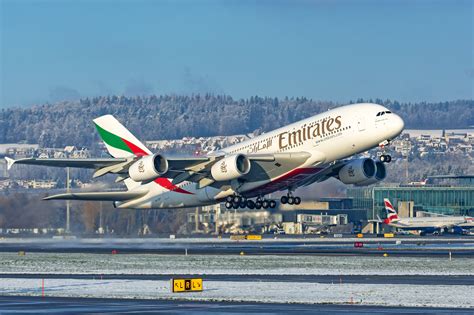
Singapore–Sydney: Dual Operators Create One of the World’s Busiest A380 Markets
The Singapore–Sydney corridor has become one of the strongest remaining Airbus A380 markets globally.
Singapore Airlines operated approximately 388 flights each way during the first half of 2026, transporting around 170,000 seats while generating approximately 666 million ASMs.
However, the route becomes even busier when Qantas operations are included.
Qantas contributed another 206 A380 flights each direction, many operating as part of its famous Singapore stopover services continuing onward to London Heathrow.
Together, both airlines completed approximately 594 A380 flights each way, making this the second busiest superjumbo route worldwide.
Although Qantas is preparing to introduce its new Airbus A350-1000ULR fleet for nonstop Sydney–London services, the airline has made clear that the arrival of these aircraft will not immediately replace its Airbus A380 fleet.
Indeed, after returning its final stored A380 to service in late 2025, Qantas continues relying heavily on the aircraft for premium long-haul operations.
Dubai–London Heathrow: The World’s Undisputed A380 Capital
No route better represents the original vision behind the Airbus A380 than Dubai to London Heathrow.
During the first six months of 2026, the route recorded an extraordinary 1,059 Airbus A380 flights in each direction, comfortably making it the world’s busiest superjumbo market.
Emirates accounted for the overwhelming majority with 981 flights, while British Airways contributed another 78 rotations.
Together, the airlines offered approximately 500,000 seats in each direction.
The route covers roughly 3,420 miles (5,500 kilometers) and connects two of the world’s most important international aviation hubs.
Heathrow’s chronic slot shortage has long made larger aircraft economically attractive. Instead of increasing flight frequencies—which Heathrow often cannot accommodate—airlines maximize passenger capacity by deploying the world’s largest commercial aircraft.
For Emirates, the Dubai–London Heathrow corridor remains the flagship example of its global hub strategy, feeding passengers from across Asia, Africa, Australia, and the Middle East into one of Europe’s busiest airports.
British Airways also continues utilizing the Airbus A380 on selected Heathrow routes, although the majority of its superjumbo operations now focus on North American destinations rather than Dubai.
Why the Airbus A380 Still Thrives on Select Global Routes
Although hundreds of twin-engine widebody aircraft now offer significantly better fuel efficiency, the Airbus A380 continues occupying a unique niche that few competitors can replicate.
Every route featured among the busiest in 2026 shares several common characteristics. They connect major global hubs, experience consistently high passenger demand, and frequently involve airports where available landing slots are severely constrained. Under these conditions, carrying more than 500 passengers on a single departure often proves more practical than adding additional flights.
Emirates remains the clear driving force behind the aircraft’s continued relevance. With approximately 116 A380s still in its inventory and dozens actively operating every day, the Dubai-based airline continues investing in cabin refurbishments and long-term fleet support, extending the aircraft’s operational life well into the next decade.
Meanwhile, Singapore Airlines, British Airways, and Qantas continue demonstrating that, despite its age, the Airbus A380 still delivers exceptional passenger appeal on carefully selected long-haul markets.
Far from becoming a relic of aviation history, the superjumbo remains a powerful symbol of global air travel, continuing to dominate the world’s busiest international corridors whenever passenger demand, airport infrastructure, and airline strategy align in its favor.