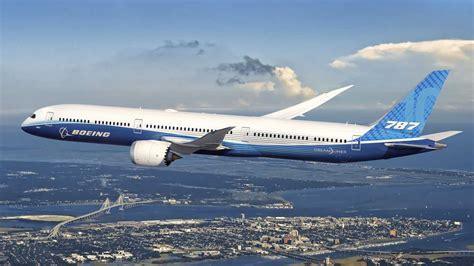
Transpacific aviation represents one of the most technically demanding and commercially competitive sectors in the global airline industry. Flights between North America and Asia routinely exceed 10 hours and cross some of the most remote airspace on Earth. In 2026, the Boeing 787 Dreamliner has emerged as the defining aircraft of this vast corridor, reshaping airline strategy and enabling routes that once seemed economically impossible.
The Dreamliner family—consisting of the 787-8, 787-9, and 787-10—combines long range with exceptional fuel efficiency. Its composite airframe, advanced aerodynamics, and next-generation engines allow airlines to connect distant cities with lower operating costs than previous widebody aircraft. These characteristics have dramatically expanded the viability of point-to-point transpacific travel, allowing airlines to bypass traditional megahubs and deliver passengers closer to their final destinations.
At the same time, the aircraft’s passenger experience has become a key factor behind its popularity on long-haul routes. The lower cabin altitude, higher humidity, larger windows, and quieter engines significantly reduce the fatigue commonly associated with ultra-long flights. For business travelers crossing multiple time zones—or tourists beginning long vacations—these improvements have turned the Dreamliner into one of the most passenger-friendly aircraft ever built.
Based on airline scheduling data and route frequency analysis for 2026, several corridors stand out as the most heavily operated transpacific routes using the Boeing 787 Dreamliner. These connections reflect powerful economic links between technology hubs, global finance centers, and major tourism destinations across the Pacific Ocean.
The following analysis explores the ten busiest transpacific corridors operated by the Dreamliner, highlighting why airlines rely on this aircraft for such demanding missions and how these routes illustrate the evolving geography of global air travel.
10. Dallas/Fort Worth – Seoul Incheon
The connection between Dallas/Fort Worth International Airport (DFW) and Seoul Incheon International Airport (ICN) has rapidly become one of the most strategically important links between the United States and South Korea. In 2026, the route records 516 annual flights operated by the Boeing 787-9, primarily flown by American Airlines.
This nearly 16-hour journey showcases the Dreamliner’s capability to perform ultra-long-haul missions from interior U.S. hubs rather than coastal gateways. Historically, most transpacific flights departed from cities such as Los Angeles or San Francisco due to range limitations. The efficiency of the 787-9 has completely changed that paradigm, allowing airlines to launch nonstop routes from inland hubs with strong connecting traffic.
Dallas/Fort Worth serves as the largest hub in American Airlines’ global network. By linking Texas directly with South Korea’s capital region, the airline captures both corporate demand and international connections from across the southern United States. The route also supports a significant cargo market focused on electronics components, semiconductors, and automotive parts, reflecting the deep industrial ties between the two regions.
Despite its length, the route remains viable thanks to the Dreamliner’s fuel-efficient engines and optimized aerodynamics. These features reduce operational costs while maintaining payload capacity, allowing airlines to sustain year-round service without relying on much larger aircraft like the Boeing 777.
9. Los Angeles – Seoul Incheon
The Los Angeles–Seoul corridor ranks among the busiest transpacific air routes in the world. In 2026, it registers 520 Dreamliner flights annually, driven largely by the rapid growth of Air Premia, a South Korean carrier operating an all-Dreamliner long-haul fleet.
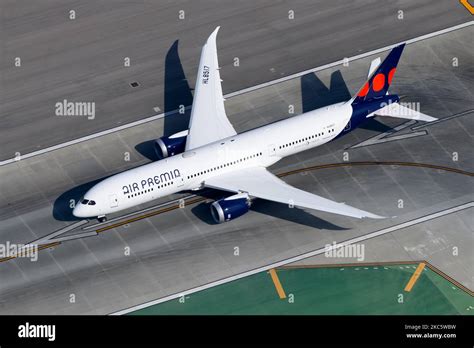
Los Angeles International Airport (LAX) has long served as the primary gateway between the United States and South Korea. The region hosts one of the largest Korean diaspora communities outside Asia, generating consistent passenger demand for both business and leisure travel.
Historically, airlines deployed high-capacity aircraft such as the Boeing 747 and Airbus A380 on this route to handle enormous passenger volumes. However, the rise of the Dreamliner has introduced a new operational philosophy. Rather than relying on extremely large aircraft with limited daily departures, airlines can now operate smaller widebodies more frequently, offering travelers greater schedule flexibility.
For Air Premia, the Boeing 787-9 provides the perfect balance between range, passenger comfort, and operating economics. The airline has steadily increased frequencies on the route, especially during peak summer travel periods, where up to 12 weekly flights are scheduled.
Passengers also benefit from the Dreamliner’s advanced cabin pressurization and humidity levels, which significantly reduce the physical stress associated with long-haul travel across the Pacific.
8. Seattle – Taipei
The route between Seattle–Tacoma International Airport (SEA) and Taipei Taoyuan International Airport (TPE) represents one of the most dynamic transpacific corridors in 2026. With approximately 522 annual Dreamliner flights, it has become a critical link between two of the world’s most important technology ecosystems.
Seattle is home to major global corporations including Microsoft, Amazon, and Boeing, while Taiwan stands at the center of the global semiconductor supply chain. This economic synergy drives heavy corporate travel demand between the Pacific Northwest and Taipei.
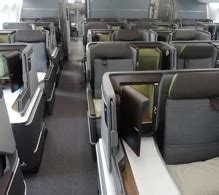
EVA Air dominates Dreamliner operations on the route, utilizing both the Boeing 787-9 and the larger 787-10. By employing two variants of the aircraft, the airline can tailor capacity based on seasonal demand while maintaining consistent frequency.
Unlike traditional hub-to-hub routes dominated by massive widebody aircraft, the Seattle–Taipei corridor illustrates how the Dreamliner allows airlines to adopt a frequency-driven strategy. Instead of offering just one daily flight, carriers can schedule multiple departures per week, giving travelers greater flexibility.
This approach is particularly appealing to business travelers who often require specific departure times. The Dreamliner’s efficiency ensures that these additional flights remain profitable even during off-peak travel seasons.
7. Seattle – Tokyo Narita
Another major Pacific Northwest connection appears in the form of the Seattle–Tokyo Narita route, which records approximately 538 Dreamliner flights per year.
While Tokyo’s Haneda Airport now handles much of the city’s premium business traffic, Narita International Airport remains an essential hub for international connections throughout Asia. Airlines rely on Narita’s extensive route network to distribute passengers to destinations across Southeast Asia, China, and beyond.
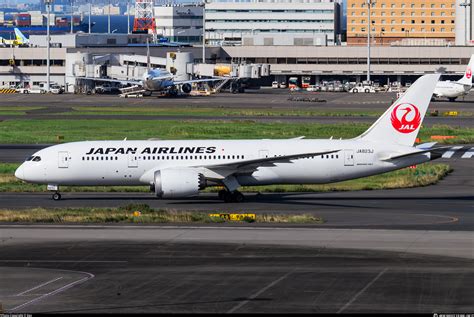
The Dreamliner plays a vital role in maintaining consistent service along this corridor. Both Japan Airlines and Alaska Airlines operate the route using Boeing 787-8 and 787-9 aircraft, balancing passenger capacity with operational efficiency.
Seattle’s geographic position makes it an ideal departure point for flights to northern Asia. The great circle route between Seattle and Tokyo reduces flight distance and fuel consumption compared with departures from more southern cities.
By deploying mid-sized widebodies like the Dreamliner instead of larger aircraft, airlines can maintain year-round service even during seasonal fluctuations in passenger demand. This strategy has proven especially effective in the Pacific Northwest, where business travel can vary significantly throughout the year.
6. San Francisco – Singapore
Among all transpacific Dreamliner routes, San Francisco to Singapore stands out as one of the longest and most technically demanding. The route stretches over 8,400 miles, requiring a flight time of roughly 17 hours.
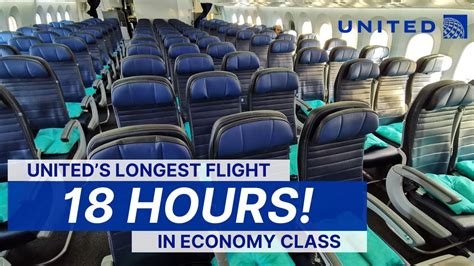
In 2026, United Airlines operates approximately 730 annual flights on this ultra-long-haul corridor using the Boeing 787-9. The route links Silicon Valley with one of Asia’s most influential financial and technology centers.
Just a decade ago, such a mission would have required severe payload restrictions for a mid-sized widebody aircraft. The Dreamliner’s advanced design has changed that reality. Its high-efficiency engines, lightweight composite structure, and optimized wing design enable airlines to operate extreme long-distance flights while maintaining commercial viability.
Passenger comfort is especially important on flights of this length. The Dreamliner’s cabin features improved humidity, larger windows, and reduced cabin altitude, which help mitigate dehydration and fatigue during long journeys.
As a result, the San Francisco–Singapore route has become one of the most reliable ultra-long-haul services in the world.
5. Los Angeles – Hong Kong
The Los Angeles to Hong Kong corridor represents a powerful link between two of the world’s most influential economic centers. With approximately 730 Dreamliner flights scheduled in 2026, the route continues to thrive as global travel demand rebounds.
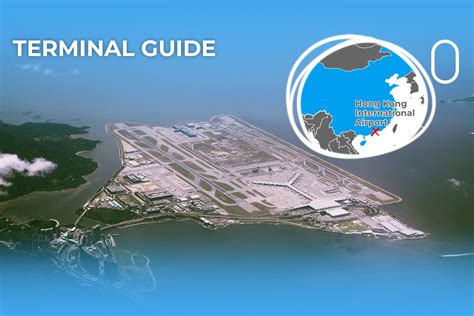
Hong Kong serves as a major hub for finance, trade, and aviation throughout Asia. The city’s international airport handles enormous volumes of cargo, making it one of the busiest freight hubs on the planet.
The Boeing 787-9 has proven particularly effective on this route due to its ability to combine long range with lower operating costs. Airlines can maintain daily service without the financial risk associated with extremely large aircraft.
Cargo also plays a crucial role. The Dreamliner’s belly cargo capacity supports shipments of high-value goods including electronics, pharmaceuticals, and luxury consumer products moving between Asia and North America.
For passengers, the roughly 15-hour journey benefits from the aircraft’s advanced cabin environment, which significantly reduces the fatigue typically experienced on transpacific flights.
4. San Francisco – Seoul Incheon
Ranking fourth among the busiest Dreamliner routes across the Pacific, San Francisco–Seoul Incheon records approximately 962 annual flights in 2026.
This connection reflects the deep economic relationship between Silicon Valley and South Korea’s technology industry. Companies in both regions collaborate extensively in fields such as semiconductors, consumer electronics, and advanced manufacturing.
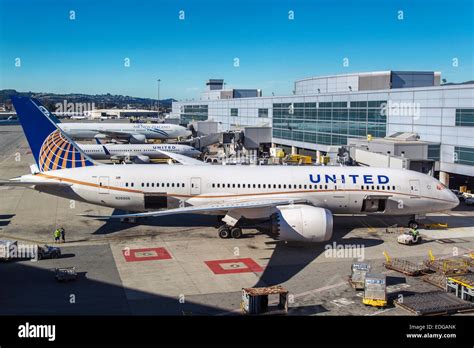
United Airlines dominates Dreamliner operations on this corridor, using the 787-9 to operate multiple daily departures. By scheduling flights at different times of the day, the airline captures both morning and evening travel demand while providing efficient connections for passengers arriving from other U.S. cities.
The Dreamliner’s economics allow airlines to prioritize flight frequency over raw seat capacity. Instead of deploying a single large aircraft each day, carriers can schedule several smaller flights, offering greater flexibility to travelers and improving overall connectivity within the airline’s network.
This strategy has proven particularly effective in the Bay Area, where international business travel remains exceptionally strong.
3. Honolulu – Tokyo Haneda
While many transpacific routes are driven by corporate travel, the Honolulu–Tokyo Haneda corridor is almost entirely powered by tourism. In 2026, the route registers 1,086 annual Boeing 787 flights, making it one of the busiest leisure corridors across the Pacific.

Japan has long been one of Hawaii’s most important tourism markets. Millions of Japanese travelers visit the islands every year, attracted by warm weather, beaches, and a unique blend of American and Pacific cultures.
Both All Nippon Airways (ANA) and Japan Airlines rely heavily on the Boeing 787-9 to operate this route. The aircraft’s efficiency allows airlines to schedule multiple daily flights, maintaining a steady flow of tourists between Tokyo and Honolulu.
Another key factor behind the route’s popularity is the shift from Narita to Haneda Airport. Haneda’s location closer to central Tokyo significantly reduces travel time for passengers, making it the preferred gateway for many travelers.
The Dreamliner’s quiet cabin and improved air quality enhance the vacation experience from the very beginning of the journey.
2. Los Angeles – Tokyo Narita
With 1,095 Dreamliner flights annually, the Los Angeles–Tokyo Narita route ranks as the second busiest transpacific corridor operated by the Boeing 787.
For decades, Narita served as Tokyo’s primary international gateway. Although Haneda now handles much of the city’s premium traffic, Narita remains an essential hub for connecting flights across Asia.
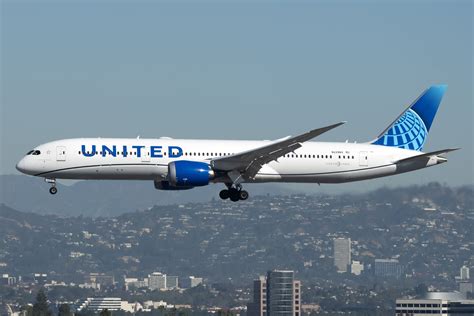
Airlines use the Boeing 787-9 to transport passengers from across North America into Narita’s extensive network of onward flights. From there, travelers can easily connect to destinations throughout Southeast Asia, China, and Oceania.
The Dreamliner’s fuel efficiency and cargo capability allow airlines to operate multiple daily departures while maintaining profitability. High-value cargo shipments, including electronics and industrial components, frequently fill the aircraft’s lower deck cargo hold.
This blend of passenger demand and cargo revenue ensures that the Los Angeles–Narita corridor remains one of the most strategically important routes in the global aviation network.
1. Los Angeles – Tokyo Haneda
At the top of the ranking stands the Los Angeles to Tokyo Haneda route, the busiest transpacific corridor operated by the Boeing 787 Dreamliner in 2026. The route records an impressive 1,146 annual Dreamliner flights, reflecting extraordinary demand between two global megacities.
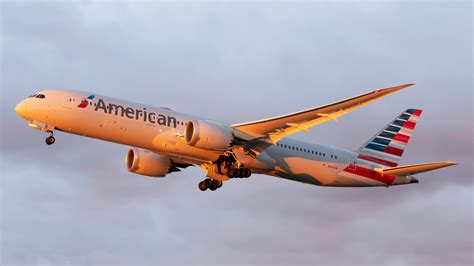
Haneda’s proximity to Tokyo’s central business districts makes it the preferred arrival airport for corporate travelers. This advantage has transformed the route into a high-frequency business corridor connecting the entertainment capital of the United States with one of the world’s largest financial centers.
Both American Airlines and United Airlines rely on the Boeing 787-9 to operate multiple daily departures. The aircraft’s efficiency allows airlines to maintain frequent service while offering premium-heavy cabin layouts designed for long-haul comfort.
The route perfectly illustrates how the Dreamliner has reshaped global aviation. Instead of relying on a few massive aircraft, airlines can operate numerous fuel-efficient widebodies, giving passengers more departure options and improving overall network flexibility.
How the Boeing 787 Reshaped Transpacific Aviation
The routes dominating transpacific travel in 2026 highlight a fundamental shift in airline strategy. The Boeing 787 Dreamliner has enabled carriers to prioritize frequency, efficiency, and passenger comfort over sheer aircraft size.
Before the Dreamliner era, airlines relied heavily on large aircraft such as the Boeing 747, Airbus A340, and Airbus A380 for long-distance flights. These aircraft required consistently high passenger loads to remain profitable, limiting flexibility in scheduling and route selection.
The 787 changed that equation entirely. Its lower fuel consumption and long-range capabilities allow airlines to launch routes between cities that previously lacked sufficient demand for larger widebodies.
As a result, the global aviation map has become far more diverse. Secondary cities such as Seattle and Dallas now support major transpacific routes, while established gateways like Los Angeles continue to expand their role as international aviation hubs.
In many ways, the Dreamliner has not simply improved long-haul travel—it has redefined the entire structure of global air connectivity.
The ten routes highlighted above represent the clearest example of this transformation. Together, they illustrate how airlines are using the Boeing 787 to connect economies, support tourism, and bridge continents across one of the world’s largest oceans.