The transpacific aviation corridor is one of the most strategically important air travel markets on Earth. Every day, widebody aircraft arc across the Pacific Ocean, linking the industrial powerhouses of East Asia and the massive consumer markets of the United States. These flights carry far more than vacationers. Inside the cabins are semiconductor engineers heading to Arizona, financial executives commuting between Tokyo and New York, and cargo tied to global supply chains worth trillions of dollars.
For airlines, this corridor represents a powerful mix of long-haul prestige, high passenger yields, and cargo demand. For airports, the stakes are equally high. Being a major gateway for US-bound transpacific flights means increased airline investment, global connectivity, and significant economic influence.
Today, the hierarchy of airports dominating this market looks very different from a decade ago. New-generation aircraft such as the Airbus A350-1000 and Boeing 787-9 Dreamliner have reshaped long-distance flying, allowing carriers to experiment with routes that once seemed impossible. At the same time, airline alliances and geopolitical realities have shifted passenger flows across Asia.
The result is a fascinating competition between airports across the Pacific Rim. Some lead through sheer flight frequency, others through massive seat capacity, and a few are rising quickly due to new economic ties with the United States.
By examining recent aviation data and route strategies, a clear picture emerges of the airports that have become the true engines of US-bound transpacific traffic.
Seoul Incheon: The Undisputed Leader of US-Bound Transpacific Flights
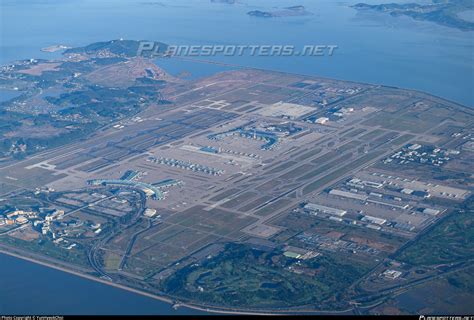
At the top of the leaderboard sits Seoul Incheon International Airport (ICN), currently the busiest airport for US-bound transpacific flights. With 1,141 scheduled departures to the United States, the airport has firmly established itself as the primary bridge between Asia and North America.
This dominance is not an accident. Incheon’s rise reflects a deliberate strategy built around global airline partnerships, geographic advantage, and modern infrastructure.
The most powerful driver behind Seoul’s position is the joint venture between Korean Air and Delta Air Lines. In aviation terms, a joint venture is far deeper than a simple alliance. It allows airlines to coordinate schedules, share revenue, and operate routes as if they were a single carrier. The result is an incredibly efficient network that funnels passengers through Seoul from dozens of US cities.
Travelers departing from Atlanta, Detroit, Los Angeles, Seattle, and Salt Lake City frequently pass through Incheon before continuing to destinations throughout Asia. From Bangkok to Manila and Jakarta, the airport acts as a mega-hub for onward connections.
Geography also plays a role. On a great-circle route, the shortest path between two points on Earth’s curved surface, Seoul sits closer to North America than many Southeast Asian cities. This positioning allows airlines to operate flights more efficiently, saving fuel while maintaining convenient travel times.
Incheon’s infrastructure amplifies this advantage. The airport was designed with large-scale international transfers in mind. Wide concourses, efficient security systems, and modern terminals make it easier for thousands of passengers arriving from the United States to quickly connect onward.
Tokyo Haneda: The Premium Gateway for Business Travelers
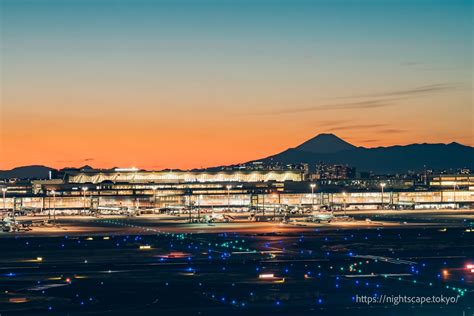
Close behind Seoul is Tokyo Haneda Airport (HND), which hosts 1,061 US-bound transpacific flights. While slightly behind Incheon in total departures, Haneda occupies a unique and highly valuable position in global aviation.
The airport’s biggest advantage is location. Haneda sits just 15 kilometers from central Tokyo, making it dramatically more convenient for business travelers compared to Tokyo Narita, which lies far outside the city.
For executives flying between Tokyo and major US business hubs like New York, San Francisco, or Washington DC, convenience matters enormously. A shorter trip to the airport can easily save an hour or more on each end of the journey.
However, Haneda faces one major constraint: limited runway slots. Airport slots determine how many aircraft can take off or land within a given time window. Because Haneda operates near maximum capacity, airlines compete fiercely for these permissions.
This scarcity creates an interesting dynamic. Airlines tend to allocate Haneda slots to high-yield routes, particularly those favored by corporate travelers. Flights from Haneda to cities such as Los Angeles, San Francisco, and New York often carry large numbers of premium passengers seated in business or first class cabins.
Despite its slot limitations, Haneda remains one of the most desirable departure points for transpacific travel thanks to its speed, reliability, and proximity to the heart of Japan’s economic capital.
Taipei Taoyuan: The Quiet Giant of Transpacific Capacity
When discussing transpacific aviation, Taipei rarely dominates headlines. Yet Taipei Taoyuan International Airport (TPE) has quietly become one of the most important players in the Pacific.
Although the airport operates 782 US-bound flights, fewer than both Seoul and Tokyo, it ranks second in total Available Seat Miles (ASMs).
Available Seat Miles are a crucial aviation metric. The number measures how many passenger seats are offered multiplied by the distance flown. Essentially, it captures the true capacity of an airline network, not just the number of flights.
Taipei’s high ASM ranking comes from its focus on long-distance routes using large aircraft. Taiwanese carriers like EVA Air and China Airlines frequently operate high-capacity widebody jets on extremely long flights to destinations such as New York, Houston, Chicago, and Los Angeles.
One single flight from Taipei to New York covers more than 7,800 miles, generating enormous seat-mile totals.
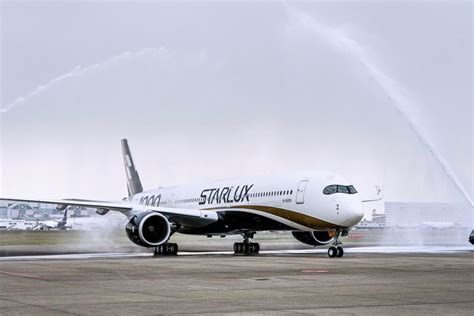
Another major factor driving Taipei’s growth is the emergence of Starlux Airlines, a relatively new premium carrier founded by former EVA Air leadership. The airline has expanded aggressively into the United States, targeting underserved markets.
In early 2026, Starlux launched a Taipei–Phoenix nonstop route, a move closely tied to the semiconductor industry. Arizona has become a major hub for advanced chip manufacturing due to TSMC’s massive investments in the region.
This route illustrates how aviation sometimes mirrors economic geography. When billions of dollars flow into new industries, air routes often follow.
Tokyo Narita: From Dominant Gateway to Strategic Partner
For decades, Tokyo Narita International Airport (NRT) was the undisputed gateway between Asia and the United States. In the 1990s and early 2000s, nearly every major transpacific airline routed passengers through Narita.
The airport’s runways were filled with aircraft from United Airlines, Northwest Airlines, Japan Airlines, and All Nippon Airways, operating complex hub-and-spoke networks that linked dozens of Asian cities with American destinations.
Today, Narita still plays a major role with 863 US-bound flights, but the aviation landscape has shifted dramatically.
The rise of Haneda as Tokyo’s preferred airport for business travelers has diverted much of the premium traffic. Meanwhile, airlines now operate more nonstop flights between secondary cities, reducing the need for traditional hub transfers.
Narita has responded by repositioning itself. Instead of competing solely for business passengers, the airport has become a hub for leisure travel, cargo operations, and low-cost long-haul flights.
Many routes connecting vacation destinations in Southeast Asia with the United States still pass through Narita. Additionally, cargo flights moving electronics, automotive components, and pharmaceuticals continue to use the airport extensively.
The transformation reflects a broader truth about aviation infrastructure: airports rarely disappear from relevance. Instead, they adapt to new market realities.
Hong Kong: A High-Capacity Hub with Strategic Influence
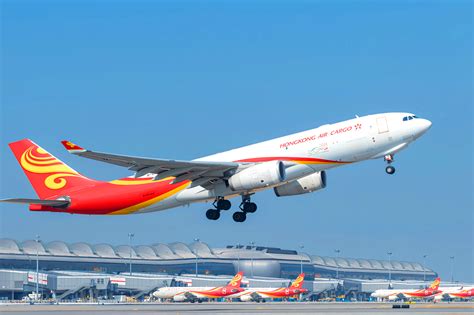
Further south, Hong Kong International Airport (HKG) holds the fifth position with 345 US-bound flights. While the raw number of departures is lower than other major Asian hubs, Hong Kong remains deeply influential due to its massive passenger capacity and cargo dominance.
Hong Kong has long been one of the world’s busiest cargo airports. The territory’s economy revolves around trade, finance, and logistics, making it a natural gateway between China and the United States.
Airlines operating from Hong Kong frequently deploy large widebody aircraft, including Boeing 777-300ERs and Airbus A350-1000s. These aircraft can carry hundreds of passengers along with large amounts of cargo beneath the cabin floor.
Routes such as Hong Kong to Los Angeles, San Francisco, and New York are some of the most cargo-dense passenger flights in the world.
Cargo demand often shapes airline strategy more than travelers realize. Electronics, pharmaceuticals, luxury goods, and time-sensitive manufacturing components all move across the Pacific in the belly holds of passenger aircraft.
In this sense, Hong Kong’s transpacific importance extends far beyond the number of flights. The airport remains one of the most economically significant aviation nodes in global trade.
How Geography Shapes the Transpacific Flight Network
A glance at a globe reveals an interesting pattern. Most of the busiest US-bound airports are clustered in northern East Asia.
That pattern emerges from simple geometry.
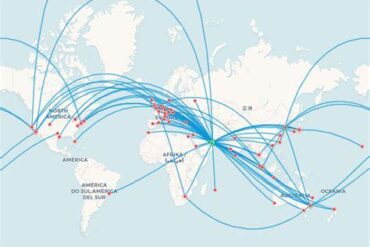
Airplanes follow great-circle routes, which represent the shortest distance between two points on Earth’s curved surface. When plotted on a globe, these routes arc northward across the Pacific rather than traveling in straight lines across flat maps.
Cities such as Seoul, Tokyo, and Taipei sit close to these optimal flight paths between North America and much of Asia.
This location allows airlines to operate transpacific flights more efficiently, reducing fuel consumption and maximizing aircraft utilization. Over thousands of flights each year, those small efficiency gains translate into millions of dollars.
Southern hubs like Singapore or Bangkok can still reach the United States nonstop, but their routes are significantly longer. Airlines operating these flights must carefully manage fuel loads, passenger weight, and operational costs.
As a result, northern Asian airports often become natural transfer points for travelers heading deeper into Asia.
Ultra-Long-Haul Flights and the Rise of Direct Routes
Despite the dominance of northern hubs, aviation technology continues to reshape the map.
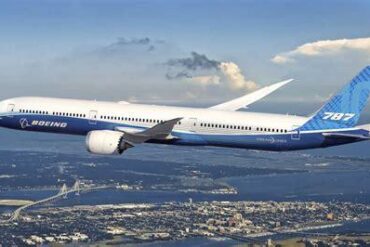
Aircraft such as the Airbus A350-900ULR and Boeing 787-9 have made ultra-long-haul flights increasingly viable. These planes use lightweight composite materials and advanced engines to travel extraordinary distances without refueling.
Singapore Airlines, for example, operates 18- to 19-hour nonstop flights between Singapore and New York.
These flights bypass traditional hubs entirely, allowing passengers to move directly between continents without connections. From a traveler’s perspective, skipping a transfer can be incredibly appealing.
However, these routes remain expensive to operate. Airlines must carefully balance fuel efficiency, crew scheduling, and passenger demand.
For that reason, the majority of transpacific passengers still travel through high-frequency connection hubs like Seoul or Tokyo, where multiple daily flights provide flexibility and lower fares.
China’s Aviation Market: The Sleeping Giant
Before 2019, airports in mainland China were rapidly closing the gap with Japan and Korea in transpacific connectivity. Shanghai Pudong and Beijing Capital frequently ranked among the busiest Asia-US gateways.
Today, their flight numbers remain below historical levels.
Operational challenges have slowed growth, including bilateral flight caps and longer flight paths caused by restricted airspace. Avoiding Russian airspace can add several hours to certain routes between China and the United States, dramatically increasing fuel costs.
As a result, Shanghai currently operates around 462 US-bound flights, while Beijing handles approximately 301 departures.
Yet the long-term potential remains enormous. China’s massive population, expanding middle class, and global trade networks mean the country’s aviation sector could eventually rival or surpass existing transpacific leaders.
If geopolitical and regulatory conditions shift, Chinese airports could quickly become dominant forces in Pacific aviation.

The Future of Transpacific Air Travel
The transpacific market is entering a fascinating new era shaped by technology, alliances, and economic geography.
Seoul Incheon currently reigns as the frequency champion, offering the most flights between Asia and the United States. Tokyo Haneda continues to attract premium travelers seeking speed and convenience. Taipei has evolved into a capacity powerhouse, fueled by long routes and semiconductor-driven business travel.
At the same time, emerging trends could reshape the rankings again.
The upcoming introduction of aircraft such as the Boeing 777X promises greater range and seating capacity. These aircraft may allow airlines to open entirely new nonstop routes between smaller cities across the Pacific.
India’s aviation expansion, particularly through Air India’s growing fleet, could also introduce new transfer hubs connecting North America with South Asia.
Even infrastructure challenges play a role. At Seoul Incheon, the enormous number of simultaneous arrivals sometimes creates bank congestion, where many widebody flights land within the same hour. Managing this traffic efficiently will become increasingly important as passenger numbers continue rising.
What emerges from all these factors is a dynamic and constantly evolving network. Airports rise and fall in prominence depending on technology, trade flows, airline strategy, and geopolitical shifts.
For now, however, the gates of the Pacific are firmly controlled by a handful of powerful hubs. Seoul, Tokyo, Taipei, and Hong Kong stand at the crossroads of continents, orchestrating one of the most complex and economically vital aviation corridors in the world.
Each departing aircraft carries more than passengers. It carries the pulse of global commerce, diplomacy, tourism, and technological collaboration, all crossing the vast blue expanse of the Pacific.